
“You are not lying awake because you are anxious. You are lying awake because your endocrine system’s alarm clock is broken.”
You know the drill. It’s 11:47pm and you cannot sleep.
Despite looking forward to going to bed ever since you woke up this morning. Despite being exhausted to your bones.
But your brain has chosen this time to be awake. Not just awake. Wired. It’s like a toddler refusing to participate in nap time.
Thoughts firing in twenty directions. Fifty tabs open. All the decisions you couldn’t make during the day urgently require your immediate attention.
Then it’s 7am and you cannot function. Not tired. Wrecked. Your alarm is a threat. Coffee is a religion. The first two hours of the day feel like you are scraping yourself off the wall like lead-based paint.
And nobody has ever told you why.
POTTY MOUTH WARNING. Somewhere in the middle I get a bit excited and overly passionate. Sorry not sorry. But seriously. You need to just fucking do this shit. Future you will be eternally grateful.
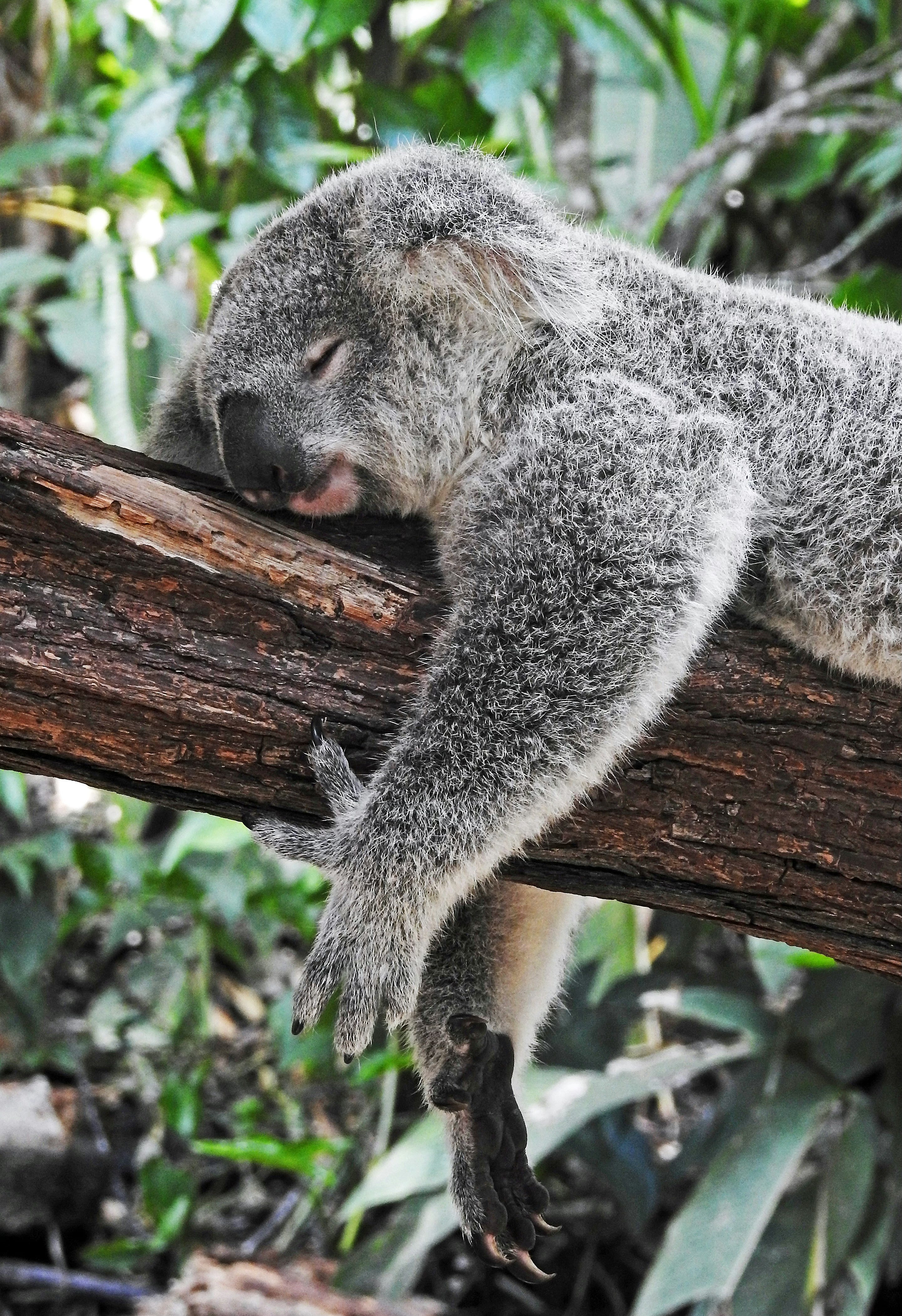
WHY A KOALA SLEEPING? Because you’re probably reading this on your phone at night. So instead of another scary picture of a person who can’t sleep staring at their phone to make you feel bad, here’s a koala showing you just how easy it is to sleep without your phone by your side … Photo by David Clode on Unsplash
This phenomenon has a name. A boring, clinical, un-Instagrammable name.
Our last post argued that burnout is a brain injury – an injury with real biological signatures involving the Hypothalamic-Pituitary-Adrenal (HPA) axis (aka hormonal stress response control centre), neuroinflammation (inflammatory responses specific to the brain and spinal cord), and prefrontal impairment (feels like your brain isn’t thinking straight). If you haven’t read it, that’s the background for this one. The one-line summary for those feeling too much apathy to read: burnout isn’t a character flaw. It is measurable damage to your brain, and it deserves to be treated as such.
That damage can mess up your sleep. Via cortisol curve dysregulation – a flattening of the curve in mild cases, a full inversion in more advanced ones. This is the specific hormonal signature of chronic HPA-axis activation.
It is not insomnia or anxiety. It is not a symptom of ADHD (despite what the internet might tell you). These conditions may overlap with it. But they are not the same thing.
Cortisol curve dysregulation has a mechanism. It has evidence. And, mercifully, it has two evidence-based treatments that don’t cost a cent.
NERD ALERT. Skip if you want the headline; stay if you want the endocrinology. Cortisol follows a specific daily rhythm. It rises sharply in the 30 to 45 minutes after you wake up, a spike called the Cortisol Awakening Response, or CAR. Then declines steadily through the day, reaching its nadir around midnight, and rebuilding through the second half of the night ready to peak again at dawn. Van Cauter’s foundational work on this rhythm is bedrock endocrinology. In health, the curve looks like a mountain – sharp climb, slow descent, low valley overnight. In chronic HPA activation the curve flattens. The CAR blunts (you wake tired). Evening cortisol stays elevated (you can’t wind down). In more advanced cases the curve fully inverts: lowest cortisol at dawn, highest at midnight. The clock has stopped talking to your endocrine system. Cortisol and melatonin follow reciprocal rhythms, both driven by the SCN – when cortisol stays elevated in the evening, melatonin release is suppressed. And the relationship runs both ways: sleep disruption further dysregulates cortisol, and vice versa. This is why the standard sleep-hygiene advice – magnesium, chamomile, lavender oil – won’t touch the actual problem. Your hormones are telling your brain the wrong time of day. Sleep disruption also drives inflammatory pathways that further entrench the state – a topic future Prescription pieces will unpack. What this means.
Everything above applies. But you have an additional hormonal layer that most burnout writing fails to acknowledge. Progesterone withdrawal takes away an important GABAergic sleep-supporting hormone. At exactly the point in life when cortisol levels are malfunctioning for other reasons.
Oestrogen fluctuations disrupt thermoregulation, producing hot flushes and night sweats that may already fragment your sleep architecture. Peri-menopausal women can present with blunted CARs and elevated evening cortisol at rates that overlap significantly with clinically burnt-out populations.
Which is to say – the burnout literature and the peri-menopause literature have been describing the same endocrine mess from two different angles, for thirty-odd years. This is what happens when medicine still hasn’t quite worked out that women exist across their whole lives, not just the reproductive middle of them.
A dedicated Prescription piece on the peri-menopause / burnout overlap is queued (because … hello, peri-menopausal woman here. My progesterone has left the building. My CAR is a rumour. Yes, I am writing this at 2am. I have a severe case of self-interest in this one). It will land soon. In the meantime, the two interventions in this piece work for you too. In fact, it’s probably more important for you, not less.
Every day, most burnt-out people do a stack of small things that entrench the flipped curve. Some of them are marketed as good ideas. All of them, in this specific endocrine state, work against recovery.
Evening screen use. It’s not just the blue light – so a $60 pair of blue-light blocking glasses is not the answer (PS. In case you are wondering, the evidence on these is sketchy at best, and to have any benefit, it needs to be the proper amber-tinted ones that make you look like David Bowie. Turning down the brightness of your screen will achieve more than most of these expensive fashion accessories.)
Light of any wavelength at sufficient intensity suppresses melatonin. The bigger problem is what’s on the screen: threat content (news, doomscroll), social evaluative content (comparison, status), notification anticipation (ongoing sympathetic activation). All of these push cortisol up at exactly the time it should be dropping.
And here’s the bonus problem. Late-night phone use doesn’t just mess up your sleep. It can screw over your bank balance too. The wellness industry has engineered its ads to find you at exactly the 11pm dopamine-low, prefrontal-cortex-offline moment, when the part of you that says “I don’t actually need this” has gone to bed but the part of you that clicks buy is still up. The inaugural Crank Files piece – Why can’t we stop buying wellness shit – walks through why this works so well and what to do about it. Every notification is a cortisol bump. Every impulse purchase is a cortisol bump that also costs you $89 for a magnesium spray you’ll use twice.
Caffeine after midday. Caffeine’s half-life (i.e. the time that it is still active in your system) is five to six hours. That 3pm coffee you so desperately needed to get through the day is still 25 percent active in your bloodstream at 9pm, when you should be winding down for the night. It blocks adenosine, which is the neurotransmitter that tells you you’ve been awake long enough to sleep. Caffeine is standing in the doorway telling adenosine to piss off.
Alcohol as a nightcap. Makes you feel nice and sleepy at the time. Causes a cortisol rebound around 3am, fragments sleep architecture, destroys REM. You are trading twenty minutes of chillaxed ‘wined down’ time for hours of shattered sleep. It is a very bad trade. You cannot feel that in the moment because the alcohol is happily telling you it’s exactly what you need. But you know it’s not.
Late high-intensity training. HIIT late in the day spikes cortisol in the exact direction you’re trying to reverse. The bootcamp instructor is not thinking about your HPA axis. That is not their job. It probably needs to become yours. A whole future Prescription piece is coming on the exercise paradox (this one is right up my alley – if there’s a mistake to be made exercise-wise, I have road tested it already). For now, know that when you’re dysregulated, the timing of exercise matters as much as the doing of it.
Sleep tracking. This one deserves its own paragraph. You wear a device that gives you a “sleep score” immediately upon waking. You get a bad number. Cortisol spikes. Next night’s sleep is worse. Baron and colleagues named this “orthosomnia” in 2017. It is an entire product category built on measuring something it makes worse. Take a moment with that.
None of these are moral failures. They are the modern default. But most burnt-out people are doing three or four of them nightly, and the stack is what maintains the flipped curve.
Two interventions will re-anchor your cortisol curve. Both are free. Both are supported by robust evidence. Both work through the same mechanism, at different ends of the day. Neither will look good on Instagram, which is roughly the definition of an evidence-based intervention.
Before we get to what they are, one piece of important context. Because we know you are burnt out. We know you have apathy, fatigue, brain fog. We know your ‘I should really’ list is already crushing you, and we know this piece is starting to feel like it is about to add two more items to it.
It is not.
These are not additions to your list. These are what the list gets thrown out for.
These are THE MOST IMPORTANT TWO THINGS YOU CAN DO FOR YOURSELF RIGHT NOW.
If you skip everything else you hear. Prioritise these two things.
From tonight and forever after.
Why. Because lack of sleep feeds into everything else. Every other recovery intervention you might attempt – nutrition, movement, breathwork, therapy, HRT, the lot – only starts working properly once your sleep is working. And if you do these two things, then you might get some more sleep? Make better decisions, buy less shit you don’t need, be a nicer person, enjoy your personal and work life more, etc.
If you only ever do these two, and nothing else in this entire publication, you will still recover faster than most of the people currently trying to buy and scroll their way through burnout. You’ve just got to do them and keep doing them.
Put on shoes. Go outside. Ten minutes. Ideally with a walk, but standing on the deck with a cup of tea counts. Do it within an hour of waking. Bonus points if you can point your face vaguely toward the sun without looking directly at it.
Below is why this works, for those who want the mechanism. If you don’t, skip to the phone rule.
Your circadian rhythm is entrained by light. Specifically, by a subset of cells in your retina called intrinsically photosensitive retinal ganglion cells, or ipRGCs, which contain a photopigment called melanopsin (this should probably have been in a nerd alert, right? Bear with me). Berson, Dunn and Takao discovered them in 2002. It rewrote sleep science. The wellness industry did not update its content in response, because a photopigment won’t sell melatonin gummies.
Melanopsin responds most strongly to blue-spectrum light around 480 nanometres, which is precisely the peak wavelength of natural morning daylight. When you get enough of that light early in the day, the suprachiasmatic nucleus (SCN - the body's master clock, which is tucked deep in the hypothalamus), receives a clear ‘it is morning’ signal. It boosts the CAR. It anchors the cortisol peak to the correct time. It sets a timer that tells melatonin to rise about fourteen hours later. It is a beautifully simple system, and it works, right up until you stop feeding it any actual daylight.
The word that matters here is enough. Indoor light is dimmer than most people realise. A bright office is 300 to 500 lux. A cloudy day outside is 5,000 to 10,000 lux. A sunny day is 50,000 to 100,000 lux. The SCN is a lux-hungry organ. Sitting near a window with your coffee is not enough. It is not fooled by a nice lamp. Being outside – even briefly, even under cloud – is orders of magnitude stronger.
Zeitzer’s 2000 dose-response work shows measurable circadian phase shifts from small amounts of properly bright light at the right time. Ten minutes of outdoor daylight within an hour of waking is a rational dose. Twenty is better. Thirty is optimal. Two is not zero.
You cannot substitute this with indoor light. You cannot substitute it through glass (glass reduces intensity and filters certain wavelengths). You cannot substitute it with a SAD lamp unless you literally cannot get outside – and then it needs to be a proper 10,000-lux therapy device used correctly, not the mood lamp you bought on sale.
This one is non-negotiable. Not because phones are evil (though the case has been argued elsewhere and it is not weak). Because the phone is a stimulus device, and stimulus is the wrong signal at night.
It hits multiple mechanisms simultaneously, which is what makes removing it more effective than any single-mechanism fix. One behavioural intervention collapses four upstream drivers at once.
Luminance. The screen is bright enough to suppress melatonin even with a warm-tone filter on. Blue-blocking is a minor tweak on a much bigger problem – the sheer amount of light you are firing at your own face at bedtime.
Threat content. Doomscrolling, news, work email – all trigger amygdala activation and the resulting HPA cascade. The cortisol spike lasts longer than the scroll. Reading the news at midnight is not information. It is a chemistry decision.
Social evaluative content. Comparison scrolling triggers the same mechanism – social evaluative threat – that the Trier Social Stress Test exploits in the lab to reliably induce cortisol responses. Your body does not know the difference between being judged in a lab and being judged on Instagram. Instagram is worse, because the lab session ends.
Notification anticipation. Even the possibility of an incoming message keeps sympathetic tone elevated. Kushlev showed that having a phone on the desk, silent and face-down, measurably impairs attention. Silent, face-down, and still ruining your concentration. That is not neutral. That is polite. The same anticipatory arousal disrupts sleep onset.
Removing the phone from the bedroom removes all these drivers in one step. Not partially. All the way.
Practically: charge it in the kitchen. Buy a $15 alarm clock. If you have on-call responsibilities and need to be reachable, use a call-only mode or a dumbphone. Use structure rather than willpower. The phone in another room does the work your executive function isn’t currently up to.
Most of us can’t stop checking our phones while we are awake. If this has become your ‘I’m awake. I wonder what time it is’ routine, just saying you won’t isn’t enough.
Because you will. You are addicted.
Your prefrontal cortex is already impaired for reasons covered in our first post (see below)
Putting your phone away will be hard because you are probably at least slightly addicted to checking it, and breaking an addiction takes time.
But who wants to live their shortened life a slave to an addiction fuelled by tech-bro billionaires who are profiling your burnt-out soul so that they can sell you things you don’t need? (The Crank Files covers this in more detail if you’re interested.) So much more to say on this. Probably in three or four more posts.
NERD ALERT. Skip if you want the headline; stay if you want the asymmetry. The phone is not the villain. Stimulus is. Your body wants different signals at different times of day. In the morning, you want alerting inputs – bright light, movement, cool temperature, cortisol rising. These are the signals that tell your SCN it is morning and your body should synchronise upward. A brief functional phone check in the morning is a mild alerting stimulus in a context where alerting is exactly what you want. It doesn’t help much, but it doesn’t hurt. At night, you want the opposite. Dim light, warmth, low arousal, cortisol falling. Any strong alerting stimulus works against the endocrine transition. The phone is a strong alerting stimulus. Full stop. What this means.
Great. You need your phone.
Then get your arse out of bed, grab it, and take it outside. Check the shit you supposedly need to check while you are standing in the sunlight.
Two birds. One stone.
The sequence matters. Out of bed, then outside, then phone.
Not: bed, then phone, then maybe outside. If the phone comes out before you are through the door, the workaround has already failed.
But before anyone congratulates themselves for the workaround itself, one slightly harder conversation:
You really don’t need to check your phone as soon as you wake up. You are probably making that shit up to feed your addiction.
Unless you are in the 0.01% of humans who have a genuinely urgent morning phone need – the sort of need that has only existed since the invention and proliferation of smartphones – the honest truth is that the human race got by just fine for tens of thousands of years without checking in with their phone upon waking. Very few historical deaths occurred because a parent couldn’t check a school WhatsApp message that was sent at 3am. Very few marriages ended because of an unread work email. Very few emergencies were made worse by ten minutes of not-yet-being-online.
If it is genuinely urgent, someone will probably call you. Old-school. Ring, ring.
And if you cannot resist checking your phone before you are outside, that is not a phone problem. That is information about how much sovereignty you have currently given away. It deserves its own separate conversation with your prefrontal cortex. Let me know when you are ready to have that ‘chat’ and we’ll do a post on just that topic …
Every night: phone out of the bedroom. Charge it somewhere else. Don’t touch it after your evening wind-down starts. Ideally 60 to 90 minutes before your target sleep time.
Every morning: outside within 60 minutes of waking. Ten minutes minimum, twenty if you can. Cloudy still works. Through a window does not count.
Two weeks minimum before you decide if it worked. In general circadian studies, two to three weeks is a reasonable expectation for phase shifts to consolidate. In burnout populations specifically, the timeline is less directly evidenced – treat it as an approximate target, not a promise. If you were hoping for overnight, you are still thinking like a wellness consumer, not a burnout patient.
Three things to expect. Some people sleep worse for the first two or three nights of phone removal. This is real. It is a dopamine-loop withdrawal from the loss of your usual bedtime scroll. Push through. It resolves. Second, the improvement is not linear. It is not supposed to be. It is a nervous system, not a spreadsheet. Third, treat yourself like you would a recovering addict – be empathetic, compassionate but FIRM. To quote Rachel Hunter, ‘It won’t heppen overnight, but it will heppen.’
You cannot patent ‘go outside.’ You cannot add a monthly subscription to ‘leave phone in the kitchen.’ There is no recurring revenue, affiliate code or upsell on ‘sleep now, no scrolling.’ The interventions with the strongest evidence, the biggest effect sizes, and the lowest costs are almost always the ones no one can monetise (and therefore add an ending-soon discount and a flashing banner counting down the hours till it goes away forever. Never to be seen at this price again).
If you have come to this piece cold, the two pieces around it will make more sense of it. Burnout is a brain injury is the mechanism the sleep problem sits inside. It’s highly recommended to give them a read.
Or read The Crank Files article above to understand why the compulsion to buy is so strong…
If this was useful, subscribe. The Prescription is where each of these free interventions gets its proper evidence write-up, one at a time, with receipts, so you have them when your GP, your PT, your friend, or the internet tries to sell you the expensive version.
The next Prescription piece looks at the exercise paradox – why the advice most burnt-out people receive makes them worse, and what the evidence says about training in a dysregulated state. If you’re reading this and about to book a bootcamp, hold off on that one.
Do these two things. Come back then. We’ll do the next thing then.
Know someone who is wired at midnight and wrecked at dawn? Send them this.
Stay sane and sceptical.
– Jill
Cortisol curve. Van Cauter E, Leproult R, Kupfer DJ. Effects of gender and age on the levels and circadian rhythmicity of plasma cortisol. J Clin Endocrinol Metab, 1996. PubMed.
Melanopsin / ipRGCs. Berson DM, Dunn FA, Takao M. Phototransduction by retinal ganglion cells that set the circadian clock. Science, 2002. PubMed.
Light dose-response. Zeitzer JM, Dijk DJ, Kronauer R, Brown E, Czeisler C. Sensitivity of the human circadian pacemaker to nocturnal light: melatonin phase resetting and suppression. J Physiol, 2000. PubMed.
Evening screens and sleep. Chang AM, Aeschbach D, Duffy JF, Czeisler CA. Evening use of light-emitting eReaders negatively affects sleep, circadian timing, and next-morning alertness. PNAS, 2015. PubMed.
Orthosomnia. Baron KG, Abbott S, Jao N, Manalo N, Mullen R. Orthosomnia: are some patients taking the quantified self too far? J Clin Sleep Med, 2017. PubMed.
Notification anticipation. Kushlev K, Proulx J, Dunn EW. Silence Your Phones: Smartphone Notifications Increase Inattention and Hyperactivity Symptoms. CHI 2016 Proceedings. ACM Digital Library.
Social evaluative threat. Kirschbaum C, Pirke KM, Hellhammer DH. The ‘Trier Social Stress Test’ – a tool for investigating psychobiological stress responses in a laboratory setting. Neuropsychobiology, 1993. PubMed.
(Links point to PubMed search rather than specific PMIDs – Jill to verify and swap for direct links before publication.)
Comments
Nothing yet. Say the first thing.
Sign in to join the conversation.