
Hi,
Time to slip into another painting but the one I chose is not easy. First, it’s in Buckingham Palace and second, it’s really old.
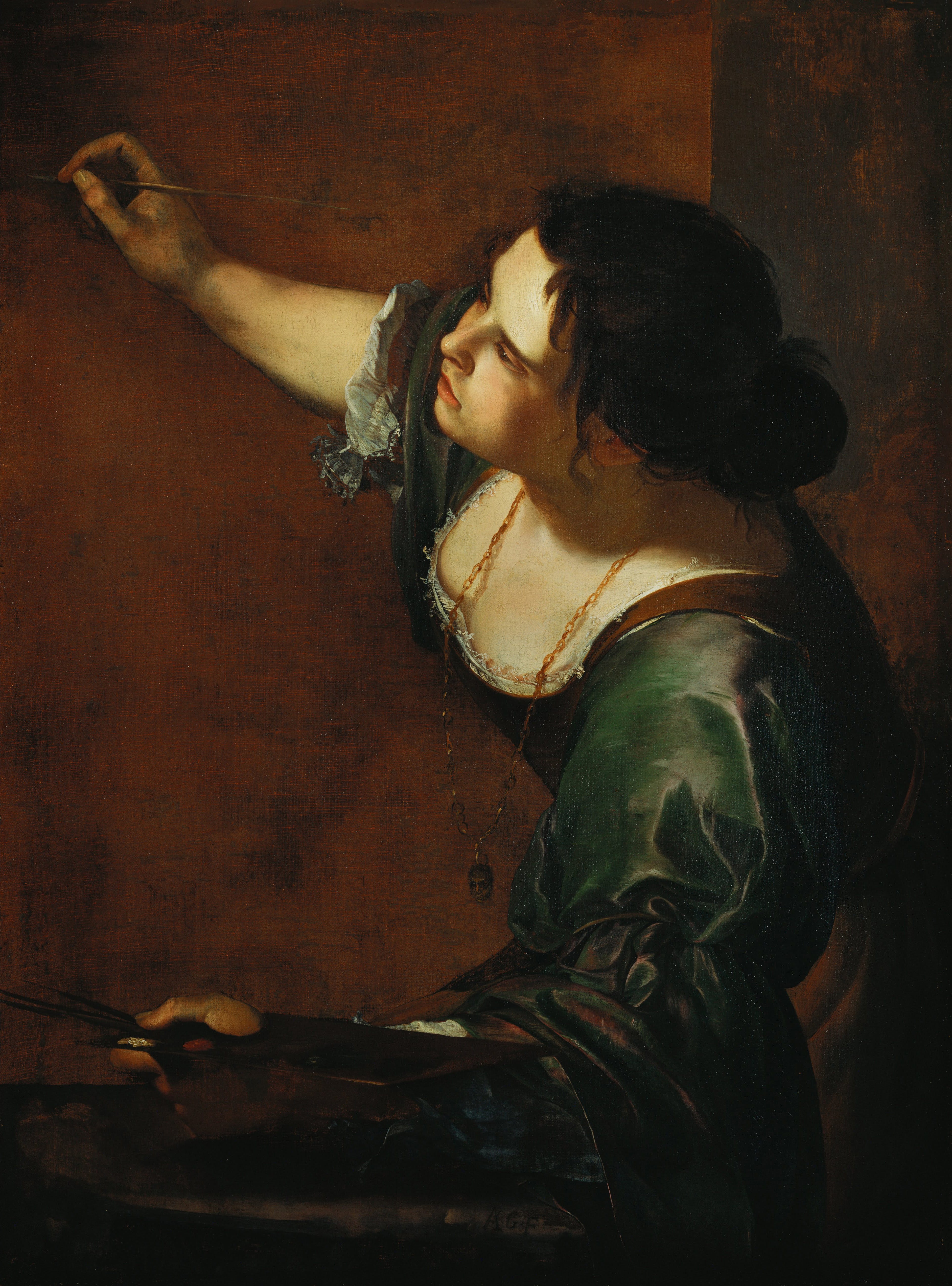
Artemisia Gentileschi painted Self-Portrait as the Allegory of Painting sometime around 1638–39. It joined the Royal Collection under Charles I where it remains, surrounded by furniture with better manners than my own.
Something that old is difficult to fathom. My own age? … also difficult to fathom, but comparing it with the 387 years this painting has had to acquire its gravitas while watching generations of people stand before it saying, “Why didn’t I think of that?” puts it all in perspective.
The wrinkles I’ve acquired in my life are little road maps of all the wobbly miles I’ve traversed, and the freckles are due to slathering my legs with baby oil in the 70s under a merciless Miami sun when SPF was just a rumor, but I’m not pictured here so let’s move on.
Since I’m not expecting an invitation from King Charles anytime soon, I slip inside the painting by using my imagination as a step stool and Wikipedia as the museum. Wikipedia has no guards, but there are pop-ups I’m impressively adept at minimizing; a skill that doesn’t work with guards.
I climb in.
I love that Artemisia is not posed in the manner of a woman who has been instructed to look wistful while holding a flower like …
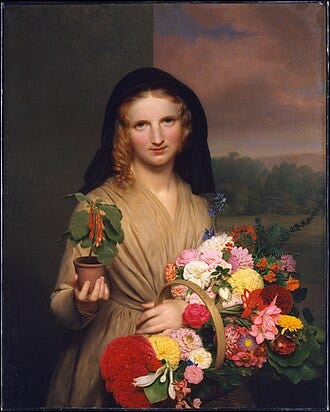
Flower Girl by Charles Cromwell Ingham 1846
Artemisia’s sleeves are rolled up and her body leans toward the canvas. She has a brush in her hand and the focus of someone who isn’t interested whether anyone approves her idea.
“Excuse me,” I say. “Could you share a bit about how you found your artistic voice?”
She doesn’t turn around which I admire more than find annoying.
Artemisia Is Painting
Painting herself painting was an audacious choice for the time. She made herself the metaphor, the “allegory”, the actual embodiment of what Painting is.
Painting had traditionally been personified as female which gave Artemisia an advantage. A male painter could paint an allegorical woman called Painting, and could paint himself, but he could not convincingly be both Painting and himself at once. Artemisia could.
So she did.
I stand behind her, trying to look as though I belong in a seventeenth-century studio which is difficult because I am wearing Hoka hiking shoes, have a receipt from Cold Stone in my pocket, and my Fitbit is vibrating to alert me of the 225 more steps I’m supposed to walk this hour.
“Is this how you found your voice?” I ask.
She keeps painting.
I close a pop-up and try another question.
“Do you journal?”
Nothing.
“Did you have a tutor help you with your style? Do you meditate, drink absinthe, eat gummies, look on YouTube, or Google it? ”
I pause and realize I’m in the wrong century again. And I’m in the wrong asking questions.
She dips her brush into paint with enough force that I realize her actions are my answer … but I try one more question anyway.
“Were you always this confident about your work?”
This time she sighs and gestures toward the paintings stacked around the studio. Not one painting.
Paintings. Studies. Canvases. Attempts. Failures. Favorites. The mediocre predecessor of the successful one. The one with a delicate ruffled sleeve but a face that is scribbled over. The painting that taught her she needs to stop before she goes too far with the burnt umber.
She is not looking for a voice. She is making one. Again. And again. And again, until the brush begins to recognize her hand. Until her hand begins to trust its own appetites: the dramatic light, the uninvited rage, the refusal to make herself smaller for a room that prefers women be decorative and passive.
A voice happens when you keep making work. You make enough work and it tells you what it wants to be. And then, in the discovery, you celebrate the additional dimensions art gives you, because there it is … the visual evidence. Your style emerges and you have a life-time companion leading you toward work that is unmistakably your own.
Learning to love our artistic voice can be a life-long practice in self-acceptance, believing in it, and staying with the work even when we feel like abandoning it. It enriches our relationship with ourselves.
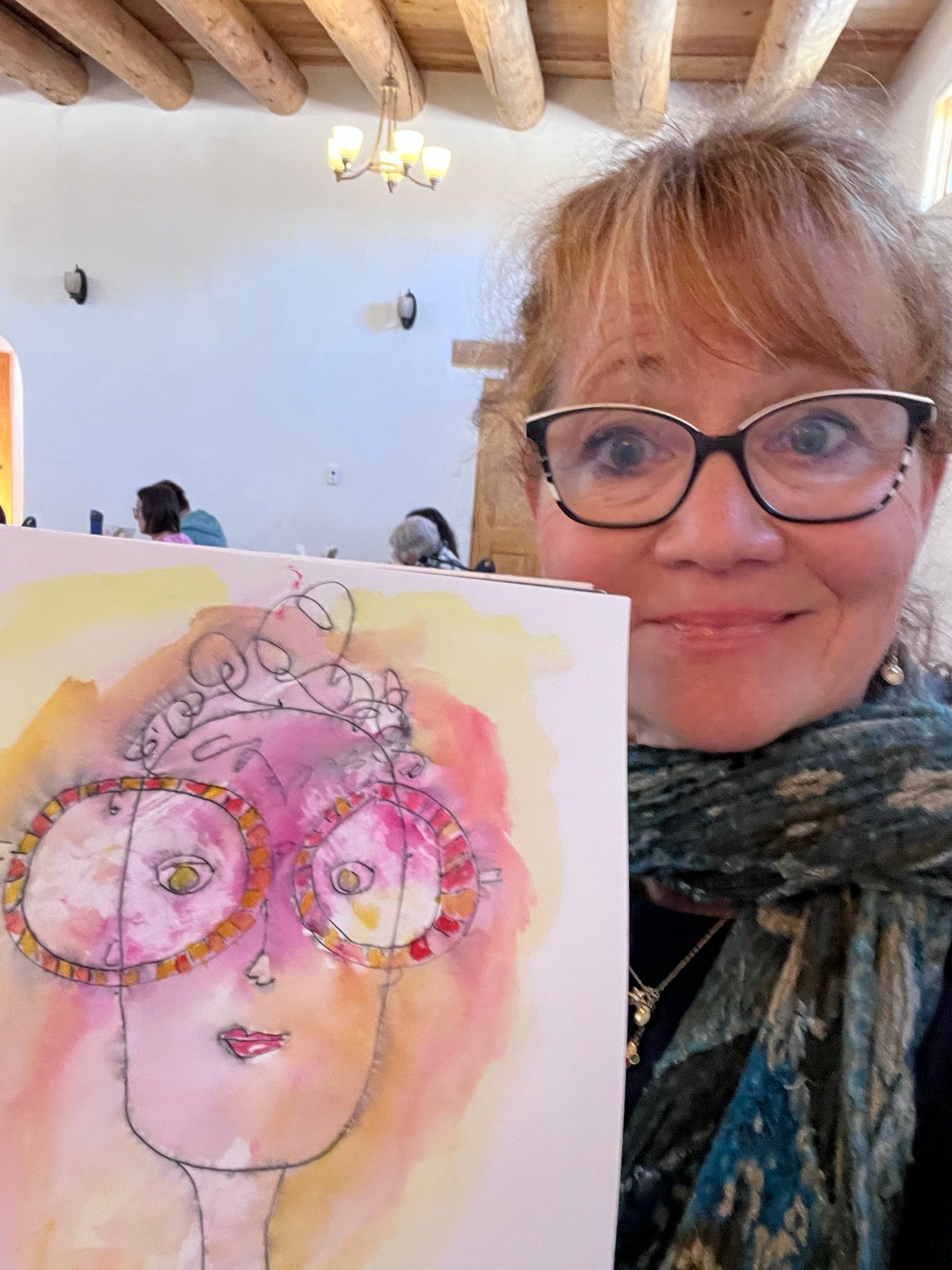
Voice emerges through volume and repetition.
It surfaces by making paintings (and writings) that nobody gets yet, including you. Then you look back on them, and you recognize them as who you are
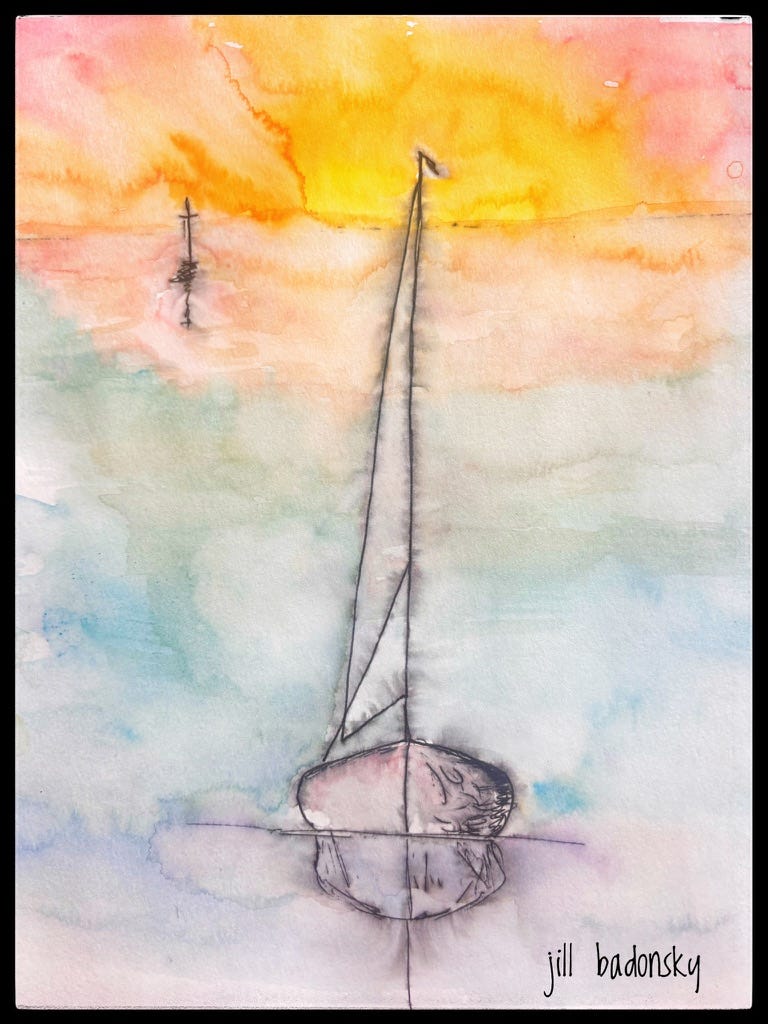
The Paintings Nobody Gets
Artemisia doesn’t pause to poll the room or even her friends. She doesn’t arrange a focus group of dukes, bishops, relatives, critics, and someone from the seventeenth-century version of Substack. She paints.
There must have been plenty who didn’t get her. There always are. A woman being Painting itself? A woman claiming the whole spiritual and intellectual territory of making art? It made some people uncomfortable.
Good.
Your Voice Is in the Reps
“So,” I conclude out loud, “To acquire a voice we should paint more?”
Artemisia keeps working. This is, apparently, a yes. Paint more than you think is necessary. Paint even when the rest of the world is trying to distract you.
Paint when you feel inspired, naturally, but also paint when inspiration is in bed, eating grapes, and refusing to answer messages. Paint when the painting is bad. and when you have no idea what you are doing. Paint the same subject seven times. Paint it badly on purpose as many times as you like. Paint it too big, too small, half on the canvas - half off, with your non-dominant hand, with your eyes closed, balancing a book on your head, and paint it in colors that don’t make sense to anyone but your intuition or the rebellious nature you’ve kept pent up since you chose “appropriate” over astonishing.
Every painting teaches our hand something our brain cannot learn from watching. The work accumulates. Our proclivities begin leaving fingerprints.
Same with writing. Eventually you think: Oh. There I am. Because you stayed long enough for your style to reveal itself.
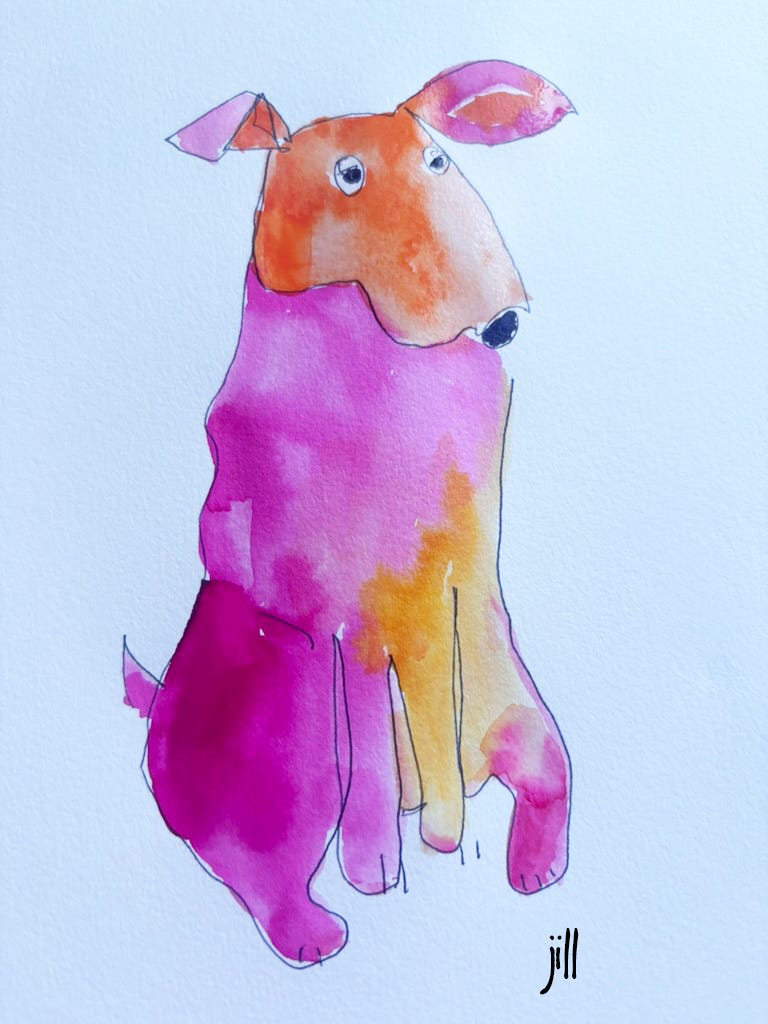
I climb back out of Wikipedia and pace back and forth musing all I learned and my FitBit reaches 250 steps and says, “Goal met.”
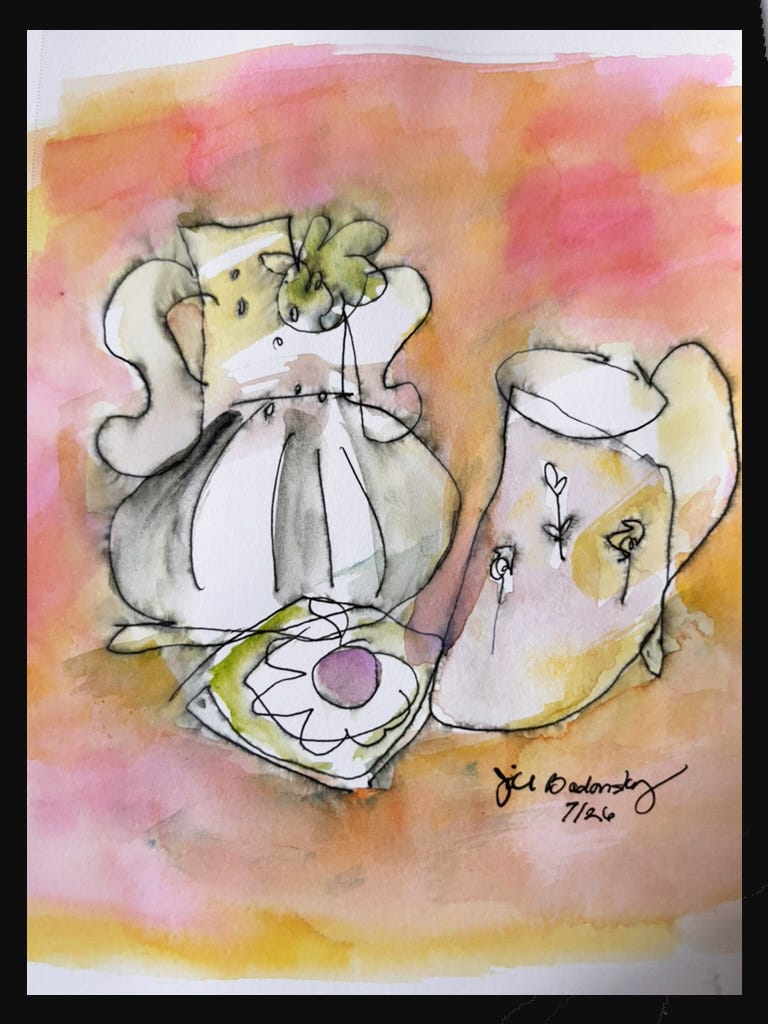
Partial blind drawn still life of vase, mug, and coin purse
Artemisia Gentileschi (1593–about 1654) was a groundbreaking Italian Baroque painter and one of the most accomplished women artists of the 17th century. She painted bold biblical, historical, and mythological women with a muscular, dramatic style influenced by Caravaggio.
She trained in Rome with her painter father, Orazio Gentileschi, then built an independent career in Florence, Rome, Naples, and later England. In 1616, she became the first woman admitted to Florence’s Accademia del Disegno, and earned major patrons despite the steep restrictions placed on women artists at the time.
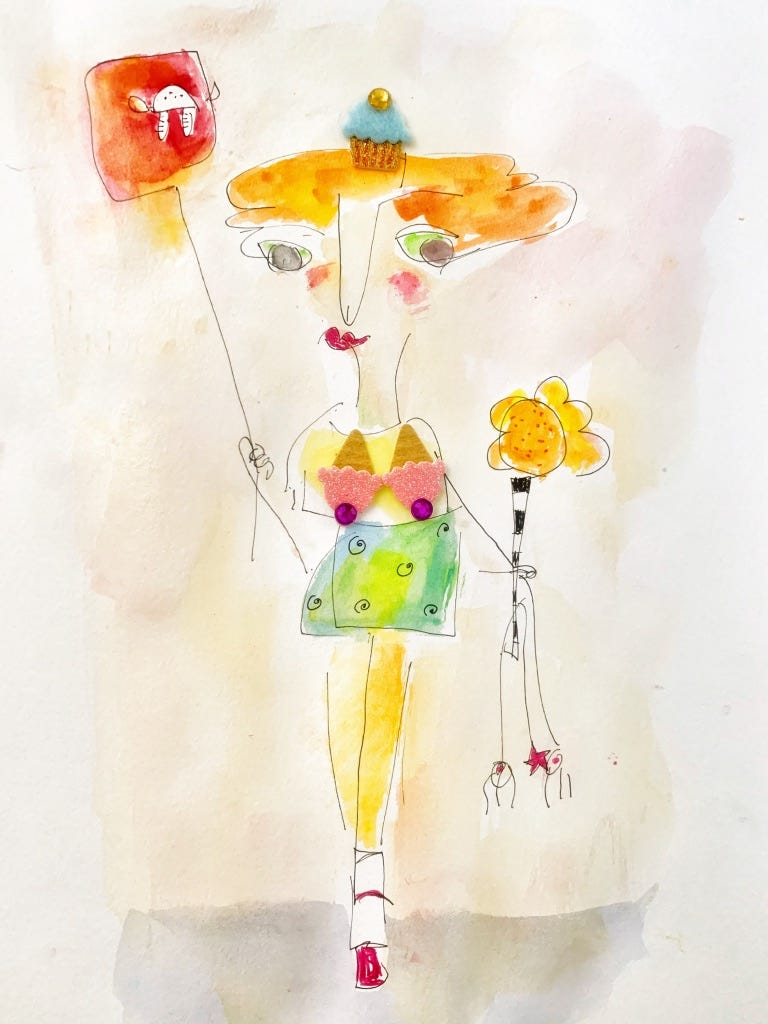
I was scrolling through old paintings, and because of writing of this article, I noticed paintings I loved, but the voice was so unconventional and loose I didn’t give them much attention. I shall revisit them like old friends. If I’m the only one who likes them …
Good.
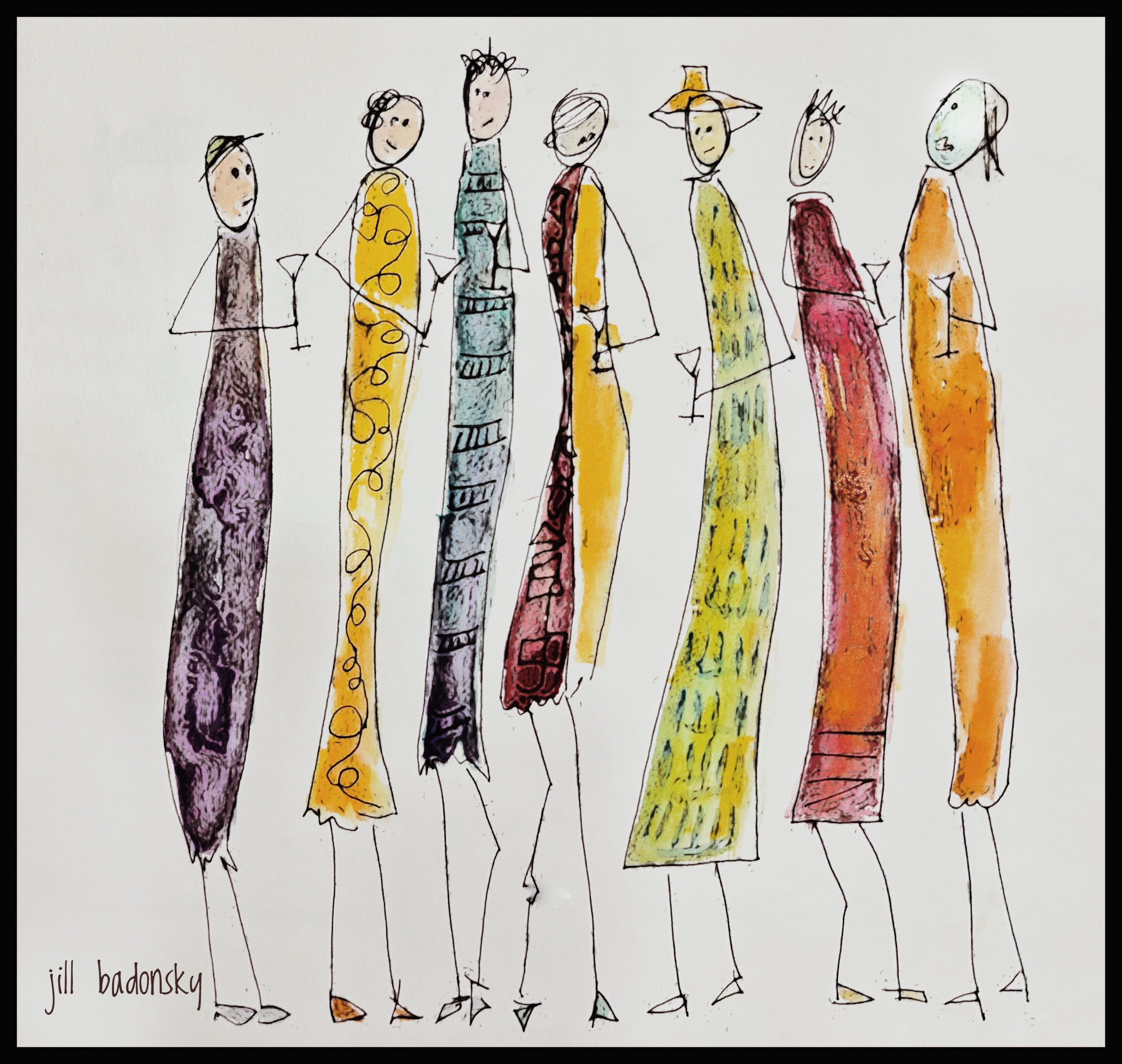
Suggestion: Paint, write, maintain your passion and it will reveal its voices.
As always, best wishes,
Jill

Kaizen-Muse Creativity Coaching Certification Training:
Become a Creativity Coach for Others and/or Yourself
The concepts I teach in these writings are taught by way of mindfulness, psychology, intuition, play, permission and small steps in the KMCC training. It’s for anyone who wants to free the creativity of others and/or go deeper and more consistent with their own creative interests. Another training is begins in January 2027 and is for anyone passionate about creativity even if you’re blocked. More here
Or join me in Taos February 6-10. The Muse in Winter:
Two spots have opened up. More here.
No posts
Comments
Nothing yet. Say the first thing.
Sign in to join the conversation.