
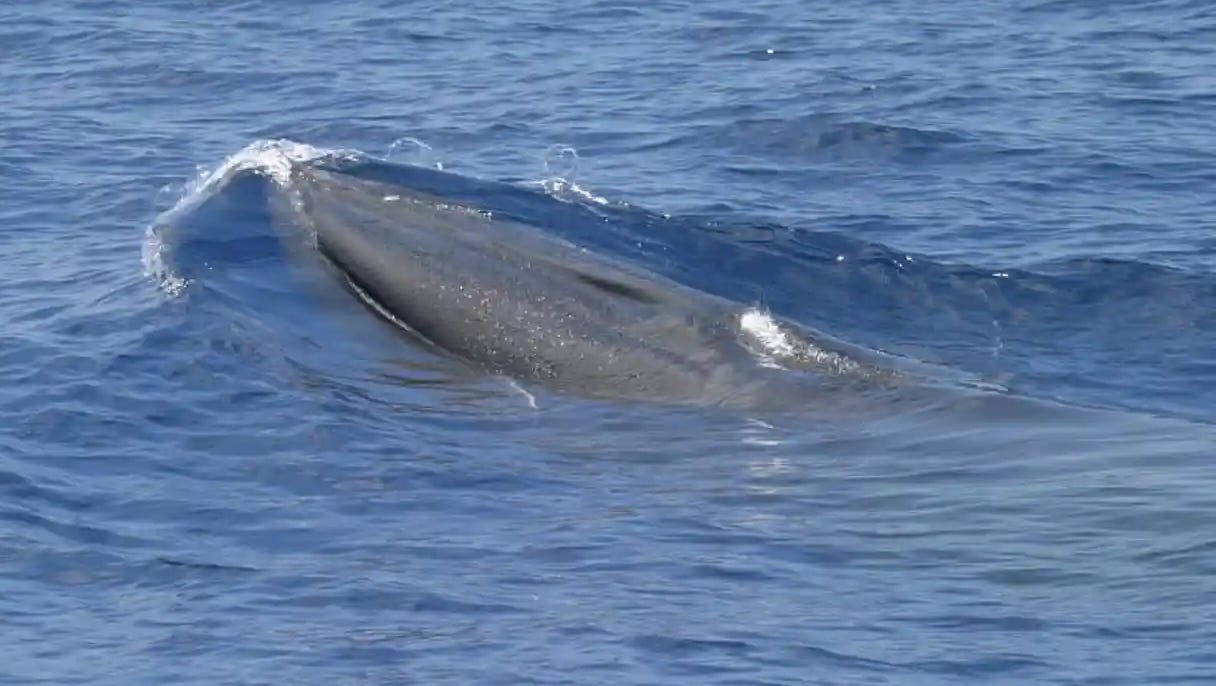
(It is Easter, and I find myself writing about a President who has invoked the machinery of law to exercise a power that begins to resemble judgment itself.)
“The term ‘Committee’ means a committee consisting of— the Secretary of Agriculture, the Secretary of the Army, the Chairman of the Council of Economic Advisers, the Administrator of the Environmental Protection Agency, the Secretary of the Interior, the Administrator of the National Oceanic and Atmospheric Administration, and one individual from each affected State, to be appointed by the President…”
— Endangered Species Act, 16 U.S.C. § 1536(e)
Last week, on March 31, Defense Secretary Pete Hegseth convened the Endangered Species Committee—formed in 1978 as an amendment to the Endangered Species Act (ESA) and nicknamed the “God Squad.” Acting with speed and unanimity, the Committee granted an exemption to the ESA, permitting offshore oil and gas activity in the Gulf of Mexico despite the acknowledged risks to one of the rarest marine mammals on earth: the Rice’s whale. (pictured above)The decision was framed in the language of necessity, grounded in claims of national security, and presented as an instance of the statute’s own design at work—a rare but lawful exception to an otherwise uncompromising rule. But the fact of the exemption does not by itself explain what occurred. The statute has always contained such a mechanism. What demands attention is the gap between the law’s original design and its present operation. What the statute presents, in form, as a balanced and deliberative exception has come to function, in practice, as a legal fiction—the appearance of institutional constraint masking the exercise of concentrated executive power.
The Endangered Species Act emerged from a period of unusual legislative confidence. Enacted in 1973 and signed by Richard Nixon, it announced a national commitment to halt and reverse the trend toward species extinction, and it did so in language that appeared deliberately resistant to compromise. Federal agencies were directed to ensure that their actions would not “jeopardize” the continued existence of endangered species, a command that, on its face, admitted no balancing of costs and benefits, no weighing of economic interests against ecological loss. That same year, the Supreme Court decided Roe v. Wade, and it is difficult not to read these developments together as expressions of a broad legal optimism, a belief that certain values could be secured against the contingencies of politics through the force of statutory and constitutional command.
Commitment to that belief was tested in 1978, in Tennessee Valley Authority v. Hill. Confronted with a nearly completed dam that would eradicate a small and recently identified species of fish, the snail darter, the Supreme Court refused to introduce a balancing test that Congress had not authorized. Congress, the Court explained, meant what it said: that it was imperative “to halt and reverse the trend toward species extinction, whatever the cost.”[1] The reaction to TVA v. Hill was immediate and divided. For some, the decision represented a principled and absolute fidelity to legislative intent. For others, it revealed the potential absurdity of an uncompromising rule applied without regard to scale, consequence, or common sense. The tension was real, and it did not go unanswered. Congress responded not by repudiating the Court’s interpretation, but by amending the structure of the ESA. In 1978, it created the Endangered Species Committee, a body empowered to grant exemptions in rare and extraordinary cases where the statutory command would otherwise produce outcomes deemed unacceptable or absurd.
The Committee’s history underscores how unusual the present moment is. It has convened only a handful of times since its creation in 1978, and its early decisions reflected the very structure Congress intended. In 1979, at its first meeting, the Committee confronted two emblematic cases. It refused to exempt the Tellico Dam from the protections afforded to the snail darter, leaving Congress to intervene directly, but it granted an exemption for the Grayrocks Dam in Wyoming, where whooping crane habitat was at stake, imposing mitigation conditions after extended consideration of alternatives. More than a decade later, in 1992, the Committee met again to consider timber sales affecting the northern spotted owl. That proceeding was protracted and contested, resulting in a partial exemption for a limited number of sales and the denial of others, followed by judicial scrutiny that exposed improper political influence in the process.[2] In both instances, whatever their outcomes, the Committee functioned as a site of visible conflict, deliberation, and constraint, conditions that give meaning to the statute’s claim of exemption.[3]
The statute authorizes these exemptions but justifies them as exceptional. Clearly, the Committee was not designed as a routine decision-maker. It was conceived as a safeguard, a mechanism through which the statute could accommodate a rare case without surrendering its general principle. Its composition reflected this ambition. Drawn from the heads of multiple federal agencies and supplemented by a presidentially appointed representative of affected states, the Committee appeared to embody a balance of perspectives: environmental protection, economic development, military and infrastructure concerns, scientific expertise, and regional interests. (see epigraph above) The structure suggested that even though housed within the executive branch, these commitments would not necessarily align, and that their convergence, when it occurred, would be the product of principled debate. And exemptions would apply only after a ruling out of reasonable, alternative means of species protection. The amended statute reinforces these conditions in the criteria it establishes for exemption:
“…the Committee may grant an exemption… if it determines that—
(i) there are no reasonable and prudent alternatives…
and
(ii) the benefits of such action clearly outweigh the benefits of alternative courses of action consistent with conserving the species…”— Endangered Species Act, 16 U.S.C. § 1536(h)
That language is careful and conditional, invoking alternatives, benefits, and the weighing of various fields of expertise. It transforms the statute’s categorical prohibition into a structured form of discretion, but it does so under the assumption that the discretion will be exercised within a genuinely pluralistic framework, and only under exceptional circumstances. The Committee’s design is meant to ensure that no single interest can dominate, that any decision to suspend the statute’s command will emerge from the interaction of principled institutional mandates. It presumes that the Secretary of the Interior will not think like the Secretary of the Army, that environmental protection will resist development from within, and that expertise will operate as a constraint on expedience. That design rests on a second legal fiction: that the mere distribution of offices will reflect a distribution of interests, which will in turn produce an outcome as consistent as possible with the intent of the ESA itself.
But that presumption, however intuitive, is not secured by the statute. In practice, alignment within the current Committee is not an accident of appointment but its condition. Its members are not independent actors.[4] They are cabinet officials and agency heads operating within a tightly controlled administrative hierarchy. In 1978, Congress did not foresee that those roles might have been stripped of their independence. But under the current executive, any principled opinions are subordinated to the President’s will; any premise of balance has been summarily dissolved. The members of the current Committee—the so-called “God Squad”—have been prescreened for absolute fealty to their so-called god.
In addition to this backdrop, the decision of March 31 must be understood within an even more constrained provision of the statute. The Committee’s unanimous decision—subjecting the Rice’s whale to the dangers of drilling—was not an instance of the statute functioning as intended, but of its most exceptional mechanism being deployed in a way that collapses the distinction between judgment and mandate. Unlike in the 1979 and 1992 convenings of the Committee, this exemption was justified on grounds of national security, a category that, across legal domains, has long operated to expand executive power and contract the space of review. Here, that expansion takes a specific statutory form. Under section 1536(j) of the Endangered Species Act, once the Secretary of Defense determines that an action is necessary for national security, the Committee “shall grant” the exemption.[5]
The statute does not ask the members of the Committee to agree; it requires them to comply. The language leaves no room for balancing, no role for competing perspectives, no occasion for the very debates the Committee was designed to stage. What appears, outwardly, as a unanimous vote is, in this posture, something closer to ratification: a formal act through which a determination made within the executive branch is given legal effect. The statute anticipates the possibility of executive override, but it does so on the assumption that such power will be exercised under conditions that preserves a process of deliberation. When the claim of national security triggers a mandatory outcome, that process dissolves, and the Committee ceases to function as a site of judgment at all. The result is a system in which the law’s most visible moments of decision occur precisely where its internal constraints are weakest.
Coda: A Tale of Two Whales
Two endangered whales, the right whale and the Rice’s whale, inhabit different worlds. The first moves along the eastern seaboard of the United States, migrating between calving grounds in the South and feeding grounds in the North Atlantic. The second is confined almost entirely to a narrow region of the Gulf of Mexico, its range so limited that its survival depends on the stability of a single and highly industrialized marine environment. The difference in geography is real, but it is not the difference that matters here. What they share is a statute, and the statute asks the same question in both cases: whether the risks imposed by human activity can be mitigated, reduced, or avoided through reasonable and prudent alternatives. Yet under the statute, administrative responses have been markedly different.
In the case of the North Atlantic right whale, one of the principal threats is well understood and comparatively straightforward to address. Ship strikes account for a significant portion of documented deaths, and the relationship between vessel speed and lethality is not in dispute. Slowing ships saves whales. The mitigation is neither novel nor speculative; it has been studied, modeled, and already implemented with measurable effect. In 2023 under the Biden administration, federal regulators declined to impose emergency speed restrictions—a decision that drew immediate criticism. But that refusal was accompanied by an ongoing effort to expand existing protections through broader regulatory frameworks. The agency continued to develop rules that would extend speed limits to additional vessels and geographic areas, reflecting a recognition that the problem required a more comprehensive response. Whatever its shortcomings, the decision to delay immediate action did not abandon the premise that mitigation was both possible and necessary. It deferred it in the course of attempting to make it more effective. In 2025, NOAA under the Trump administration reversed that trajectory. The proposed expansion of speed restrictions was withdrawn, and with it the principal regulatory mechanism for addressing one of the most direct and preventable sources of mortality for the species. The shift is not merely procedural; it marks a change in orientation, from the development of protective measures to their wanton abandonment, from an acknowledgment of risk to a willingness to tolerate it. The issue became not a question of how to reduce harm, but a decision not to pursue reduction at all.
The current case, involving the Rice’s whale, presents the inverse problem. Here, the risks are both well understood and far more difficult to mitigate. The count of existing whales is estimated at 50, and they are confined to a limited region of the Gulf where offshore oil and gas activity is already intensive. The threats—vessel traffic, acoustic disturbance, the ever-present possibility of spills—are embedded in the very activity that the God Squad has now authorized. For a population so small, and a habitat so constrained, any marginal reductions that might be implement do not translate into meaningful security for the whales. There is no credible pathway by which these risks can be reduced to a level consistent with the species’ continued existence. The statutory language of “reasonable and prudent alternatives” remains, but the conditions that would give it meaning do not.
Taken together, these cases reveal a pattern that the statutory language alone does not explain. Where mitigation is available, demonstrable, and relatively low-cost, it was delayed and ultimately withdrawn. Where mitigation is uncertain, limited, or ineffective, the requirement itself has been displaced by a broader claim of “necessity.” The statute asks whether reasonable and prudent alternatives exist. In practice, the answer appears to depend only on whether there is an institutional willingness to pursue them.
The legal fiction is not that the Endangered Species Act admits of no exception; it is that the exception was meant to be governed by a principled structure. When that structure ceases to function as intended (such as when executive authority exceeds the limits imposed by the Constitution), the fiction no longer preserves the integrity of the law. The God Squad’s decision on March 31 exposed a mechanism through which that integrity can be set aside, thus allowing a president and his minions to decide which species deserve to live, and which do not.
[1] Tennessee Valley Authority v. Hill, 437 U.S. 153 (1978).
[2] Endangered Species Committee proceedings: Grayrocks Dam (whooping crane habitat, 1979) and northern spotted owl timber sales (1992). Summaries are available in agency records.
[3] The species at the center of these disputes followed very different trajectories. The snail darter, once thought confined to the Little Tennessee River, was later successfully transplanted to other waterways and ultimately removed from the endangered list. The whooping crane, whose migratory habitat was implicated in the Grayrocks Dam decision, was not relocatable and remains dependent on long-term, system-wide conservation efforts, though its population has gradually increased. The northern spotted owl, by contrast, became the focal point of prolonged conflicts over logging in the Pacific Northwest, and remains threatened by habitat loss and competition from the barred owl. Each case underscores the uncertainty surrounding mitigation at the time of decision, rather than the clarity often imposed in hindsight.
[4] Members of the God Squad: Interior Secretary Doug Burgum (chair), Environmental Protection Agency Administrator Lee Zeldin, Agriculture Secretary Brooke Rollins, Army Secretary Dan Driscoll; Pierre Yared, acting chair of the Council of Economic Advisers, and Neil Jacobs, administrator of the National Oceanic and Atmospheric Administration.
[5] Endangered Species Act § 7(j), 16 U.S.C. § 1536(j) (national security exemption provision).
No posts
Comments
Nothing yet. Say the first thing.
Sign in to join the conversation.