
It’s not too often (I hope) that I cross-pollinate between my fiction writing and my Substack. For one, I know you lovely people often follow me in multiple channels (tysm!!!!), including on TikTok/Instagram where I put out chopped videos/reels (including this one promoting a story about dog detectives???). But on top of my sci-fi and fantasy writing, I also occasionally write climate fiction (aka cli-fi), and I’ve had a couple pieces published this year I thought were worth highlighting.
Incidentally, I’m also potentially — fingers and toes crossed — going to be teaching a breakout session on writing at a climate conference in the fall. If that opportunity comes through, I’ll be sure to blast out the deets, but I thought this might also be a nice venue to share some of my thoughts in case you too want to pursue your dreams of writing weird screeds about the climate.
The Filling Station — a story about two sisters who help charge robots in the middle of a forest — read it in The Heimat Review
Memories and Moonlight — a gardener in the 2030s thinks back on a decade of climate progress before attending a farmer’s market — read it in The Metaworker
Writing is a rejection business, and these were two pieces I felt strongly about and fought hard to get published. In fact, this was like the zillionth time I’ve submitted to The Metaworker, and they were kind enough to let me resubmit this story with some big edits. (If you want to see my submissions process, click here lol – or if you ever want advice on surviving the submission trenches, DM me, I love supporting other writers!)
So, without further ado, let’s talk about my in-no-way-definitive thoughts on writing cli-fi. I’ll even pull some examples from the above.
This applies to all science fiction, but the goal of writing about any futuristic technology is to be intriguing without being overly didactic. As the old adage goes, you should try to “show not tell” with your writing. But I think it’s more than that. My goal, even in the third person, is to be “voice-y,” fully entering the mind of my characters. And, like you and I, real people don’t think all that hard about the technology they use every day. Imagine if I thought this while getting in a car:
I walked up to my combustion automobile, flabbergasted by the pistons waiting to fire on my command. Filled with hydrocarbons, the reservoir tank would cycle the engine, creating torque to turn the wheels.
In reality, you’re way more likely to just get in your car and go — spending your time focusing on the new hit by Olivia Rodrigo (and if you haven’t listened to Drop Dead yet, you’re welcome). Instead, try to focus on the emotions the technology invokes in your character. In a best-case scenario, your reader will be so intrigued they’ll Google it later — and go get their own heat pump or other climate-saving technology. Take this line from Memories and Moonlight:
What I most liked about it, though, was the golden glow my place had when the sunlight hit the windows. It was like being on the inside of an egg, the world holding me in its warm embrace until I hatched.
Yes, there’s a bit about how perovskite solar can increase the wavelengths of sun we capture, but I’m not trying to give a lecture on futuristic solar. I’m trying to lure you in to solar as a concept. That to me is what makes sci-fi so fun to write. You can take something you’re already interested in and punch it up to 1,000x, leveraging it to investigate the themes driving your writing. Which brings me to my next point…
We’ve talked a lot about climate positivity in this blog over the years, but I think it’s even more important in Cli-fi. Instilling climate fear in your readers is not particularly motivating — nor is it especially accurate. As I wrote in the Substack, Are We Doomed, the scientific consensus is no longer for six degrees of warming. Instead, we’re looking at two-to-three, and while that will come with a lot of pain and suffering, we can succeed in fending off the apocalypse. And in part, that’s thanks to the very solar-punk reality of clean technology. We simply need the motivation to keep going — something fiction is very good at inspiring.
Of course, I don’t think we should write one-dimensional utopias. While they offer ample inspiration for the kind of world we should be forcing our elected representatives to embrace, the reality of being human will always be full of trials and tribulations. Take this line from The Filling Station:
I rolled my eyes, but inside, I had the warm feeling I always got when Bolt defended me. Things hadn’t been so easy when Mom died, leaving us in the orphanage. Actually, I hardly remembered Mom, but Bolt said I took it hard. She blamed Mom’s death for making me different—though, if I’m honest, I’ve never been normal. The other kids would tease me, catching me talking to myself as the numbers danced—something I couldn’t do in my head back then. They were the ones who started calling me Nut.
Was I bullied and beat up in Catholic school for being a neurodivergent little weirdo whose mom died? Hell yeah I was! Do I still believe in the utopian vision of abundance politics and the future of climate tech? Sure do! We contain multitudes lol.
I think writing cli-fi is all about walking and chewing gum. We absolutely shouldn’t ignore the hard parts of climate — in my short story collection, The Future of Nothing, many characters reflect on what they’ve lost because of climate change. And yet, the framing of the stories are set in the 2040’s, when the characters begin to have hope again.
If you want to play around with writing some cli-fi, think first about the things that inspire you. A short list to start you off:
Moral Argument – I’m a big fan of the writing teacher John Truby. In his book Anatomy of Story, while he warns against being preachy, writing is ultimately about “the author’s view of how to act in the world.” We humans have told each other stories for tens of thousands of years, and part of the reason is to make sense of the world around us. What do you think is really important for people to know? In Memories and Moonlight, I wanted to explore getting past climate guilt and leaning into the very collective hope of climate progress. What do you think people are missing in the present that could inspire their climate future?
Technology — this goes back to our “space ships are just cars bit,” but what technology really fascinates you right now? In my piece Permanent Winter, I wanted to talk about heat pumps. So, I made one that was really big, like bigger than a house, enough to provide HVAC for an entire village. If there’s some tech that made you think “dang that’s cool,” turn it into sci-fi! What would that tech be like if it were perfect? What would it be like it were ubiquitous? As I wrote in this Substack, making objections to batteries today because they contain conflict minerals ignores how much better batteries will be when they don’t.
The Happenings — maybe this is obvious, but with a beginning, middle, and end, what do you want to happen in your story? Some experience should cause your character to collide with the technology in question. You can even pick something banal from your own life. Nephew’s school recital? Throw in a robot choir teacher and now it’s sci-fi. Taking a trip to the ice cream shop? What if the milk was grown in a lab on the moon? Get weird with it, but also make contact with your moral argument in some way. Conflict — even internal conflict — is the heart of fiction.
Once you have your list, just go for it! And if this somehow inspires you to jot down a little cli-fi, I’d love to read it. Thanks for reading mine. If we can believe in fiction — a non-optimized, “non-productive,” intensely human art form — then we can believe in ourselves.
With love always,
JH
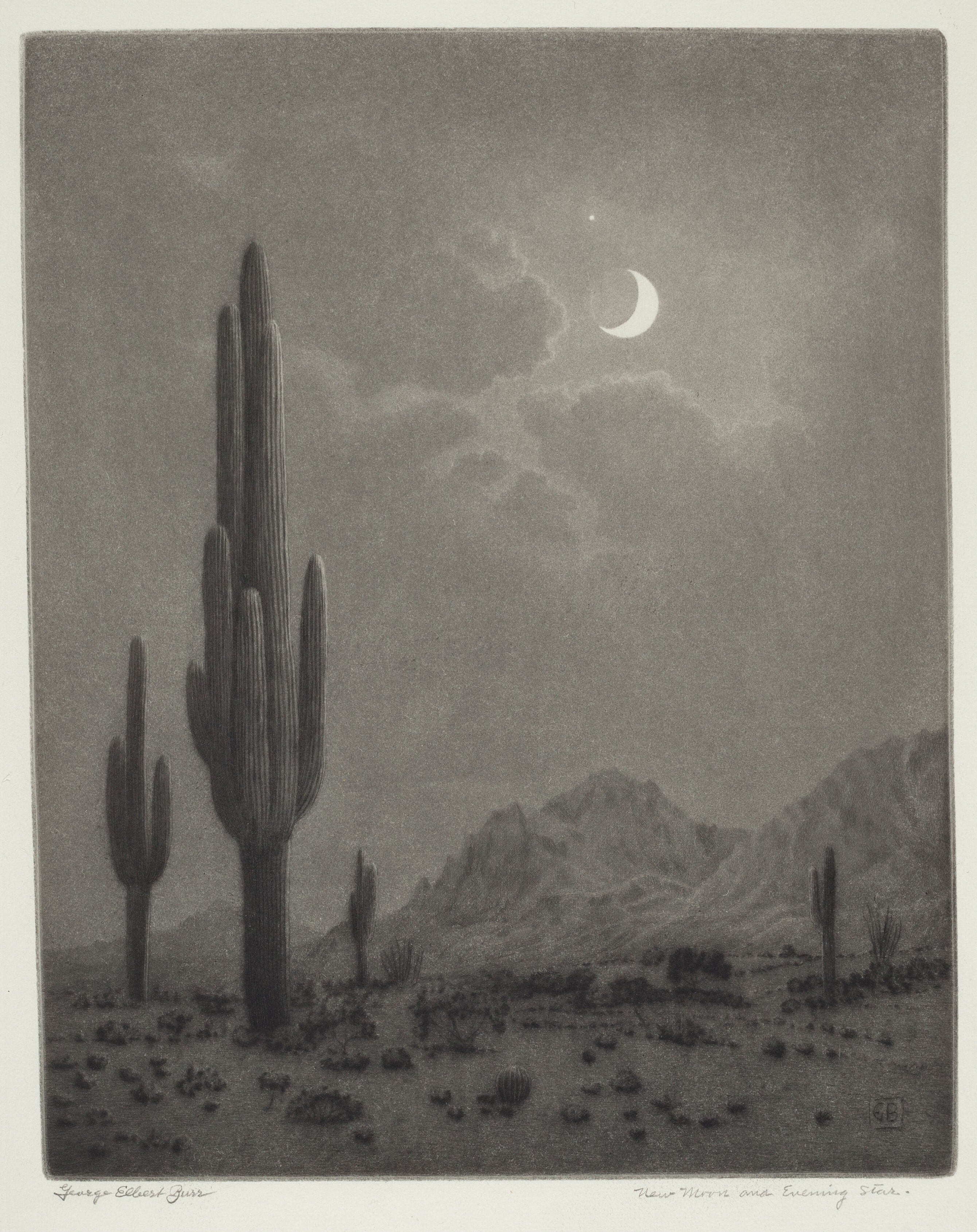
*Art by George Elbert Burr, New Moon and Evening Star, 1932, courtesy National Gallery of Art
**Email header art by Karl Nilsson (sigvardnilsson on instagram), includes portions of Beck’s Castle Ruins by László Mednyánszky Denbigh Castle, W he ales by Edward Dayes & Paysage de la Grand Chartreuse attributed to Jean Lubin Vauzelle
No posts
Comments
Nothing yet. Say the first thing.
Sign in to join the conversation.