
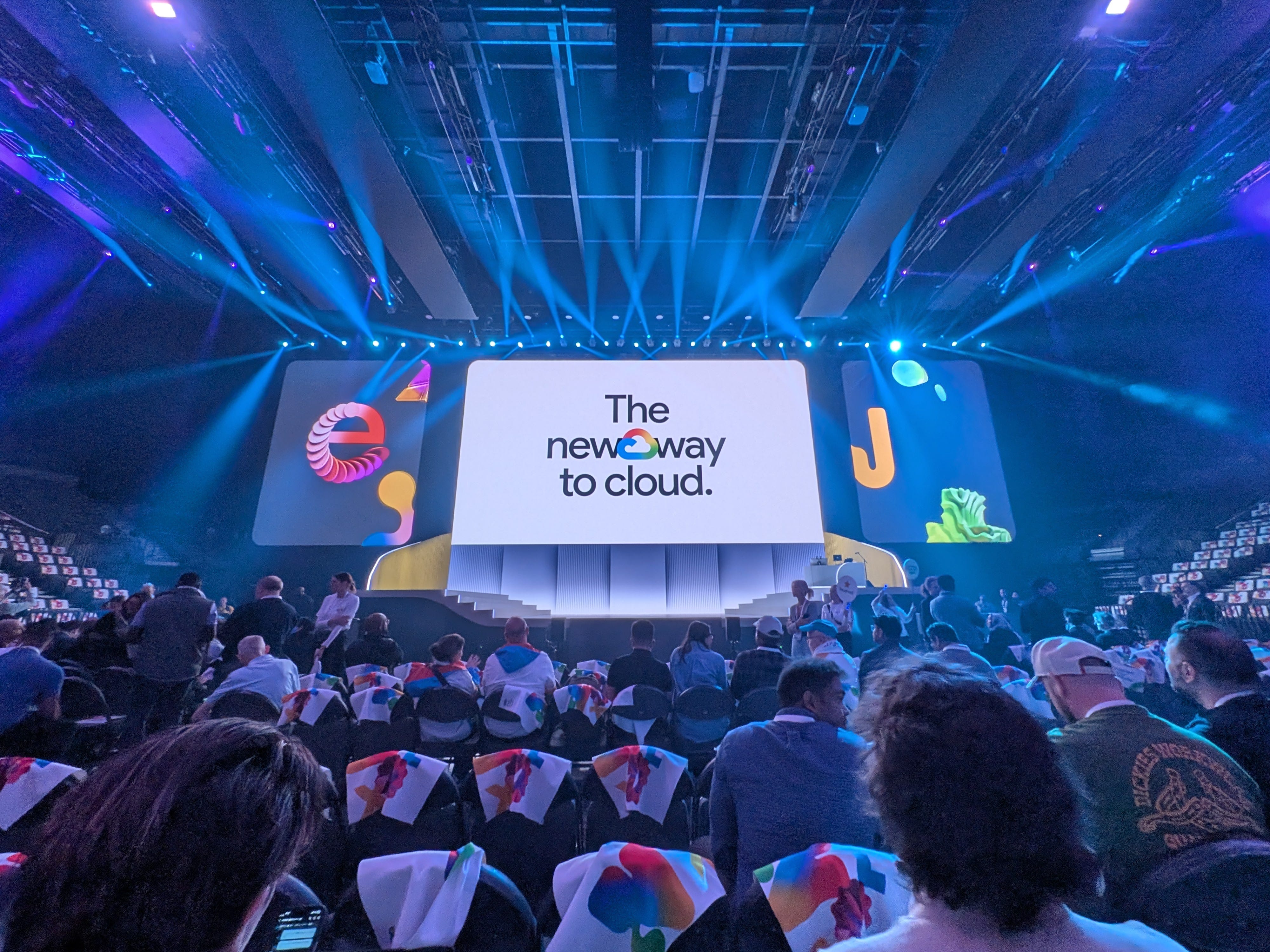
I’ve spent the week in Vegas and soaked up all there was to see for this year’s annual Next conference. Allow me to give you my perspective, from a developer, Google Developer Expert (GDE), consultant, yet someone who has stepped away from enterprise work (this is important).
My week kicked off on Monday with some drinks with fellow GDE’s from around the world who were also in Vegas for the conference. It’s always a real pleasure to connect with people who do what I do but from other parts of the world and talk shop and chat about all the similar problems we’ve encountered being at the bleeding edge of Google technologies, private preview programs we’re in for various products and how they’re solving problems with clever workarounds and techniques. As none of us are allowed to be both in the GDE program and work at Google. We only really see things from the outside, so it’s always fun to poke holes at funny things that we encounter, rate limits, bugs and how we’re dealing with them. For me, I’m the only GDE in Western Australia which is quite literally thousands of kilometers from the next nearest GDE. It’s awesome to catch up in person with people you only really ever see on video calls.
The next day was the Global GDE summit for those of us who made it to Vegas. There were a few talks and demos of stuff that was to-be announced. The agenda was packed with talks from the GDE program leaders and product engineers and managers from within Google for various products they were about to announce.
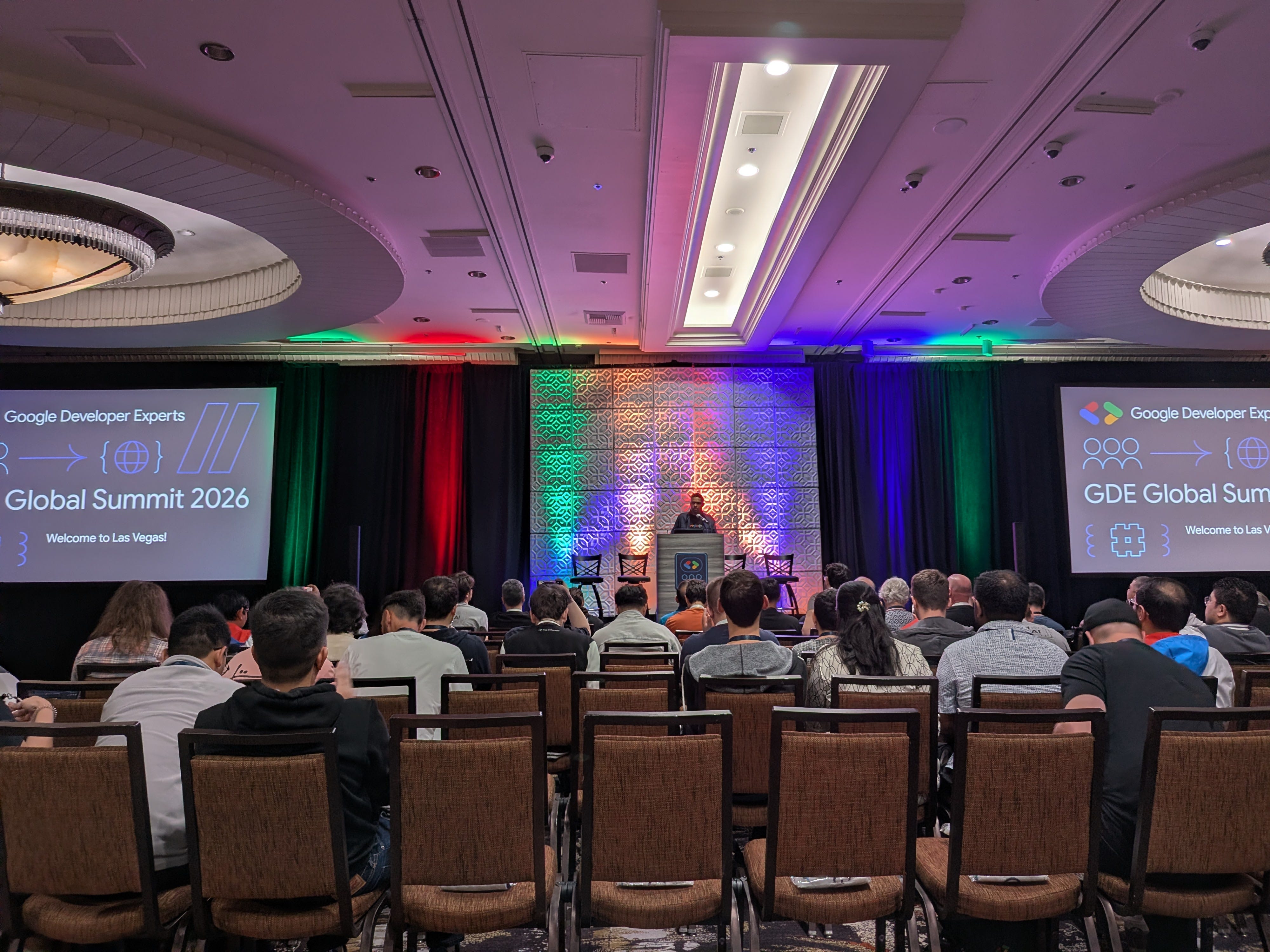
After all the talks we had a number of short breakout sessions with various teams. The highlight for me was the Antigravity session. We kicked off the session by going around the table of about ~20ish developers discussing how they’re using Antigravity, but the question asked was: “How are you using Antigravity for non-coding work”?
The answers that people discussed were frankly very cool and some were very outside-the-box thinking. It made me realise that Antigravity isn’t positioned as a code editor. Rather it’s a nice ui to kick of as many parallel tasks as you can think of to get things done for you. Some answers we great, such as people using it to check their email, with the workspace MCP server, they were getting summaries of their day with calendar and todos, combining meeting locations with cafe’s such as “I’m meeting X for a coffee, what’s a good coffee shop we should go to. And the agent would go off and figure out where the meeting was taking place, the time is was happening and then come back to with some coffee shops that were open that time nearby. All from Antigravity. My use case was to get the thinking and reasoning models to help me understand huge legacy codebases when working with my clients and provide reports on which areas need attention and could benefit from refactoring or modernisation.
Time for the big dance, the main keynote event took place in the Arena/Stadium thing and there were a lot of people. I was fortunate to have reserved seating as a GDE, but a lot of people missed out on a seat and needed to watch remotely. Apparently Next this year sold out so seating was limited. There were so many announcements that I won’t bore you with listing them all out, but suffice to say Google is doubling down hard on the agentic future they talked about last year. I was starting to count the number of times agent was mentioned but I lost track.
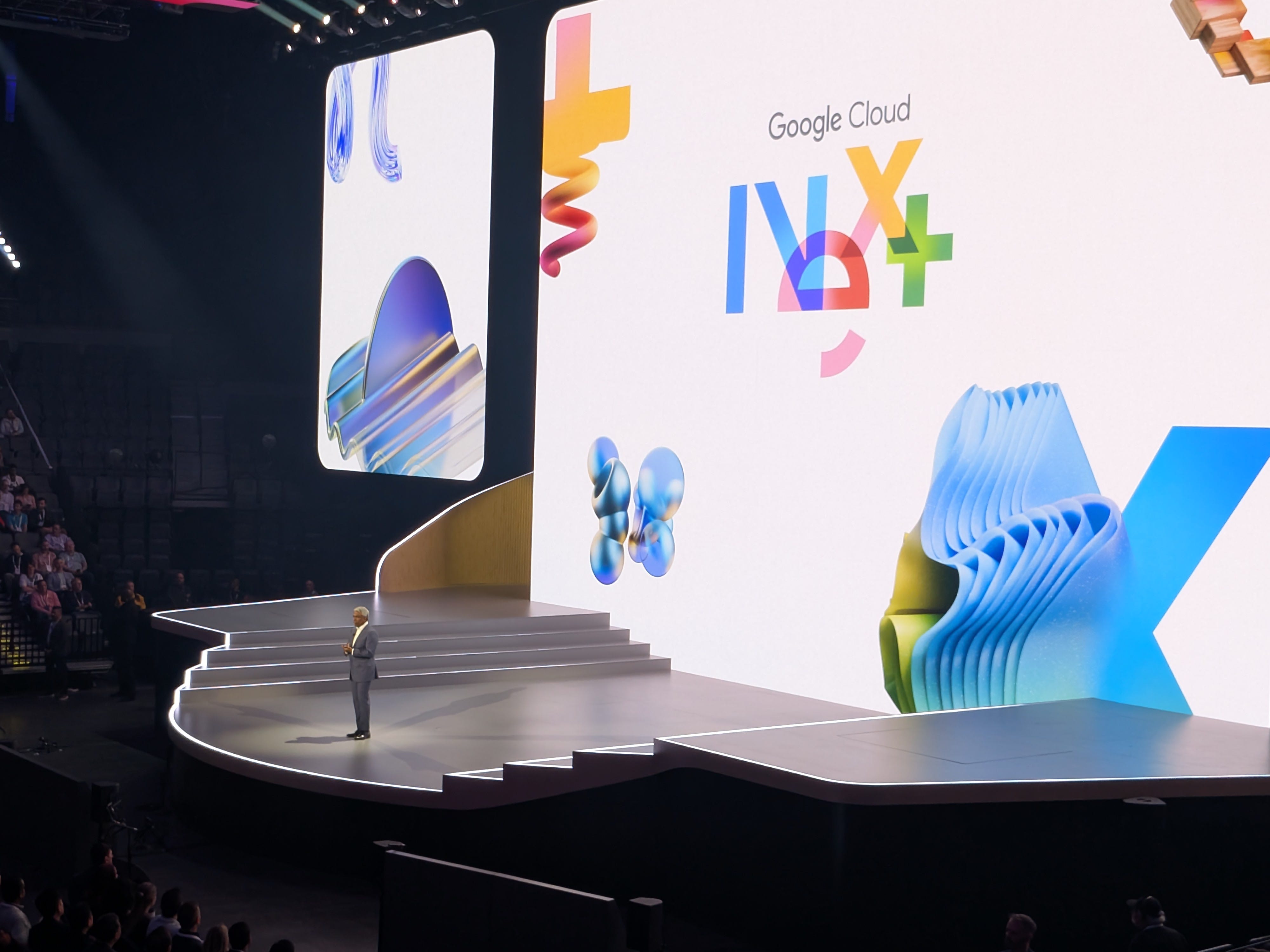
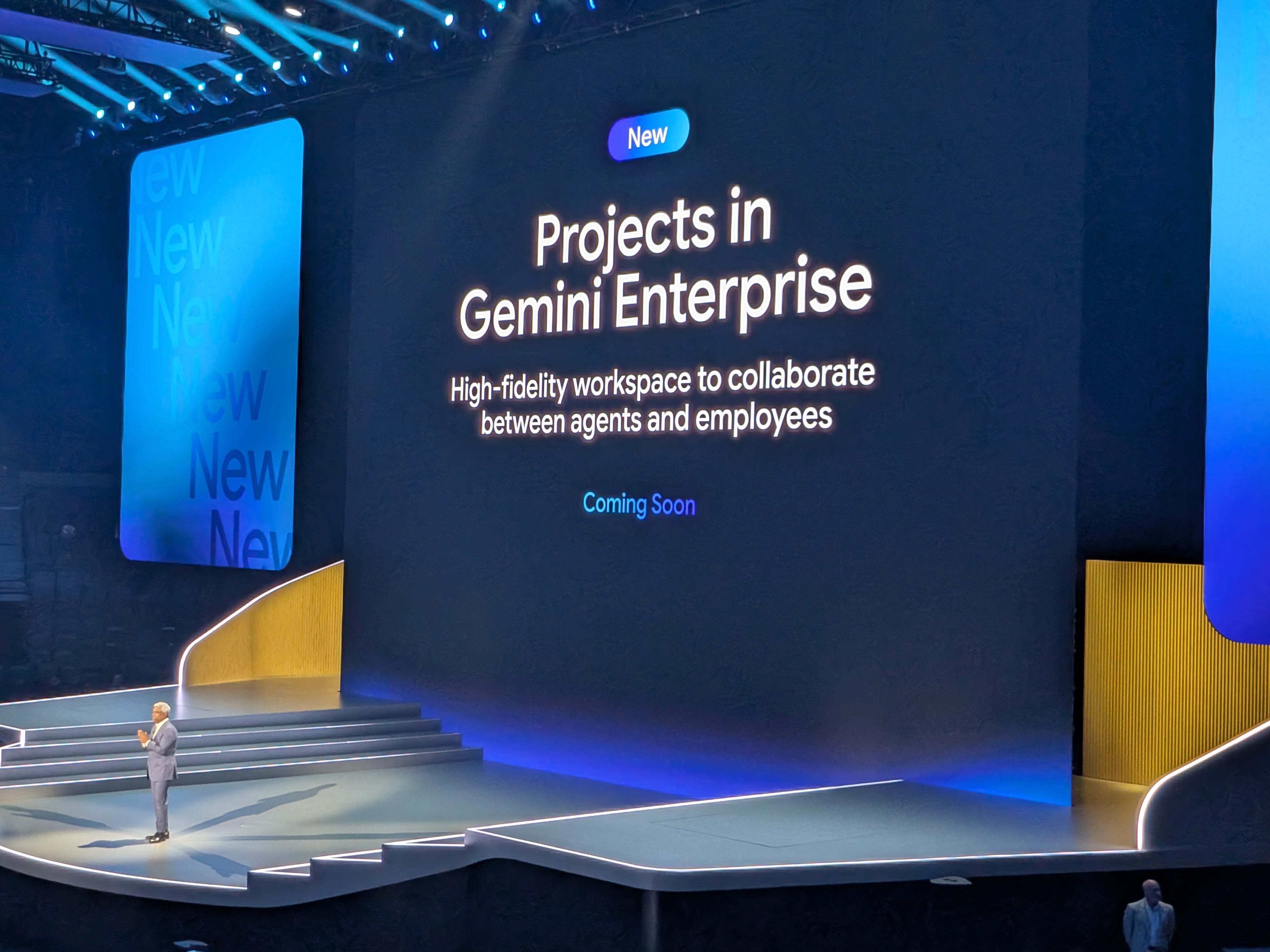
Whilst there were a few standout things for me in the keynote, unfortunately so much of it was focused on “enterprise” that it was a bit lost on me. My work involves helping startups and small-medium businesses build on and adopt Google Cloud that the kind of audience a lot of these product announcements were for didn’t really hit home for me. Below are some images I took of some things that did stand out:
Projects for Gemini Enterprise - I took this announcement to be Google’s answer to Claude’s Co-work.
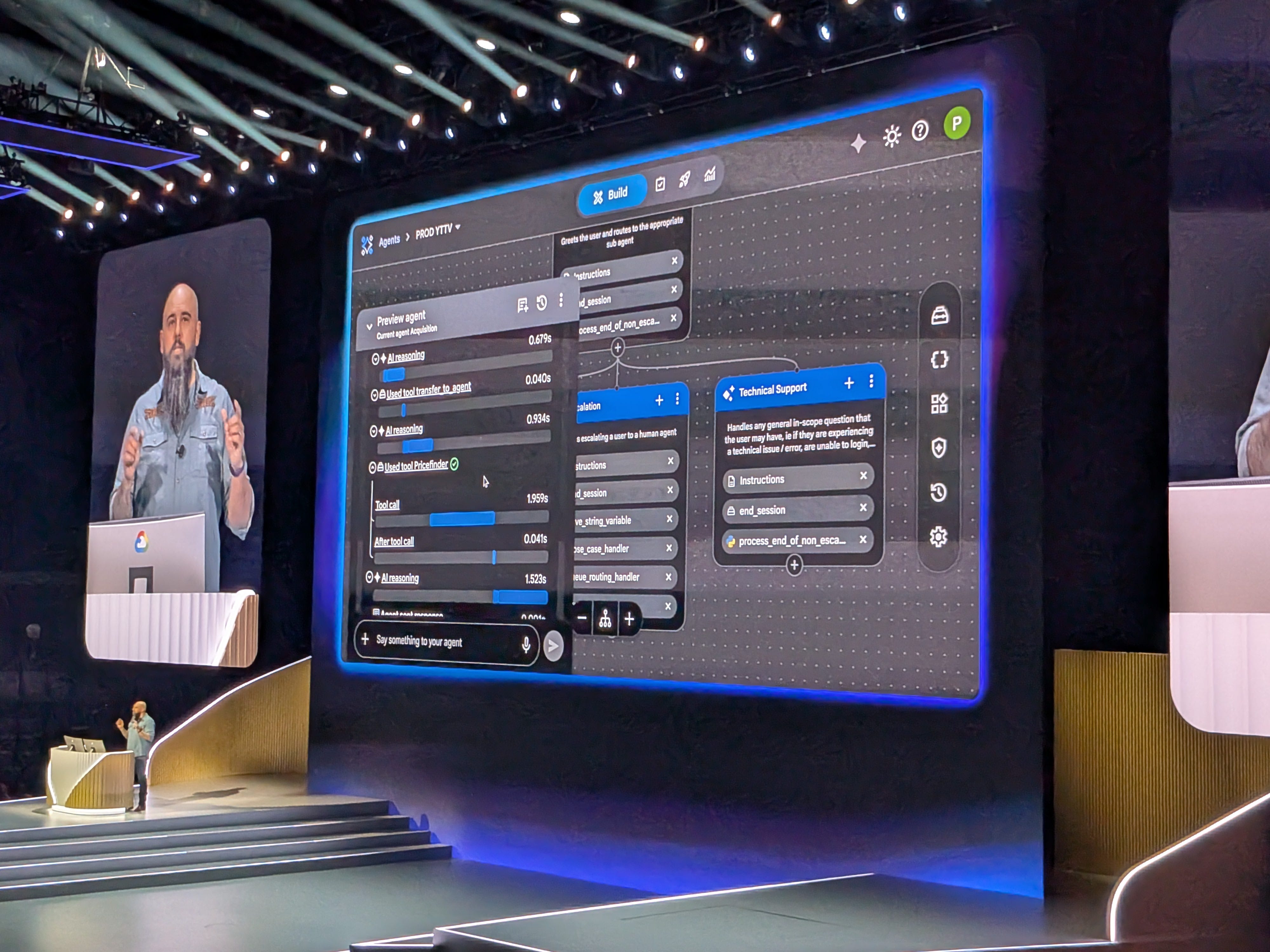
A call-center agent builder for being able to handle multiple types of support call requests. A great demo actually. So this service already existed, but the demo showcased the new abilities to build and update the agent with zero coding skills. In the demo they had several types of agents depending on what the caller was asking about, eg, sales, support, etc. And then they showcased adding a new agent which was made specifically to handle a new promotion. It was neat to see the live call starting in English switching to another language halfway through, and then back to English without breaking cadence.
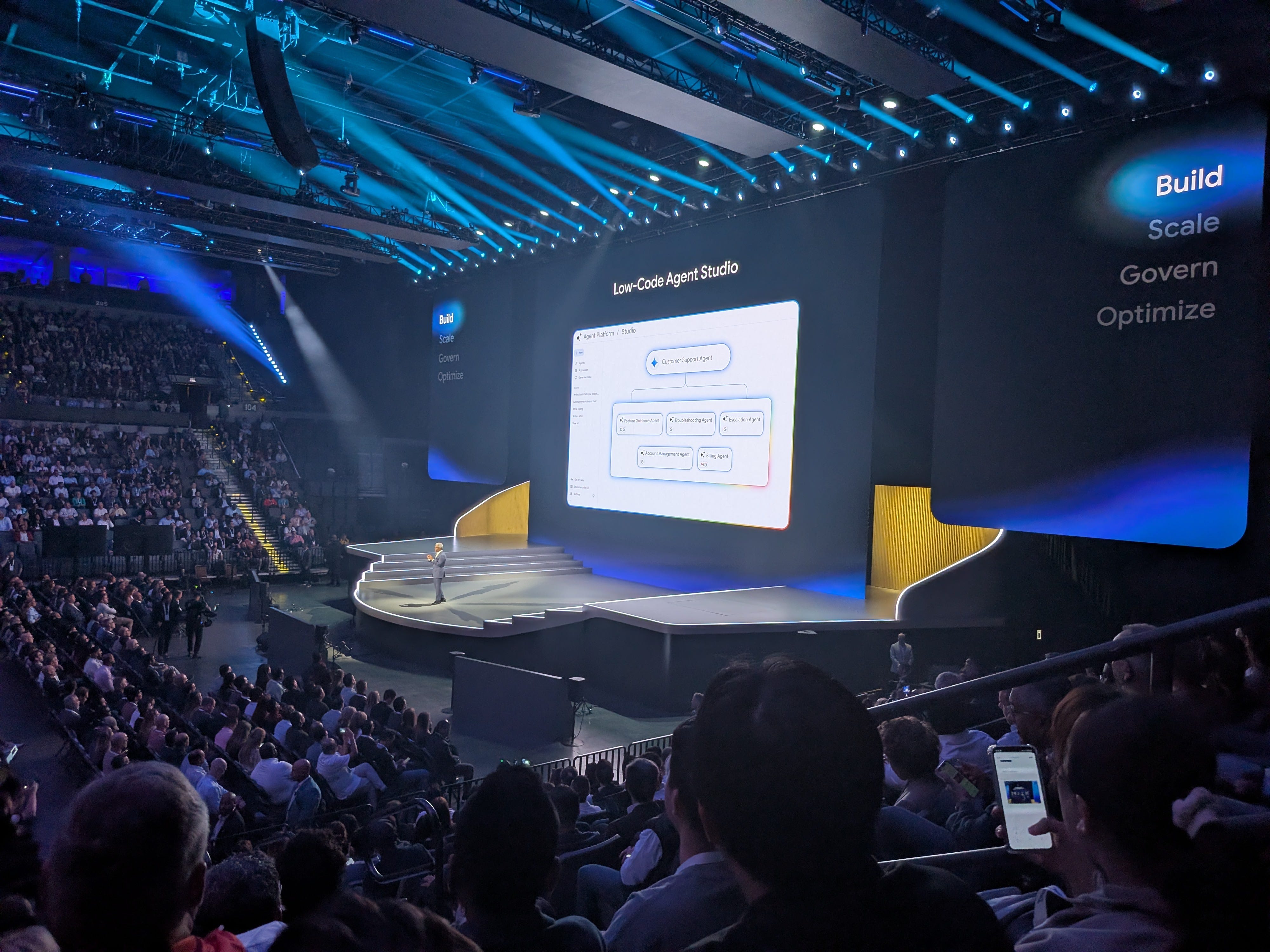
Low-code agent studio - this was great to allow employees of an org to be able to create any agent which can then be re-used by others in the org to get things done. I liken this one to the evolution of organisational “gems” in the Gemini chat ui that were able to be created before.
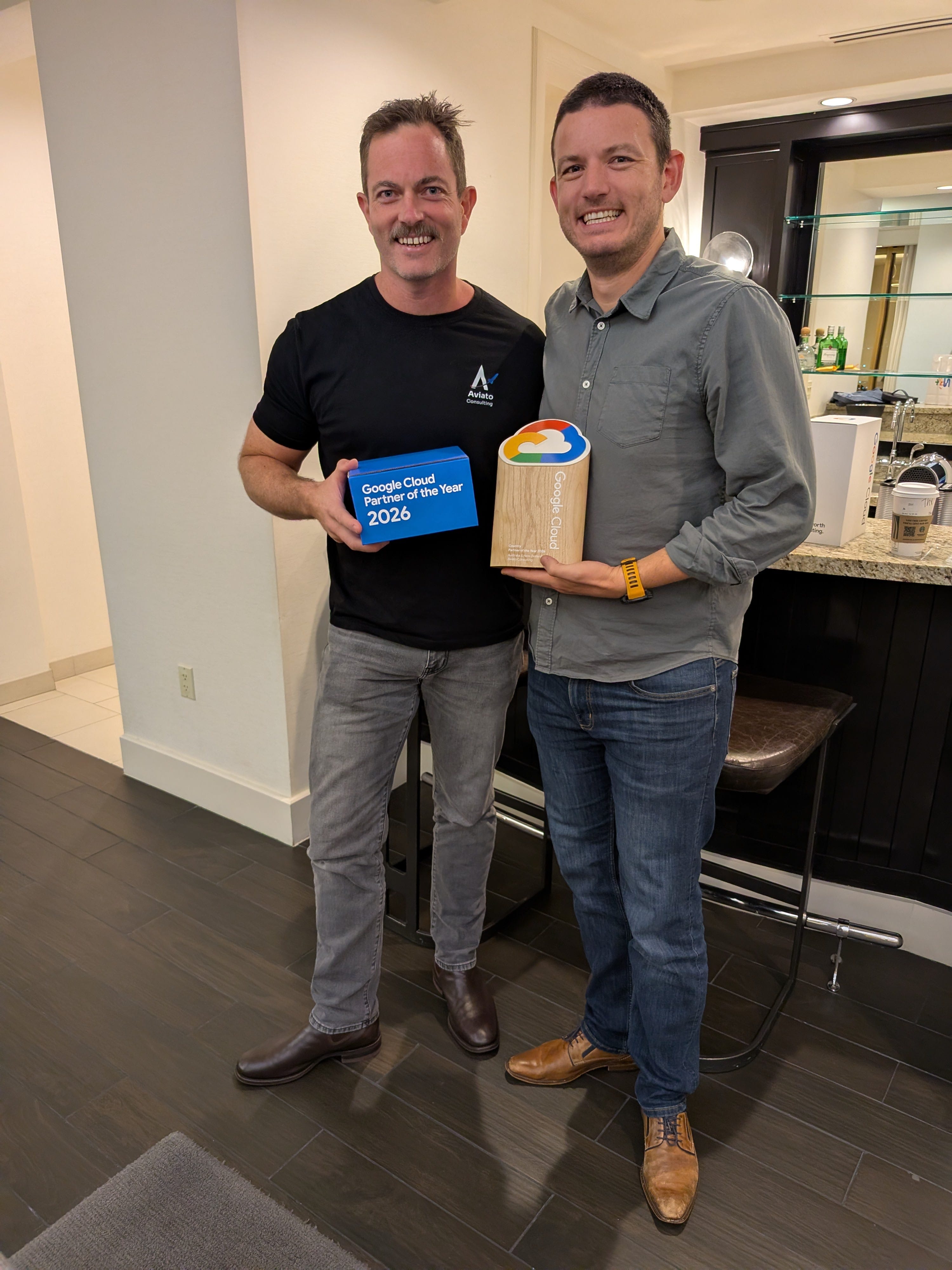
Aviato Consulting, who I have had the pleasure to contract to a few times in the past couple of years won the partner of the year award for Australia / New Zealand. Here’s a photo of Ben King and I together with the award. Ben mentioned a couple of times that I was involved in some projects which he believed got them the award, so I was thrilled for Aviato to take out the win this year. Congratulations to Ben & the team.
Now we’re talking. Whilst the main keynote is great and all, it’s clearly aimed at a different audience than me. Think executives, enterprises, companies with departments and so on, that sort of size. Also probably media, shareholders and so on. Whilst nice and all, the depth or types of topics isn’t for me. However, the developer keynote is much more my style.
The focus of the keynote was planning a running race in the streets of Vegas with several demos. Naturally, everything was turned into an agent to showcase how it all fit together.
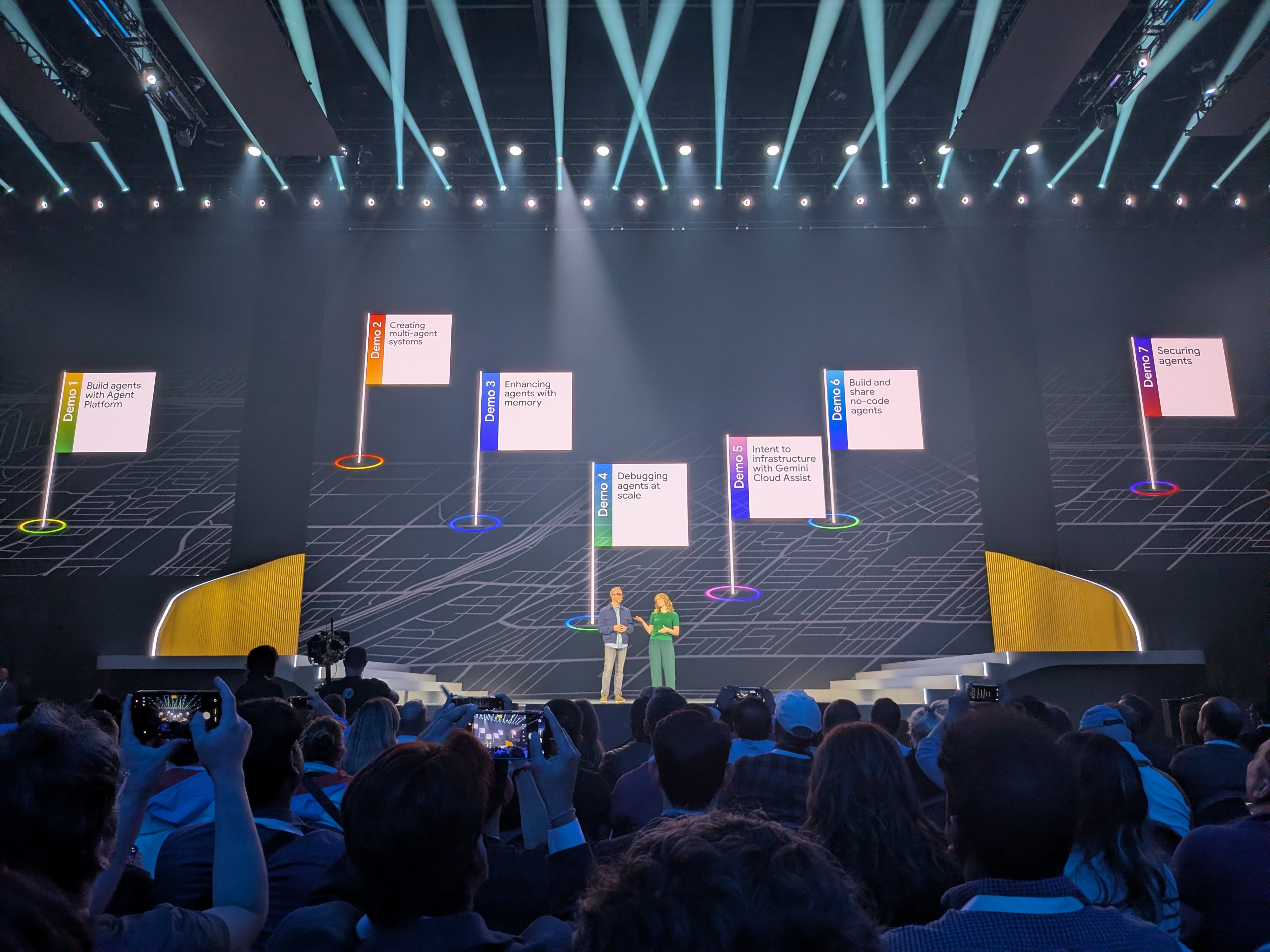
Overall the dev keynote was pretty good, and you can see the whole thing here if you want to have a gander yourself.
Here are some of the takeaway links I found neat for your perusal:
Build Agents with Agent Platform: https://goo.gle/buildagents
Creating Multi Agent Systems: https://goo.gle/multi-agents
Intent to infrastructure with Gemini Cloud Assist: https://goo.gle/intenttoinfra
Build and share no-code agents: https://goo.gle/shareagents
One of the concepts talked about at the dev keynote was how “shifting left” from the industry is putting all the onus on developers which has become a bigger and bigger burden, but does “save” time in the long run. For those unfamiliar with the shift left philosophy:
“Shifting left” is the practice of finding and fixing problems as early as possible in the software development process.
Imagine you are building a house: “shifting left” means catching a flaw in the blueprints (early) rather than discovering the foundation is cracked after the roof is already on (late).
In software, this involves moving tasks like testing and security checks from the very last step to the very first steps. By doing this, teams save time, reduce costs, and prevent small bugs from turning into expensive disasters.
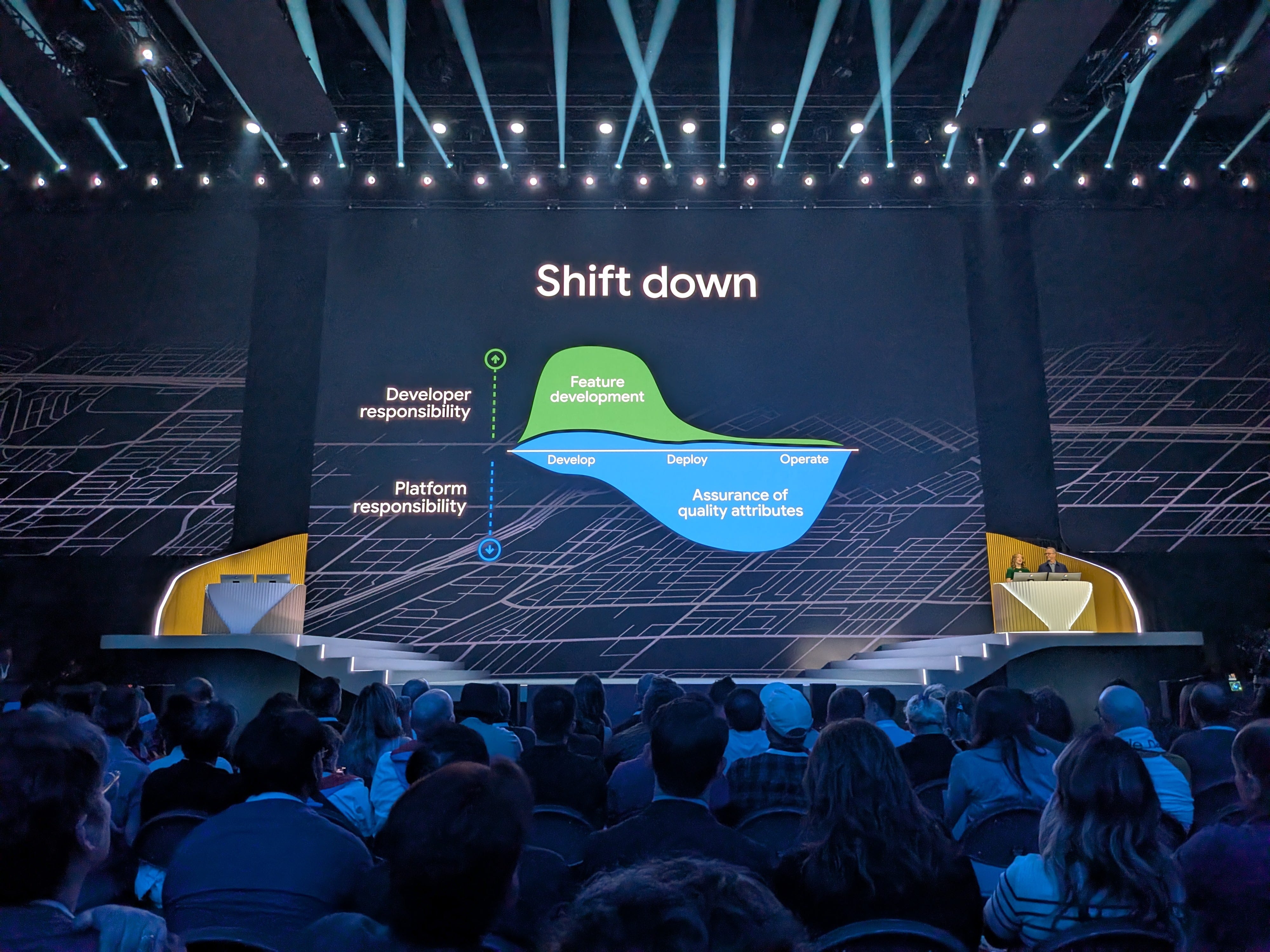
There was a concept discussed modifying this philosophy to “shifting down”. This changes the responsibilities to the platform away from the developer to a platform instead. The market is flooded with platforms that will do things for you (you can pretty much buy any SaaS to take the problem away. With the advent of ai agents and the positioning Google is making to enable them to be so easily create-able and maangeable through agent engine and the likes, this means that this platform responsibility is one of those things you can build once and modify a few times to continuously improve. But, by and large you move the responsibility away from the developer to a trusted agent operating inside the confines of your personal environment, not beholden to a third party.
Let me give you an example. Suppose you need to shift the responsibility of security. If we do this pre-agentic-era (urgh I hate that term “agentic era”) then we need a CICD tool that kicks off at each code change catching things before they go into production. Now, we can create an agent to automatically monitor our production systems and pipelines and should something go in which becomes a security vulnerability later on then the agent can recognise, alert, propose and change and introduce the fix automatically. At least that’s the dream. But for those of you who have worked with AI tools in the SDLC you can probably imagine this working today or in a not-too-distant future.
Some of the breakout sessions I attended were really great, some were a bit misleading in the title some were '“meh” and others weren’t great. A real mixed bag.
The first one I went to was by Cara Philips from Anthropic about “Build multi-agent systems that actually work”. The session was overall really good.
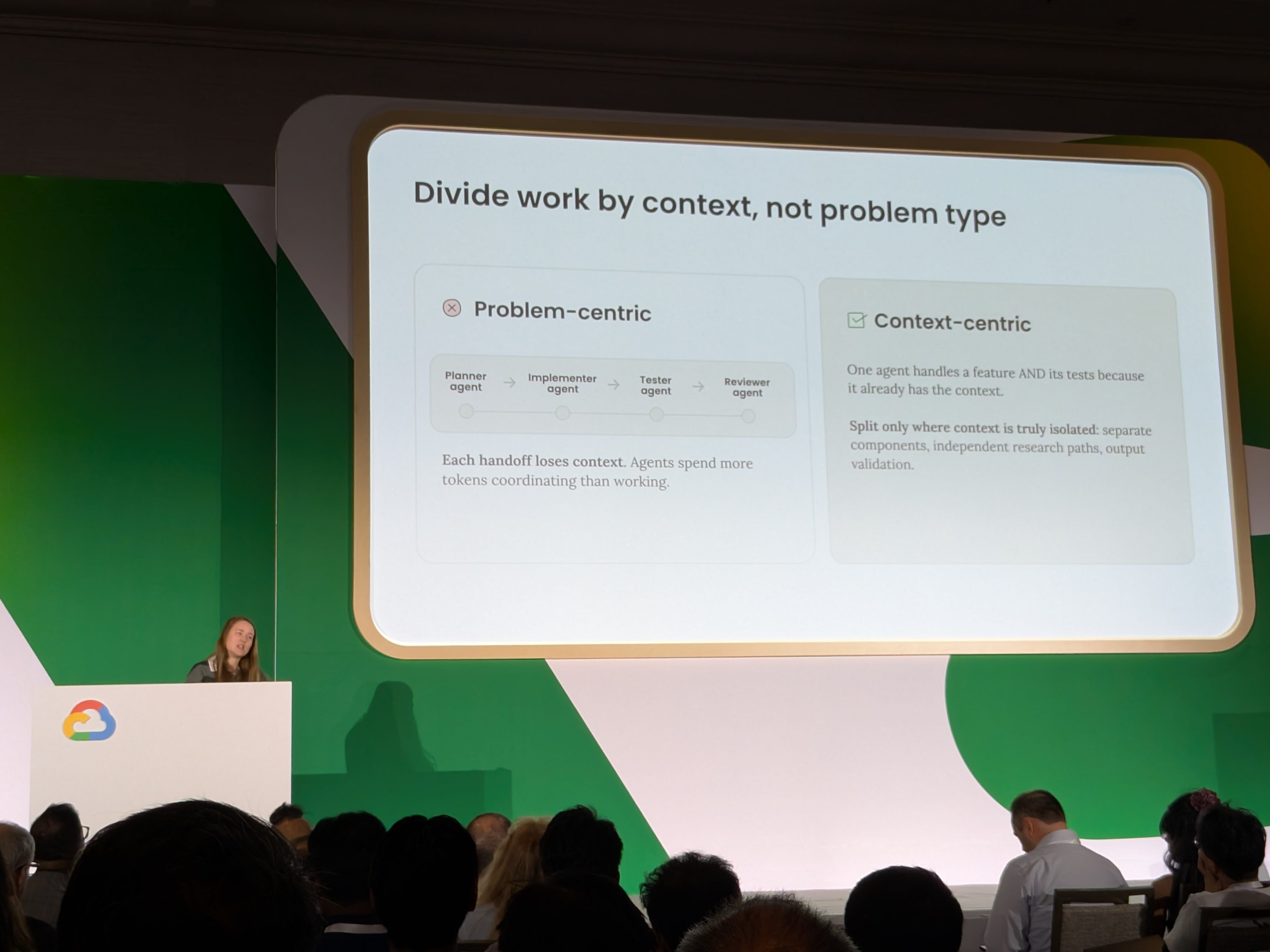
Cara focused on when multiple agents can outperform a single agent, but also explained some caveats to doing so, such as passing context between agents so the next agent knows what to do, and how this can in fact be more expensive than just using a single agent instead. I’ve included the key takeaways slide from the session here.
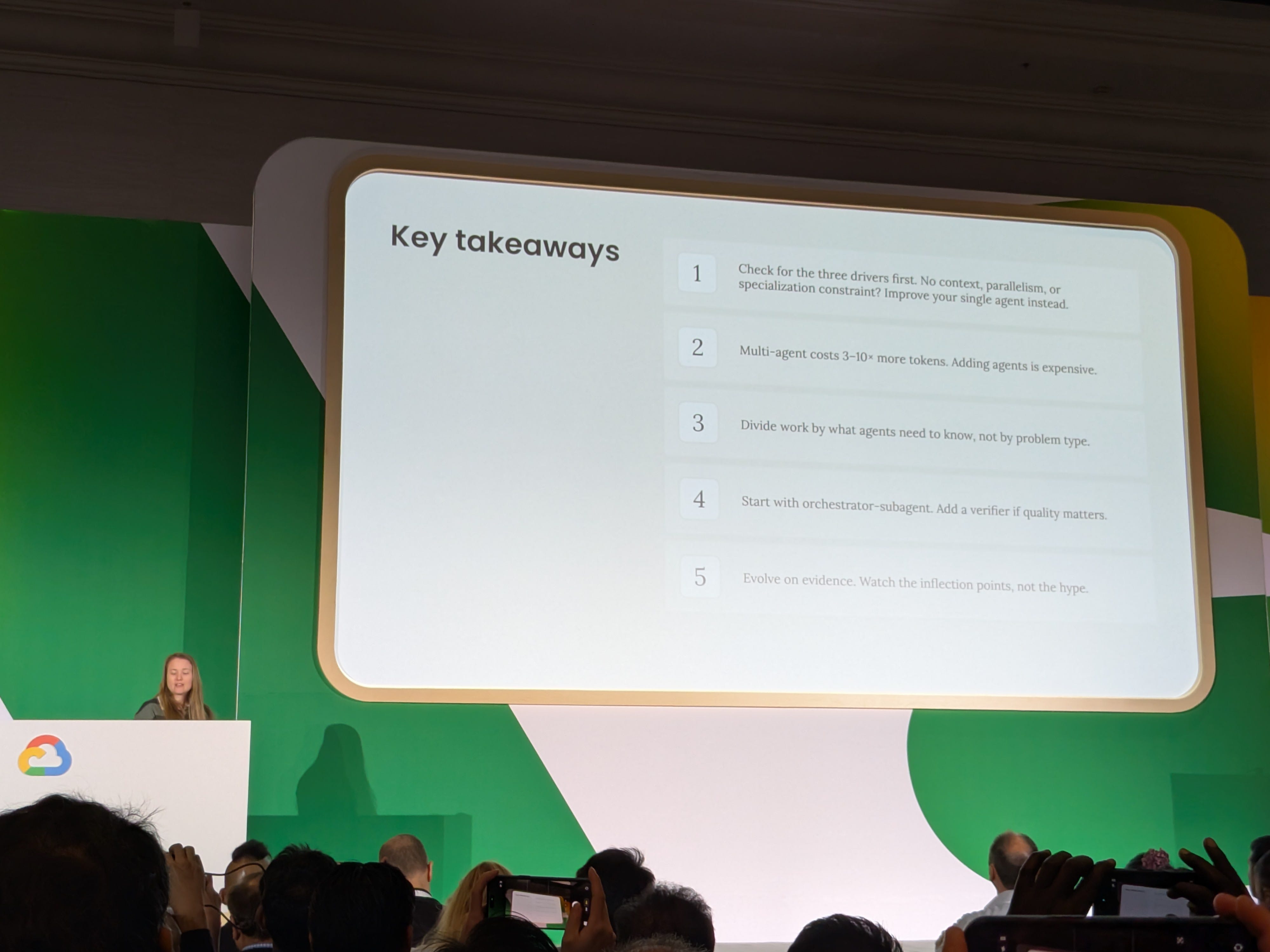
The main takeaway points presented on the screen are:
Check for the three drivers first: If there are no context, parallelism, or specialisation constraints, you should focus on improving your single agent.
Multi-agent systems are resource-intensive: Multi-agent costs can range from 3-10x more tokens, and adding agents can get expensive.
Organise agents by knowledge: Divide work based on what knowledge agents need, not by problem type.
Start with orchestrator-subagent structure: This provides structure and a clear delegation of tasks. If quality is a concern, add a verifier to the process.
Focus on evidence and data: Base your decisions on concrete evidence and track key inflection points rather than getting swept up in the hype surrounding multi-agent systems.
As you are probably becoming acutely aware from reading this post, everything at this conference was about AI and Agents. I mean, it is Google after all. This next session, “What’s new in Cloud Run” by Steren Giannini a product manager at Google on the Cloud Run team.
There were lots of really neat improvements to Cloud Run that weren’t specific to AI, but will obviously help with the building of tools that use it.
Cloud Run Sandboxes - Secure on the fly code execution
Cloud Run Instances - A new primitive to run container based workloads. Manage instances instead of through predefined resource types. I think this is actually replacing the deprecated “deploy your container to a VM” service that Google recently removed support for from compute engine.
Cloud Run Instances: SSH Support - Yes you read that right, you can now SSH into your cloud run services. And it includes all the goodies you’d expect from IAM controls, identity aware auth via the proxy. Chef’s kiss.
Cloud Run Instances: Built in dev loops - This one seemed very cool to me. Basically you deploy your container and connect it to your local dev machine. Then you edit your code and instead of hitting localhost to poke your container service, you just hit a live cloud run endpoint which auto-syncs your code and then you can verify it working live on the server. Great news for devs with all different machine types as this means that developing code will be able to be instantly testable/verifyable on a machine that IS going to be deployed in the cloud. Chef’s kiss again.
There’s quite a few more, I would encourage you to check them all out.
The other sessions I attended were:
The future of AI: How startups build competitive moats
Build fast, run lean: Accelerate development with Gemini and Cloud Run
Vibing with Gemini CLI: Custom Web AI solutions and shareable skills
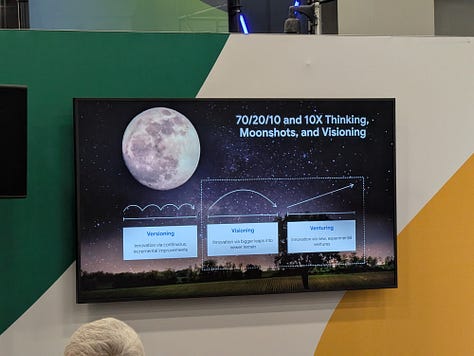
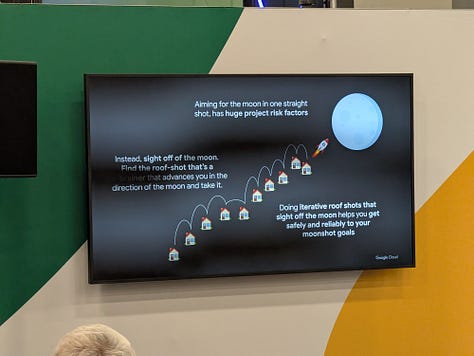
10x innovation: Moonshot thinking for the AI-first startup
Cloud Run Developer meetup
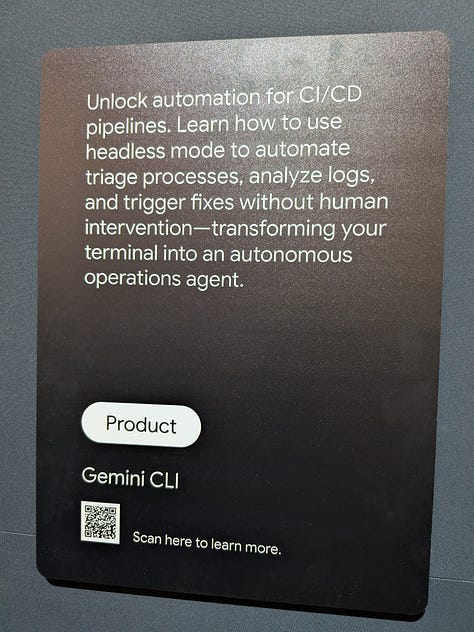
Automating the UI with Gemini CLI, MCP and Skills.
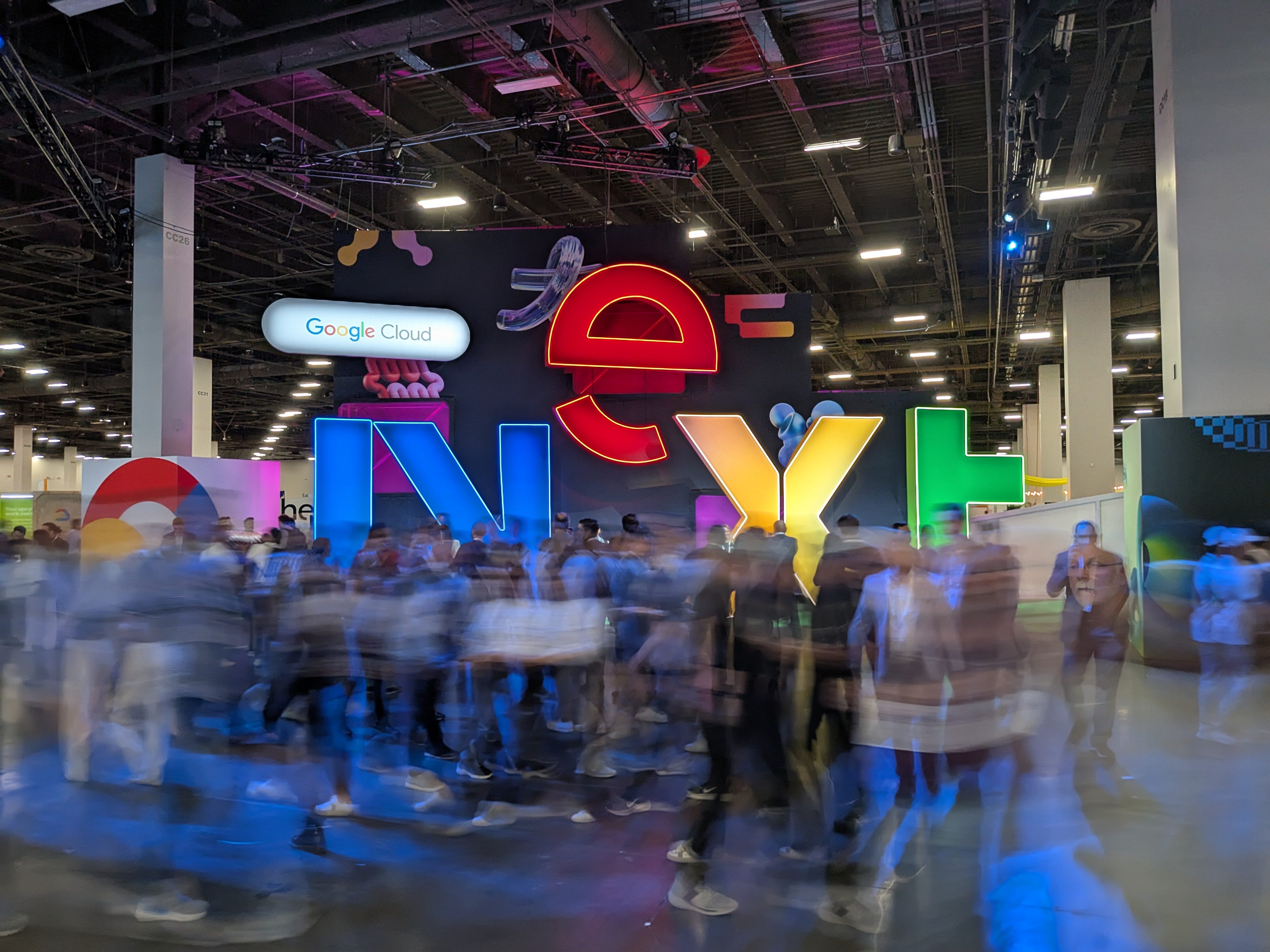
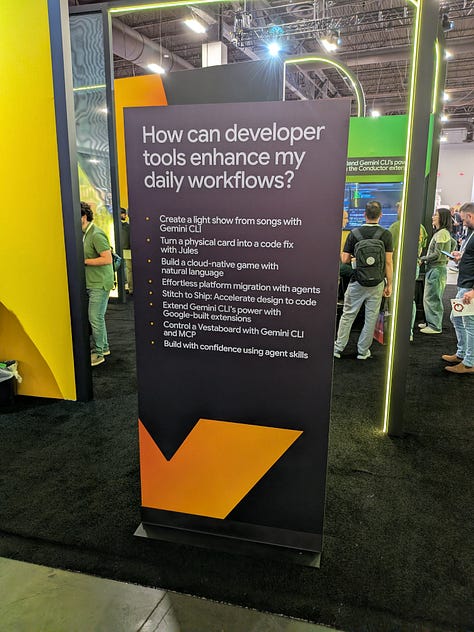
There was a hell of a lot to see on the expo floor. I thought about trying to get around to everything but there’s just too much so I ended up just walking around and stopping by the various booths which took my interest. One of the standouts for me was the Gen Latte booth, mostly because it’s so damn hard to find good coffee in America for some reason but also because it created custom latte art on your coffee.




This year Google has doubled down on agents and their suite of Gemini products is becoming actually usable, with less and less supervision required. Our collective understanding of AI is surprisingly similar to how humans work. Imagine context switching, focus, roles in the workplace and so on. More and more, as we understand where agent capabilities exist, where the strengths are and where the pitfalls are it’s becoming clearer where we can focus our efforts and where we still have a long way to come.
Google’s Next has shown us all the tools we can use at our disposal to remove “busy” work which doesn’t add immediate value, such as “research all these system logs and tell me what the problem is” or “do some market research on this topic and create an executive summary for things I can tackle with my business”. We can then combine lots of various skills and agents together to automate entire workflows which was work that would have taken a long time or work no one wanted to do, and focus on higher value work. I don’t think people will lose their jobs from AI any time soon, if ever, it’s just the kind of work they’ll do changes.
There’s so much new stuff coming out and changes in the way we work all the time, it’s interesting to see how the future is unfolding in front of us.
No posts
Comments
Nothing yet. Say the first thing.
Sign in to join the conversation.