
I’ve been thinking a lot lately about how artists get paid. Not just how artists make money, but how artists keep making the work. Can a creative person build a life that allows them to continue creating? There is a difference.
If you talk to enough artists, eventually you realize that many of them spend their entire lives figuring out how to continue creating. Artists get stipends. Artists get benefactors. Artists get grants. Artists get commissions. Artists get patrons. They piece together entire lives around making sure they can continue making the work.
I think about that a lot, living in one of the most expensive cities on the planet. Partly because I run a jewelry company. Partly because I write. And partly because every time I think I’ve figured out what I do, the work gets bigger.
The jewelry becomes an experience. The experience becomes an installation. The installation becomes a conversation. And somewhere in the back of my head is a giant sculpture I haven’t made yet.
My dream, my vision, is to be able to create and to be paid well to do it.
I keep thinking about that meme with the tiny house, the giant piece of land, and the massive building. The biggest footprint on the property says ART STUDIO. Every time I see it, I laugh because that’s me. Except I want to do it on Miami Beach.
There are so many different ways artists support their work. And I’m also thinking about the early jewelry designers: Cartier, Verdura, and Belperron. How they all started. They had benefactors or particular clients who commissioned major pieces, but they were all putting it together with bubble gum and toothpicks at the time. They didn’t start as giants.
All of the jewelry houses we now think of as institutions began as people. They had patrons. They had clients. They had believers. They had people willing to commission ambitious work. We all start by trying to figure out how to keep making the work.
And a lot of artists die poor.
That is not my vision.
I have no interest in starving for my art. I have every interest in making ambitious work and building a sustainable life at the same time.
So lately I’ve been thinking about how other artists do it. Who supported them. Who commissioned them. Who believed in them. And how they expanded beyond the object itself.
Because the object isn’t always the end point.
Sometimes it’s the beginning.
Similar to writing.
It is the process.
It is the journey that gets us there.
Then I think of the force of Cartier. Being a merchant. Being looked down upon. You know, just the—What am I talking about?
I’m talking about the haves and the have-nots.
We, as artists, create worlds. When you walk into a space that an artist has created, whether it’s looking at a piece of jewelry and picking it up and wearing it or walking into an exhibition, we almost trick you into learning something new through the visual.
Through the visual, we bring people into conversations about politics, the diaspora, domestic violence, financial equity, financial insecurity, and poverty. We bring people into conversations about what those things actually look like in today’s society.
Because the majority of us are living in it, but not talking about it.
But we, as makers, bring people in through beauty, through a tactile experience, and through a powerful vision.
And that takes craft.
And that takes money.
And that takes time.
And that takes years of experience, conversation, reading, and learning.
There’s a woman I met at the Untitled Fair this year.
Her name is Tiff Massey.
She is a force.
The energy of just walking into her booth.
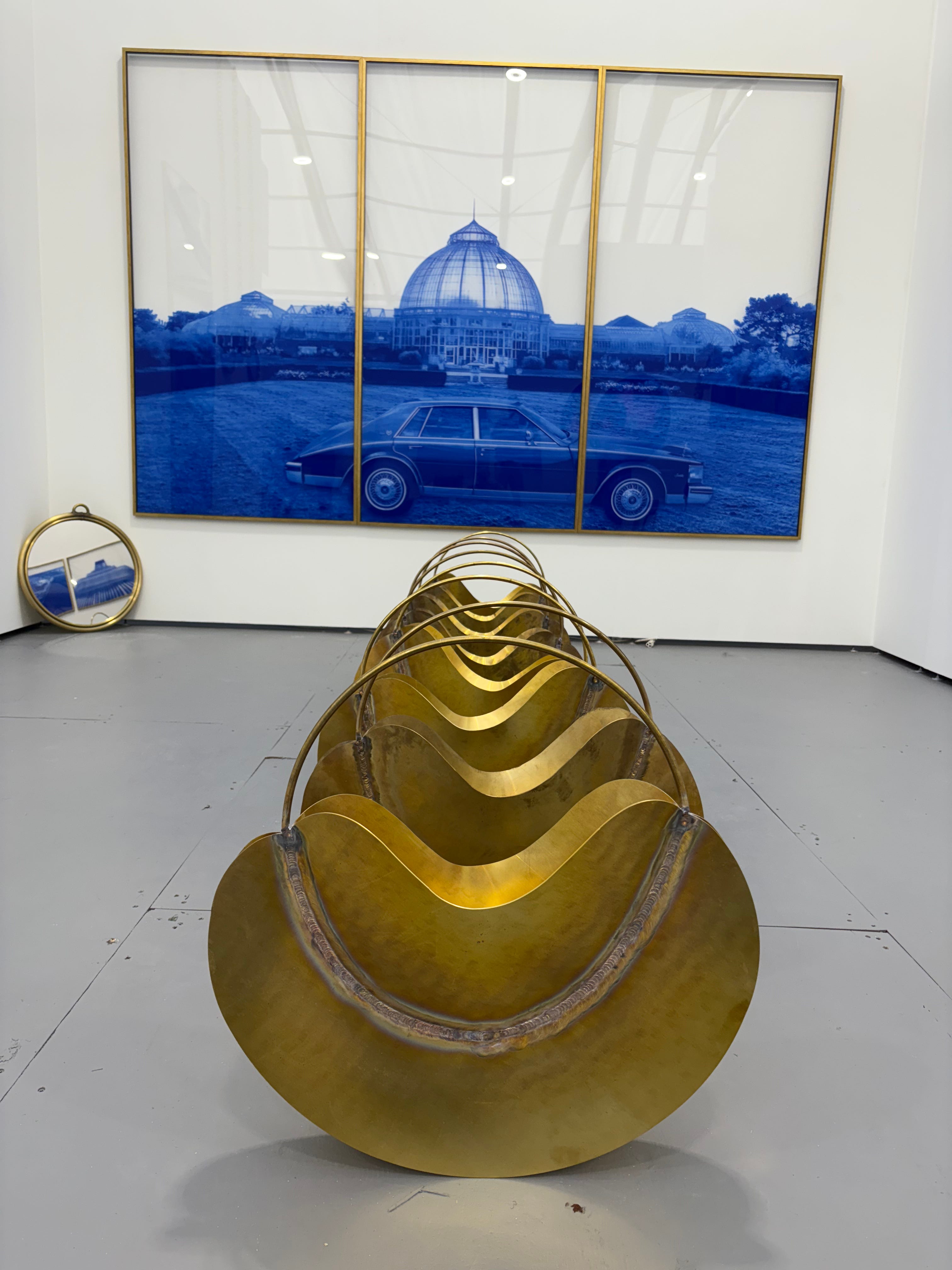
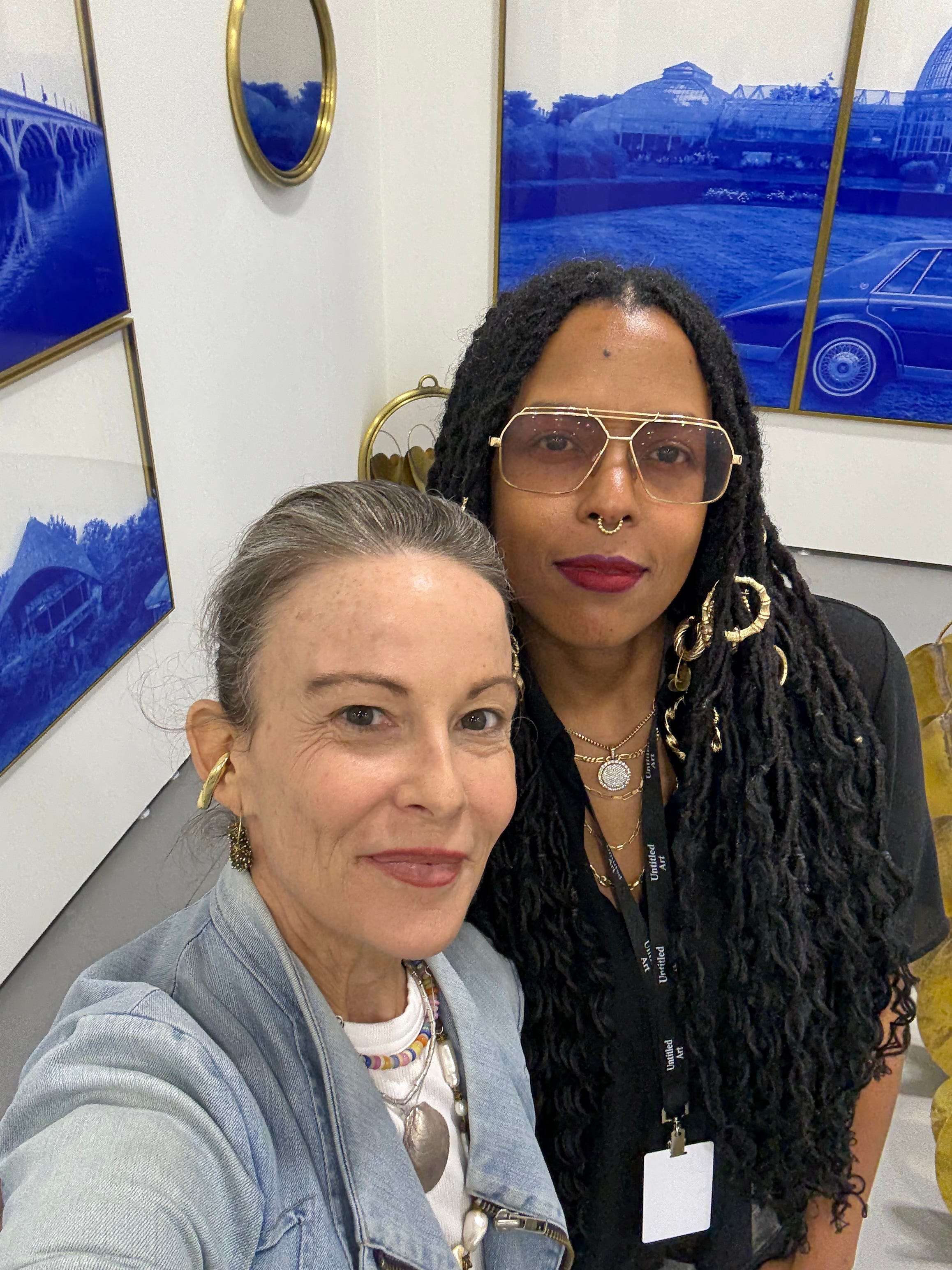
She actually paid for her own booth because she decided she didn’t want anyone else to do it for her. She curated her own booth. Built her own world. And told us all about it through images and sculpture.
She makes earrings into large-scale sculptures. She takes jewelry forms and transforms them into sculpture. She takes adornment and turns it into something monumental.
What struck me most wasn’t just the work itself.
It was the confidence of the work.
The certainty.
The understanding that jewelry doesn’t have to remain jewelry.
It can become architecture.
It can become cultural memory.
It can become a conversation.
And her giant versions of the hair ties little girls wear. She takes Black womanhood, contemporary jewelry, and contemporary hair adornment and turns them into art.
And not only does she do that—I’m sort of destroying your art right here, Tiff, and I’m sorry—but she brings the force of a Black woman into sculpture through earrings and objects.
She takes those forms and turns them into a powerful force of recognition.
Of what jewelry can define.
I’ve never been to Detroit. I didn’t get to see her exhibition. But I read that she took over the Detroit Institute of Arts.
She had her entire community behind her.
She had a DJ.
Just got goosebumps thinking about what she was able to accomplish.
This is her culture.
And oh my God, she’s incredible.
Go look at her work.
Standing there, I wasn’t just looking at sculpture.
For me, I was looking at possibility.
And then my brain did what my brain does and wandered over to Jill Platner.
I’ve been thinking about Jill Platner a lot. She is a master of sterling silver. Jill Platner jewelry is just absolutely magical.
Her studio, which I see on social media—thank you, Jill, for putting the inside of your studio out there for those of us who don’t get to visit it.
Her jewelry work is sculpture, and her large-scale sculptures are absolutely incredible. What fascinates me is the continuity of the work. The forms are still there. The language is still there. The ideas are still there.
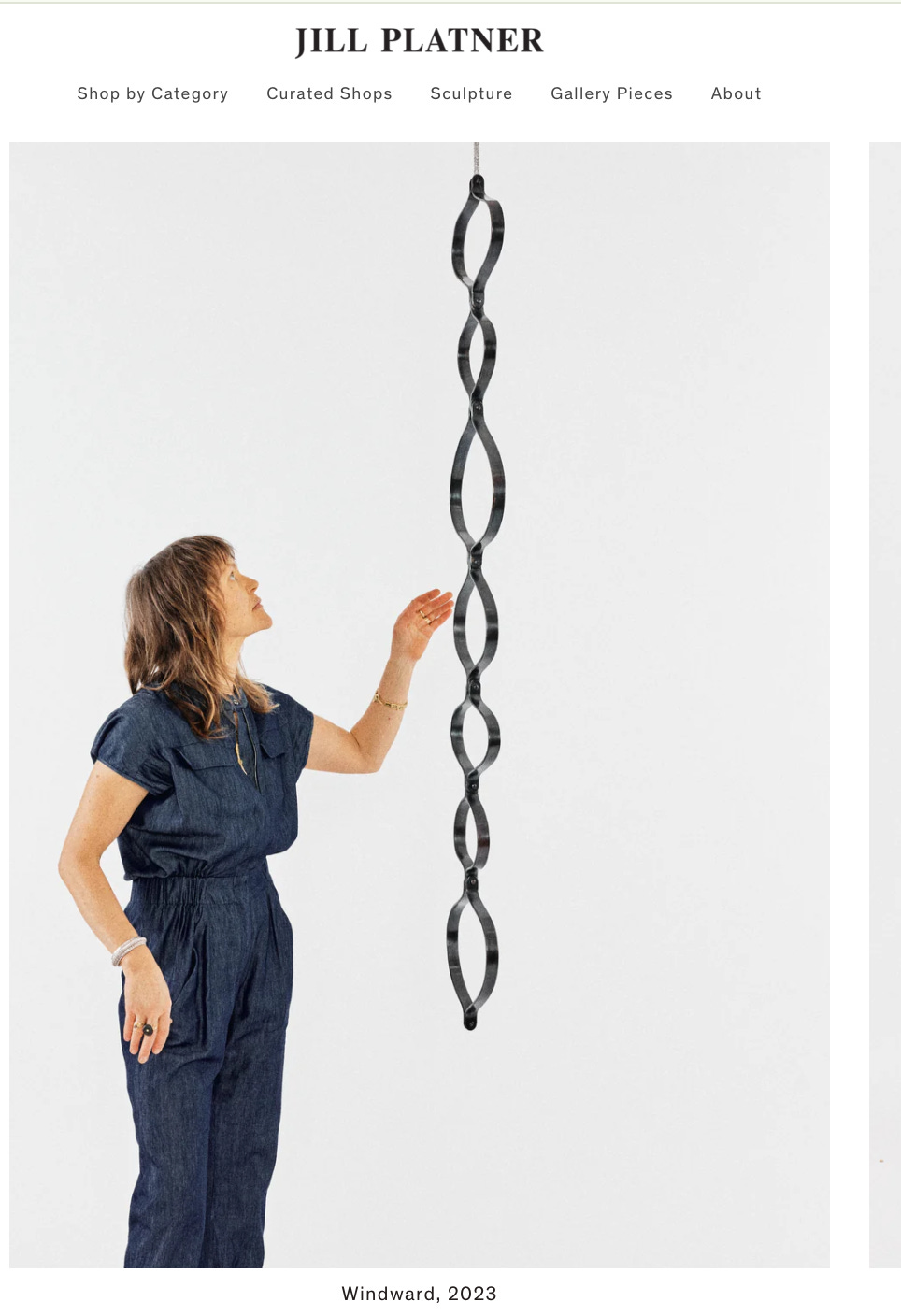
I mean, Calder made beautiful jewelry too. But Jill’s pieces are like these giant earrings hanging from the ceiling. These anthropomorphic forms. They’re forms that jewelry designers and sculptors understand immediately. You look at the work and think: of course.
The form wanted to become larger. The idea wanted more room.
Which brings me back to the question: How do I keep making the work? Not next month. Not next year.
For the next twenty years.
Recently, Radical Partners invited me to create one of the Signature Experiences for 10 Days of Connection. They gave me a stipend and trusted me to build the experience I wanted to see in the world.
So I built a writing experience around money and making a piece of jewelry. I invited Miami’s community. It was free to the public. People signed up. There were three prompts, and then we made jewelry.
What surprised me was how difficult people found the making portion. There were large holes and pieces of string to loop through them. I thought it would be easy.
It wasn’t.
A lot of people struggled.
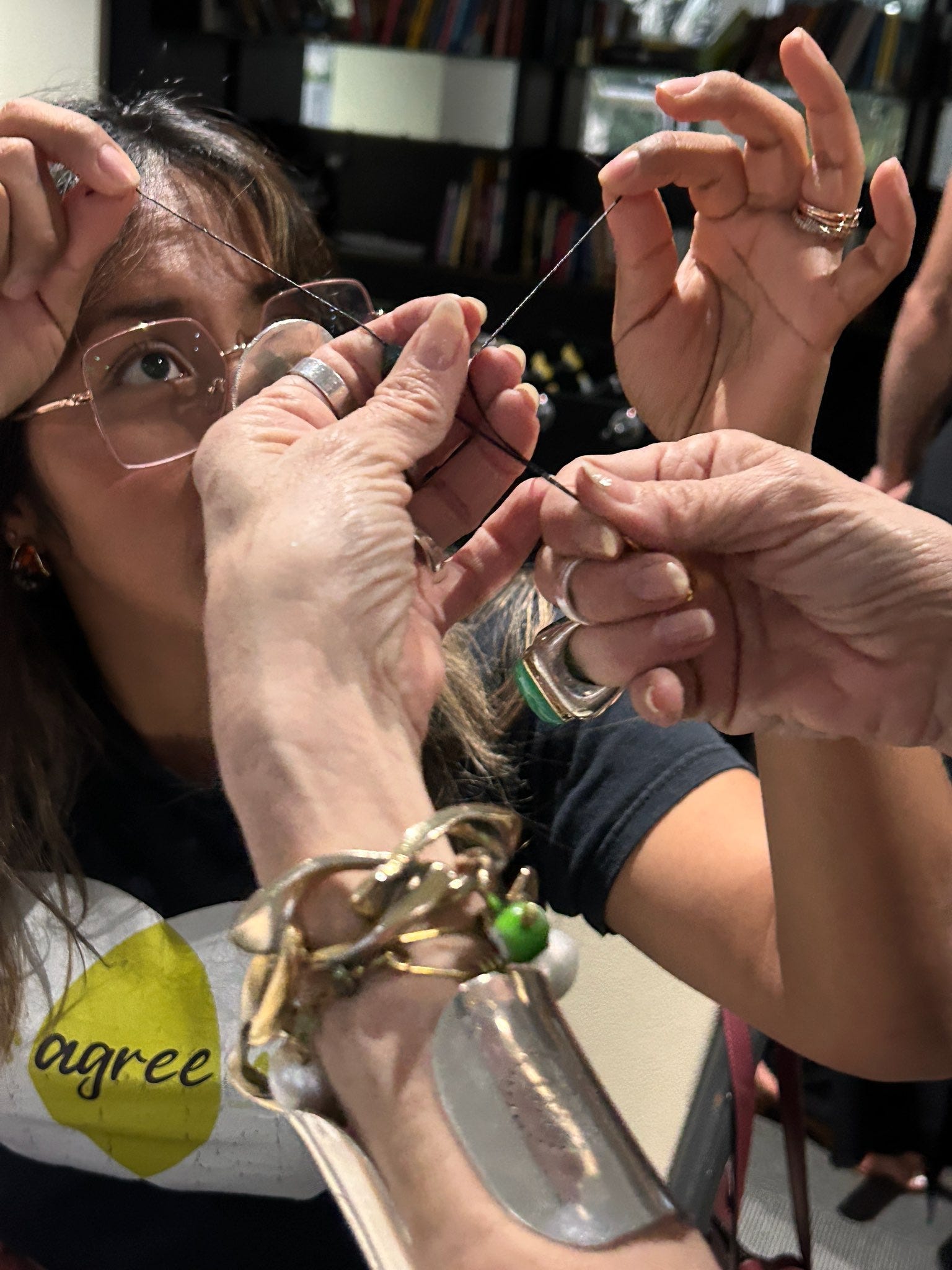
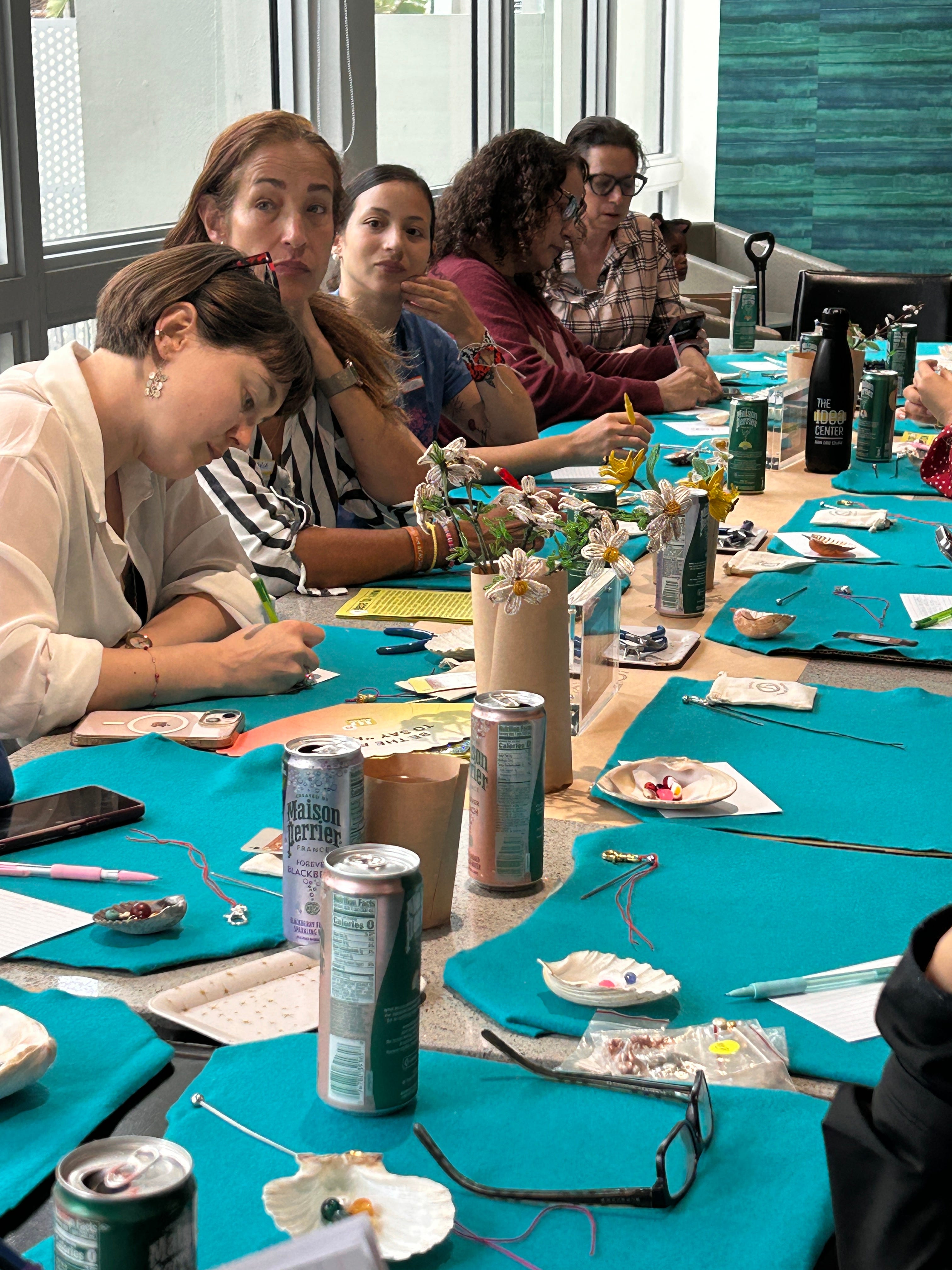
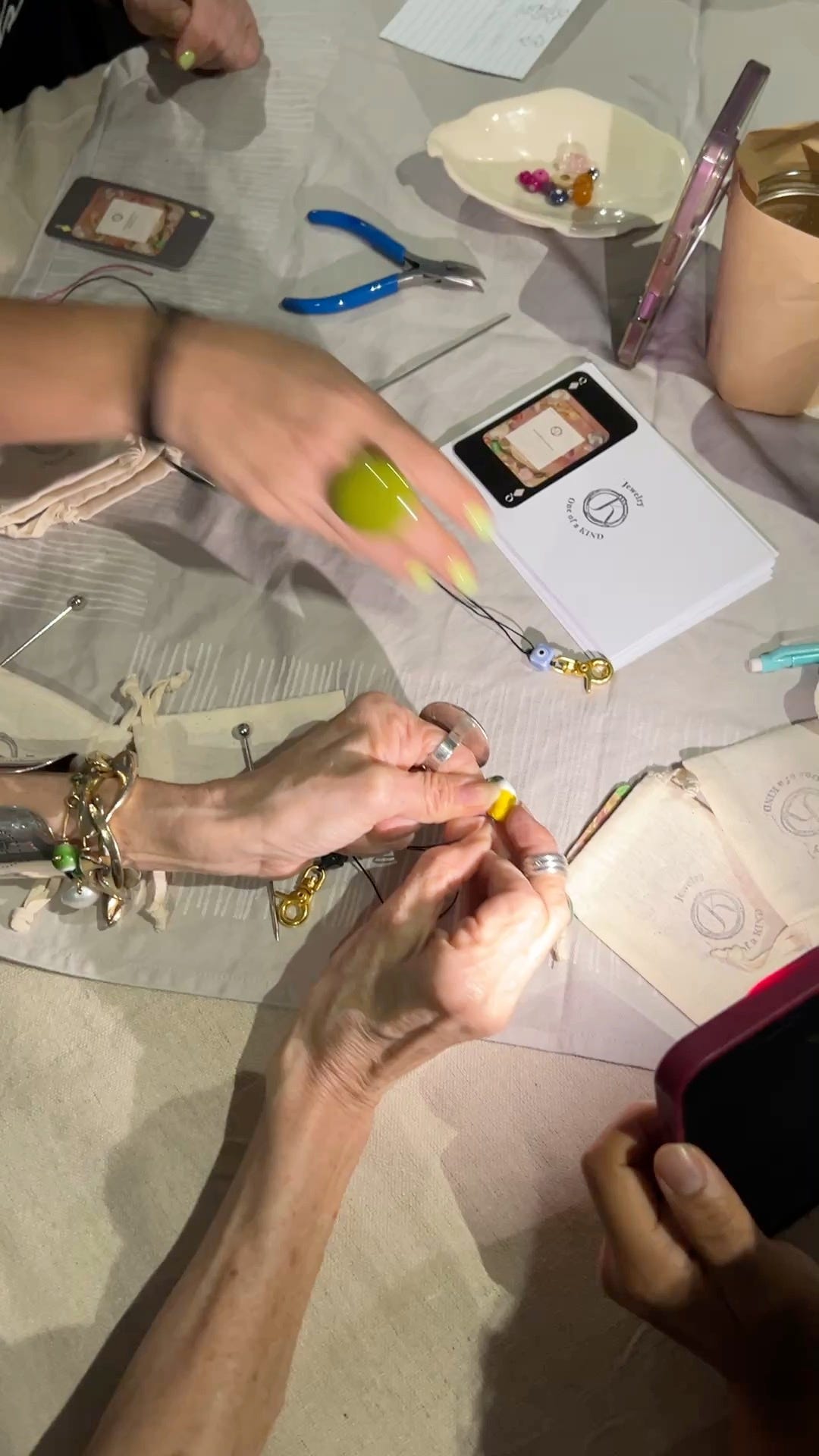
What I realized afterward was that it became the perfect metaphor. Making something by hand is harder than it looks. Craft is harder than it looks. Creating something from nothing is harder than it looks.
The writing exercise around money was equally revealing. Almost everyone shared some version of the same experience: under-earning, joyful spending, and audacious goals they weren’t entirely giving themselves permission to pursue.
Those were the themes.
And afterward, I couldn’t stop thinking about an installation.
A wall of jewelry. Chains. Stones. Color.
And hanging from each piece, a written prayer. A hope. A wish. A goal. Something written by the person who comes to the show.
It would be an interactive piece. People would be invited to engage with the work, write their own prayers, hopes, wishes, and goals, and add them to the installation.
Like a curtain of expression.
That’s exactly what it is.
A curtain of expression.
I’ve also had another vision for decades: the first ring I ever made.
I’ve always wanted to turn it into a sculpture. A large-scale sculpture cast at a foundry. Something larger than life.
I keep thinking about it.
After twenty-five years of making things, I’ve learned that’s usually a sign. The ideas that won’t leave me alone are often the ones worth paying attention to.
So maybe the question isn’t really how can I be paid to make art. Maybe the question is how do I keep making the work.
Because every time I think I’ve figured out what the work is, it changes shape.
The jewelry becomes an experience.
The experience becomes an installation.
The installation becomes a conversation.
– Amanda
I am curious: What is the biggest idea you’ve carried around for years that still won’t leave you alone?
Comments
Nothing yet. Say the first thing.
Sign in to join the conversation.