
Last week, I encouraged readers of The Jesus Movement to send in their questions—about the historical Jesus, Christianity as a tool of oppression, or anything else—and I would do my best to answer.
I’m humbled that so many of you responded! I’m doing my best to answer every person who reached out (so if I haven’t gotten to you yet, please be patient, I’m trying!). For this week, I’m going to share some of the questions I’ve received and answered. If you have any of your own, feel free to reply and I’ll do my best to answer.
As always, thank you so much for reading—and if you are able and would like to help keep my work free online without a paywall—forever—consider becoming a paid member.
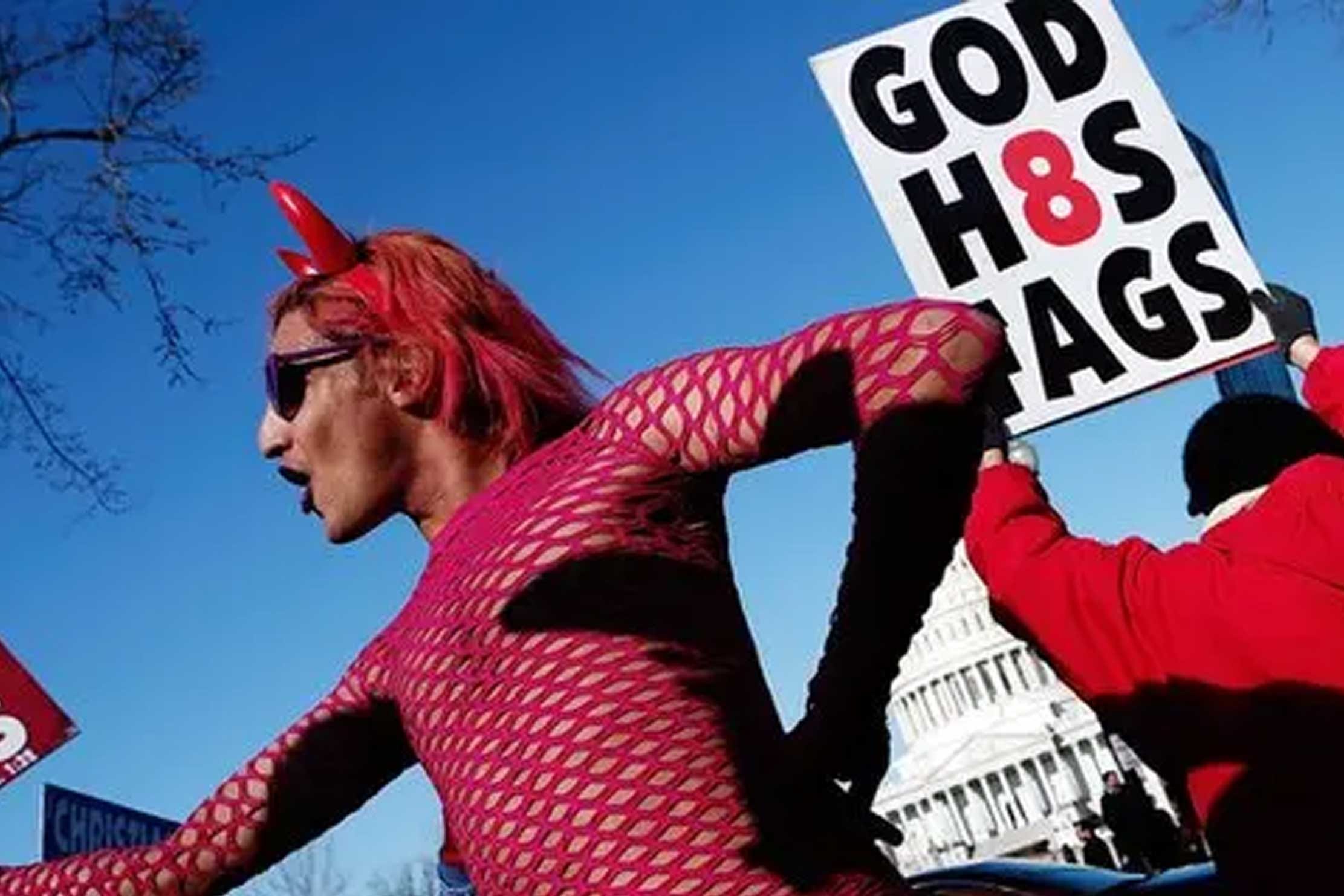
Mark asked: Can you discuss the specific Christian attitude toward homosexuality, and if there's place for homophobia in Jesus's original rhetoric, and where it comes from in the later discourse.
The truth is that we have no record of what the historical Jesus may or may not have felt about homosexuality. In all that survives—even in the parts that are authentically not Jesus (like much of John)—Jesus never once mentions it.
More broadly, Jesus doesn’t really mention any sexual relation, except to forbid infidelity and divorce. So the evidence suggests he didn’t think about it much. Which is ironic, given how much he talked about greed and wealth and how much Christians talk about homosexuality today. So no—there is absolutely no place for Christian homophobia (or transphobia for that matter) in the message of the historical Jesus.
There were early movements, including ascetic movements and the Judaeo-Platonic movement in Alexandria which explicitly forbid homosexuality, if not all sexual acts (for being unclean). Paul seems to have been influenced by this.
According to the Yale historian John Boswell—whose book, Christianity, Social Tolerance, and Homosexuality: Gay People in Western Europe from the Beginning of the Christian Era to the Fourteenth Century I cannot recommend enough—homophobia didn’t become mainstream among Christians until the 12th and 13th centuries. That’s partly because that’s when Europe turned against all non-conformists, especially Muslims (who broadly accepted homosexuality) and other heretics. The French word for heretic, bougre, even became a slang term for a homosexual.
In the 13th century, Saint Thomas Aquinas formulated the final theological synthesis that cemented Catholic homophobia. Bowing to popular prejudice, he categorized homosexual acts as the absolute gravest of sexual sins—worse than rape or incest—because they were “against nature.” That was really the final nail in the coffin.
Brad asked: How much of Jesus’ teachings came from his Jewish background/ influence?
Short answer: ALL OF IT! Modern historical scholarship emphatically rejects the older, anti-semitic idea that Jesus sought to break away from or destroy Judaism. Scholars now agree that to understand the historical Jesus, he must be placed squarely within the world of 1st-century Judaism.
Jesus observed Jewish law and debated it, and the absolute center of his preaching—the imminent arrival of the “Kingdom of God”—was a thoroughly Jewish apocalyptic concept. Apocalyptic here means the traditional Jewish hope that God would soon intervene in history to defeat the forces of evil, liberate his people, and establish a utopian era of peace and justice.
So, simply put: Jesus was entirely a product of his Judaism, from which he never deviated.
Jon asked: I definitely have noticed in my reading that there are two versions of Paul. Question is which one is the REAL Paul. Why did he and Barnabas disagree so much? How about a lesson on Barnabas role. I love reading about him.
You’re absolutely right there are two Pauls - perhaps more like three: the original Paul (who was fanatic but a radical egalitarian), the Paul of Paul’s early followers, and the Paul of the later established church. (Which is almost impossible to see outside the lens of Luther.)
One book I would suggest on this is John Dominic Crossan’s The First Paul: Reclaiming the Radical Visionary Behind the Church’s Conservative Icon. Have you read it/come across it?
As to your question about Barnabas - this is a great question. Essentially we get two explanations for the split from the New Testament. The first, from Acts, is a disagreement about John Mark. The second, from Paul himself in Galatians—is over theology and practice. Specifically, should non-Jews who don’t keep kosher be allowed to sit with Jews who do. According to Paul—the radical egalitarian—they should be. To Peter and Barnabas, they shouldn’t.
Scholars generally accept Paul’s version as true, and the Acts version a papering-over of conflict in the early church. (Acts does this elsewhere).
Monty asked: Why were all the gospels written so long after Jesus died? And who assembled/edited the Bible originally?
To understand why the gospels were written down so long after Jesus died, we need to understand first and foremost that what survived in the Bible was the record of early Jesus followers who were convinced of his imminent return. They were apocalyptic—that is, they expected the world as it is now to end, with the help of God and the return of Jesus, to begin a new utopia here on earth. When, by about 70 CE, that hadn’t happened—and the generation of Jesus followers who actually knew Jesus or knew people who knew him started to die—they started writing things down.
The first known list of a closed “cannon” in Christian communities comes from a 2nd century thinker named Marcion—who loved Paul. But he also thought the god of the Old Testament was different from the New Testament, so he ditched it entirely, and only included the Gospel of Luke. That forced “orthodox” church leaders to create their own list, which scholars think was a compilation of writings 1) already in wide use and 2) reinforced emerging dogma.
The New Testament was never finalized by a single, worldwide church council in antiquity. Instead, it was established by a growing consensus, which was eventually supported by regional gatherings like the Synod of Hippo (393 CE) and the Third Synod of Carthage (397 CE). The Roman Catholic Church officially established its definitive biblical cannon centuries later at the Council of Trent in 1546.
Adrian asked: For me, it would be helpful to excise overlaid and imputed sayings from the New Testament. Will you help?
What you suggested is quite a project! The difficulty, however, in producing a text that includes only things Jesus surely said—excising what was overlaid or imputed—is that whether or not Jesus said something is more a scale than a binary—which makes it hard to produce in print. And that’s to say nothing of the massive debate around most passages.
For example, many scholars believe the Sermon on the Mount to be largely representative of what Jesus taught—even if it’s not a direct quotation. But the consensus seems to be that even that is embellished; many scholars think Luke’s Sermon on the Plain to be a more accurate representation of what Jesus thought (blessed are the poor or blessed are the poor in spirit?)
The best attempt at this, however, in a single volume is a book called The Five Gospels (five because they include the Gospel of Thomas), edited by Robert Funk. A group of scholars called The Jesus Seminar actually went through each Gospel and voted on the authenticity of each saying or parable, resulting in a color-coded scale of red (almost certainly true) to black (almost certainly not true)—with detailed explanations for each.
Comments
Nothing yet. Say the first thing.
Sign in to join the conversation.