
“When Lamech had lived 182 years, he fathered a son and called his name Noah, saying, ‘Out of the ground that the LORD has cursed this one shall bring us relief from our work and from the painful toil of our hands.” [Gen. 5:28-29]
I am a father of two sons and was profoundly encouraged by Lamech’s prophecy about his son, Noah. I do not think that I would pray this type of prayer over my sons. Although all proud fathers long for their sons to be healthy and prosperous, I did not see the birth of my sons as a hope of redemption from a curse of hardship. I hoped for the best future for my sons, but I never put hope in contrast to a cursed history. My father and both grandfathers encouraged me to do better than they did; I have done the same with my sons. While I never saw my sons as avenues of redemption, Lamech did see Noah in that way.
Lamech lived in a pre-flood time where survival was difficult, almost impossible, since the Edenic fall of his forefather, Adam. Seth was the redemptive son born to Adam and Eve after the loss of Abel and then Cain. It was through Seth that the curse of Adam and Eve was retold, passed down through seven generations. Then came the birth of Noah, and his father, Lamech, must have longed for the promised redemption from the Adamic curse of the ground.
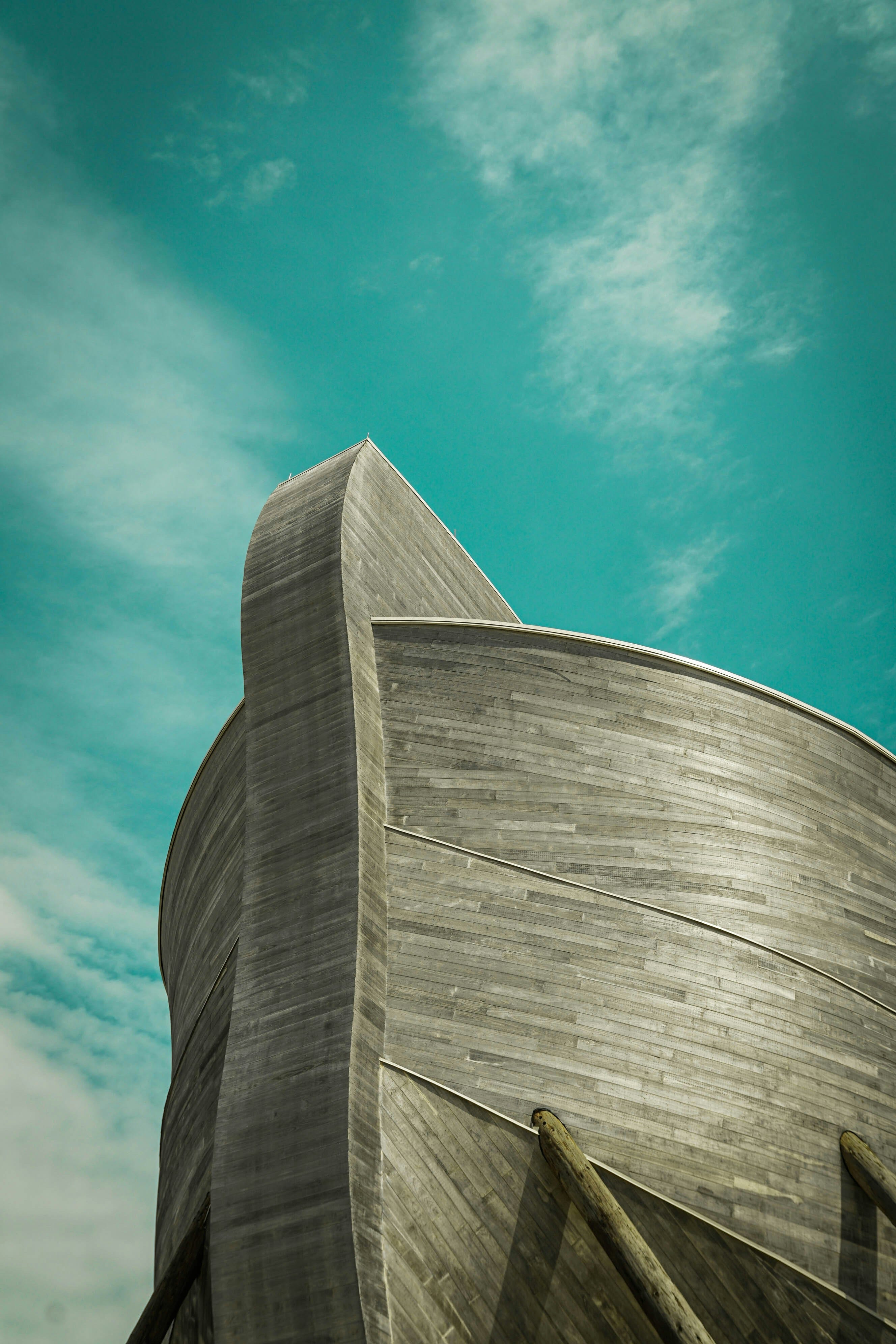
We often remember Noah as the redeemer of animals in the building of his ark, but how often do we remember Noah as the source of hope from Adam’s curse? Noah’s faithfulness did not just save animals. God’s faithfulness to HIS covenant to Adam and Eve in [Gen. 3:15] through Noah, saved all of the fallen created order. God destroyed His creation so that He could redeem it.
At the time of Noah, the average lifespan of a man was about 900 years. After Noah, the average lifespan dropped to 100 years and then leveled off over the course of human history to what we see today, 79. We are hard-pressed to witness a life of 900 years.
Imagine the type of life men endured prior to the flood of Noah’s time. The curse of Adam brought a difficult existence to his descendants. Survival was toilsome. Sustenance was obtained from agricultural production and varied between farming and gathering. Natural fruits and vegetation were provided by God, the Creator, but gathering was necessary. Thorns made this task more difficult. God also cursed Adam to struggle. Whereas food was once richly provided by God, all generations would suffer from Adam’s fall through the difficulty of bringing food from the ground in hard labor.
“And to Adam he [God] said, ... cursed is the ground because of you; in pain you shall eat of it all the days of your life; thorns and thistles it shall bring forth for you; and you shall be at the plants of the field.” [Gen. 3:17-18]
The weight of Adam’s curse must have been overwhelming by the time Noah was born. Survival was certainly difficult for Adam and the generations of men that followed. The Genesis account of Noah’s birth reveals the longing for relief from the curse of working the ground.
Whereas Adam’s original relationship with the ground was to steward and rule over it, his fall reversed that order. Now, Adam would be ruled by the resistant ground that once gave life. Now the ground will eventually swallow life.
What was once a gift of the Creator no longer existed in harmony with Adam but instead longed for restoration. The ground cried out.
Even Abel’s life cried out for justice to God from the ground where his murderous brother hid him, but the LORD granted another son to Eve, a gift of restoration, through Seth.
“And Adam knew his wife again, and she bore a son and called his name Seth, for she said, ‘God has appointed for me another offspring instead of Abel, for Cain killed him.’” [Gen. 4:25]
The Noahic prophecy from Lamech indicates an important shift in the Genesis lineage of Seth. Just as Seth’s mother praised the birth of her firstborn son, Cain [Gen. 4:1], and then of her third-born son, Seth [4:25], so too does Lamech praise the birth of Noah.
“Out of the ground that the LORD has cursed this one shall bring us relief from our work and from the painful toil of our hands.” [Gen. 5:29]
In contrast to Cain’s curse and struggle with the ground, Noah would bring relief from the curse of the ground. We do not know to what extent Noah’s father, Lamech, foresaw the devastation that would come. His prophecy over Noah carries profound irony. Noah’s name hinted at the Hebrew word for comfort. The name “Noah” (נוֹחַ, noach) sounds similar to the Hebrew word “comfort” (נַחַם, nacham).
But what father could foresee that comfort would come through destruction?
Perhaps speculation of this kind imposes my worries as a father upon the biblical text. Regardless, Lamech’s blessing and prophecy over his son, Noah, came true. Noah’s actions did usher in relief to the earth, but this relief came through God’s judgment rather than agricultural restoration.
“Noah found favor in the eyes of the Lord. … Noah was a righteous man, blameless in his generation. Noah walked with God.” [Gen 6:8-9]
This may be the type of hope that I have for my sons. I pray that they, too, would be righteous men, blameless in their generation, walking with God. We do not have a record of Lamech specifically praying for Noah to be righteous before God.
Perhaps the subsistence farmers of the pre-flood era longed for the day when the labors of agriculture would produce abundance again rather than thorns. Perhaps Lamech hoped for a future for his son where he would never have to break the hard ground to strain out life. Perhaps we can infer from his prayerful blessing that he foresaw his son finding favor with God and walking in righteousness.
The prophetic blessing of Lamech foresaw, whether literally or figuratively, one small step in God’s covenant with Adam to restore what was broken. God commanded Noah to build an ark. We all know this story, but this ark and the flood would preserve Noah’s family, a remnant of humanity, that would eventually lead to the one offspring that Eve longed to see. An offspring would come to crush the serpent’s head for deceiving her. An offspring would come to take back what Satan stole.
Theologians point to the prefiguring of Christ in Noah’s birth. Lamech’s fatherly hope for deliverance through his son foreshadows redemption through Christ yet to come.
Lamech’s prophecy of comfort and relief from the struggle and painful toil of working the ground may be gloriously fulfilled when Noah plants the first vineyard post-flood.
“Noah began to be a man of the soil, and he planted a vineyard.” [Gen. 9:20]
Further fulfillment of Lamech’s prophecy of comfort and relief may also be seen in God’s promise to Noah that the earth would never again be destroyed by water.
“Then God said to Noah and to his sons with him, ‘Behold, I establish my covenant with you and your offspring after you, and with every living creature that is with you, the birds, the livestock, and every beast of the earth with you, as many as came out of the ark; it is for every beast of the earth.” [Gen. 9:8-10]
Ultimately, Lamech’s prophecy was part of a long line of prophecies and promises in the Old Testament history of Israel, which were fulfilled in the incarnation of Jesus Christ. Luke’s gospel shares a reverse genealogy of Jesus back to Adam and includes Lamech, the father of Noah. [Luke 3:23-37].
“the son of Cainan, the son of Arphaxad, the son of Shem, the son of Noah, the son of Lamech” [Luke 3:36]
So perhaps godly fathers can take encouragement from Lamech when we pray for our sons and daughters. Perhaps we can pray for them as sons and daughters of God, placing our hope in the promise of redemption, just as Noah’s father did.
Comments
Nothing yet. Say the first thing.
Sign in to join the conversation.