
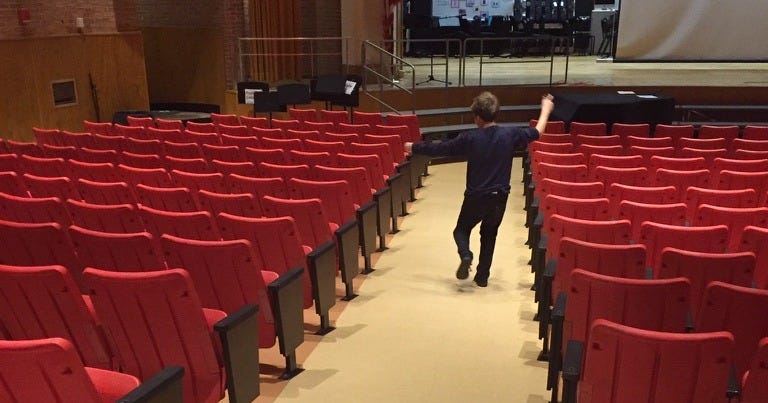
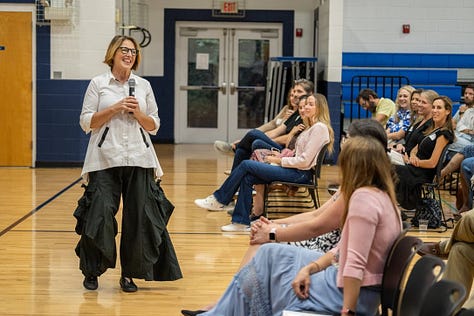
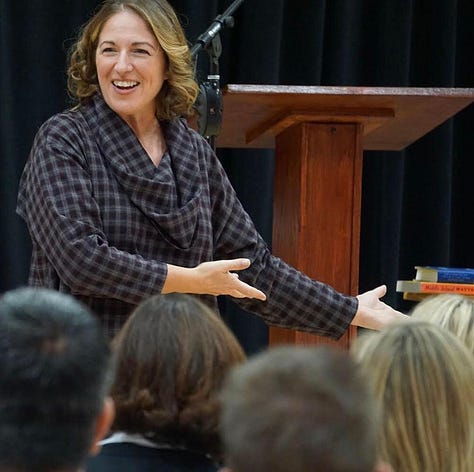
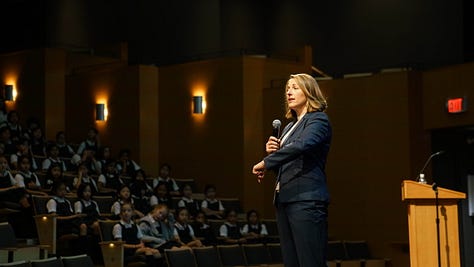
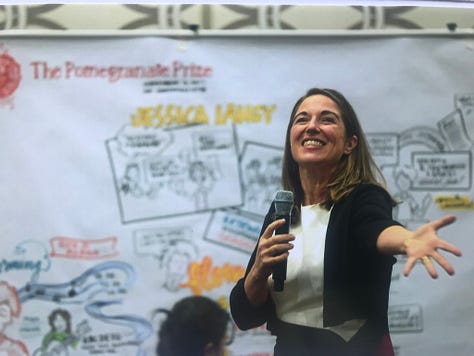
In the ten years since I started speaking, I’ve been fortunate enough to visit about 300 schools and organizations around the world:
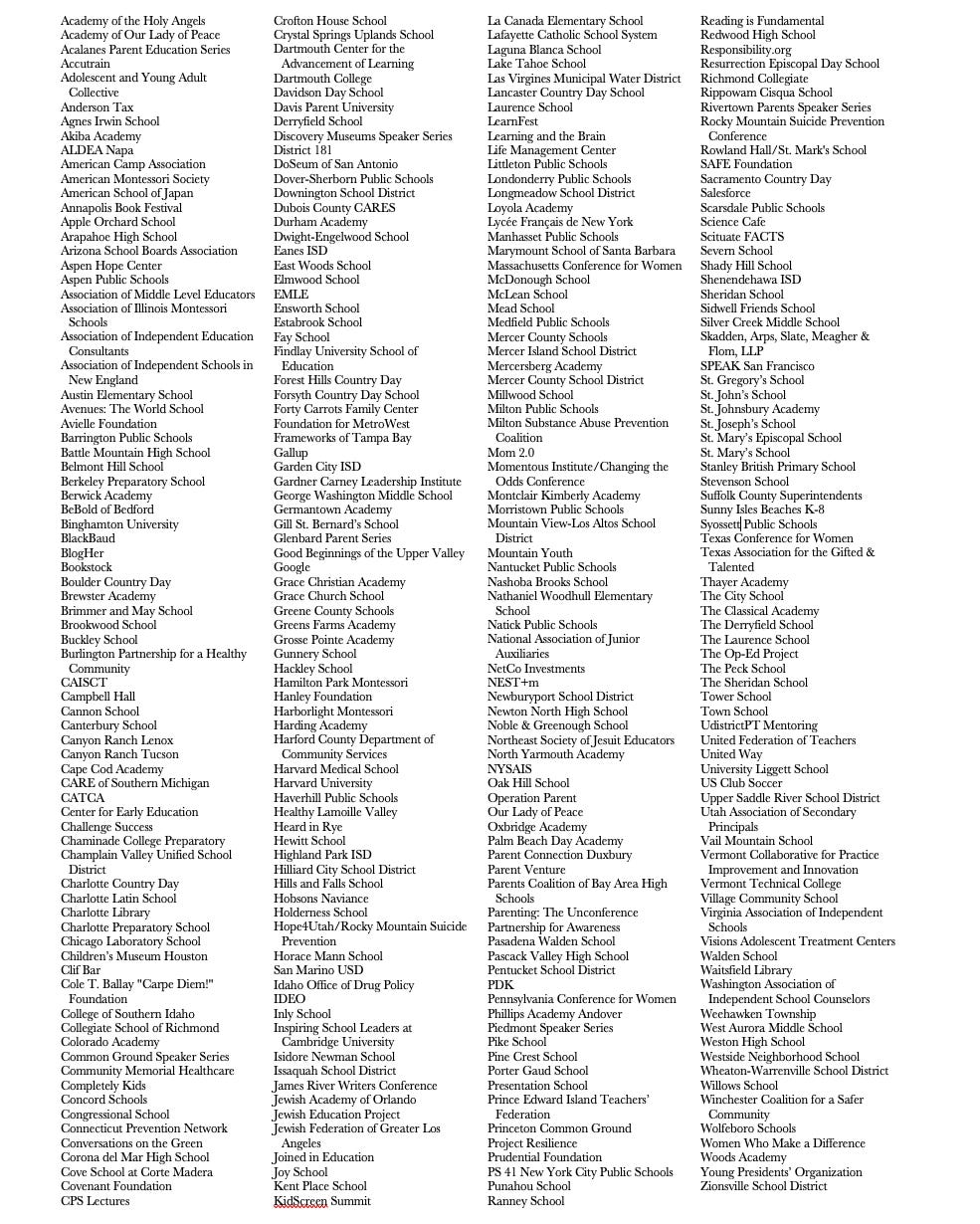
This coming year, I get to visit a few new places (North Dakota!) and revisit some favorite repeat spots (who knew I’d spend so much time in Houston?) but I’d love to add your town to my itinerary.
Here’s what I’m doing these days, in case you or your local school leaders, nonprofits, or businesses might be interested.
I’m still doing a lot of The Gift of Failure: How the Best Parents Learn to Let Go So Their Children Can Succeed content as it’s evergreen and I continue to learn so much about the benefits of autonomy supportive teaching and parenting, building kids’ competence, and helping them feel deeply connected to family, school, and community. We also discuss the science behind how kids learn, stay engaged in school, hobbies, and life, how to help them feel competent rather than merely confident, why “I just want them to be happy” is too low of a bar and why parenting for fulfillment and purpose is a much better goal, and finally, how to help kids feel supported and loved for who they are rather than who we’d like them to be.
These topics intersect brilliantly with substance use prevention, so even if it’s not part of the named event description, I touch on it where it intersects. It’s too important, and too vital to overall health and mental health, I can’t ignore the confluence. When I explain the difference between competence and confidence, I describe the power of self-efficacy, or the belief that your world can be better AND you have the power to make that happen. In other words, if you take action toward change, positive effects will follow. The power of self-efficacy is super protective against substance use and substance use disorder. It feeds into the natural dopamine cycle because mastery after struggle is an fantastic source of a dopamine hit in the adolescent brain and achieving mastery helps kids feel more in control. Shifting the internal locus of control back to kids reduces anxiety, boosts self-efficacy, and lowers kids’ need to self-medicate their emotional angst with through chemical (aka drug) means. A lovely self-perpetuating cycle, that is.
Integrating substance use prevention into my Gift of Failure talk has also helped schools get butts in chairs for substance use prevention talks, get parents who are seriously invested in learning and engagement to hear the message that teen anxiety is fueling substance use, and start to shift their focus (and control) back toward autonomy, competence, and connection with their kids. I do a lot of myth busting around the romance of the moderate European drinker, giving kids sips at home and having those “well, kids are going to drink anyway so I might at well let them do it at home” parties. In my head, I call this event “the substance use prevention talk for people who don’t want to talk about substance use prevention” but let’s keep that between us, shall we?
I get so many emails after these events thanking me for sneaking the substance use prevention information in, that I was right, they likely would not have shown up for a straight-up (pun intended) substance use prevention talk either because of fear or shame or stigma (“Hey look at MARY over there, she must be worried about her kid taking drugs!”) but they needed to hear what I had to say.
And yes, of course I’m still doing straight-up The Addiction Inoculation: Raising Healthy Kids in a Culture of Dependence, substance use prevention presentations and they can take a lot of forms. I love to talk to kids directly because whatever reason (because I actually like them and care what they think?), they engage in lively discussions. I give them my email ahead of time via a welcome video (see an example below) and I get so many incredible, smart, and detailed emails from them about what they don’t understand or want to know more about. Sure, parents and teachers also get my email in another version of the video (here’s what that video looks like), but the kid questions are my favorite.
School or community visits can take a lot of different forms. I can meet with kids (usually grades 5-12) during the day, faculty in the afternoon, and community at night. I can just do the community talk. I can have a local bookstore there and sign books. You can purchase books at a discount from my publisher then sell them at the cover price and make money for your parent association or health program. I even make personalized bookplates for school-wide reads! Yep, I sign and personalize a bookplate for every staff member, even if your school has 300 employees. Schools can tap into professional development funds for the faculty talk on boosting learning and engagement. There are so many ways to make these talks work.
My point is this: I love my work more than I can say, and the only way I get to keep doing it is if people invite me to speak. I work with all budgets and can even brainstorm with you to find ways to fund the event. If your child attends a Title I school, I have a pro bono program for that, too. Have access to opiate settlement funds and don’t know what to do with it? Well done! I know precisely how those funds work. I also keep a “while I’m in town” list for schools with no budgets so I can try to make visits work when I’m in town for something or someone else (with their permission, of course). I do tons of virtual events as well, and they are not only well-attended, you get to keep the video for a month so people who missed the live version can tune in.
Let’s talk. You can contact me here anytime. If you know of a school head or counselor or nonprofit leader who might be interested in my work, I’m happy to send signed books, and a brochure about what I do their way, just let me know!
Whether I’m a part of it or not, I hope you have a fantastic start to the school year.
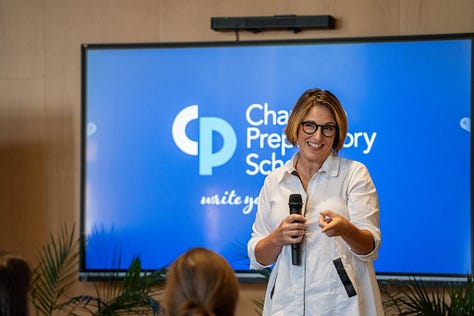
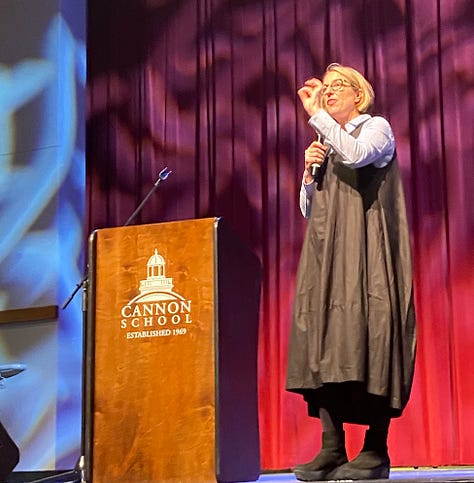



This post is public so if you know anyone you feel might be interested, feel free to share it.
No posts
Comments
Nothing yet. Say the first thing.
Sign in to join the conversation.