
I have news!
My first book, a memoir-in-essays titled This Middle Living, was selected as the winner of the Autumn House Nonfiction Prize and will be published by Autumn House Press in the fall of 2027! Ahhh!
I am finding it nearly impossible to express what it feels like to know that this thing I made, this impression of my being, is going to be published. I am giddy, hopeful, scared, grateful, grieving, loving, shaking, laughing, grateful, grateful, grateful.
As I’ve already established, expression is hard right now, and it is always oddly difficult to explain what one is writing about, so here is a short marketing-esq blurb to describe the content of this book:
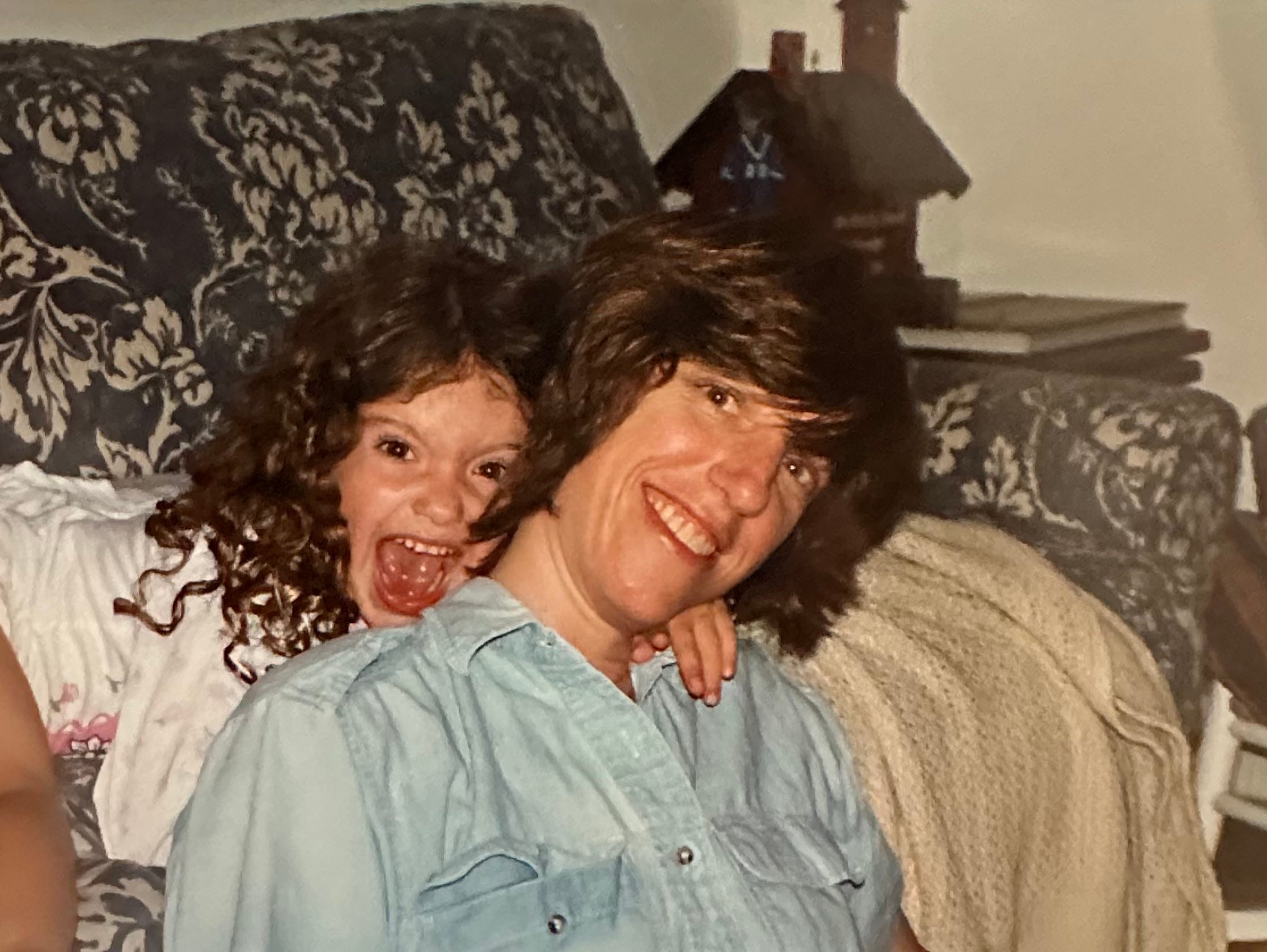
“This Middle Living looks to my upbringing in what was practically a lesbian commune, a stretch of blocks in late 90s lower Manhattan filled with some of the first moms to have children in two mom families. Ours was a community of defiance, defined by an insistence to live by our own rules. I was twenty-two when both of my moms were diagnosed with cancer. Twenty-six when I watched one of them end her own life. This Middle Living weaves these stories together, moving from a Pride parade where I, at four years old, tossed condoms to the crowd, to the living room of my childhood home where I sat beside my mama as she chose the day she’d die. From the space of impending loss and acute grief, it looks to the women who raised me and to my experience with my mama’s medically assisted death to ask questions about agency, autonomy, and what it means to live and die on one’s own terms.”
Writing This Middle Living fundamentally changed my experience of and relationship to impending loss and grief. Writing about something requires that we look closely at it, that we pay attention, and in writing This Middle Living I choose to pay attention when I might have otherwise looked away.
Because of this book, my final months with my mama are technicolor. I can feel the soft skin behind her ears. The pink socks we put on her feet. One morning she wore a shirt with a sailboat on it. Another, she put her head in my lap and soaked it with tears. There was key lime pie. A morphine patch. I didn’t know what was real until I wrote it. At night, I picked the sticky residue of morphine patches off her skin. I wrote and I wrote and I wrote. I looked right at us. I let us be real.
The same was true in early grief. In the months after losing my mama, I wrote my way through a pain I could not recognize and in writing that pain I choose to feel it. I believe firmly that our capacity for sensation expands in all directions at once. Writing let me feel more pain, which let me feel more joy, love, giddiness, hope, and beauty too.
One of the most magical things that I have found to be true about writing is the way that it tends to mirror the lessons of living. This book asks what it means to live and die on ones own terms. At its core is the question: How can we learn to listen to ourselves over the expectations of others? Writing it required me to answer this for myself.
In the spring of 2025, almost two years after losing my mama, I experienced an extreme bout of depression. Call it Complex Grief Disorder, PTSD, whatever, it felt like depression. I was spending my days at a job I liked but did not love and could not wrap my head around how people could die and time could keep passing as if it was nothing. My hair fell out. I got sick and then sicker. I kept working. Kept living. This is what people do, I told myself. They keep working and living.
That spring, I couldn’t write anything. Instead of feeling more, I felt numb. I had finished an early draft of what would eventually become This Middle Living, and knew it needed an edit. But I couldn’t work on a book about how to listen to oneself when I wasn’t listening to myself. It was my inability to write (and my unreasonable attachment to my hair) that eventually led me to take time off from work. To try and start listening.
In the year since, I have made a lot of changes. I moved across the country. Applied to school. Decided to leave my job. Decided to write. I decided to listen to the voice in my head that tells me that time is precious, that sure, it doesn’t make that much sense in this capitalist world to quit your job and write, but what is sense in a world made of soft skin and pink socks and key lime pies and sticky residues on the skins of mama’s who are dying. Listening to that voice let me finish this book. Writing this book, let me listen to it.
There is another, perhaps more subtle way, that I feel the themes of this book reflected in the process I underwent to make it. This book is weird. I say that with so much love. It is sort of an essay collection. Sort of a memoir. There are about 75 pages in the middle with no narrative form whatsoever. When I look at it now, I am shocked by the conviction of the version of me that wrote it. Where did I get the guts to take that kind of risk? But at the time of writing, it didn’t feel like risk. It just felt like listening.
This might be the coolest part of knowing that this book is being published. The version of me being published is the version that listened to herself, that followed the examples her moms set for her. It was not an easy path to publication. Before this prize, I experienced a lot of rejection. I was told repeatedly to make the book more commercially accessible. This is good advice for some, but the project of this book was listening to myself over others and knowing that it will exist in this form, my form, feels important.
What I mean to say is, I am not just proud of the book, I am proud of how I wrote it. I think my mama would be too, and to me that is so special.
I wish I could thank my mama for the example she set for me. In the nonsensical sense of things, the pink socks and key lime pie sense of things, I hope I can. To everyone else though — my mom (my everything), my sister (my other everything), my aunts, uncles, cousins, my friends, my readers, my teachers, my Loren (Loren! Loren! Loren! who reads every single thing I write, who teaches me to dream and listen), and to Autumn House Press for agreeing to make a weird with book me — thank you. There aren’t enough words.
I will end by saying that it is a very strange thing to get something you want. Sometimes, when we want things, it feels like once we get them we will be finished. That achieving a goal is an end in and of itself. But next week, I will move back to New York, I will quit my job, I will turn thirty, I will start school, and I will write. So much will change. I will be giddy, hopeful, scared, grateful, grieving, loving, shaking, laughing, changing. What I mean is, there are no beginnings or endings. Life is all, always, made of middle.
No posts
Comments
Nothing yet. Say the first thing.
Sign in to join the conversation.