
I spent the first part of this summer moving. I shouldn’t have been surprised by the scale of the ordeal, but still, I managed to underestimate the task, and I feel like I’m still recovering from it all.
I’m not a hoarder by any means, but no matter how many hopeful attempts I make to participate in trends like “Swedish Death Cleaning,” stuff always accumulates. (Especially papers. I believe the papers might be procreating on their own.) I could take the low road here and blame my nine-year-old for the clutter, because there certainly are a lot of crafts and random items that come home from school and camp, but once I started boxing the books and sketches and art supplies in my studio I had to face the fact that I, too, had a bit of a chaos problem. My studio was full of stuff. Where did it all come from?
To answer this question, we must go back in time. So sit back, buckle up, and join me for a journey to my past studios, starting in 2008 where it all began.
To set the scene, imagine I am 24 years old, unsure of what to do with my life, and moving to Berlin for the “cool art scene” with my then-boyfriend. It might sound exciting, but it was mostly just reckless. We had no real plan, direction or money. My studio was about as simple as it gets.
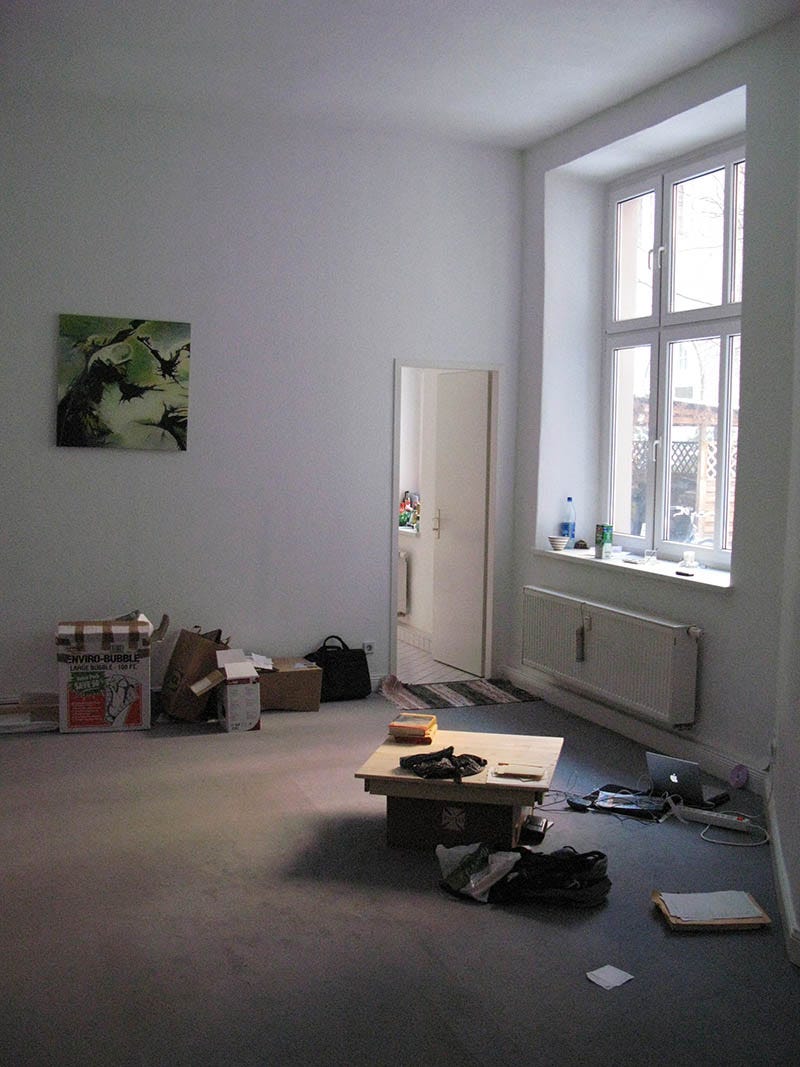
At first I worked at a makeshift desk on the floor. I didn’t have a scanner or a lamp, but the deep windowsills of the apartment offered a nice space for photographing my art with my digital camera, and I could do some color correction with my pirated version of Photoshop.
Eventually I upgraded with a small lamp from IKEA and a table fashioned from a door that we found on a street corner. The addition of a flea market chair completed my first studio setup.
I made my first portfolio pieces here, but the biggest takeaway for my art career was realizing was that I needed some kind of plan rather than simply “winging it.” Eventually I acknowledged that the situation wasn’t working, and I left.
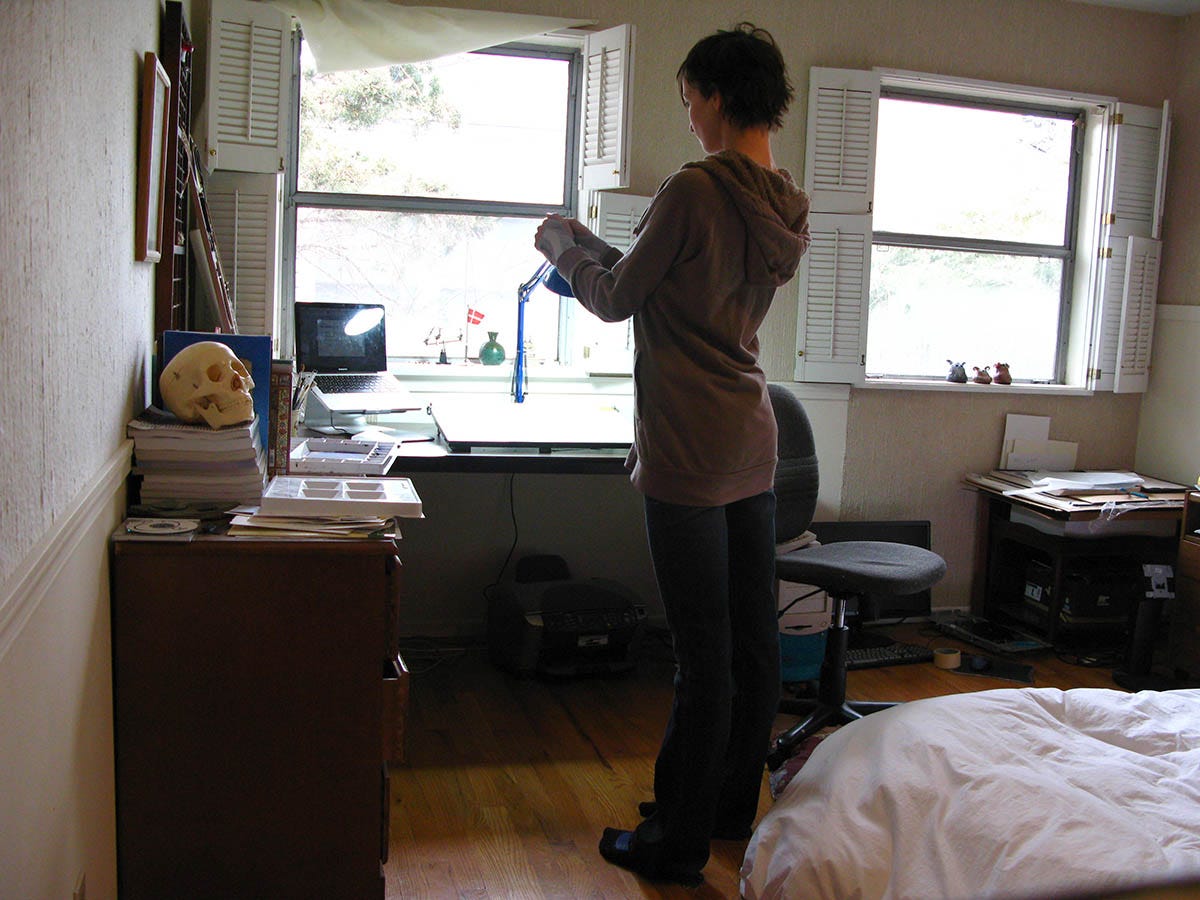
My next studio was a room in a shared house. It had flimsy windows that leaked in the cold, and thin bedroom walls that let you know exactly what everyone in the kitchen was saying. The thermostat was inconveniently located in the neighboring unit. But the house’s location made it possible to sip coffee watching the sun rise on the foothills, and my job on the CU Boulder campus was a short bike ride away on pleasant, tree-lined paths. I hosted a lot of memorable dinner parties with friends in that house, and I illustrated my first picture book there, Good Fortune in a Wrapping Cloth.
This awkward reference picture seems to be the only image I have of that workspace. By this point I had added a printer, a drawing board, and a desk lamp to my setup, and upgraded my travel watercolor kit to a big plastic palette.
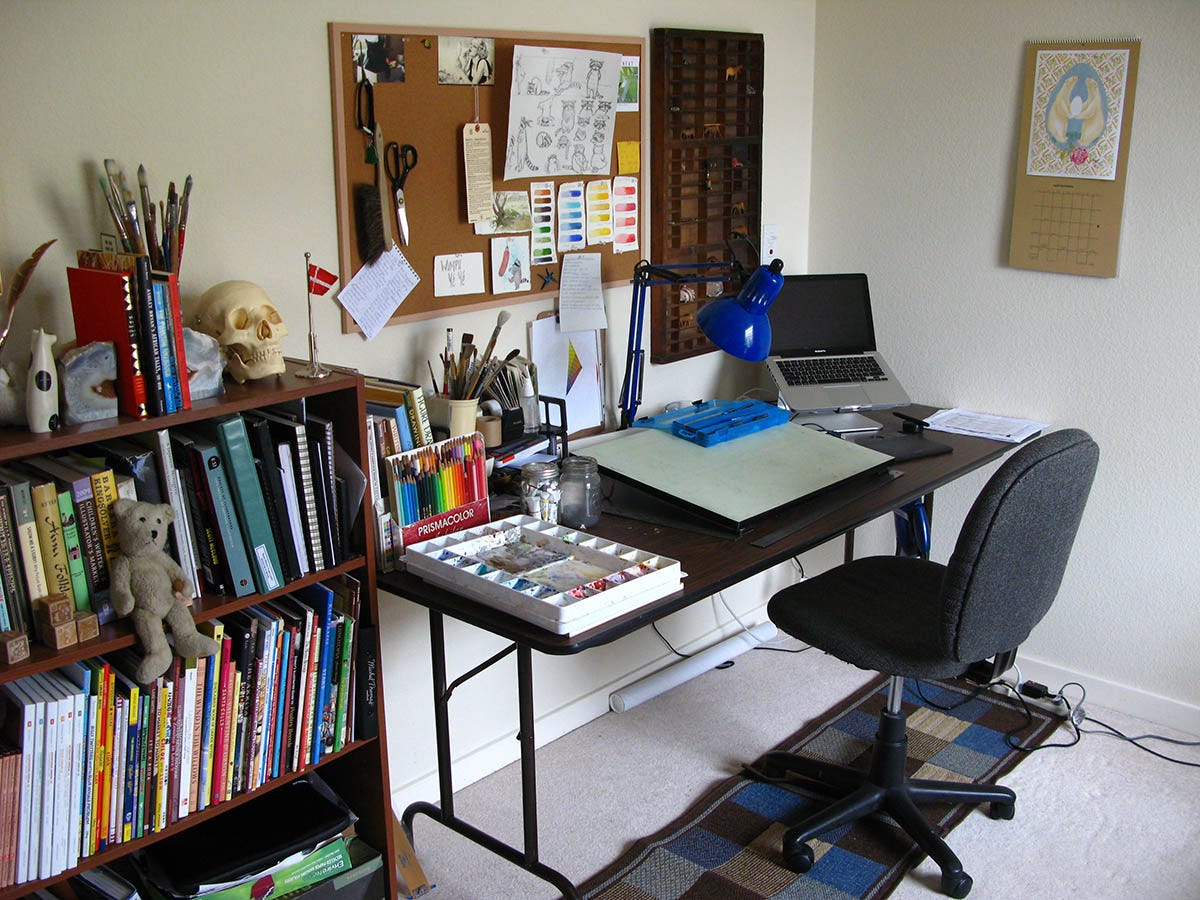
In my next studio I really had some room to stretch my elbows. Instead of using a corner of my bedroom, I now had a separate room for work. Granted, it was shared, but it still gave me plenty of space for a bookshelf and additional tools. I upgraded to a newer laptop and bought a small scanner as well.
By this point I was working on regularly pitching my portfolio at SCBWI conferences and was finding small illustration projects wherever I could. I completed several books in this space, including The Story I’ll Tell.
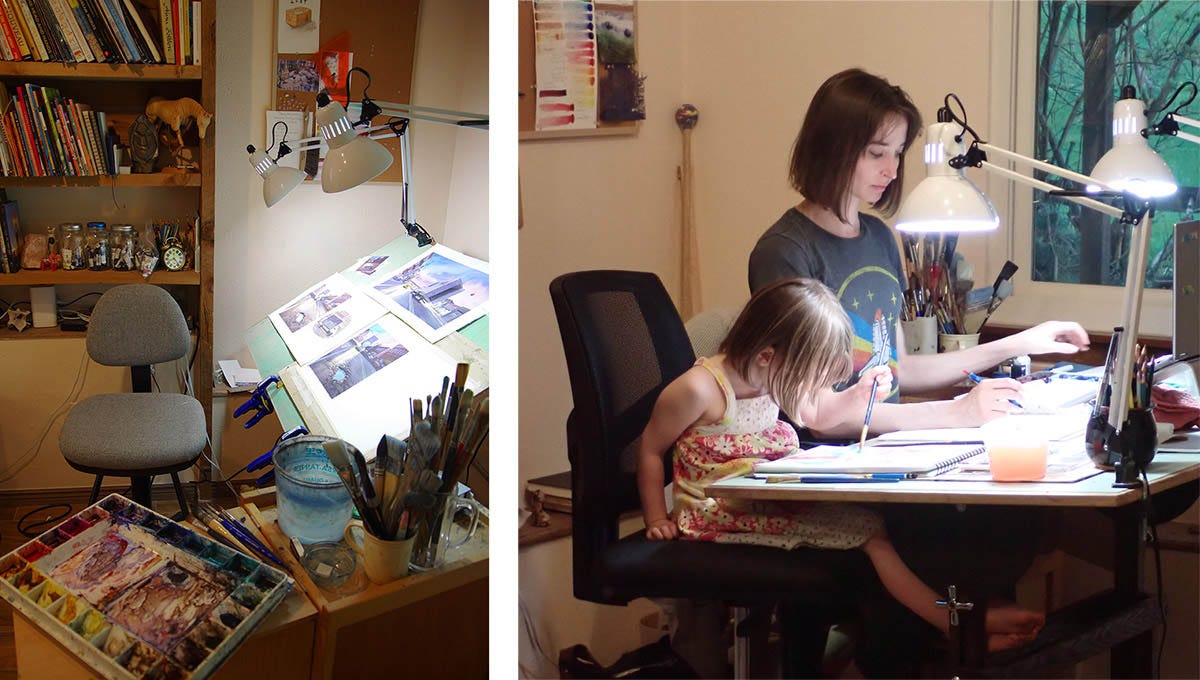
In 2016 I moved from the townhome to a larger house. This was around the same time that I started working with an agent and began illustrating my first projects for “big 5” publishers, books like The Fisherman and the Whale and Just Right: Searching for the Goldilocks Planet, and many others. I upgraded to a drafting table and invested in a flat file and better equipment like a large-format scanner. The room had a rustic built-in bookshelf, so naturally I bought more books to fill that right up.
While this studio was a little dark and had mice living in the walls, there was lots of space to work and it stayed pleasantly cool in summer. And since I was also working full-time in another new role—mom—it was handy to be just a step away from my daughter’s bedroom.
When the pandemic hit, I began to look for an escape and found a space in the “art district” of North Boulder. This studio was huge—500 square feet!—and I hardly knew what to do with it all. This is probably when my too-much-art-stuff problem really solidified, because now I needed wanted all sorts of additions: easel, furniture, shelving…
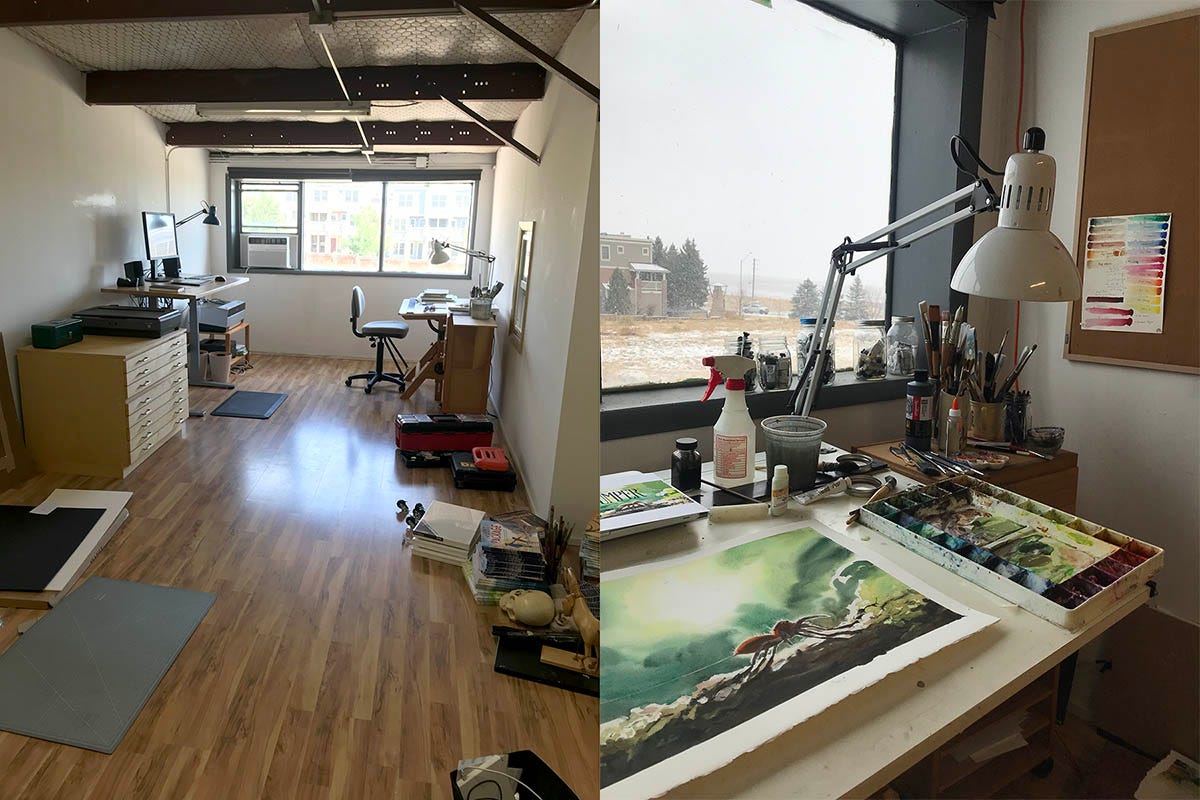
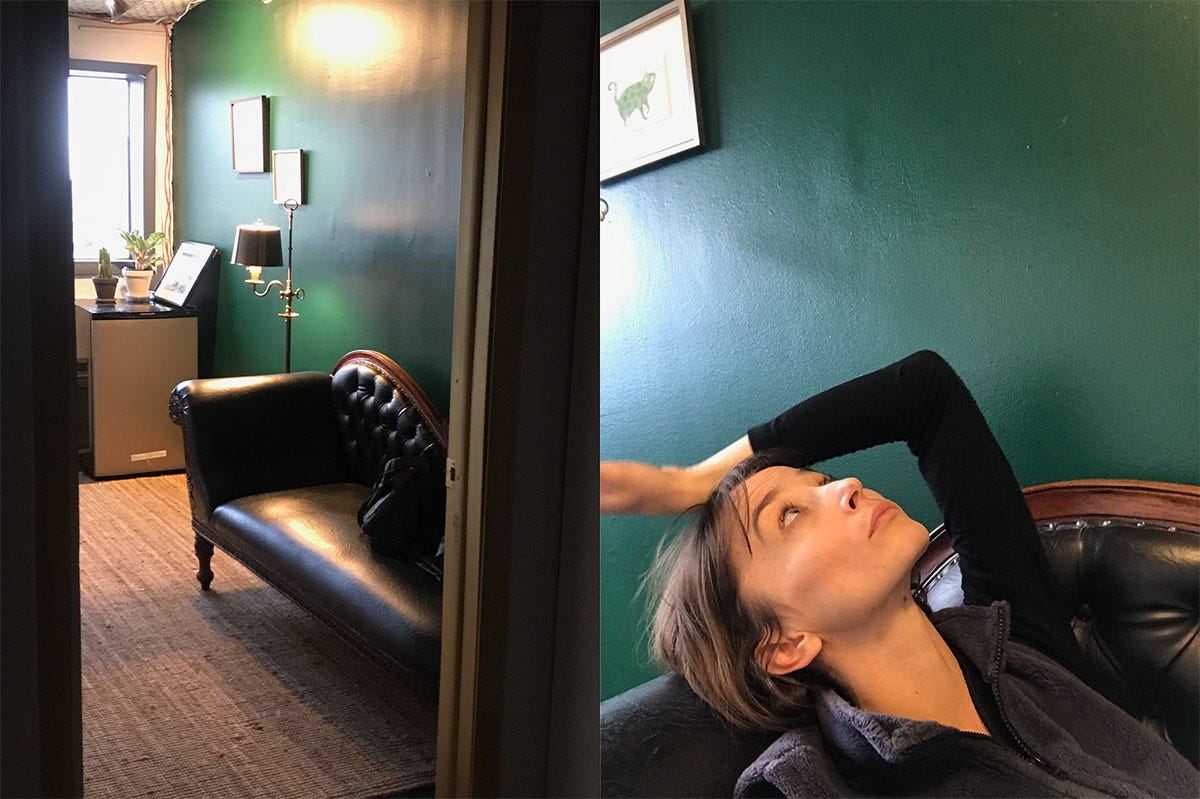
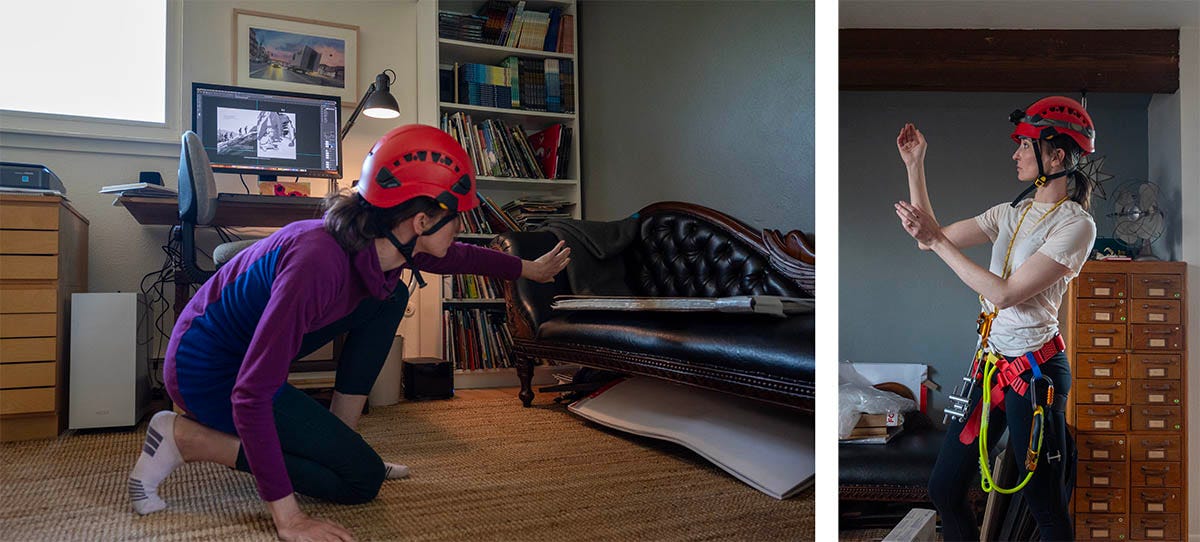
This studio had an odd little side room. This became a “break room,” which I furnished with a fainting couch that I found on Craigslist. I purchased it because it had a carved swan on it and why would you not?? (Note that I am currently trying to deal with getting rid of this fainting couch. Thanks for being so impulsive, past me.)
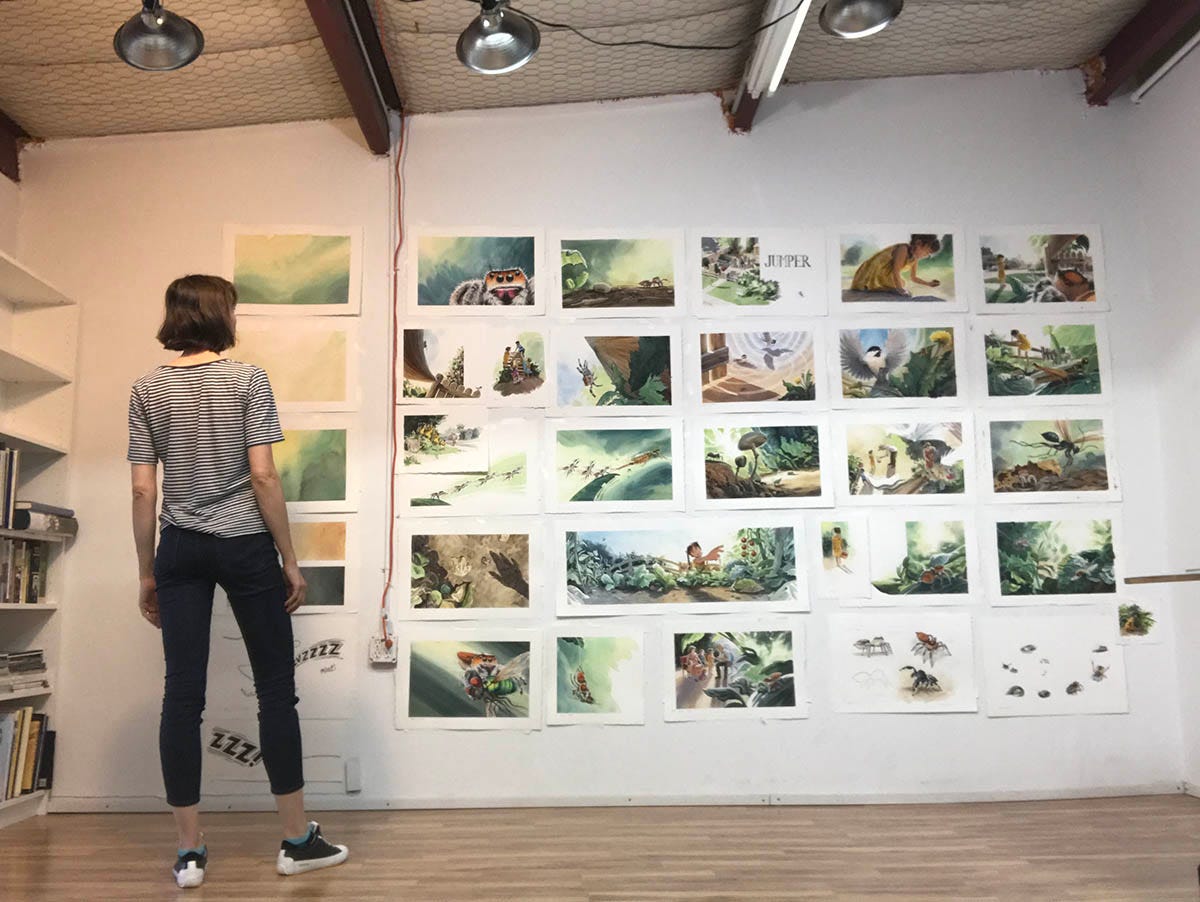
The space was so big that I could tape up an entire book on the wall at once. On my lunch break, I’d sit back in a comfortable chair and stare at my work in progress, planning my next move. I completed Jumper: A Day in the Life of a Backyard Jumping Spider here, as well as two other books.
Eventually it made sense to move my studio back into my house, so I converted the master bedroom into my most recent studio. It was sunny and had a cheerful view of a park. I tried to preserve a wall for hanging my work but there wasn’t much space, due in no small part to the fainting couch. (See how this stuff is becoming a problem?)
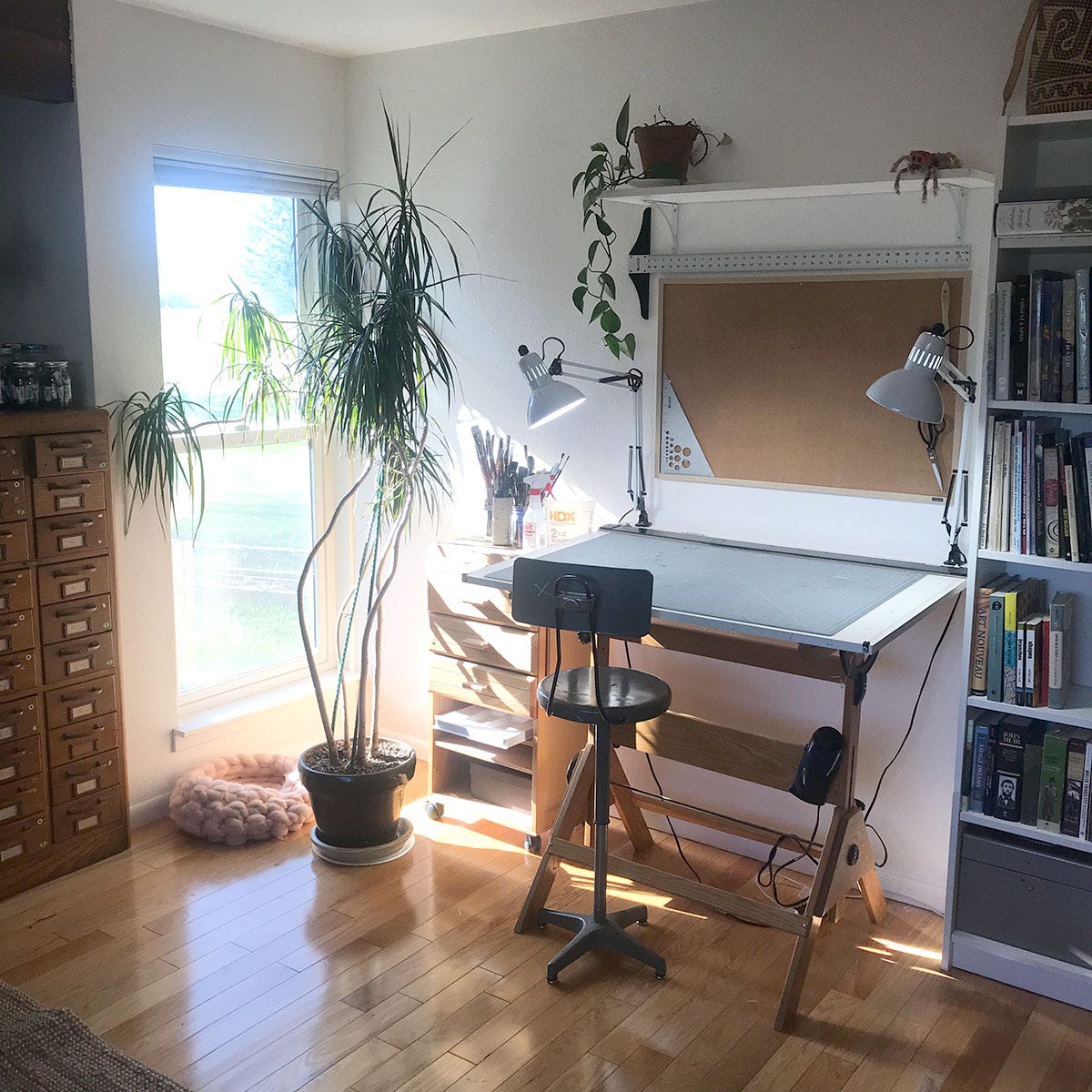
This is the studio where I completed Before You Were Here and In the World of Whales. I also did almost all of the work for my next upcoming project, The Crystal Room.
And finally…
Louisville, Colorado, 2026 -
And now, to the present! Welcome to my new studio. It is in a basement once again, but this time the space was planned from scratch so I was lucky to get to choose many elements of the room’s design.
One major update was storage. Before, I had been solving the problem of storing my original art by shoving cardboard boxes into my closet. Nothing was labeled, empty boxes were mixed in, and some oversized paintings were just draped, unprotected, across the closet. It wasn’t ideal. I upgraded to archival boxes and we designed custom shelving for the new space that could accommodate it all.
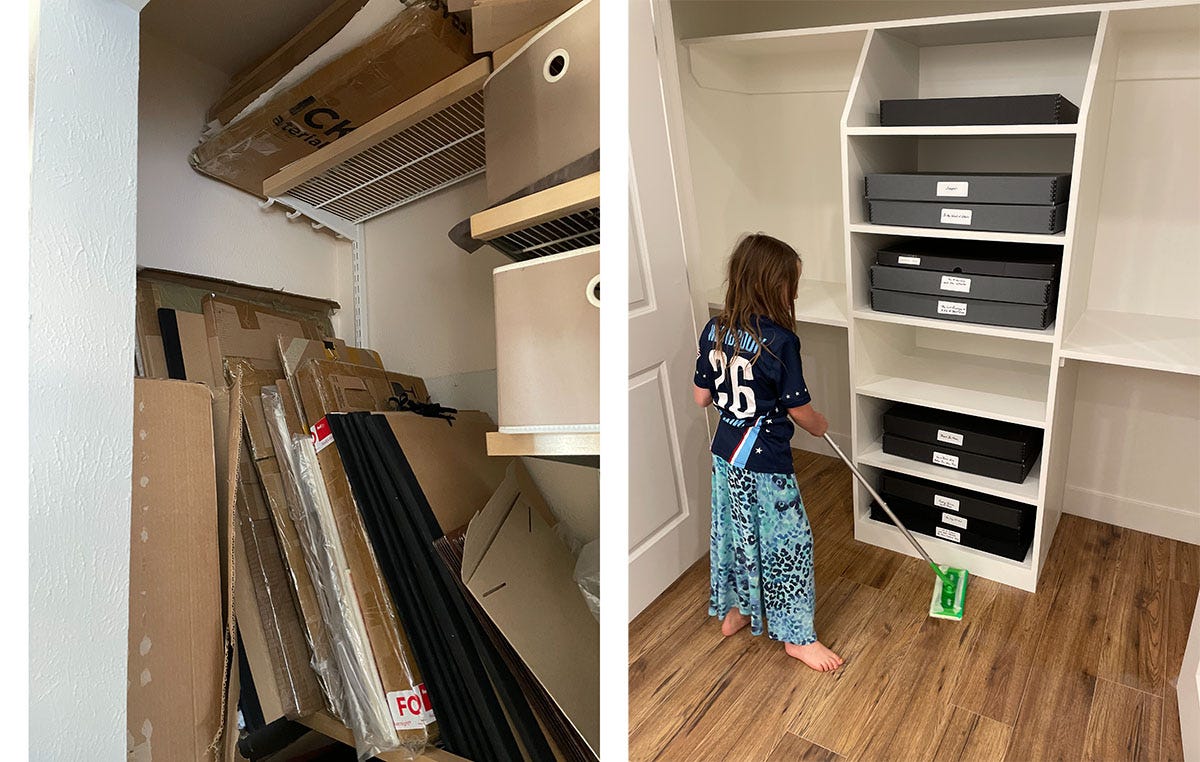
Other features in the new studio include generous bookshelves, a large built-in desk for things like trimming paper and laying out proofs, and yes, even a big wall to hang my work in progress! So far, it’s been great. I especially enjoy the fact that I can keep my scanner and other equipment in the closet, reserving the desks for art making.
The only real question left is what I should do to dress up the window well. Any suggestions?
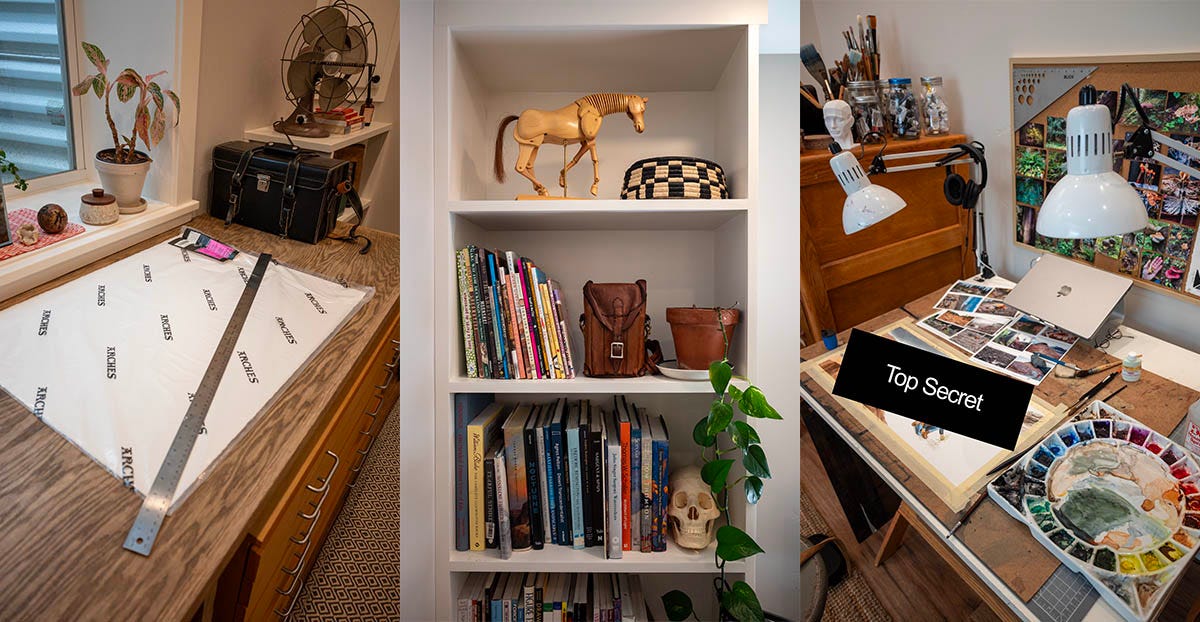
Now that the boxes are mostly unpacked and I’ve finally settled in, I have a newfound determination to keep the clutter under control. The first book I’ll complete in this space is We Are the Trees, written by Deborah Noyes, coming soon from Holiday House. I’m just a few paintings away from finishing the final art, and since the deadline is looming I’d better wrap up this Substack post and get back to work.
I’d love to hear about your work spaces, and how they have evolved over the years! What was your first studio like? Do you have a strategy for keeping studio clutter in check?
Thanks for reading,
Jessica
Know someone who would enjoy this post? Feel free to share it!
No posts
Comments
Nothing yet. Say the first thing.
Sign in to join the conversation.