
Dear readers,
I believe there’s only one true way to get better at something: to do it. A lot. Which, to be honest, isn’t always that fun. There’s a well-known quote on this subject that sums it up:
"Embarrassment is the cost of entry. If you aren't willing to look like a foolish beginner, you'll never become a graceful master." ~ Ed Latimore
If you’ve ever met a baby just learning to walk, you know that we’re all born with the grit to fail repeatedly without giving up. But at some point along the way we begin to second-guess ourselves. Our failures start to mean something, we begin to care about what other people think of us. Fear takes hold, and what if becomes what if I make a fool of myself?
Over the years I’ve met and mentored a few illustrators who wanted to develop more of a sketching practice or explore new mediums like watercolor, but they made little progress because they felt blocked by anxiety. So I thought I’d write a little bit today about how I overcame some my own inhibitions about sketching in public and share some practical tools you can use if you’re feeling shy or insecure. These tools focus on making art, but they can apply to anything that you feel embarrassed to attempt.
(If you’re pressed for time, jump straight to the tips!)
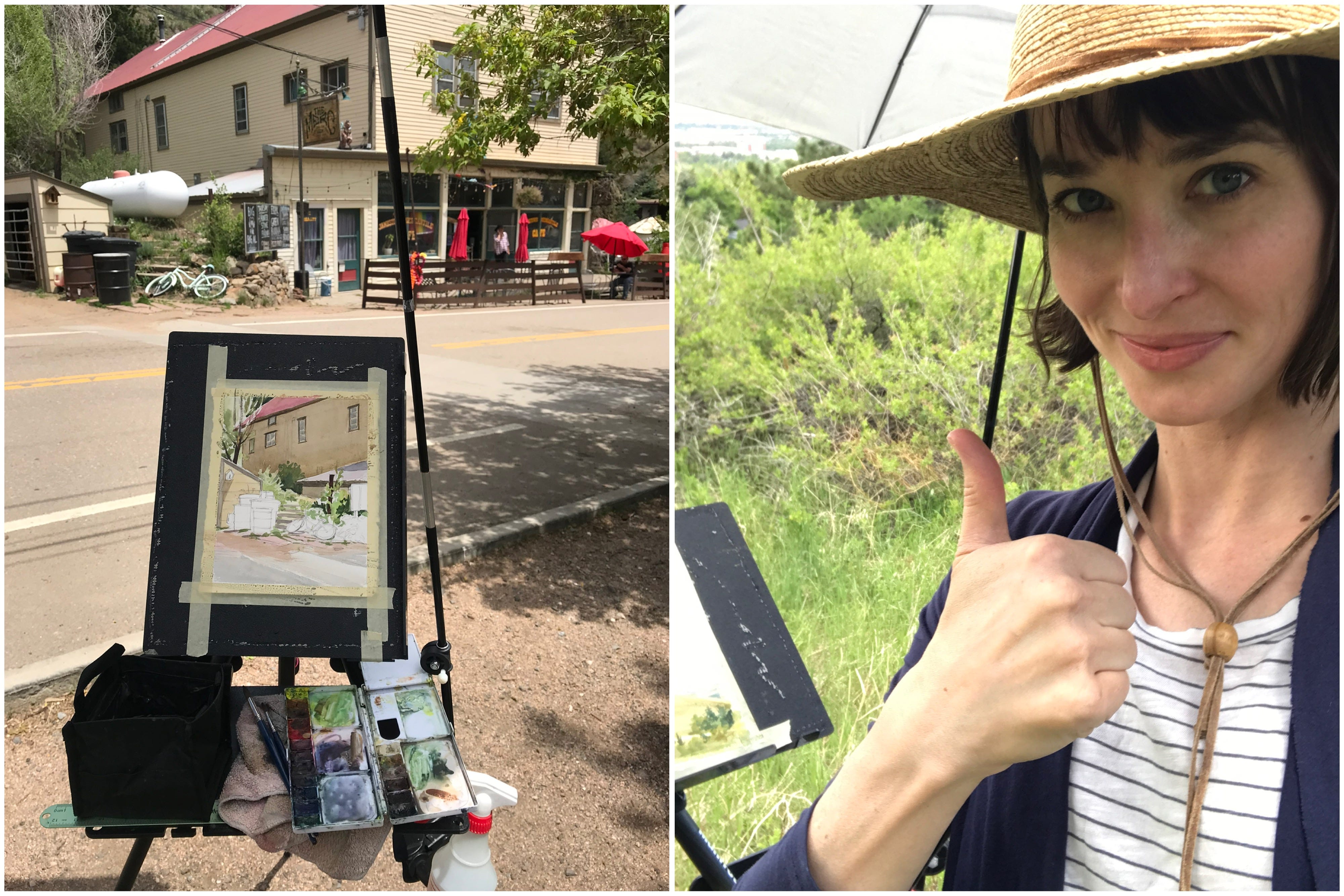
To begin my own tale we have to go back to when I was a senior in college, when the humble sketchbook took a starring role in my life.
Let’s set the scene: it was the fall of 2005 and I had just discovered that The Thomas J. Watson Foundation was offering a fellowship to travel solo around the world for a year, working on a project of my choice. It seemed like an extraordinary opportunity, and I wanted it badly. I decided to focus my project on folk tales, but I knew I needed an extra hook to win over the selection committee, so I challenged myself to rely on my sketchbook to document my journey. I filled my proposal with nice-sounding things about how sketching in public would spark conversation, create connection and build community.
Left out of my proposal? The fact that I had never traveled alone overseas (let alone for a whole year) and was mortified by sketching in public.
I knew I needed some help to make my case more convincing so I took a day off and went to downtown LA to do a practice run. It was deeply uncomfortable and I hated it, but I didn’t tell the committee that. I stumbled through some drawings, talked to a few random people, and came back for my interview with things to share.
In March I found out that it had worked. After graduation I was going to Asia.
On my first day in Japan I was catatonic with terror. I struggled to get up from the hostel bed, but somehow get up I did, and as the days went by the what the heck am I doing feeling began to wear off and was replaced by curiosity. The world around me was overwhelming, but it was also pretty interesting. I began to venture out and sketch. But even as I found my footing as a traveler, the conspicuous feeling I got from painting in public stuck around, stubborn as a stain.
I found workarounds. I’d go out of my way to find a spot that was out of sight, or make a few marks then snap my sketchbook shut and vow to finish it later from a photo. But I was frustrated. I wasn’t making as many drawings as I wanted to. And it sure was a far cry from “sparking conversation, creating connection and building community.”
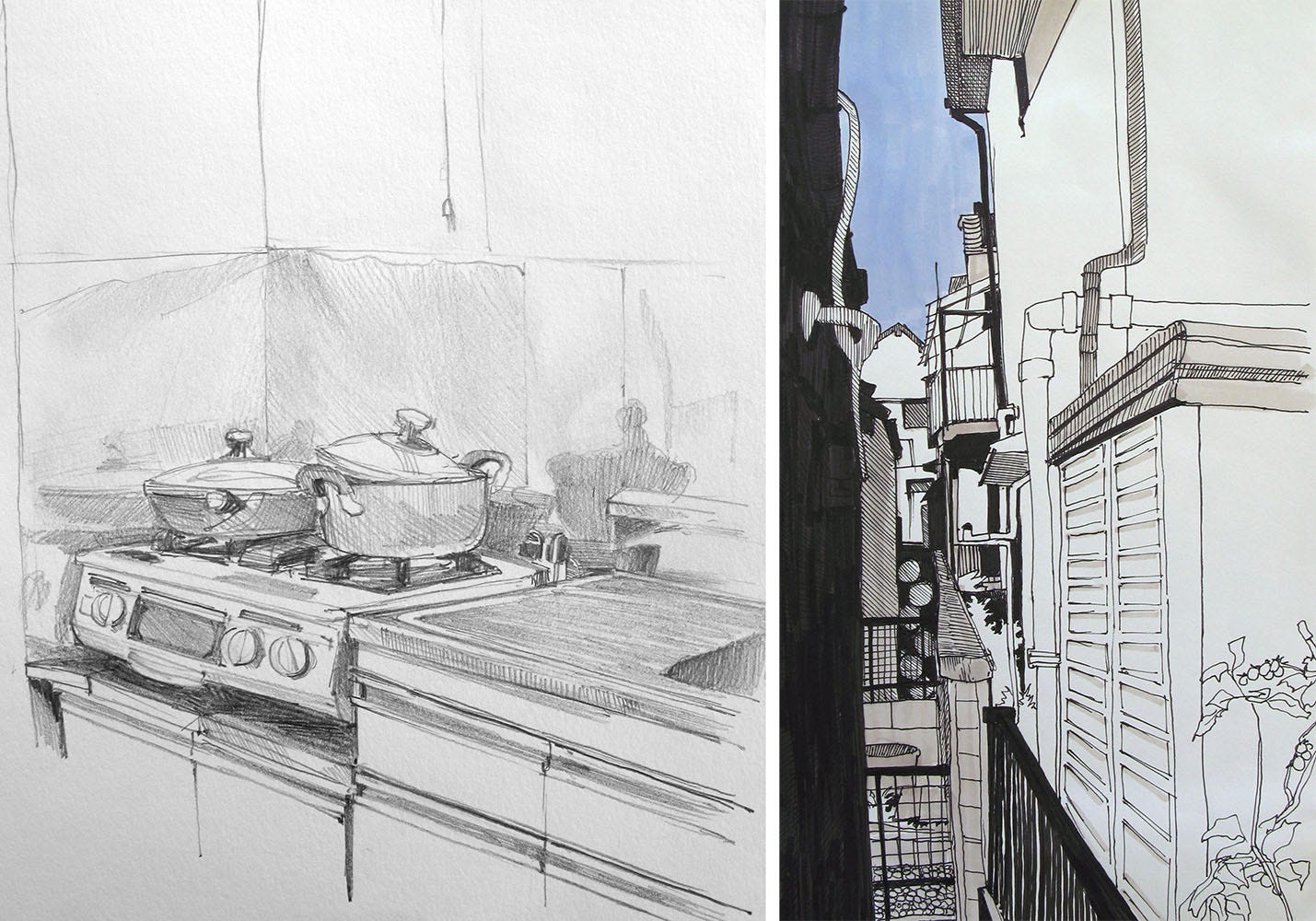
Why was it so hard? What was I so afraid of? It wasn’t as if I had never drawn before. I was an art major, after all, and surely my watercolors weren’t that bad. Yet the gaze of strangers had the power to make my artistic abilities crumble, and I’d find myself left with nothing but a disappointing sketch and a feeling of embarrassment.
One day in the old town of Takayama I decided to go for it. There wasn’t anywhere to hide in that narrow street, but the architecture was fascinating. I felt as if I had traveled there by time machine. I simply *had* to draw it. I decided that I would sit down right where I was and work—no matter what.
It began well enough, but soon I started to attract the inevitable attention of people walking by. I tried to brush it off. I was, after all, a tourist—gaijin to boot—so of course I stood out. I could see my painting going downhill as I began to sweat, but I pressed on. No matter, I thought, hold steady. I reminded myself that I’d never see any of these people again, that it would all be forgotten. All I had to do was finish.
That was when the TV crew arrived.
I’m not exactly sure what they were doing there. Perhaps it was a local news station shooting some footage, doing a tourism piece. Regardless, when they saw me it was clear that they had found their subject. Before I knew it I had a TV camera perched over my shoulder.
I was not confident with watercolor painting and I was even less confident speaking in Japanese and appearing in front of a TV camera. Let’s just say that the combination of all three did not result in my finest work. Perhaps, somewhere in Japan, there are people who tuned in and watched me stumble through a painting and an interview nearly 20 years ago. I can only hope that they have forgotten all about it.
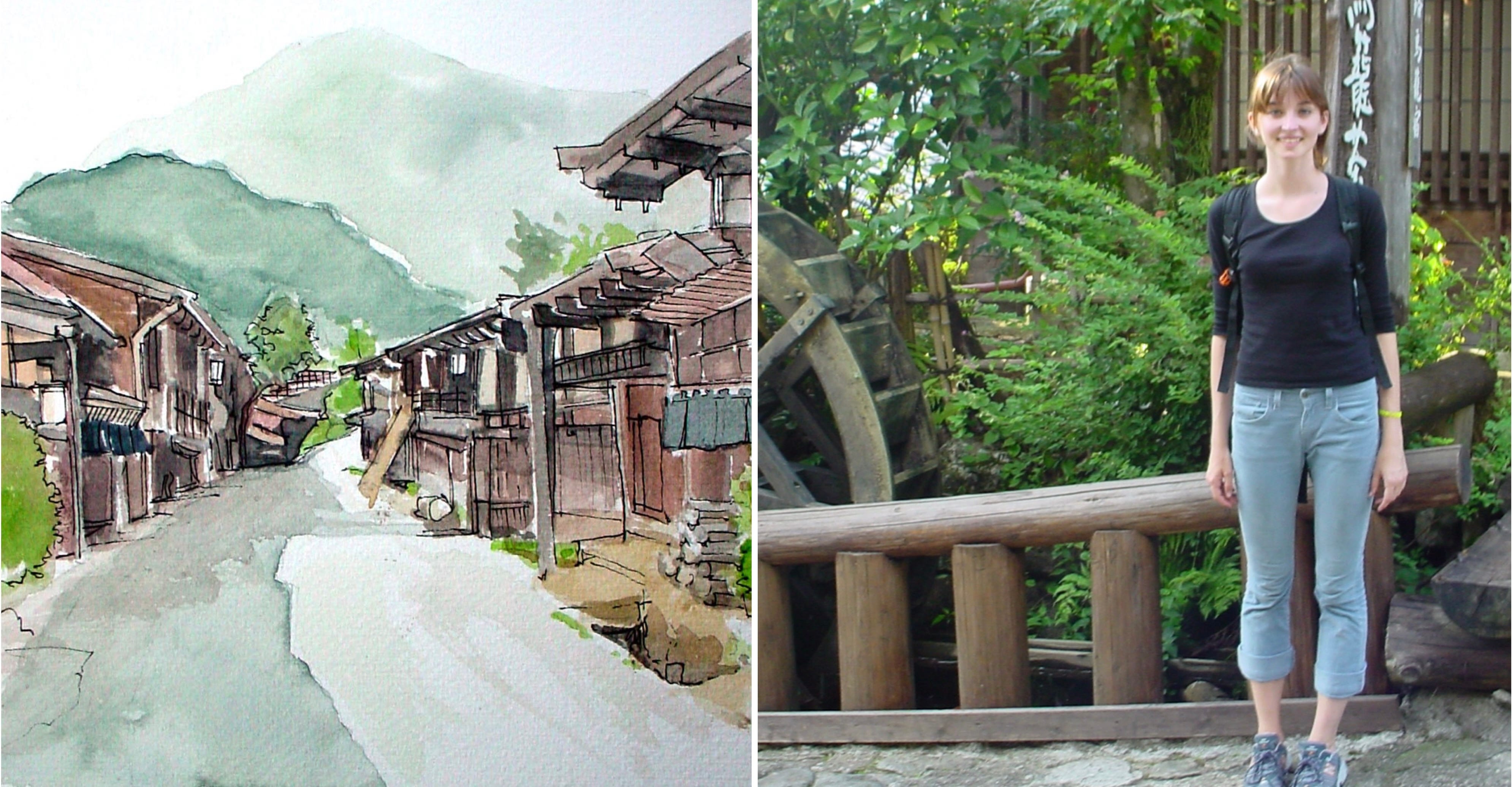
I still blush thinking about this moment, but in the end I survived. While the awkwardness of that experience may not have resulted in a piece of art that could do Takayama justice, it did result in a great lesson in how it’s okay to fumble and make yourself a little bit vulnerable. It chipped away at the anxiety that was keeping me from making my best work.
I went on to make many more sketches on that trip, and in the end I did meet many people and share many wonderful moments of community along the way. My sketchbook opened the door to unique experiences like making portraits for excited kids on a train platform in India and communicating with people who I didn’t share a language with. I learned about other cultures, but I also learned about myself, and I definitely got better at watercolor.
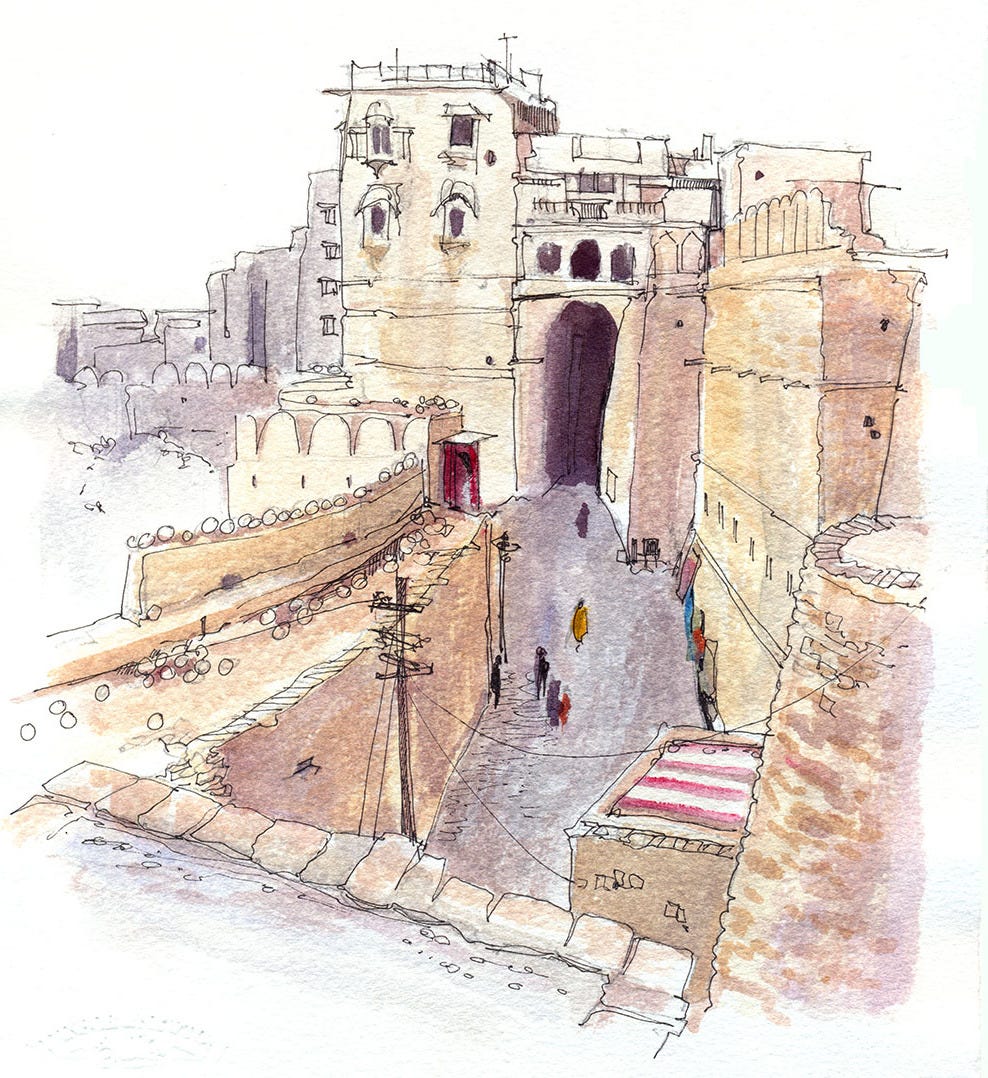
The trip was a crash course in overcoming discomfort, but I realize most people don’t have a whole year to devote to that process. As a shortcut I’ve put together my five best tips on how to overcome the inevitable anxiety and get started right now, wherever you are.
Science shows that humans learn best by playing. If you can find some way to make your artistic outing into a fun and playful challenge it will not only make it more pleasant but also help you learn faster.
There are so many ways you could “gamify” your process, so be creative. You might set a time limit or only give yourself a random assortment of colors. My personal favorite is what I like to call “Wildlife Documentary.” It always makes me laugh, and laughing at yourself is a vital skill for any artist.
The rules are simple: imagine that the narrator of a documentary is observing you and describing everything that’s going on. I prefer a David Attenborough voice-over:
“The human has ventured out into the wild. Far from her territory, her anxiety is high. She has carefully angled her easel so that it will be harder for passers-by to see her work. Social acceptance is important for this primate, and her ego is still too fragile for her to realize that the other humans are all preoccupied with their phones. But to avoid the humans she has put herself in an awkward position. Now the wind has blown her easel over! What will she do?”
There’s a simple and often overlooked way to prevent people from trying to peek at your art: say hello and offer to show them your work. Not only does it put you in control of the situation but it also brings them into the experience. When someone lets you look at something as personal as a sketchbook it feels like a special gift and creates an immediate bond. You’ll feel better and possibly even make a new friend.
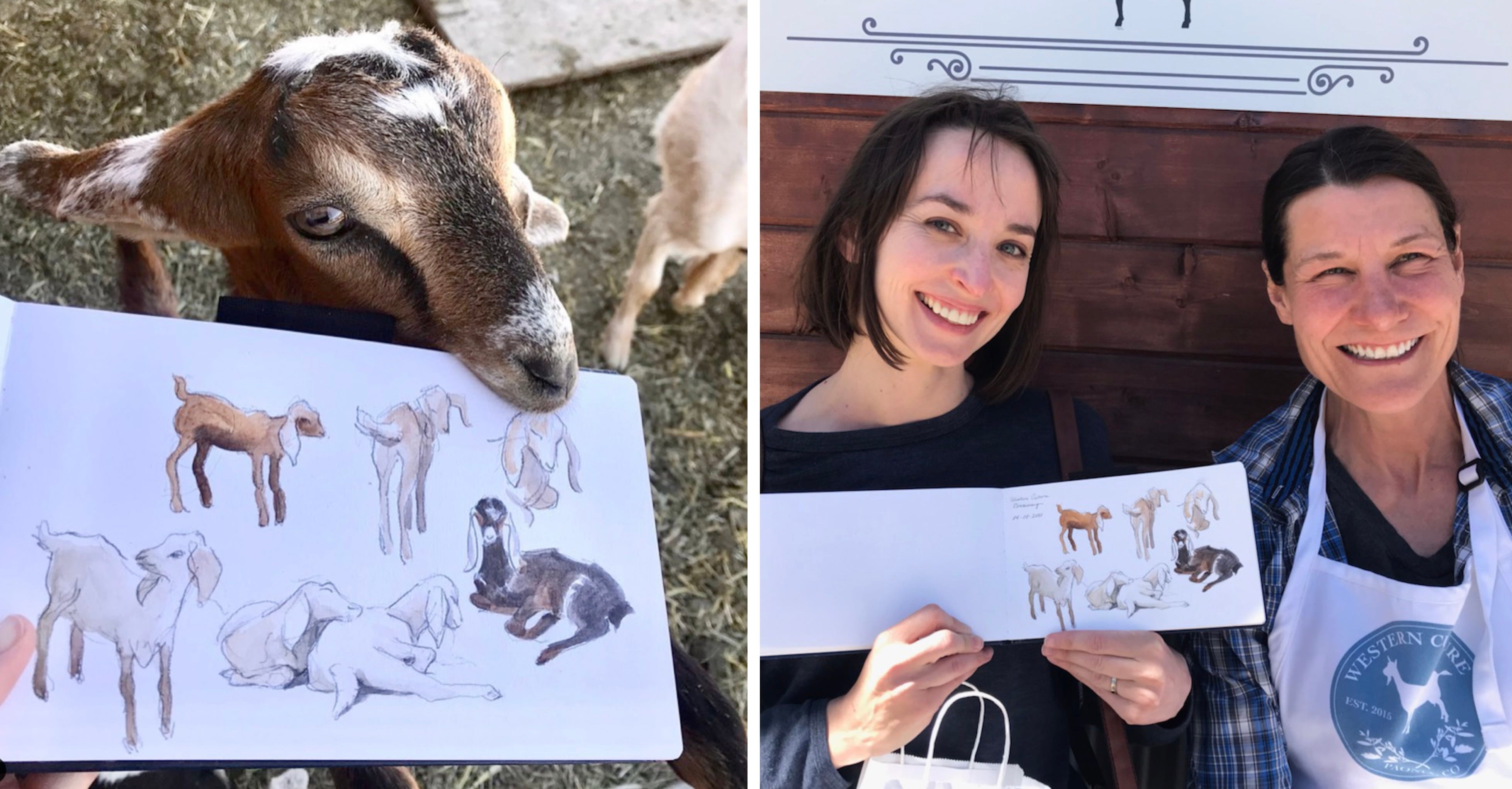
I generally find that people are curious and excited rather than mean and judgy. (And if they are mean and judgy then they can go jump in a lake!) I love connecting with people and occasionally even keeping in touch, like these folks who once kindly let me draw their baby goats.
Are you asking too much of yourself when you go out to make art? It can be tempting to think that you can go out and master your medium, learn to be comfortable in public, deal with changing weather conditions, and capture moving and dynamic subjects all at the same time. I did much better when I started choosing just one thing to work on. It could be, say, getting the colors right, or finding an interesting composition. Or it could be as simple as making something—anything—when the conditions aren’t ideal.
The self-help shelves are full of advice about starting small, and for good reason. There’s wisdom in the idea of working your way up to larger changes. Just getting out of your house with sketchbook in your hand could be step one. Opening it up and making a few marks could be step two. Someday, if you keep at it, you’ll be doing it all. You might even add additional challenges and push the limits of where and when sketching is possible!
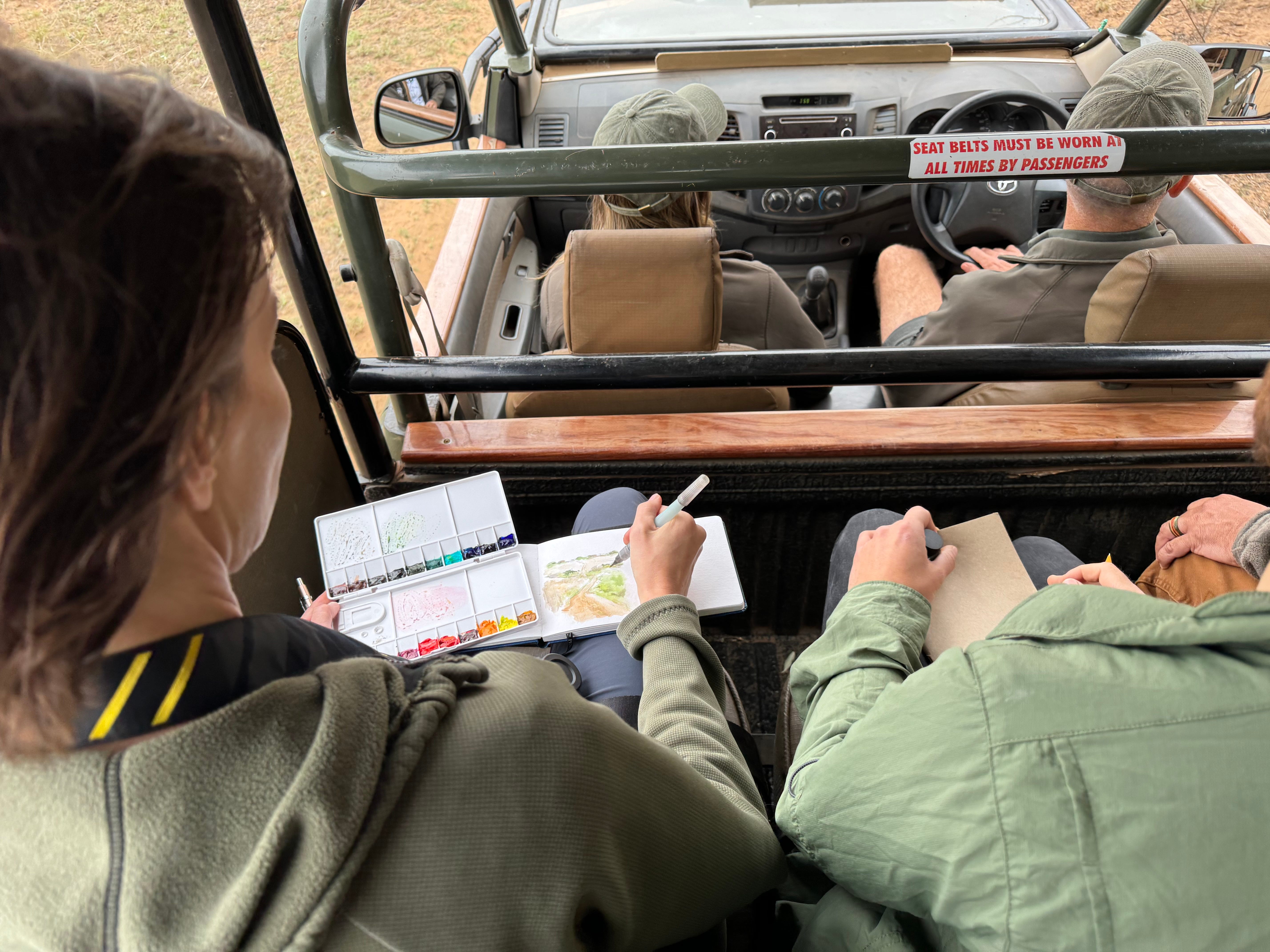
If you’re caught in a loop thinking “I feel awkward,” try focusing on the sensory information around you instead. What do you hear? What’s the temperature like? Is there something you can smell or sense? Maybe you have a pit in the bottom of your stomach and a fluttering heart. Maybe you are regretting that spicy curry you ate earlier. Note it. Is there something pleasant to focus on, like a bird singing? Observing these things can help get you out of your head and back into the experience.
I had a revelation the day I finally understood that every so-called “bad” painting was a step closer to the work I wanted to be making. In fact, the bad work is part of the good work, because everything is connected. There is no C without both A and B.
This realization took the pressure off: I didn’t need to like what I had made that day in order to feel like I had made progress, I just had to make it. Instead of feeling disappointed with my achievements for the day, I’d feel energized by being one step further on my artistic path. Every now and then I’d find myself happily surprised by my work, and as the years went by the happy surprises became more frequent.
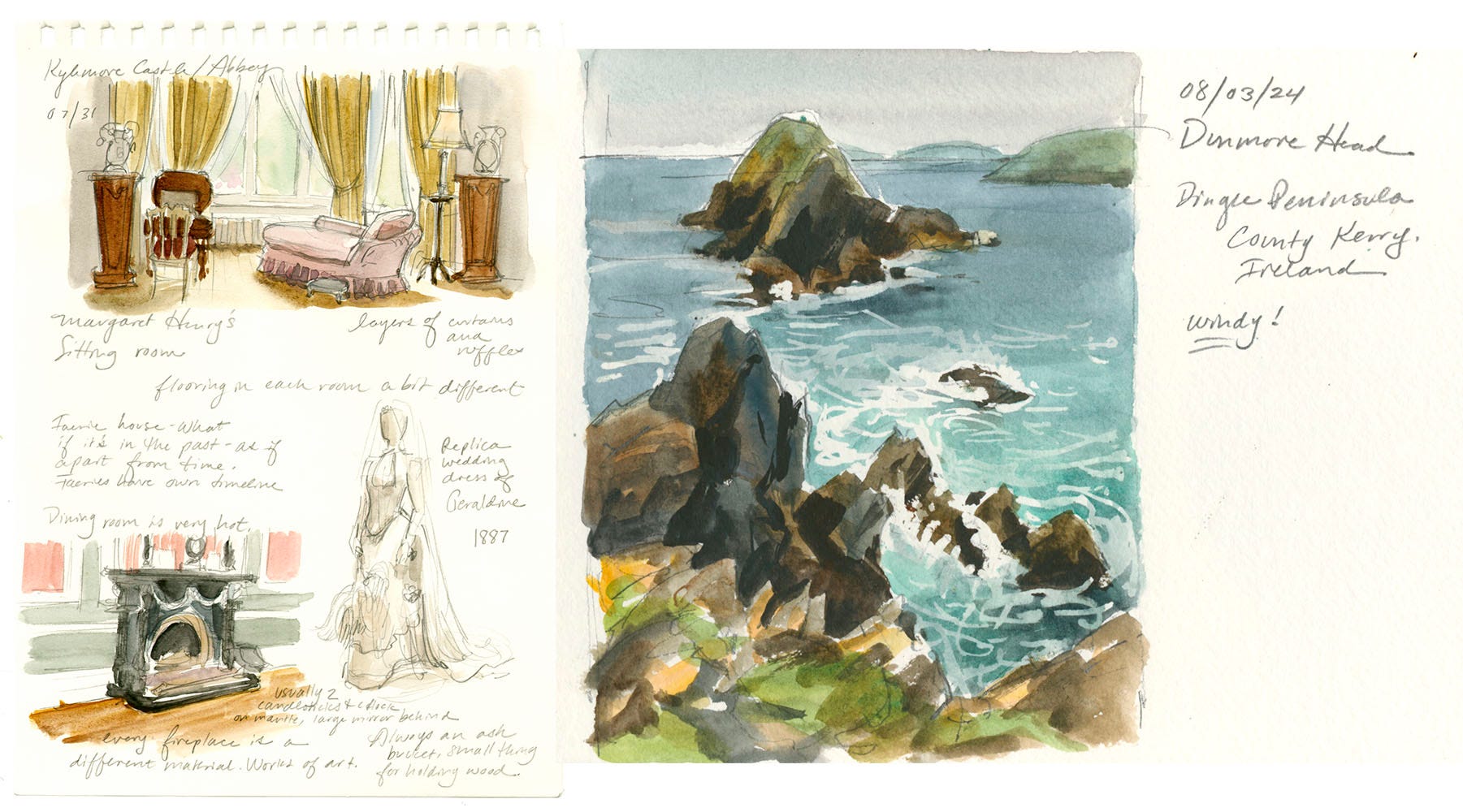
If you make the experience fun, interesting or funny it can help you overcome your inhibitions and get to the place where you’re making the sketches you need and want to be making. And one of these days, you’ll find that you’re happy with your progress, and you have a wonderful sketchbook treasure to bring home. You’ll begin building a library of observations that you can draw on to enrich your studio work, and you’ll have stories, ideas, and memories that will stay with you for the rest of your life.
The whole process can be beautiful: from the foolish beginner to graceful master and every step in between. The fantasy that you can get to the finish line without putting in some emotional pain and hard work is a lie. And why should we want to believe it? The easy path (*cough* AI *cough*) robs us of the embarrassing, bumbling moments that are so universally relatable, the moments make great stories later on when the pain has worn off. It is the richness of the journey—with its ups and downs—that makes our achievements feel satisfying and our life feel fully lived.
-Jessica
Thanks for reading! If you enjoyed this post, please consider sharing it with a friend. And I’d love to hear your own ideas and tips for getting past anxiety in the comments.
Thanks for reading Pictures and Words -Jessica Lanan's Newsletter! This post is public so feel free to share it.
No posts
Comments
Nothing yet. Say the first thing.
Sign in to join the conversation.