
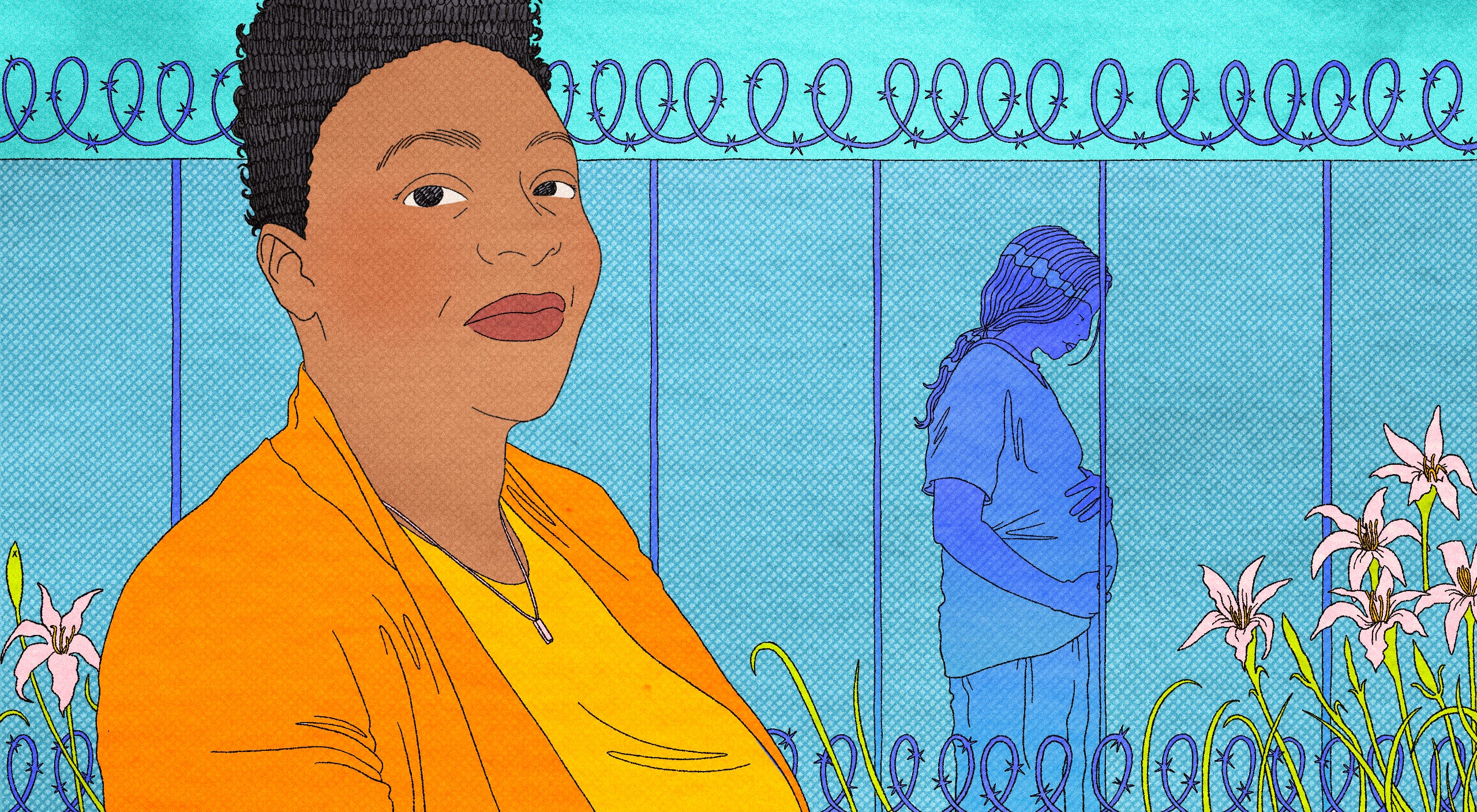
In the first two years after the Supreme Court killed Roe, over 400 people faced criminal charges related to their pregnancies. Many were struggling with substance use disorders. And many were jailed while pregnant, against all medical guidance and public health warnings, separated from their newborns, or subjected to invasive, faulty drug testing.
Organizations like Pregnancy Justice perform the vital, urgent work of providing legal representation to these women. But there’s another crucial arm of the organization’s work: they’re trying to prevent pregnancy criminalization from happening in the first place. At the helm of this work is Ashley Sawyer—an attorney and policy strategist working closely with lawmakers and community advocates across the country to address the root causes of why pregnant people face these charges.
Certainly, policy change is a major part of the equation. But so is public education, Sawyer says.
“Because of popular culture and media, particularly when we go back to the ‘80s and ‘90s, there was all of this mythology around so-called ‘crack babies’ and a lot of blame placed on particularly Black and Latine moms, who were blamed for a number of social and structural issues.”
For generations, problematic journalism, medical misinformation—and structural racism, misogyny, and classism—have defined the standards we hold mothers and expecting mothers to. And those standards inform how law enforcement treats pregnant and postpartum people.
Anyone familiar with our reporting at Abortion, Every Day knows the bogus, terrifying reasons people are arrested for their pregnancy outcomes. They sometimes face charges for how they disposed of pregnancy remains (even though there are no laws for how to ‘properly’ do so), or ‘manslaughter’ and ‘child endangerment’ charges. They’re often targeted by cops who are all too eager to punish ‘irresponsible’ mothers, and turned in by healthcare workers motivated by personal biases. For those who are struggling with substance use, carceral and punitive measures only place them and their pregnancies at further risk.
Finally, even a dismissed charge or a courtroom win won’t undo the damage. An arrest, a mugshot spread across the internet, incarceration that cuts off prenatal care, separation from a newborn—the consequences are vast and lasting. That’s why Sawyer is trying to stop these charges from materializing in the first place.
Sawyer spoke to AED about the policy change we need—including change that’s already happening—to decriminalize pregnancy; the cases that have stayed with her; the challenges to creating structural change when individual cops have so much power; and what everyone from voters to state legislators can do right now to help.
AED: What does an ordinary workday entail for you?
AS: My days are all very varied. In policy, our work is super dynamic because we have multiple priorities. This often involves talking to so many different audiences. A typical day can include preparing talking points for Pregnancy Justice’s staff, or depending on the time of year, drafting or reviewing testimony to a state legislative body—like a state senate or state assembly. I get the privilege of being a part of coalitions. I was just in a meeting with one of the coalitions I’m a part of, the New York State Informed Consent Coalition. [Ed. note: Informed consent refers to ending nonconsensual drug testing.] Our work is to prevent the criminalization of parents, particularly Black and brown moms, in New York state, and interventions from family policing, and try to advance legislation to protect their dignity and health outcomes.
We’re just planning out this coming fall—which lawmakers we need to talk to to get on board with our bills, or preparing fact sheets to help the public understand our issues better. Last week, I was working on social media posts about the most recent legislative trends across the country on pregnancy criminalization. We do both federal and state-level policy work, and it’s a lot of coalition work with different groups.
AED: Are there any particular cases that Pregnancy Justice has worked on that have really stayed with you?
AS: A case that’s stuck with me involves a woman in Alabama, Tiffany McElroy, who was incarcerated and subjected to horrific conditions. When I read her case, I was moved to tears from the way she suffered. I believe deeply that incarceration of any kind is inhumane and horrific—especially for pregnant people. Tiffany was in her third trimester due to give birth, and jail staff treated her like dirt and didn’t acknowledge her pregnancy. When she went into labor, they punished her and the incarcerated women who were demanding she get medical attention.
The whole time that she was in labor, she did not have medical assistance. She didn’t have access to pain medication. The jail staff only believed her after she gave birth and let her go to a hospital, where she was diagnosed with anemia because she lost so much blood in jail and from infection, and this could have cost her her life.
This is happening in a state where pregnant people are incarcerated under the Chemical Endangerment Law, where cops and prosecutors jail pregnant or postpartum people under the guise of protecting fetuses. But all of the public health data says that incarcerating a person actually increases their stress and worsens their health outcomes.
Tiffany’s case is an indictment of the horrific nature of criminalization for pregnant and postpartum people, the way pregnant people who use drugs are criminalized for their conduct during their pregnancy, then sent to jail which is not safe for them or their pregnancy.
AED: How have these Pregnancy Justice cases influenced the policies that you’re seeking to write and advocate for?
AS: There’s a really direct connection with the policy and legislative advocacy we do and the cases that we take. We prioritize policy advocacy in the states where we’re seeing a lot of criminalization, like Alabama, Oklahoma, South Carolina. We try to prioritize thinking of the interventions, the tools we can use from a policy standpoint, to reduce risk of harm to pregnant and postpartum people, including in states that are hostile to reproductive freedom. But we also work in states that are more receptive.
Recently our litigators flagged to me that there were pregnant or postpartum people who being placed on severe child abuse registries in Tennessee because of consuming cannabis. One parent had a cannabis gummy during her pregnancy and was placed on that registry. We’re pressing state lawmakers to reconsider these types of policies and challenge this idea that if a person uses drugs—whether they have a substance use disorder or whether it’s just a false positive from faulty testing—that either way, pregnant people and postpartum people should not be separated from their their newborns. This goes against all of the best public health research.
In New York, with Informed Consent Coalition I mentioned, the bill we’ve been pushing is the Maternal Health Dignity and Consent Act against nonconsensual drug testing of pregnant people. It’s all connected, though our work in New York is distinct from our approach in Tennessee. There’s a strong throughline across the country of tens of thousands of pregnant and postpartum people subjected to horrific, invasive investigations, all under this false idea that people who use drugs or people who are accused of using drugs during pregnancy or postpartum are somehow inherently a risk to their children. That’s just not backed by science, and it’s not good policy. A great deal of our efforts are designed to mitigate that potential harm and keep families together.
AED: What are the long-term consequences that someone who has faced criminal charges over their pregnancy may experience, beyond the initial charges?
AS: The moment a person is arrested or accused of a crime, that person has their name and mugshot everywhere, and they’re subjected to the stigma associated with criminalization—even worse if they’re in a small, rural community. Because of the internet, even just facing an allegation and for years beyond an arrest, your name is Googleable forever. That’s why protecting the privacy of our clients is so important for us. Our clients could lose their job, their community. I was thinking of the Brooke Shoemaker case in Alabama—like other clients, she was providing support for other children and family members, and after being arrested and incarcerated, she wasn’t able to support them anymore.
The impact can’t be understated. You might get cut off from family, friends, religious services. Then there’s the physical safety threats of being incarcerated, exposure to harm and disease, like with Tiffany in Alabama, who was incarcerated while pregnant and that had a negative impact on her pregnancy outcomes. You’re not getting adequate medical care. Criminalization diminishes your overall health outcomes.
The costs of legal representation, the cost of losing your job. Many people just don’t have the money or the resources to defend themselves in criminal cases. It’s incredibly expensive, but particularly in states where pregnancy criminalization is the most common—the legal representation is more than most of them can afford. I don’t know if there’s a way to even capture in words how horrific and long-term the impacts are.
AED: We’ve seen that so many pregnancy criminalization cases are a result of how much discretion these individual local law enforcement officials have. Is that a challenge in crafting policy to address this structural issue?
AS: Our research team does incredible work documenting the cases of pregnancy criminalization since Dobbs, and overwhelmingly, these involve substance use. Those cases often came down to one or two cops’ ideas. So, relatedly, one of the biggest, biggest barriers to all of our legislative and policy work is dispelling deep-seated myths and false ideas. Because of popular culture and media, particularly when we go back to the ‘80s and ‘90s, there was all of this mythology around so-called ‘crack babies’ and a lot of blame placed on particularly Black and Latine moms, who were blamed for a number of social and structural issues.
So many publications were reproducing these ideas around the myth of the so-called “crack baby.” But we know the science they believed in is wrong. A drug test is not a parenting test. A person’s ability to parent and care for their children is not determined by whether or not they test positive for substances. A huge part of our work is education, so we have fact sheets to this effect. We encourage lawmakers to consider actual public health research and evidence rather than knee-jerk reactions—what actually works? Top medical associations will tell you that punitive responses to substance use in pregnancy are not the answer. Parents need care and support.
So, we explain to lawmakers to take action against incarcerating someone, separating families, painful investigations. These are things they have control over to pass legislation to stop. We connect them to real people who can tell their stories, to data and information. People shouldn’t have to worry that if they go to a healthcare facility or a doctor as they’re navigating a pregnancy loss, that they’re going to be criminalized. We want lawmakers to see that a big part of changing this means creating legal protections and passing legislation to protect pregnant and postpartum people from criminalization based on how their pregnancy ends.
AED: Behind the scenes, what are people missing from the movement to end pregnancy criminalization? What isn’t being covered?
AS: A lot of the coverage around pregnancy loss is sometimes lacks compassion. When we think about cases that involve people who experience a stillbirth or miscarriage, there are ways in which media can jump to conclusions and rely on information that’s not rooted in evidence, or just rely on ideas that are not rooted in compassion. If I had a magic wand, I would first of all end criminalization altogether, but short of that, help media and lawmakers and those with influence to unpack their biases. We know these assumptions are rooted in misogyny, classism, racism.
And these stories should be rooted in science and evidence. At Pregnancy Justice, we’re combating the use of the lung float test, which is outdated and ineffective, and similar tests that wrongly justify pregnancy criminalization. The Drug Policy Alliance’s slogan is compassion and science, which I can’t emphasize enough.
AED: What are actions that voters, lawyers, local city officials, state lawmakers, or policy staffers in Congress and beyond can take right now to help stop pregnancy criminalization, and stigma around pregnancy loss?
AS: Some bills that passed this legislation—they don’t solve every problem but they’re promising. We saw six different bills introduced to create working groups to consider how states could be responding to substance use and pregnancy. Virginia’s task force has to include a directly impacted parent, a pediatrician, OBGYN, midwife, and they have to have specialty in addiction medicine.
Pregnancy Justice also has a legislative blueprint that focuses on mitigating punitive responses to substance use in pregnancy, including how states can use their opioid settlement funds to directly infuse resources toward supporting pregnant people navigating substance use disorders in getting help. Or, we support bills like the Maternal Health Dignity and Consent Act in New York that require informed consent before drug testing pregnant and postpartum people and their newborns.
Next year, we’re thinking about medical privacy bills, addressing punitive child welfare systems, anything that will be a deterrent to people accessing prenatal care because they fear being criminalized. Anything that enhances stigma will be a deterrent to people accessing care.
AED: How are you unwinding and taking care of yourself while doing this work?
AS: My answer is always going to be girlfriends. I am so fortunate to have an incredible set of friends I can go out and spend time with—that is how I sustain myself. It’s through nurturing community, my friendships, the people who love and care for me.
Donate to Pregnancy Justice here.
Comments
Nothing yet. Say the first thing.
Sign in to join the conversation.