
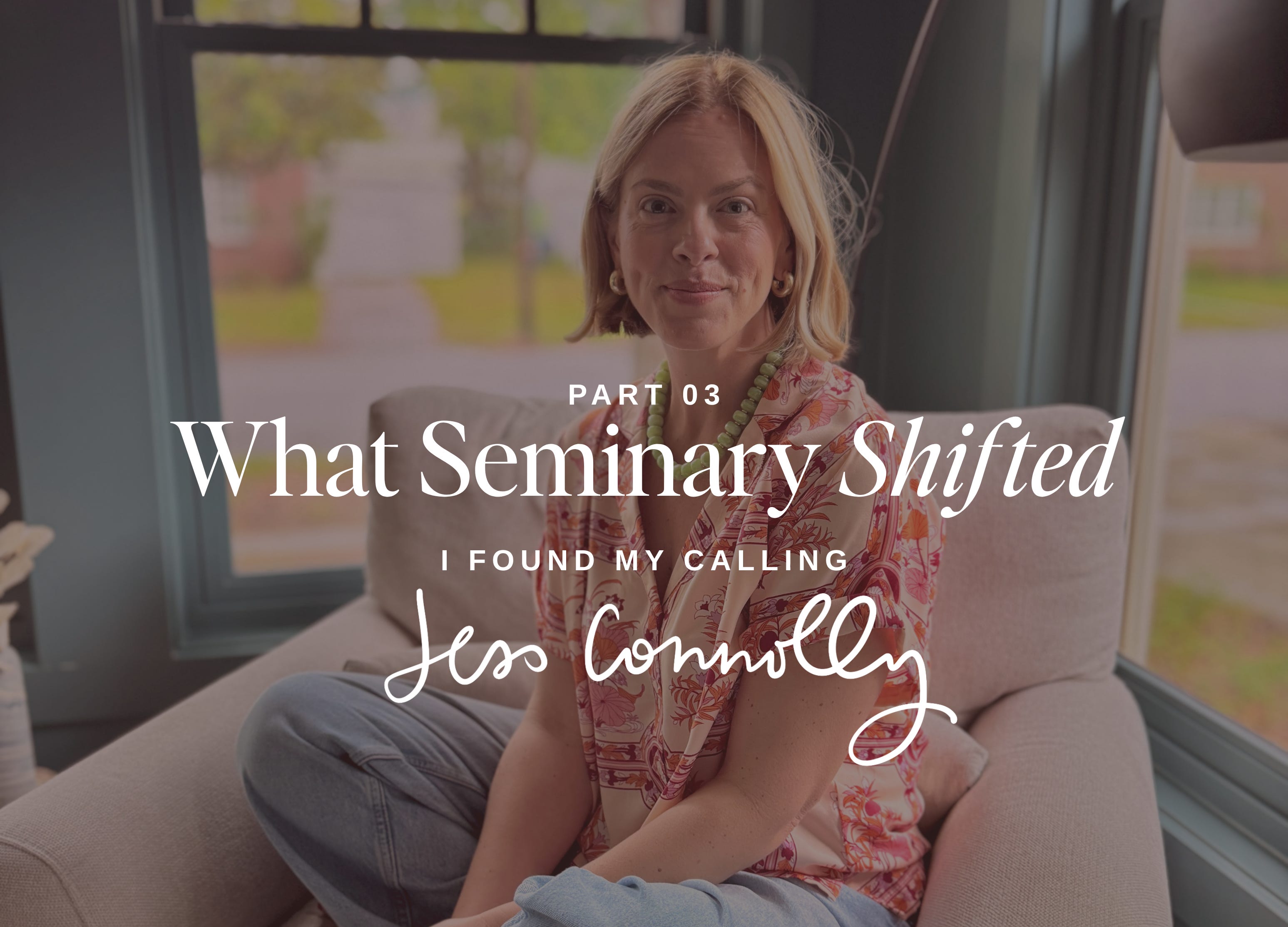
When someone asks me what I do for a living, I’m not really sure how to answer. If I’m totally honest, I often vary the answer based on what I think will make most sense to them.
If I’m talking to someone in my city, I’ll tell them I’m a pastor, because that is pertinent to our local context. And if I’m honest, it feels a little less pretentious than saying I’m an author (though there is nothing wrong with owning being an author!) and a little less nebulous than saying I’m a business owner. But the truth is, while I’m ordained to pastor and I do pastor, I don’t get paid for it, and it’s not my full-time job.
If I’m speaking to someone in a leadership context, I might say I’m an entrepreneur and coach, because both are true! I founded Go and Tell Gals and still spend a good portion of each week strategically helping other people in their lives and callings. But then, I’m not really talking about the bulk of what I do with my own calling: writing, communicating, and pastoring.
These things rarely feel like they’re at war, and for the most part, I’ve figured out how to function in all these roles in a way that feels pretty organic. But it isn’t really easy to articulate.
Anyhow, back to seminary!
Can I confess that when I said yes to being a part of the Women’s Leadership Cohort at Denver Seminary, I never even paused to think about what the actual Master's degree would be IN? Everyone in the WLC takes the same classes through the same program, and we all end up with a Master’s in Biblical Studies. I was about halfway through the program when I realized there are actually many different master’s degrees you can get in seminary, I literally didn’t know. 🫠
A Master’s in Biblical Studies is basically a lot of what you’d expect, and I’m VERY glad it’s the degree I got. You learn how to study the Bible. You learn how to use the Bible to study and process theology. You learn facts about the Bible, but you also learn how to use the Word of God effectively.
We’d sit through an amazing teach on the Holy Spirit, and I’d be wondering: how can I best communicate this to the women in my Bible Study?
Incredible lecture on the history of covenant in the Ancient Near East and the implications for Christians? I’m enthralled, but I’m wondering how I use this to shift my own language when I’m unpacking salvation.
Every single time I learned something, I found myself saying: OK AWESOME. Now how do we use this information to help people grow?
And so, somewhere during the course of seminary, my title at Bright City changed to the Pastor of Spiritual Formation. And I realized that when I write books, I’m really just asking this question: how do I help the reader experience growth and life change through the process of reading this book? As a traveling speaker and a conference host, I’m continually praying about formation, not how to put on a good show. How does a woman come into an event and leave more in awe of God? I’ve come to see even the coaching we do at Go and Tell Gals as spiritual formation: it’s strategic encouragement that helps women live into the identity and calling they’ve been given.
Going to seminary and getting a Biblical Studies degree helped me realize that I love the Bible, but I’ll probably be obsessed with spiritual formation until they put me in the grave.
Now, I still don’t have an easy answer for what I do. But if I sense the person really wants to hear more and I have the time to explain, I might say something like:
I help people grow spiritually. Through pastoring at my church, writing books, and coaching.
Comments
Nothing yet. Say the first thing.
Sign in to join the conversation.