
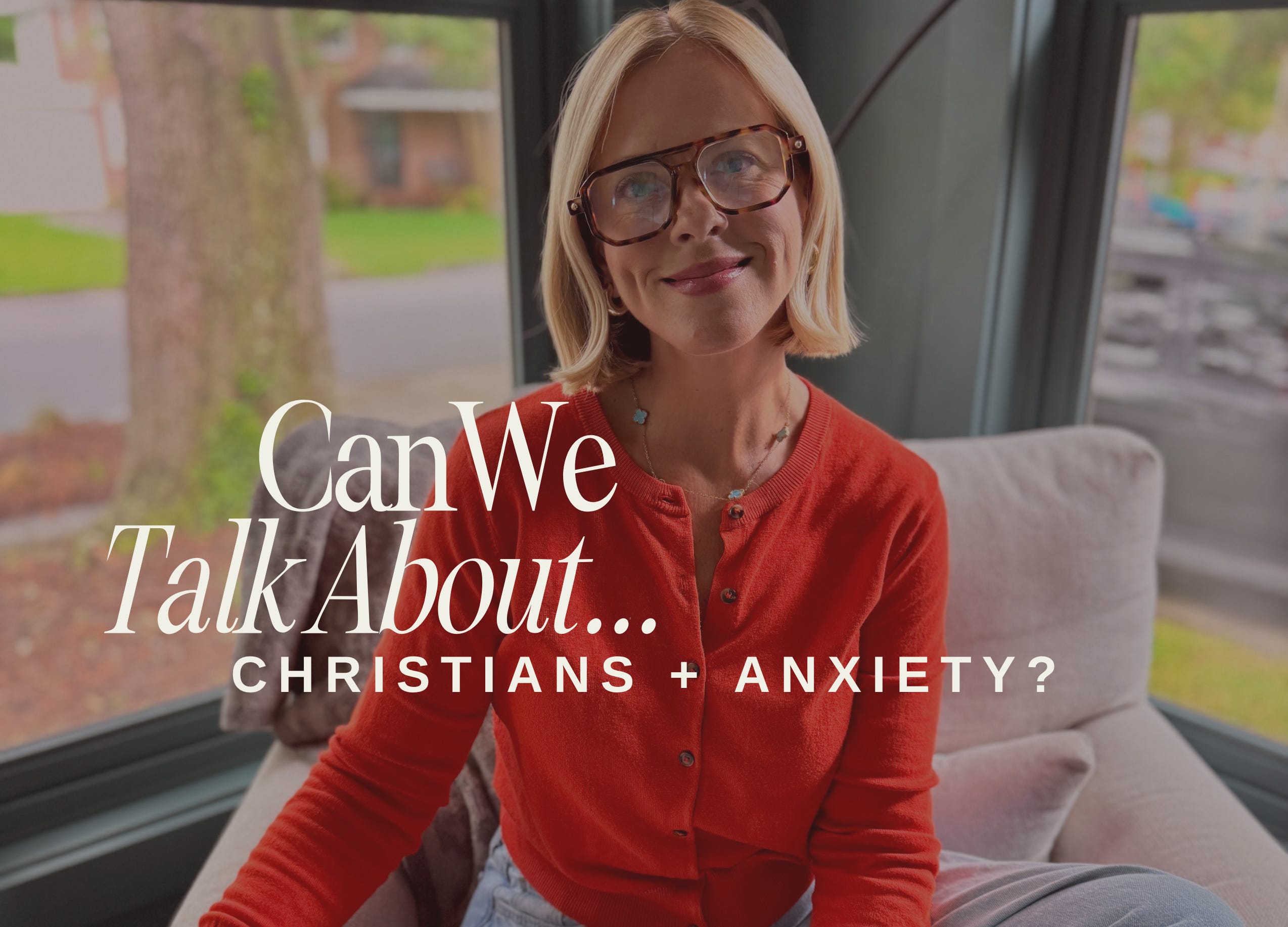
Maybe I wasn’t supposed to see it, and maybe it wasn’t even about me. But I recently saw a creator on social media say something along the lines of this: I’m sick of Christian authors and communicators talking about nervous systems when they’re not qualified, and when they’ve been part of the problem.
I wasn’t mad. I tried not to let my feelings get hurt. And honestly, I get the frustration. Christians and Christian leaders have been notoriously unhelpful when it comes to any conversation around physiological wisdom. We’ve plastered platitudes over fear, and we’ve spiritually bypassed people who are experiencing very real threats - causing very real trauma and anxiety.
I have not been an innocent bystander. I have also been part of the problem.
If you ask me when things started to shift for me, I’m sad to say it was at the start of my own battle with anxiety. When I started having rolling panic attacks, despite reading scripture and praying like my life depended on it, I started to ask questions. God used those seasons of panic to grow me spiritually, but I was also encountering something that needed physical and mental support, not just spiritual support. My hormones were out of whack. I was living dysregulated throughout the entire day and then expecting to feel peace at night. People kept sending me verses to pray, and while I was grateful, I also really believed I was a whole person, and that supporting my body and my mind mattered just as much as supporting my spirit.
That’s when I started asking real questions.
Here’s an example of what I mean: Reciting verse after verse at 3am may not be all that helpful if I’m refusing to process my fear at 3pm. Praying for rest may work against me if I’m living beyond my physical limits all day long.
My curiosity turned tenacious when my husband started dealing with panic too. He may have encountered a little less spiritual bypassing than I did, because his experience was so profound, and we also had some concerns about his heart health. But do you want to know what actually made me aggressively open to a perspective more complex than the one-note Christian take on fear we’ve been selling?
His defeat. He might not go so far as to call it shame, but I watched him beat himself up over his own anxiety. I watched him ask why this was happening to him. I watched him fight as hard as he possibly could spiritually, only to keep getting assaulted by what his body was doing without his permission.
And then there were the others.
I met pastor after pastor who had gone to the ER in the middle of the night, sure they were having a heart attack when it was a panic attack. I talked to nearly every perimenopausal woman I knew who felt like she had broken her faith and her body because she couldn’t sleep and her heart wouldn’t stop racing. I sat across from leaders, mothers, and college students, and all of them had been taught to pretend they weren’t scared and call it faith.
And when I started saying the phrase out loud….
you can’t be brave until you’re scared…
something shifted in their eyes.
They started to realize that the presence of fear isn’t the absence of faith. Together, we started to realize that our bodies experiencing anxiety is often our bodies trying to protect us.
So I decided I wanted to become informed: about nervous systems, about practical tools for facing fear, about the theological history of fear and how God interacts with scared people across scripture, and about what it actually looks like to live abundantly and courageously at the same time.
I have been part of the problem, but I didn’t want to be anymore.
Now - I could disqualify myself from this conversation entirely, getting stuck in defeat and feeling like I have nothing to add. Or I could acknowledge the space God has placed me in, and point our community toward the experts, theologians and scientists alike, who can help take all of us to a more comprehensive, compassionate, intelligent, and effective place. Which is what I tried to do in You Can’t Be Brave Until You’re Scared. I didn’t act like an expert, but I pointed toward the research of actual experts, doctors, and therapists - some who are believers and some from completely secular sources. I decided I could show and share where God has changed my mind - because, as I always tell my kids, there is nothing more effective than someone honestly admitting where they were wrong.
Christians have long been part of the problem when it comes to thoughtfully discussing fear and anxiety. It doesn’t have to stay that way.
And - this is a note for every person who might feel disqualified from speaking up about something, especially if their mind has been changed. A changed mind is a changed heart, and it is literally how the world changes. If we move into spaces with compassion and curiosity, without acting like the heroes and constantly acknowledging that we only hold our own perspectives - while seeking to understand others - we make it safe for ourselves and others to keep growing.
You can’t be brave until you’re scared.
Your anxiety is not a sign of weakness.
Let’s change the narrative, and let’s watch our communities change along with it.
— Jess
PS: When you preorder the book right now, you get amazing resources immediately - check them out here.
Comments
Nothing yet. Say the first thing.
Sign in to join the conversation.