
Since the launch of Feathers of Hope in January 2023, I’ve generally avoided writing in the first person. While the perspective of these posts is my own, my intention is always to be more informative than opinionated. Readers of Feathers of Hope are considered to be members of our network, rather than subscribers to Jerry Weiss’ Substack. As Joyce Vance ( Civil Discourse ) is fond of saying, we’re in this together. Our purpose here is to be active citizens together, robustly engaged in our democracy. Therefore, I’ve told you almost nothing about myself.
Today will be different. — J W
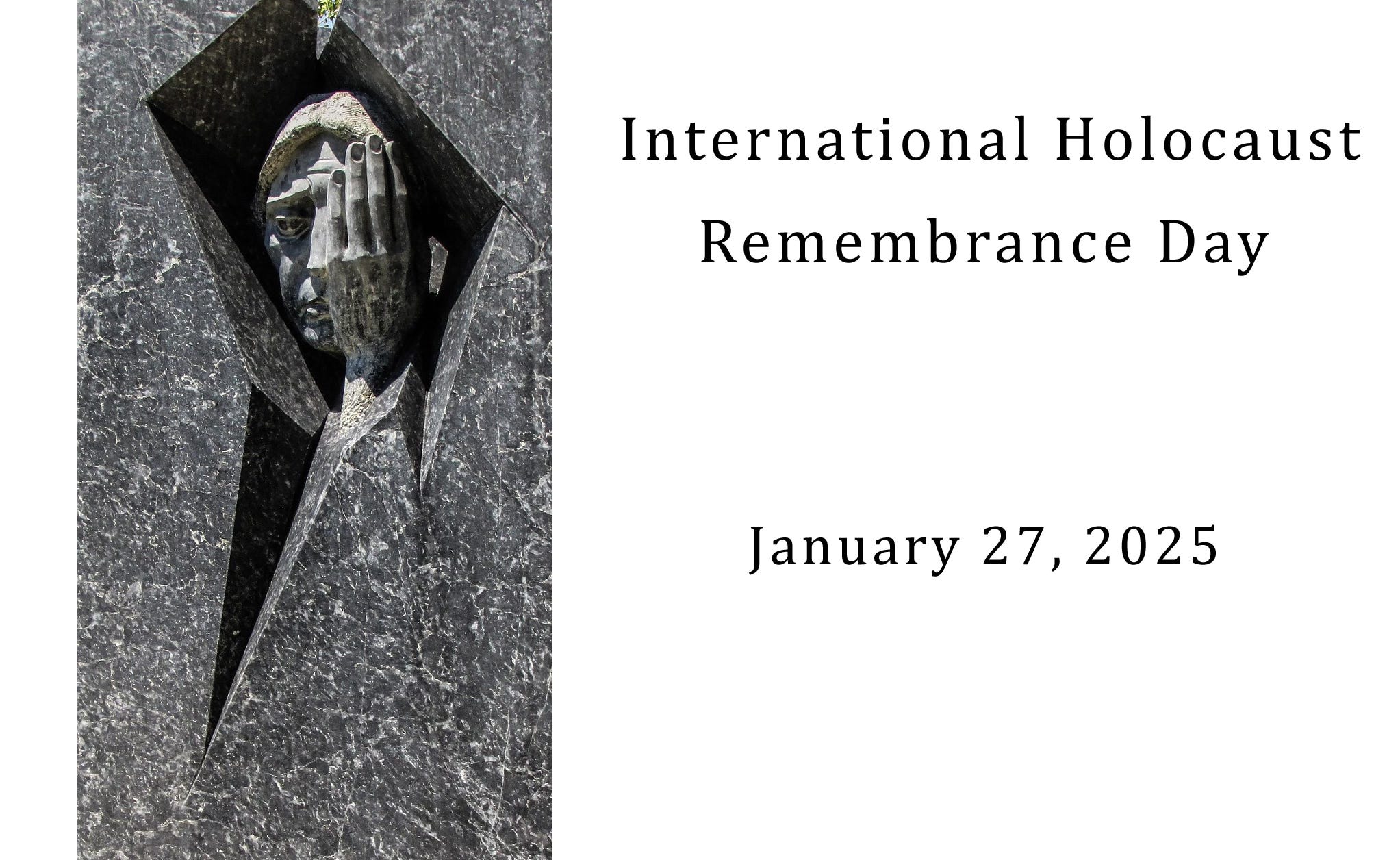
For the last 20 years, January 27 has been recognized as International Holocaust Remembrance Day — an occasion to reflect on both the nature and extent of this uniquely evil horror.
As historian Christopher Browning explains:
“I believe that the Holocaust was a watershed event in human history—the most extreme case of genocide that has yet occurred. What distinguishes it from other genocides are two factors: first, the totality and scope of intent—that is, the goal of killing every last Jew, man, woman, and child, throughout the reach of the Nazi empire; and second, the means employed—namely, the harnessing of the administrative/bureaucratic and technological capacities of a modern nation-state and western scientific culture.”
A few days ago, Steve Schmidt ( The Warning ) described visiting Auschwitz last year, his second time there. After recounting details of the Nazi extermination program in vivid detail, he concluded:
“What is the meaning of Auschwitz? I don’t know if I could answer the question in a lifetime. I can just tell you what I saw and learned.”
I recently came to a similar conclusion about the meaning of the Holocaust in my life. I can’t really say what it means, but I can tell you about the gradual, yet powerfully traumatic, effect the Holocaust exerted on my youth.
My ancestors came to the United States from Germany at the end of the nineteenth century. They settled in a small German farming community in Northern Minnesota, where the hub of all social and political life was the Catholic church. Both my parents were raised there and were married in that church. They left the village behind in the late 1930’s, and spent the war years in several different cities where my father worked for the U.S. Defense Dept.
I am what is commonly known as a baby-boomer, part of the “baby boom” that immediately followed the end of World War II. So obviously I make no claim to any equivalence between my experience and that of actual Holocaust survivors. Nevertheless, I believe my story may be of value to those for whom the Nazi atrocities of the 1930’s and 40’s are fading into a distant history. What I learned in my youth shocked me to the core, and the lessons must never be forgotten.
In 1953, on my 8th birthday, our family moved to Evanston, Illinois — a mostly middle-class suburb, separated from Chicago to the North only by an imaginary line down the middle of Howard Street. Directly to the West is the town of Skokie, where in 1977 the ACLU would defend the constitutional right of Nazis to parade through a neighborhood largely populated by Holocaust survivors.
Prior to that, I had little awareness of who lived around us, beyond a few names and faces. But as I neared adolescence I became ever more aware of the differences and similarities among our neighbors. There were Jews and Catholics, maybe a Protestant or two. I don't know if this is statistically true, but it seemed to me that there were more Jews in homes on our block, and on the two adjoining blocks, than there were Catholics.
Directly across the alley were the Schneidermans, the only name I still remember today aside from the Krzywda's next door. I baby-sat a few times for the Schneidermans, and once or twice they invited me to their home to share a Passover or Hanukkah ritual. Their next door neighbor was Jewish, and another Jewish family (the Benjamins?) lived next to that one. I remember that he had a giant electric train set-up in his basement.
In the next house after that, there lived a very thin woman, probably in her 40's. She had no breasts at all. In the summer she'd wear shorts and an elasticized strip of cloth around her chest where breasts belong, but she was like a boy there. She had dark purplish numbers tatooed on her forearm.
Next door to the Krzywda's lived another Jewish family, 3 generations in one house, including two elders who both also had tatooed forearms.
Around the age of 11 or 12, I started asking questions. I'd learned by then that there had been a big war just before I was born, and that Jews had been some kind of victims. But no one wanted to talk about it
There was a newsstand at the corner of Main St. and Chicago Ave. in Evanston. Newsstand is something of a misnomer, as it was really a small bookstore with a couple racks of newspapers and magazines in the front. The rest of its maybe 1000 square feet was filled with brand new paperback books, all carefully arranged by subject. I used to go there regularly to browse the titles, and occasionally steal magazines featuring pictures of naked women.
It was the 1950's, and among the paperbacks lined up on wooden racks inside was a large section of books about the then recent World War II. That's where I learned what happened.
I didn't care much about the military campaigns and famous battles. But I became obsessed with the Holocaust and all the things our neighbors would never mention.
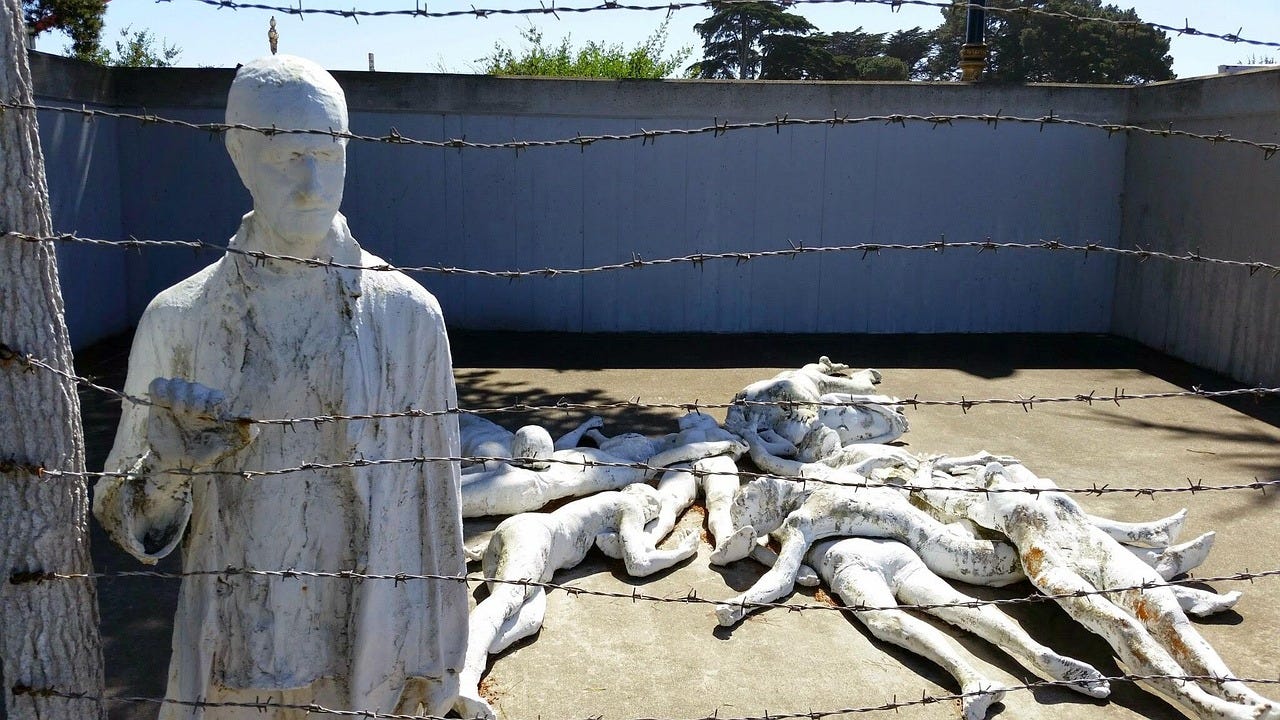
Many were graphically illustrated with photos of the camps and their prisoners -- naked bodies piled up in pits, living humans barely more than skeletons with vacant eyes, wearing broad-striped pajamas and standing behind barbed wire.
The more I read the more I needed to read. I read about the tortures, the deprivations, the cruelty. And there were the trains, the Jews' initial experience of degradation and dehumanization on their way to extermination. I read about boxcars packed with ordinary people, on trips that lasted whole days and nights with no food, water, or toilets -- totally dark, and foul with excrement and vomit. All of these images crowded my imagination, quietly haunting every meeting with one of our Jewish neighbors.
And I read about the lives of the Jews before they were rounded up and put on trains. In the years before the extermination camps, there were yellow stars, ghettos, random destruction, mindless killing and for all Jews, wealthy or worker, the stripping away of every remnant of their standing in society. The running and hiding, the daily terror of just being a Jew as every element of what had been civilization turns its fearsome strength against you. The more I read, the more I needed to read.
Stoked by hatred, their shouts of "sieg heil!" shattered everything with its threat of imminent violence. I could not bear to turn another page. I could not keep from turning another page. And every time I saw the woman with no breasts, it would all come as a flood of wonder that the men who did such things had once been normal men, fathers like my own.
By the time I was 15, I'd learned also about the Nuremberg Trials. The courage of witnesses’ testimony gave me hope, while the pathetic excuses of defendants exposed their moral bankruptcy. I cheered whenever news of Jewish Nazi-hunters in South America would find former SS officers, mass murderers all. When they located Adolf Eichmann it felt like things were finally being made right in the world. I studied his picture, looking for something I still can't describe but never did see.
From April through December 1961 the course of the Eichmann trial was described in detail in weekly news magazines. This became the denouement of my obsession. His conviction finally provided the catharsis I desperately needed after my proxy adventure, a journey that by then had lasted as long as the war itself had.
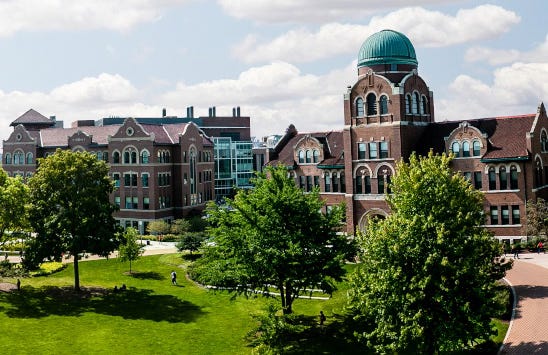
Freshman year, I took a class in Speech and Oratory on the first floor of a small building with a lawn and trees just outside the windows.
One day, as an exercise and demonstration designed to illustrate a point, the teacher did something no teacher would ever dare to do today. He had the entire class stand and repeat in unison, "Sieg, Heil!" using the cadence of the original: a slight but significant pause between the two words.
"Sieg! Heil!" "Sieg! Heil!" "Sieg! Heil!" over and over, louder and louder.
The effect was overwhelming — blindingly illuminating and profoundly frightening. All the images and stories I had absorbed over the preceding six years washed over me in a tsunami of terror.
Our teacher was old enough to have still fresh memories of what had happened only two decades earlier. And he knew that the impact of his lesson that day on those of my generation would need no further explanation. We all felt the sinister energy of an organized mob, adrenalin surging, aggressive and extraordinarily dangerous.
There, in the tranquility of a college classroom, I understood in an instant how easily such a thing can happen, how quickly everything can change. And normal men — men like my father, my teacher, and perhaps myself as well — can become monsters.

This is a network of ordinary citizens. In a democracy, we exercise our power by speaking out against injustice, hatred and bigotry. To be silent is to be powerless.
Comments
Nothing yet. Say the first thing.
Sign in to join the conversation.