
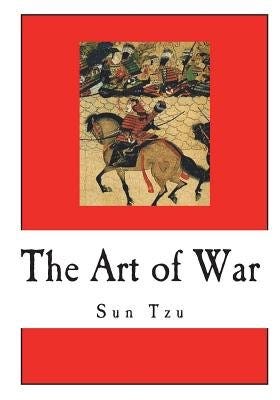
“Throw your soldiers into positions whence there is no escape, and they will prefer death to flight. If they will face death, there is nothing they may not achieve.”
- Sun Tzu (544-496 BCE), The Art of War, a classical Chinese text on military strategy and psychology in warfare
Among the maxims and parables that Sun Tzu wrote in The Art of War one of the most infrequently quoted and least understood is his precept that soldiers trapped in situations where there is no chance of escape will fight to the death rather than accept defeat or surrender. Sun called this manic mindset Death Ground: 死地.
Although Western military strategists and tacticians have known of Sun Tzu’s writings since 1772 when the Jesuit priest Jean Joseph Marie Amiot translated a French version of the Chinese text, they have misunderstood or disregarded the Death Ground concept, probably because it is inconceivably contrary to their inculcated principles of the value of human life, freedom of choice, will to survive, and hopeful expectation – beliefs that are foundations of Western philosophies, cultures, and religions. Death Ground continues to be a conundrum to most Western minds to this day.
This failure to appreciate the concept of Death Ground has been costly. In the uprisings against the oppression of European colonial powers during the 18th and 19th centuries, the ferocity of warriors who fought to the death was often dismissed by Western sociologists, military and political leaders, and popular writers as tribal ethnicity, drug-induced frenzies, or primitive peoples’ ignorance of the weapons they faced. Even in the global wars and regional conflicts of the 20th and 21st centuries, Western military leaders seem baffled by the motivations for Japanese banzai charges and kamikaze attacks, Chinese massed infantry assaults in the Korean War’s Chosin Reservoir battles, Soviet certain death resistance during the Battle of Stalingrad, Afghan mujahideen strikes against Russian and later American invaders, and suicidal attacks by countless terrorist groups.
Currently, the closest we seem to come to understanding Sun Tzu’s Death Ground doctrine is the ongoing war between Ukraine and Russia where a vastly overmatched country has fought desperately against an invading army, or the Iran war where a fourth-rate military nation has absorbed horrific blows inflicted by military forces of the United States and Israel but has continued to fight and control its land and a crucial waterway. In response, leaders of the aggressor nations state that these fighters are “scum,” “sick people,” “insane,” and brainwashed by the lies and propaganda of their leaders.
But they are not crazy, and their actions are a rational and predictable response.
Sun Tzu is credited with writing The Art of War in the 5th century BCE, an era when geopolitical conditions in China and most of East Asia were in turmoil with several nation-states continually at war. His book describes and assesses the warfare of that period in 13 chapters of vignettes that range from broad psychological and strategic concepts to detailed tactical and battlefield instructions including matters of national purpose, finances, logistics, war psychology, alliances, weather conditions and environment, weaponry, intelligence gathering, espionage, and soldiers’ morale and discipline.
In the multitude of broad lessons and detailed instructions contained in The Art of War, the concept of 死地 – Death Ground – is easily overlooked or dismissed: “Throw your soldiers into positions whence there is no escape, and they will prefer death to flight. If they will face death, there is nothing they may not achieve.” Sun Tzu’s converse but unwritten tenet should be clear to war strategists, but is almost always ignored: “Do not force the warriors of your enemy to fight on Death Ground. If they face certain death, they can inflict horrendous casualties on your own armies.”
To project the concept of Death Ground into the 20th and 21st centuries, more than 2,500 years since Sun Tzu first elucidated it, think of Death Ground as an existential threat: “Our enemy intends to kill us all, destroying not only our lives but also our families, land, cities, possessions, people, culture, race, and civilization.” Death Ground, the ultimate existential threat, explains why Stalingrad, banzai charges, kamikazes, Chosin Reservoir mass assaults, the Tet offensive, mujahideen strikes, and terrorist suicide attacks are not insanity but are rational and predictable reactions.
In the current war, President Orange has forced our enemies, and arguably some of our former allies, to fight on Death Ground. “A whole civilization will die tonight, never to be brought back again.” He wrote that sentence in a text message directed at Iran on April 7, 2026. His incompetent fool of a defense secretary, Pete Hegseth, has called the attacks on Iran a “crusade” pitting Christians against Muslims. They have forced a nation of 90 million people onto Death Ground where a U.S. invasion into a mountainous country will mean death and injury for tens of thousands of American soldiers, sailors, and airmen. A ground war in which the United States will have no allies, and will have forced virtually every Muslim nation to openly or tacitly ally with Iran.
This essay is not a defense of Iranian leaders. Iran’s theocracy is despicable. But as Senator John McCain, the Vietnam War hero, once said, “This is not about who they are, this is about who we are.”
Who we are in this crucial moment of war and international relations is a nation led by corrupt, egotistical and ignorant buffoons who have never read The Art of War or any other book on diplomacy, strategy, or warfare. This administration has purged the brightest, most experienced, and most competent leaders of the State Department, the Pentagon, and intelligence agencies and replaced them with sycophants.
A review of The Art of War states: “Sun portrays war as a costly, destructive last resort; prolonged warfare erodes the state faster than the enemy ever could. Sun uses diplomacy and economic principles in explaining how to keep war brief, contained, controlled, and as cheap as possible by minimizing financial exposure. Sun also stresses the importance of intelligence operatives and espionage to both the war effort and the prevention of war.”
We are entering the sixth month of the war with Iran, and all of Sun Tzu’s 2,500-year-old lessons hold true even in this era of technological, biological, and nuclear weapons. Alas, President Orange and his MAGA contingent cannot read and understand those lessons.
No posts
Comments
Nothing yet. Say the first thing.
Sign in to join the conversation.