
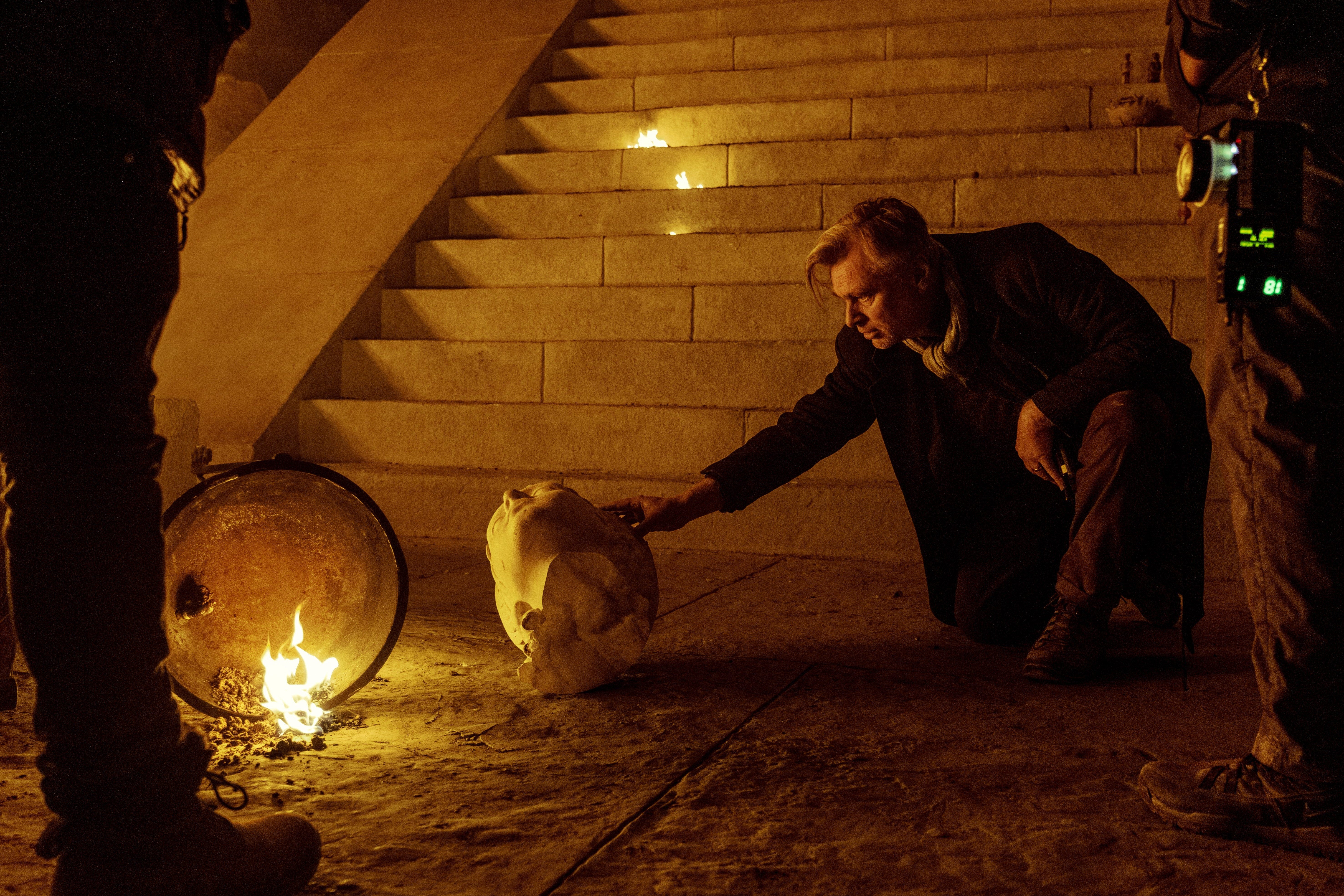
It feels a little absurd to mention that this article contains ‘spoilers’ for The Odyssey. How can anyone spoil a story that has been around for millennia? Nonetheless, here you have it: spoiler warning.
I’ll be talking about some of the themes that Christopher Nolan seems to be centering in his rendition of the tale.
Part I of this series addressed some general themes in The Odyssey, what it tells us about the evolution of consciousness, and why it remains so compelling today. In truth, I think could state something much more simple about all that now: Homer’s myth shows us ourselves.
It shows us as clever and complicated and mortal beings, as selves that wrestle with the gods and the fates and as souls who long for a distant home.
Myths are inexhaustible things, bigger on the inside than the outside. They adapt to any given time because any given time provides its own rich composite of dramaturgical tensions, the kind that myths tend to thrive in. Our own present remains good soil.
Nolan seemed to think as much. His film drives the point home—at times to a fault—that The Odyssey describes our civilization’s endgame. “Our age of Bronze is over,” Matt Damon tells us at the end of the film. He might as well have faced the camera and winked.
Odysseus expresses profound regret for his central role in hastening the coming dark age, breaking ‘the fragile bonds between men’ [and by extension the gods]. Some insightful articles have been written about how the films portrays the effects war trauma and ‘moral injury.’ Other articles have pointed out that Odysseus is a kind of mythical Oppenheimer, and Nolan is still commenting on the dangers of relentless technological advance. These are indeed interesting observations, related to what we are exploring here, but as this series is exploring what The Odyssey tells us about the evolution of consciousness, there are few other important points to make.
Nolan chose to overlay an ancient myth with our own moment of civilizational implosion/metacrisis. This is appropriate, at one level, if we believe Jean Gebser’s assertion: Greek myths evocatively describe mental consciousness coming into being.
Sing in me, muse, the wrath of Achilles.
The word mental has its etymological connections with wrath, purposive and directive thought and action. The mental is the realm of ego-consciousness, and this is not meant to be a pejorative. Whether or not Julian Jaynes was correct when he hypothesized that ancient human consciousness experienced the ‘right hemisphere’ of the brain as auditory and visual hallucinations, it seems true enough that a worldview transformation was in the making. This was the time of the so-called ‘Axial age,’ the birth of philosophy and the invention of alphabetic writing.
You see, cultural transformations are events in a wider sense. One cannot see them if they are looking exclusively at chronological time. They are kairological. They unfold over the course of generations and encompass the whole historical horizon. This means—sorry, Matt Damon—no one is proclaiming things like “our age of Bronze is over.” But they are telling stories. They are singing the Muse’s songs. The artist, as Marshall McLuhan knew, is someone who remains sensitive to these dramatic worldview shifts and feels compelled to give them texture and form. They render otherwise invisible events into visible (i.e., sense-full) and effective realities.
“Poetry,” Gebser memorably writes, “is the history of the dateless.”
And so back to the idea that Homer’s myth describe, at one level, an event in the history of consciousness: the ‘mental’ world is coming into being.
Athena, if we recall, is said to have been born from the head of Zeus.
She is owl-eyed. She sees through the dark. The Greeks will name their city after her, and its philosophers will introduce another way of coming to know the world.
As our own age represents the decline of mental consciousness, it is poetically appropriate that Athena is the only personified deity that makes an appearance in Nolan’s film. The implication is that she has been something like our civilizational midwife.
If her birth marks the emergence of the mental consciousness and the making of our world, then Nolan’s film—blurring myth and modernity quite effectively here—portrays another event: the unmaking of our world.
Despite his violent transgression, Athena reveals herself to Odysseus. Her owl eyes see right through him and chasten his hubris. Cleverness alone cannot help him now, lost at sea in the long dark between worlds.
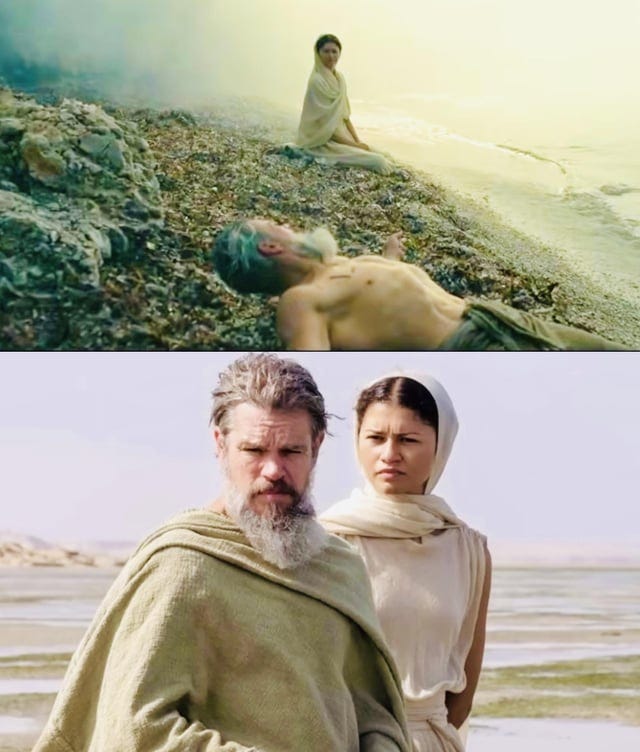
If it was cleverness and ingenuity that empowered Odysseus to outsmart the Trojans, then these same qualities—warped and inflated into egoic pride—have made it impossible to return home. What the film calls ‘Zeus’ Law,’ a kind of ‘golden rule’ of hospitality, has been irrevocably broken. With the fall of Troy, zero-sum games have descended into negative-sum games and a war of all-against-all. The dreaded ‘Sea People’ are none other than themselves.
After this Event, home can no longer be what it was, because it is only the relations between things that constitutes home-as-such [Oikos], and these relations have been severed. When we watch Athena’s statue lose its head and topple to the ground amidst the violent ruin of Troy, the point has been made clear.
But there is some cause for hope. Odysseus makes it back to Ithica at the end of this story, reuniting with his wife Penelope (played by Anne Hathaway) and restoring order to his kingdom. That is, only after a dramatic and bloody resolution - what was it he said about the fragile bonds between men?
This leads me to the whole climactic point of this writing exercise.
Penelope tells us that “civilization will rise again.” Odysseus, more wizened by his long years at sea, presciently adds that “a new dawn will break over a darkened world.” Perhaps he’s talking about Athens, or modernity, or whatever civilization yet-to-come. “Our mistakes,” he says as the film takes us back to the Trojan horse, collapsing in the flames of Troy, “will once again be forgotten.” The readymade connections invite us to consider Oppenheimer and nuclear warfare as modernity’s veritable Trojan Horse. Even if Nolan was indeed thinking along these lines, we can arguably go further. Historian William Irwin Thompson talked about how human beings tell more than we know, and so even a film like this one, which presumes to tell the audience quite a bit about what it knows, cannot exhaustively map its own mythmaking.
I want to suggest that this rendition of The Odyssey is also telling more than it knows about our present moment of climate breakdown and mass extinction, and that the whole notion of ‘Zeus’ law’ is a stand-in for a more radical rupture with ecological relation.
On one level, Nolan’s Odysseus seems to be quite cognizant of the civilizational boom-and-bust cycle: the ongoing rise and fall of agricultural states, followed by intermittent dark ages. These are, as he observes, just long enough to forget the previous civilization’s mistakes. We will see Athena walking alongside the next civilization, and the next, and the next…
And yet, on another level, there is an ecological dimension that the film’s message—despite trying to be so darned clever—misses at the conscious level and only seems to convey as an unconscious expression. I’m not interested in discussing this first level, which still seems to center the very form of thinking it claims to critique. We are still dealing with a civilizational-centric narrative, concerning the ambiguous victories of patriarchs achieving god-like powers through acts of transgression, and the subsequent and tragic unmaking of worlds.
These kind of stories are the ones told by imperial centers, with their great monuments and their statecraft. I know that other stories, other myths, are told when these centers decline and disperse. I am inclined to turn Nolan’s Odyssey over to reveal a richer underbelly, explore how it ‘tells more than it knows’ about our moment of climate crisis. I am inclined to have a more ecological reading of the myth. This level takes us beyond the cyclical horizon that Odysseus sees at the end of the film.
As I was doing some research for this article, I was pleased to discover Karina Anastasia had written a brilliant analysis of the film as a ‘climate epic.’
With the tumbling head of Athena still vivid in my mind, I suggest that in our era, the great contract being broken is that of the respect for the natural world. Let’s call this ‘Gaia’s Law,’ after James Lovelock’s hypothesis (itself named after the Greek goddess of the Earth): it’s the idea that the planet is essentially a single, living organism of which we are all a part. Breaking Gaia’s Law is to treat the earth as an mere object for energy extraction, to transgress against ourselves and life itself.
As Anastasia points out in the article, it is the telling itself which remains important. What does it mean to keep telling stories at the end of the world?"
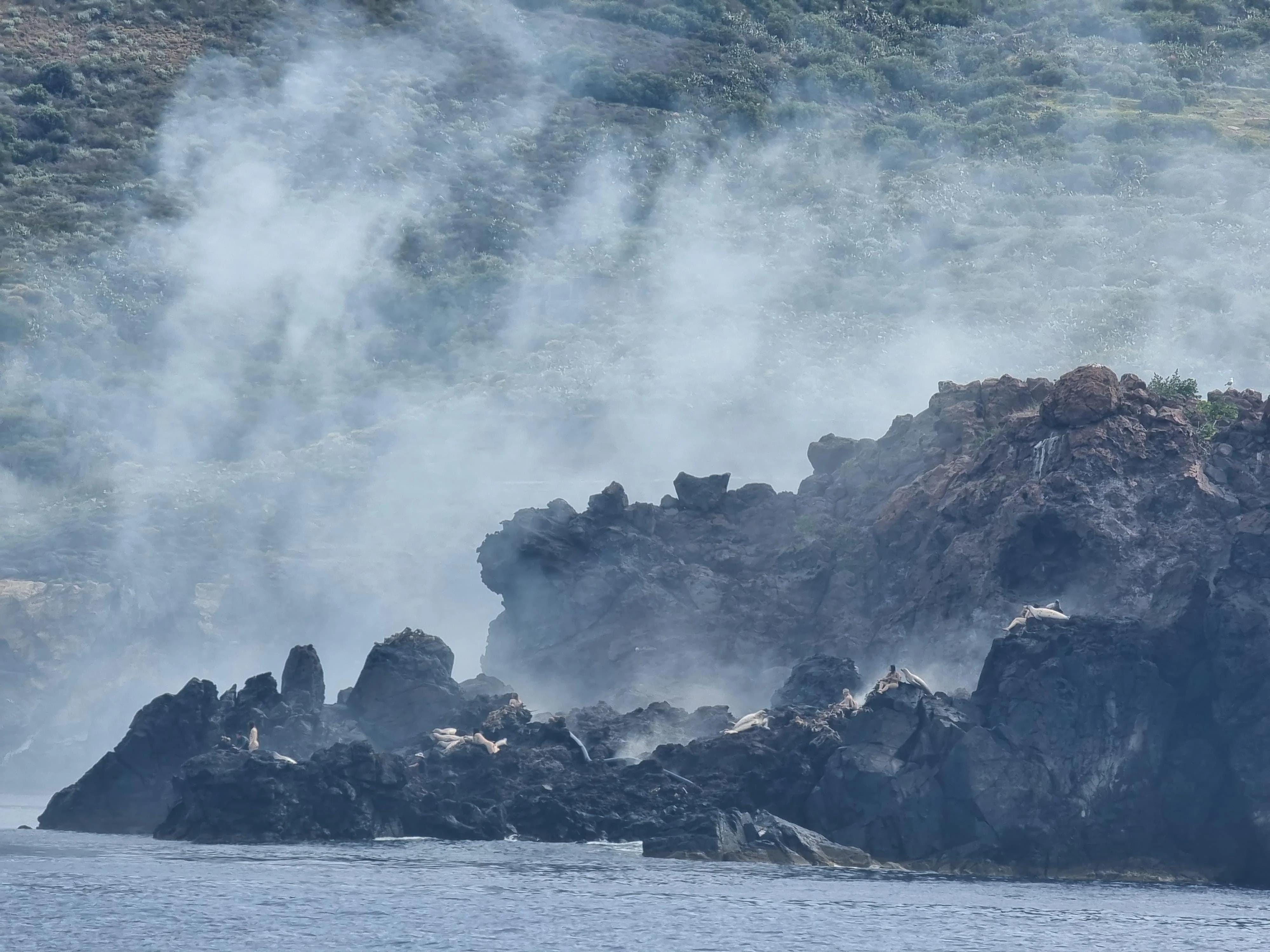
The Siren song brought these themes together for me.
Much like in previous iterations of the myth, Odysseus orders his crew to place wax in their ears and have himself tied to the mast. We aren’t privy to the Siren song ourselves. Ludwig Göransson’s achingly haunting track, ‘Sirens’ does the heavy lifting.
“What you want is what you most can’t have,” Odysseus describes in the film, “and what you most can’t have, you already had, and lost.”
In the dark of the theater, feeling adrift at sea with Odysseus and his crew and sensitized to the cinematic twists and turns in wind and weather (polytropos), my thoughts immediately went to our own climate crisis, and the definition of solastalgia.
Glenn Albrecht coined this neologism in the early 2000s. Solastalgia, he writes, is
the pain or distress caused by the ongoing loss of solace and the sense of desolation connected to the present state of one’s home and territory. It is the existential and lived experience of negative environmental change, manifest as an attack on one’s sense of place.
Odysseus longs for home, but he knows that home is something that — due to his own actions — can no longer be possible. Recall the earlier ecological definition of home:
it is only the relations between things that constitutes home-as-such [Oikos], and these relations have been severed.
Whether Zeus or Gaia, the laws of hospitality have been severed, and the relations between things have unraveled. What does it mean to go on telling stories in these conditions? The Odyssey is compelling as an ecological myth in our time because we are asked to consider this question of what comes after.
Our whole structure of feeling today is exemplified by Odysseus, tied to his post. Solastalgia is our siren song.
“What you want is what you most can’t have… what you most can’t have is what you already lost.”
The Sirens are singing all around us these days, and their songs are indeed haunting in the sense of being hauntological (i.e., Mark Fisher’s notion of ‘lost futures’).
We can hear this song when we listen to the recording of the last Kauai o'o bird. And yet even in this grief for what has been lost, or futures which will-have-been, the heart transverses another mode of time. What makes The Odyssey an appropriate myth for our era of climate crisis is the response that Penelope, with her act of weaving-and-unweaving the death shroud, and Odysseus plucking his bow, demonstrate to us.
Telling climate stories invites another, more malleable temporality to come to the fore.
We must wrestle with our fate. We must mourn the future, yes, but we do so in order to subvert it.
Sophie Strand makes a similar point in this moving piece of writing:
“Faced with demanding suitors Penelope insists that they must wait until she finishes a shroud for Odysseus’s father Laertes. Yet, every night she secretly unweaves her “great web”. If we understand threads as representing temporality and narrative progression, leading us on a filamentous line through the thick tapestry of our lives, then Penelope is unspooling time. She unweaves the Fates/Moirai’s threads each night, refusing fate, refusing to complete her shroud and refusing to complete Laerte’s life or her marriage to the absent Odysseus. Death is deferred. Widowhood is denied. Time is interrupted.”
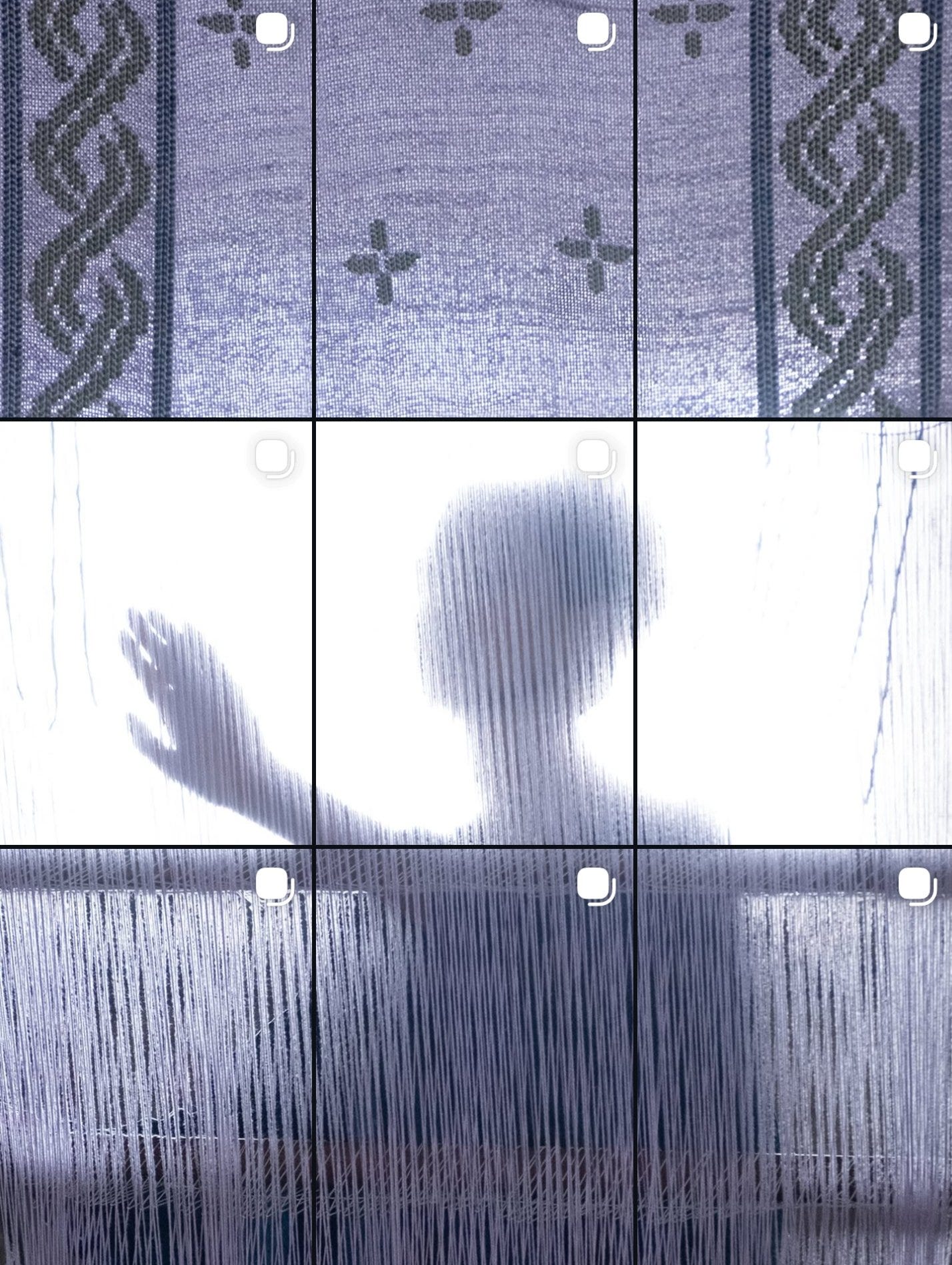
We begin with the Siren song of solastalgia, but this song, in turn, becomes more than a mere binding to one’s future fate. The fates that bind us to certain futures can, in their dynamic tension, become the song of new futures.
Isn’t this what life has always done, when the relations between things have been broken, and worlds unmade into ruins? Hasn’t life made a song out of its alleged fate, and thus a possibility for a new life in the ruins? ‘Making a life in the ruins,’ as Anna Tsing talks about, runs through as the implicit theme in this rendition of The Odyssey.
As I’ve been discussing with my present summer course participants, ecological futuring has something to do with enacting this other kind of temporality, where the bow is plucked, the moment is seized, and the threads of fate are not rejected, per se, but re-woven into new possibilities for tomorrow.
Comments
Nothing yet. Say the first thing.
Sign in to join the conversation.