
One of the most difficult truths about Doris Day’s life sits in sharp contrast to the image that would later define her. The public remembers the bright smile, the warmth of her voice, the sense of optimism that seemed to radiate from every film and recording. For decades Hollywood polished that image until it felt almost mythic: America’s sweetheart, the embodiment of sunny confidence.
But the early chapters of Doris Kappelhoff’s life were far more complicated.
In the early 1940s Doris was beginning to find her footing in the world of big band music. The swing era was in full bloom. Ballrooms across America were packed, orchestras toured relentlessly, and young musicians lived a nomadic existence moving from city to city. For Doris, who had grown up in a home marked by instability and emotional fracture, music offered both opportunity and escape.
It also offered something she longed for deeply: belonging.
Among the musicians she met during this time was trombonist Al Jorden. Jorden played in the orchestra Doris was singing with, part of the tight ecosystem of performers who rehearsed together during the day, performed late into the night, and then packed themselves onto buses or trains bound for the next ballroom engagement.
It was an environment where relationships formed quickly. Musicians spent nearly every waking hour together: rehearsals, soundchecks, meals grabbed between sets, long overnight journeys to the next city. The rhythm of the road collapsed time in strange ways. Weeks could feel like months, and emotional bonds often intensified simply because there was nowhere else to direct that energy.
Jorden was several years older and already more seasoned in the touring life. Each night Doris stepped to the microphone while the brass section drove the sound behind her, Jorden’s trombone among them. He began paying attention to the young singer—walking her back after performances, lingering in conversation during rehearsals, suggesting they grab something to eat after the ballroom lights came up.
Their early dates were not glamorous affairs. They were the small rituals of band life: late-night diners after a show, quiet walks through unfamiliar downtown streets during daytime breaks, conversations on the bus heading toward the next engagement. Within the compressed world of touring musicians, intimacy could grow quickly.

For Doris, the relationship held a particular emotional promise. Her childhood had been shaped by the collapse of her parents’ marriage and the instability that followed. The dream of building a secure home of her own—a loving partnership, a family defined by loyalty and safety—carried enormous weight. Marriage represented something solid in a life that had often felt uncertain.
In 1941 she married Jorden.
The decision came quickly, but in the emotional climate of the time it likely felt natural. The United States was on the brink of entering World War II, young couples often married early, and the intensity of life on the band circuit encouraged impulsive commitments. For Doris, marriage may have seemed like the first step toward creating the stable family life she had always wanted.
That hope unraveled almost immediately.
Jorden’s possessiveness revealed itself within weeks. The attention Doris received from audiences—something essential to her work as a singer—became a source of constant suspicion. He questioned her movements, monitored her conversations, and interpreted ordinary professional interactions as personal betrayals. Praise from fans or musicians that should have been part of the joy of performing instead became triggers for arguments.
The jealousy was relentless. It did not take long before it turned physical.
Accounts Doris later shared describe episodes of violence that were both sudden and frightening. Jorden could erupt in rage with little warning. He slapped her, shoved her, and struck her during arguments, sometimes over trivial incidents that had little to do with reality. The violence was accompanied by psychological cruelty—belittling remarks, accusations, and attempts to isolate her from colleagues.
The marriage became a cycle of tension and fear. Moments of apology or calm would give way to fresh explosions of anger. For someone who had entered the relationship hoping to create safety and stability, the reality was devastating.
When Doris became pregnant, the situation worsened dramatically.
Jorden demanded that she terminate the pregnancy. At the time abortion was illegal across most of the United States and often dangerous when attempted in secret. Doris refused.
Her refusal provoked months of sustained cruelty. Throughout the pregnancy he reportedly subjected her to repeated physical and emotional abuse, hoping that stress or injury might cause her to miscarry. Instead of protecting his wife, he attempted to break her resolve.
Despite everything, Doris carried the pregnancy to term.
In February 1942 she gave birth to her son, Terry.
The arrival of the baby forced a moment of clarity. The dream of a happy family had not disappeared, but it could no longer exist within the confines of that marriage. Shortly after the birth, Doris left Jorden.
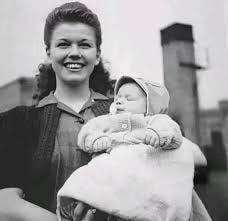
The marriage had lasted barely a year.
Jorden’s life after the separation moved steadily downward. The volatility that had marked the relationship did not disappear. Over the years his mental health deteriorated, and the instability that had once surfaced in jealousy and rage became a more general pattern of emotional disturbance.
By the mid-1960s he was living a far quieter and more troubled life than the one he had known during his time on the band circuit. In 1967, at the age of fifty-three, Jorden died by suicide after turning a gun on himself.
It was a tragic end to a life that had already been defined by turmoil.
For Doris, the marriage remained one of the darkest chapters of her youth. It was also an experience that revealed the strength beneath the public persona that would later become famous. Before audiences knew her as Doris Day, before the films and the recordings and the carefully constructed Hollywood image, she had already confronted the collapse of a relationship that promised love but delivered violence.
She had believed in the possibility of building a happy home.
When that dream turned dangerous, she left.
Comments
Nothing yet. Say the first thing.
Sign in to join the conversation.