
If you’re in publishing circles, or are near them, you probably saw the New York Times story making the rounds: a woman calling herself Coral Hart who has been using AI to churn out romance novels upon romance novels.
The Times reported that Hart has used twenty-one pen names to publish dozens of novels. “None were huge blockbusters,” says the Times, “but collectively, they sold around 50,000 copies, earning Ms. Hart six figures.”
Is this true? Not true? Is it even possible to tell, insofar as Coral Hart is a pen name and we don’t know the other pen names she used?
What is for sure: writers and readers were angry.
They were angry at the author, for her cynicism and her willingness to take advantage of other authors, whose pirated work was used to teach A.I. programs how to “write” in a way that made her “books” (I am using the term loosely) possible. In a perfect world, anyone using A.I. this way would have to pay royalties to every author whose work got fed into one of these programs. Which is pretty much every author out there.
In addition to being enraged by Coral Hart, people were angry at Amazon, where authors are required to disclose if they’ve used A.I., but where the company, according to the NYT piece, does not feel any obligation to pass that news on to readers.
They were angry at the New York Times, for even writing the story which, some folks felt, is helping to normalize the use of AI in creative endeavors, and for giving Coral Hart free advertising. Because Hart, it emerged, is running a coaching business to teach other people how to do what she’s done. She has also developed a “proprietary A.I. writing program,” which will cost between $80 and $250 a month and “can generate a book based on an outline in less than an hour.”
I took a look at one of the books the story mentioned. It’s just as bad as you’d expect. At best, the writing is cliched and clunky – “She had everything she never dared to hope for, and it was brighter, fuller, than any dream.”
At its worst? It’s clearly artificial. “Sienna smiled down at him, soft and easy, and muttered through a laugh,” is not something any reasonable human being would write.
Yes, the books are terrible, and everything about this is mad, bad, and dangerous for the book business. And yet, “Coral Hart” insists that this is the future: “If I can generate a book in a day, and you need six months to write a book, who’s going to win the race?” is the quote from “Coral” that’s been making the rounds.
Being faster might mean being able to churn out more books. But having more books doesn’t necessarily mean making more money. Not unless readers actually want all of those books you’re pumping out.
I am not sure that’s the case. At the level of proficiency the chatbots currently possess, even volume readers, and even people who are skimming more than they are savoring, are going to notice when they’re reading A.I..
But – in another piece of disturbing news – earlier this month, word came that Elon Musk’s X A.I. posted an ad seeking authors – er, “writing specialists” – to help make its A.I. chatbot, Grok, sound more human. And Musk didn’t want just any writers applying for the job, where the advertised pay began at $40 an hour. His company wanted award-winning novelists, screenwriters with major credits, journalists who had worked for major outlets, or had advanced degrees.
Moneycontrol.com reported that, “For fiction writers, the bar is especially high. Applicants must have at least two major achievements. That could mean a book deal with a big publisher, more than 50,000 copies sold, over 10 stories published in top literary magazines, or nominations for major awards like the Hugo or Nebula. Screenwriters need multiple produced films or TV shows, or recognition from awards like the Oscars or Emmys.”
And what would all that education, experience and achievement qualify a “writing specialist” to do?
“According to the listing, they would read and fix AI-written text, make it clearer and more engaging, and help Grok learn how to write better.”
There were a bunch of writers publicly scoffing at the notion that they would take low pay to, essentially, tear down the foundations of their own profession. My fear is that there might be a bunch more quietly sending in their resumes. It has always been hard to make a living with words, and it has only gotten harder since the Internet came along. There have to be some people thinking, like “Coral Hart,” that this is the future, and if you can’t beat A.I., you might as well join it.
And if real writers are already onboard, refining a chatbot’s chatter, I have no doubt that they’re also out there – or they will be soon — quietly making A.I.-produced slop read like real novels.
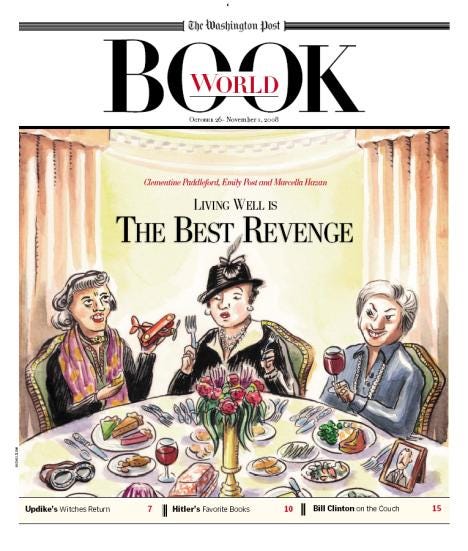
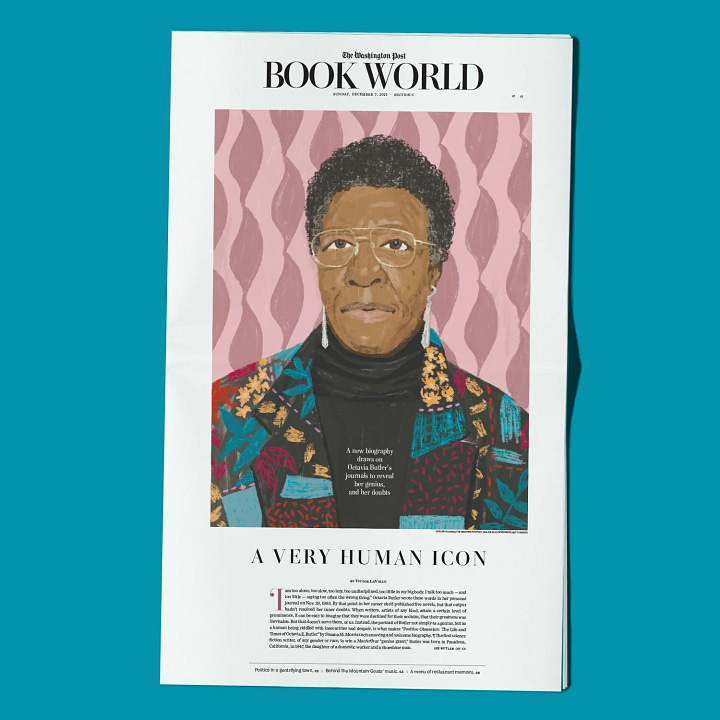
In other book news, The Washington Post last week laid off more than three hundred reporters and editors – more than half of its staff - and shut down its entire Book World section.
The news was greeted with predictable lamentations and a fair amount of self-congratulatory cynicism. “Knew it.” “Called it.” “Book coverage doesn’t make money.” “People are getting all the book news they need from podcasts/Tiktok/Substack.”
It is true that you can find book coverage in those places, and in excellent online magazines.
But having national newspapers cover books – having them say, with their words and their actions, that books are still an important part of the cultural conversation, an important part of the world – that mattered. And losing one of the last surviving big newspaper’s book coverage is a serious blow.
Why?
In The New Yorker, Becca Rothfeld, one of the Post’s former book critics, laid it out:
“Maybe (the Post’s readers) hadn’t expected to be waylaid by a book review when they opened the paper to read about Donald Trump’s latest indiscretion or to check the score of a Capitals game; maybe they didn’t seek out literary criticism because they didn’t realize they liked it, or didn’t even know what it was. But they subscribed to a general-interest newspaper, so they happened upon its books coverage occasionally—and, sometimes, they stopped to read it.”
The people who shrugged, the ones who said, “It’s no big deal, you can get your book news from a podcast or a website” – those people already knew about the podcasts, and the websites. Random newspaper readers didn’t. Those people were already seeking out news about books. Random newspaper readers weren’t.
The books section of a newspaper, Rothfeld wrote, “does not cater to aficionados; it seeks new recruits.”
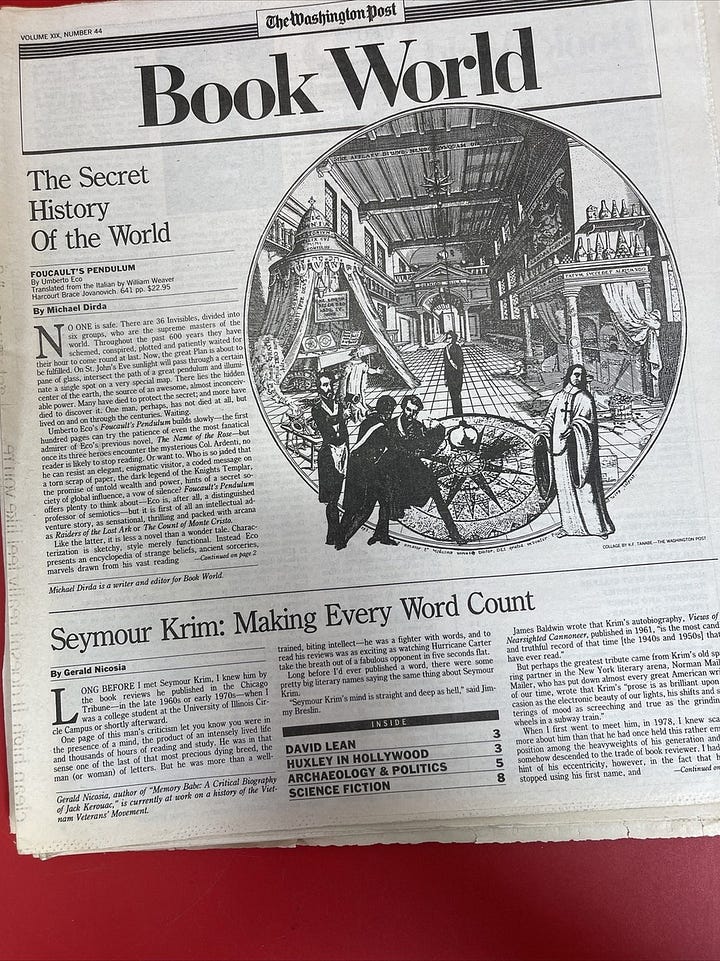
And when those people randomly stumbled across reviews, and read them, and thought about them, and wrote to Rothfeld about them, “What they often evinced was better than interest, better even than bibliophilia; it was the rare and precious capacity to be interested in what they didn’t already know interested them. It was a willingness to be changed.”
Elsewhere in the piece, Rothfeld noted that the Post’s management no longer talked about readers. Instead, the word they used was “consumers.” The same way ‘Coral Hart’ didn’t talk about writing books, but ‘generating’ them. I hate being so doom-and-gloomy, but when we stop talking about readers and writers and start talking about ‘consumers’ and ‘generators,’ that story won’t have a happy ending for any of us in the book business.
But speaking of surprise, and happenstance, and the beauty of random discovery, it’s time to talk about the film deal.
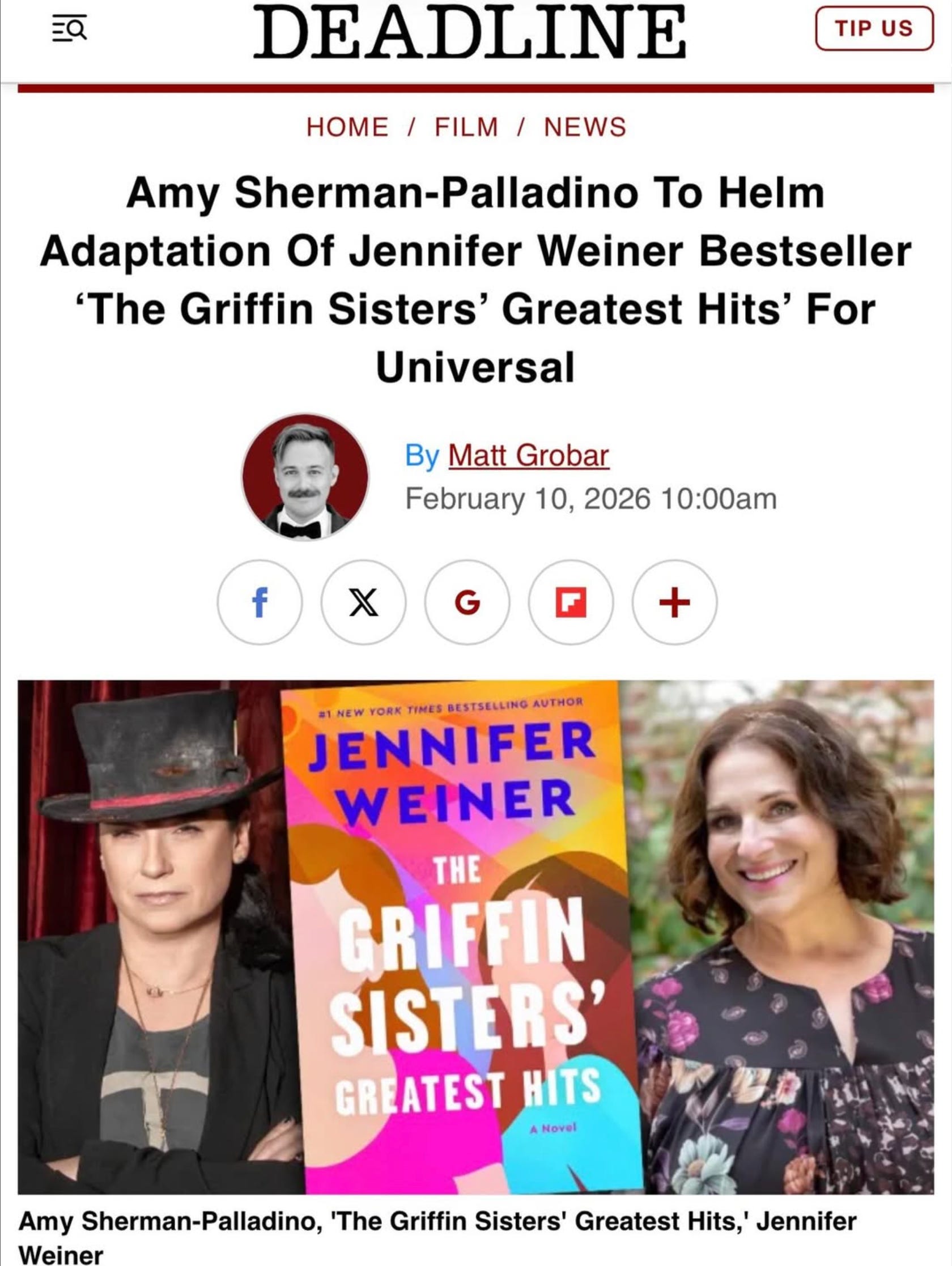
Maybe you saw the news, that the one, the only, Amy Sherman-Palladino – the woman who gave us the Gilmore Girls, and The Marvelous Mrs. Maisel, and Etoile (totally underappreciated, and you should watch it if you haven’t) has teamed up with super-producer Stacey Sher, to make a movie of The Griffin Sisters’ Greatest Hits at Universal Studios.
Obviously this is incredible good news, and I am thrilled.
And one of the best parts is how it all happened.
Normally, in Hollywood, authors have film agents. Before a book even comes out, those film agents take the book out, with the goal of putting together a package: the book, plus known quantities – directors, stars, screenwriters -- whose interest and involvement is likely to help convince buyers that “yes, this could happen” and “yes, it could be great.” Frequently, the agents will start with going to the folks under the same agency’s umbrella. If an author is a CAA client, her film agent will probably start by making the rounds of CAA’s roster, trying to get a CAA director, a CAA screenwriter and a CAA star attached.
That’s not what happened here.
My film agent did take the Griffin Sisters out to the usual suspects. And there was some interest. But, before any deals could be made, the book came out, and Amy Sherman-Palladino was browsing in a bookstore in the Hamptons. She picked up my book, and started reading, and saw something there that spoke to her.
So there I was, at home, in my sweatpants, watching TV when my brother Jake texts. “Are you a fan of Amy Sherman-Palladino?” he asks.
Am I a fan of the woman who gave the world Lorelei and Rory, and Miriam “Midge” Maisel? A fan of intricate, humorous dialogue, stories about mothers and daughters, and female characters who are flawed and funny and feel real in the very best ways?
That would be “yes.”
Jake tells me Amy is reading my book, and loving it, and would I want to talk to her and hear her vision for the project?
Yes. Yes, I would.
A few weeks later, I’m in an old-school diner in Brooklyn Heights, trying not to fangirl and telling Amy Sherman-Palladino that she is more than welcome to take my characters and their world and work her magic.
Amy reached out to Stacey Sher, who’s a total powerhouse of a producer -- she’s done everything from Pulp Fiction to Matilda to Heretic. Stacey came on board, and Amy took the project to buyers, and we ended up making a deal with Universal, which means that, in the very best world, if this happens, it will be a movie in theaters.
And then a LOT of time goes by. Like, months and months and months. And then finally, on Tuesday, we got to make the announcement.
As far as I’m concerned, this was the very best kind of origin story– a bookstore full of all kinds of books. An open-minded, curious reader, willing to be interested in a new book. And soon, let’s hope, some movie magic.
No posts
Comments
Nothing yet. Say the first thing.
Sign in to join the conversation.