
I wanted to share some advice on how to lead conversations within a highly polarized political context. This is advice I shared with folks around my campus and it seemed to help some folks, so I’m sharing it with y’all.
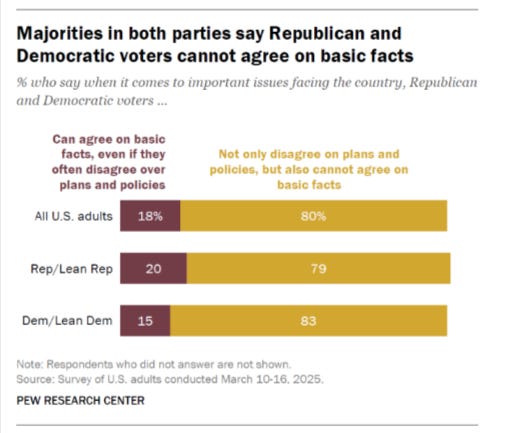
What is a “highly polarized political context”? A highly polarized political context is one in which people think within a “us versus them” framework. It’s difficult to be objective about political issues in the best of times, but within a highly polarized political context people are taught to believe that anyone who thinks differently from them is not just wrong or incorrect but is evil and out to do them and people like them harm. People learn to think of their opposition not as “good people with good reasons for thinking differently,” but as “enemies” who ought to be destroyed. While some partisanship is heathy for a political community, this kind of extreme partisanship can have tragic consequences.
The “us versus them” framework makes problem solving more difficult because it activates people’s “threat responses,” which, in turn, floods their bodies with stress hormones. This process—sometimes called an “amygdala hijacking”—activates our body’s fight or flight response. This may cause people to withdraw from conversations that they fear will be controversial or engage in conversational “battle” in defense of their position. Neither of these responses are productive for discussing and solving political problems, but both are very much a part of our human nature and ought to be expected.
Our Role: within a highly polarized political context the political community needs neutral facilitators of conversations, which is our role as leaders. It’s a challenging role because we are also human beings living within a highly polarized political context. Within this context we have to be careful to manage our own emotions and threat responses so that we can facilitate productive conversations for the students. Our role is to act as mentors and citizenship skills coaches. Our goal is to help students to learn citizenship skills and enable them to participate in political conversations more as citizens and less as partisans. We are “process advocates” (committed to ensuring a fair and thoughtful conversation between perspectives) and “issue-neutral” (not there to proselytize or convert people to adopt our opinions).
Lack of Experience: expect that students won’t have a lot of practice at having these kinds of conversations. There aren’t good models of debate, dialogue, or discussion in our public sphere. Most of what they would have seen would be a faux version of debate, which is more like sports (with winners and losers) and less like dialogue that leads to consensus and collective agreement and decision-making.
Our Role: to provide students with opportunity to learn the skills of productive political conversation. Part of our goal is to demonstrate that productive political conversations are possible, and that the goal isn’t to “win,” but to “learn.” That means we have to be clear about the rules for the conversation, enforce those rules impartially, and guide the conversation toward learning. We want everyone to leave the conversation feeling like they learned some valuable skills, had a good time, and experienced “civic friendship.” We want to draw everyone into the conversation, hear all sides of an issue, and affirm that good people have good reasons for thinking differently from one another.
Emotional Intensity: expect that you may have students who feel very intensely about an issue and attempt to dominate a conversation or other students. This kind of emotional intensity can silence some students or cause other students to respond in a highly polarized way. Note that students may experience a “parasocial relationship” with the political figures they see on their social media feeds, which means that even though they don’t actually know the person, they feel as though that person is their friend. That means that they may defend positions out of feelings of loyalty and friendship, which can be highly emotionally charged.
Our Role: try to acknowledge that the student has expressed strong emotions around this issue and then invite others to consider what perspectives haven’t been represented in the conversation yet. This approach validates that reasonable people may feel different emotions about these issues without endorsing the specific position they are taking (and, while creating space for other viewpoints to shift the conversation). Try to find common ground between what has been said by the emotionally intense student and other things that have been said, move to transcend whatever issue is causing difficulty and focus the conversation on the bigger picture or what we have in common. When possible, connect the conversation to your field of expertise, drawing from theory and research to connect what students are saying to ideas that help to explain or contextualize those ideas. Connecting back to research not only promotes and reinforces learning, but it also moves the conversation away from emotion and toward reason.
Bubbles/Silos: expect that your students are either “highly politically engaged” and have therefore only heard a narrow, partisan view of the issue or that they are “highly politically disengaged” and have therefore not heard much about the issue at all. In both of these circumstances it may be difficult for students to know how to discuss an issue or topic.
Our Role: attempt to bring in as many perspectives as possible without taking a side on which perspective you think is correct or indicating to the students that some perspectives are better than others. One strategy might be to say, “I’ve heard Perspective A” or “I’ve seen Perspective B” or “Philosopher X once argued.” Bring up multiple positions and treat each one fairly, weighing the pros and cons and consequences, rather than advocating for your own position. Help students to decide what they believe by exposing them to a variety of perspectives and helping them to learn how to evaluate those different perspectives.
This is a challenging environment for political conversation, but that challenge is precisely why it is so important that we have these political conversations. This is a moment that calls for leaders to step forward and reknit the fabric of our political community. We are those leaders.
Comments
Nothing yet. Say the first thing.
Sign in to join the conversation.