
One of the things I love about seeing clients is getting a front-row seat to the conversations women are having about their health. Those conversations shift over time, and I often find myself acknowledging that I exposed to the same cultural messages they are.
Right now, one topic seems to come up more than almost anything else:
Muscle.
Women of all ages, from their twenties through their seventies, are asking questions like:
Am I eating enough protein?
Should I be taking creatine?
Am I lifting heavy enough?
Is it too late to build muscle?


I appreciate how much this conversation has evolved. Eight or ten years ago, body composition discussions mostly centered on becoming smaller. Today, more women are curious about becoming stronger, supporting their healthspan, and aging well.
At the same time, it is hard not to notice the subtle pressure woven into this wellness culture. The sense that there is always more we should be doing.
More muscle we should be building. More protein we should be eating.
This feels especially true for women in midlife. Preserving muscle has become one of the central health messages of perimenopause.
As I listened to clients, and felt some of that pressure myself, I wondered:
How much muscle does a woman really need to live well?
The evidence is quite consistent on one point: having too little muscle, strength, and physical function is associated with poorer health outcomes.
When researchers talk about sarcopenia, they are not referring to the normal changes that happen with age or wishing your arms looked more toned.
Sarcopenia is a clinical condition characterized by a meaningful loss of muscle strength and physical function, often accompanied by low muscle mass. It is associated with frailty, falls, disability, hospitalization, loss of independence, and earlier mortality.
A large 2023 systematic review and meta-analysis pooled 49 prospective studies involving more than 878,000 adults. Across several definitions of muscle wasting, people with low muscle mass, sarcopenia, and related conditions had a higher risk of death from any cause.
That is a compelling reason to care about preserving muscle as we age.
The research gives us a fairly clear floor.
Becoming weak matters.
Losing physical function matters.
Losing the ability to move through daily life independently matters.
But more muscle isn’t always better. And that’s where this question gets interesting.
One of the more interesting findings in this area of research is that muscle function appears to matter more than muscle quantity alone.
Several large studies have found that measures such as grip strength, walking speed, and lower-body function are often stronger predictors of longevity than the amount of muscle a person carries.
In other words, how well your body works may matter more than how much lean tissue it contains.
That does not mean muscle mass is irrelevant. Muscle provides the foundation for strength and movement. But simply possessing more lean tissue is not necessarily the same as being stronger, moving better, or becoming more physically capable.
Resistance training can improve strength, balance, walking ability, coordination, and physical performance even when the increase in measured muscle mass is modest.
That may be one of the most reassuring findings in this entire conversation.
The work is not wasted simply because our muscles do not become dramatically larger.
Our bodies can still become stronger.
More coordinated.
More stable.
More capable of producing force, carrying weight, recovering from a misstep, or sustaining a demanding activity.
The research gives us important guidance, but it doesn’t give us a target.
It tells us that very low muscle mass, poor strength, and impaired physical function are associated with worse health outcomes.
It tells us that resistance training improves strength, physical function, and quality of life.
It tells us that strength matters.
But it does not tell us how much muscle every woman should be trying to build.
There is no scientifically established amount of muscle that guarantees a longer or healthier life.
It gives us a floor. It does not give us a clear ceiling.
Resistance training remains one of the best tools we have for preserving strength, bone health, physical function, and independence as we age, and I’ll happily continue lifting weights for as long as it feels good in my body.
Maybe the question is not: How much muscle should I have?
Maybe it is: What do I want my body to help me keep doing?
Do you want to run marathons?
Get your luggage in the overhead bin?
Lift heavy bags of soil without waiting for someone else to help?
Get down on the floor and back up again with kids?
Go on long adventurous hikes, climbing and scrambling?
The physical abilities that matter most to you will naturally shape how you train.
For one person, maintaining health and independence may be the primary goal.
For another, the goal may be performance, competition, adventure, confidence, or the simple joy of seeing what her body can do.
All of those goals are legitimate. But they are not interchangeable, and they may not require the same amount of muscle, training time, or sacrifice.
I think about my grandmother. She lived to be 101 and traveled (internationally) well into her nineties. She wasn't tracking macros or trying to hit a protein target at breakfast.
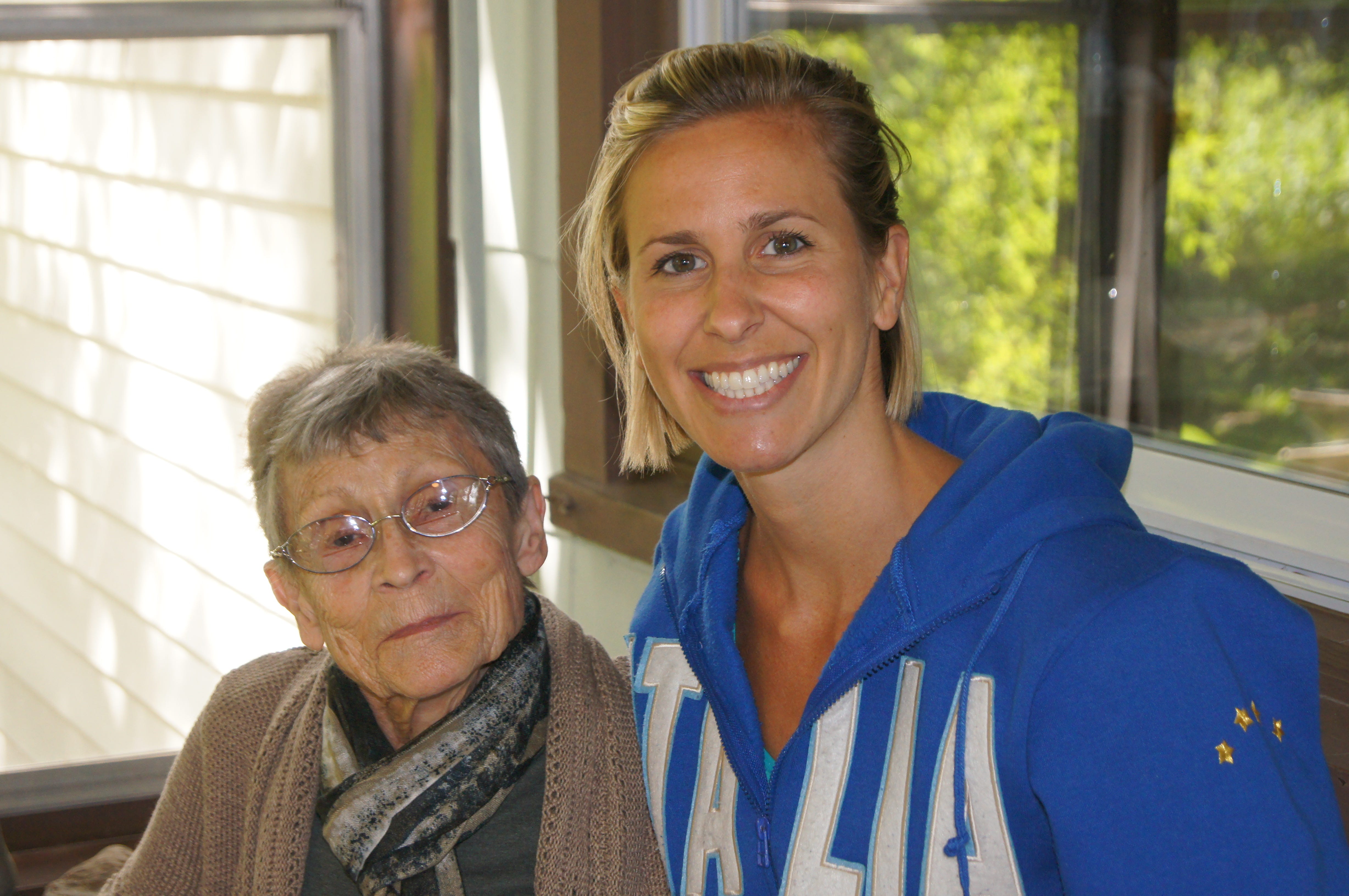
Sweet (and Spicy) Gramma Sept 2011
Today’s science has taught us a great deal about preserving muscle through resistance training and adequate protein intake. Those are valuable advances.
But my grandmother also reminds me that living well has never depended on optimizing a single health metric.
I set out looking for an answer to a simple question:
How much muscle should every woman have to live a long, healthy life?
What I found was that there doesn’t appear to be a scientifically established answer.
Instead, the research gave us something else.
It gave us a floor. Not a ceiling.
Maybe the better question is:
What do you want your body to help you keep doing?
What kind of movement brings you joy?
What physical abilities matter most to your independence?
What would you still love to be able to say yes to at 70, 80, or 90?
Maybe healthy aging is not about maximizing one variable.
Maybe it is about building enough strength, resilience, connection, curiosity, and joy that life keeps getting bigger, not smaller.
Not enough muscle to impress someone else.
Enough to keep living the life that matters to you.



XO - Jen
No posts
Comments
Nothing yet. Say the first thing.
Sign in to join the conversation.