
A few weeks ago I bought something I never imagined I’d own at 48 years old: a wedge pillow.
When my middle son saw it sitting on my bed, he couldn’t resist.
“Mom… aren’t those for old people?”
I’ve reached the stage of life where sleeping slightly propped up has become something I do, sometimes. Now to sleep I apparently need my Ozlo sleep buds (AMAZING), mouth tape (I hate dry mouth), my Nod Pod for my eyes, and yes a wedge pillow.
Like many women in perimenopause, I’ve noticed a handful of symptoms that aren’t dramatic enough to feel like a medical crisis, but noticeable enough to affect how I feel. For me, one of those has been what I can only describe as a “sour stomach” that seems to show up more often around the luteal phase of my cycle. Sometimes it’s a little reflux. Sometimes it’s just enough discomfort that lying flat isn’t particularly enjoyable.
The wedge pillow has helped.
Around the same time, a friend mentioned she’d been hearing about women taking Pepcid (famotidine) and Zyrtec (cetirizine) together to help with symptoms like hot flashes, poor sleep, brain fog, and reflux during perimenopause.
Curious, I started researching to see:
What does the evidence say?
Although research in women’s health continues to grow, especially in this area, many of the questions we ask simply haven’t been studied very well (or at all).
That leaves us in an interesting place when we hear about something from a friend, a podcast, or social media that sounds intriguing. Sometimes those ideas fade away once they’re studied. Other times they eventually become part of mainstream care.
Conversations are an invitation to ask good questions, understand the biology, look at the evidence we do have, and have thoughtful conversations with our healthcare team.
One of the biggest surprises for many women is realizing that perimenopause isn’t just about hot flashes or irregular cycles.
Estrogen receptors are found throughout the body: including the brain, blood vessels, bones, bladder, skin, and digestive tract. As estrogen and progesterone begin fluctuating rather than following their previous predictable rhythm, many women notice changes that extend well beyond their reproductive system.
The digestive system is one of those places.
Some women experience more bloating, nausea, constipation, diarrhea, or reflux during certain phases of their cycle or throughout the menopause transition. Researchers believe several factors may contribute, including changes in how quickly the stomach empties, the function of the lower esophageal sphincter (the muscle that helps keep stomach contents where they belong), increased sensitivity of the digestive tract, and the interaction between fluctuating hormones and histamine.

Why are people talking about histamine?
Histamine is probably best known for its role in allergies, but it does much more than make us sneeze in the spring.
It also helps regulate stomach acid production, plays a role in wakefulness, and interacts with estrogen in ways researchers are still trying to understand.
Pepcid and Zyrtec actually work on two different histamine receptors.
Zyrtec blocks H1 receptors, which are involved primarily in allergy symptoms.
Pepcid blocks H2 receptors, which reduce stomach acid production.
Researchers also know that estrogen can stimulate mast cells: the immune cells that release histamine. During perimenopause, when estrogen levels fluctuate rather than following a predictable monthly pattern, it’s possible that histamine signaling changes as well.
This has led researchers to wonder whether histamine could contribute to symptoms like flushing, headaches, sleep disruption, allergies, or perhaps even reflux in some women.
Biologically, it’s an interesting hypothesis.
As interesting as the biology is, we don’t yet have good clinical studies showing that taking Pepcid and Zyrtec improves hot flashes, brain fog, poor sleep, or other symptoms of perimenopause.
That doesn’t necessarily mean they don’t help. It means we simply don’t know yet.
Sometimes biology predicts what later research confirms.
Other times it doesn’t.
That’s why it’s important to separate “this makes biological sense” from “this has been shown to work.”
If your nights have become a little more difficult, medications aren’t the only tools we have.
Sometimes the simplest strategies can make a meaningful difference.
For nighttime reflux or that “sour stomach” feeling, that might include:
Sleeping with the head of the bed elevated (my wedge pillow has officially earned its place.)
Avoiding large meals within a couple of hours of bedtime.
Paying attention to whether alcohol seems to make symptoms worse.
Noticing whether specific foods are triggers.
Giving yourself a little time upright after dinner before lying down.
None of these are glamorous. But they’re supported by evidence, carry very little risk, and for some people they may be enough.
Where do over-the-counter medications fit?
If symptoms continue despite lifestyle changes, over-the-counter medications may be reasonable options to discuss with your physician.
Here’s a quick overview of the ones I found myself looking into.
May be helpful for:
Occasional heartburn or reflux
Quick relief (often within minutes)
Neutralizing acid that’s already in the stomach
Things to know:
Doesn’t prevent your stomach from making more acid
Can be constipating for some people
If you’re relying on it frequently, it’s worth talking with your healthcare provider about why
May be helpful for:
Intermittent reflux
Nighttime acid symptoms
Reducing stomach acid production for several hours
Things to know:
Generally has a reassuring safety profile when used appropriately.
Unlike stronger acid suppressors called proton pump inhibitors (PPIs), Pepcid doesn’t appear to carry the same degree of concern regarding long-term nutrient absorption or certain other long-term risks.
It still isn’t intended to be a forever solution without discussing persistent symptoms with your physician.
People with significant kidney disease may require dose adjustments.
May be helpful for:
Seasonal allergies or hives
Women whose physicians feel a short histamine trial is reasonable
Things to know:
We don’t yet have good evidence that it improves menopause symptoms.
Some people feel sleepy taking it, while others notice a little grogginess the following morning.
If it helps sleep, it may be because it’s improving another symptom rather than acting as a sleep medication itself.
When is it time to check in with your physician?
While occasional reflux is common, there are times when it’s important not to simply keep experimenting on your own.
Talk with your healthcare provider if you have:
Reflux occurring more than twice a week for several weeks.
Symptoms that continue despite treatment.
Difficulty swallowing.
Unexplained weight loss.
Vomiting blood or black stools.
Chest pain.
Nighttime symptoms that repeatedly wake you from sleep.
These symptoms deserve a closer look.
So…where do Pepcid and Zyrtec fit?
For me, this combination falls into the category of interesting but not yet well studied.
Both medications have long safety records when used appropriately, and for some women, a physician may feel a short trial is reasonable.
But I also think it’s important not to expect any medication to compensate for habits we already know contribute to symptoms. If alcohol, large evening meals, or other triggers are playing a significant role, addressing those factors is likely to have a much bigger impact than adding a pill.
The goal isn’t simply to collect remedies. It’s to understand what’s driving the symptoms in the first place.
I found myself looking into Pepcid and Zyrtec because I wasn’t looking for another medication, I was looking for another tool.
What I came away with was this:
The biology is interesting.
The evidence isn’t there yet.
The medications themselves have fairly reassuring safety profiles when used appropriately.
And perhaps most importantly, it’s worth asking whether there’s something contributing to your symptoms before assuming another pill is the answer.
Perimenopause seems to turn many of us into detectives.
We notice new symptoms.
We hear about new ideas.
We wonder whether they’re worth trying.
Sometimes the answer is surprisingly simple, like sleeping on a wedge pillow.
Sometimes it’s a conversation with your physician about whether an over-the-counter medication is worth a short trial.
And sometimes it’s simply recognizing that quality of life matters. We don’t have to wait until symptoms become debilitating before looking for ways to feel better.
It’s important to stay curious, to advocate for ourselves, and to SLEEP!
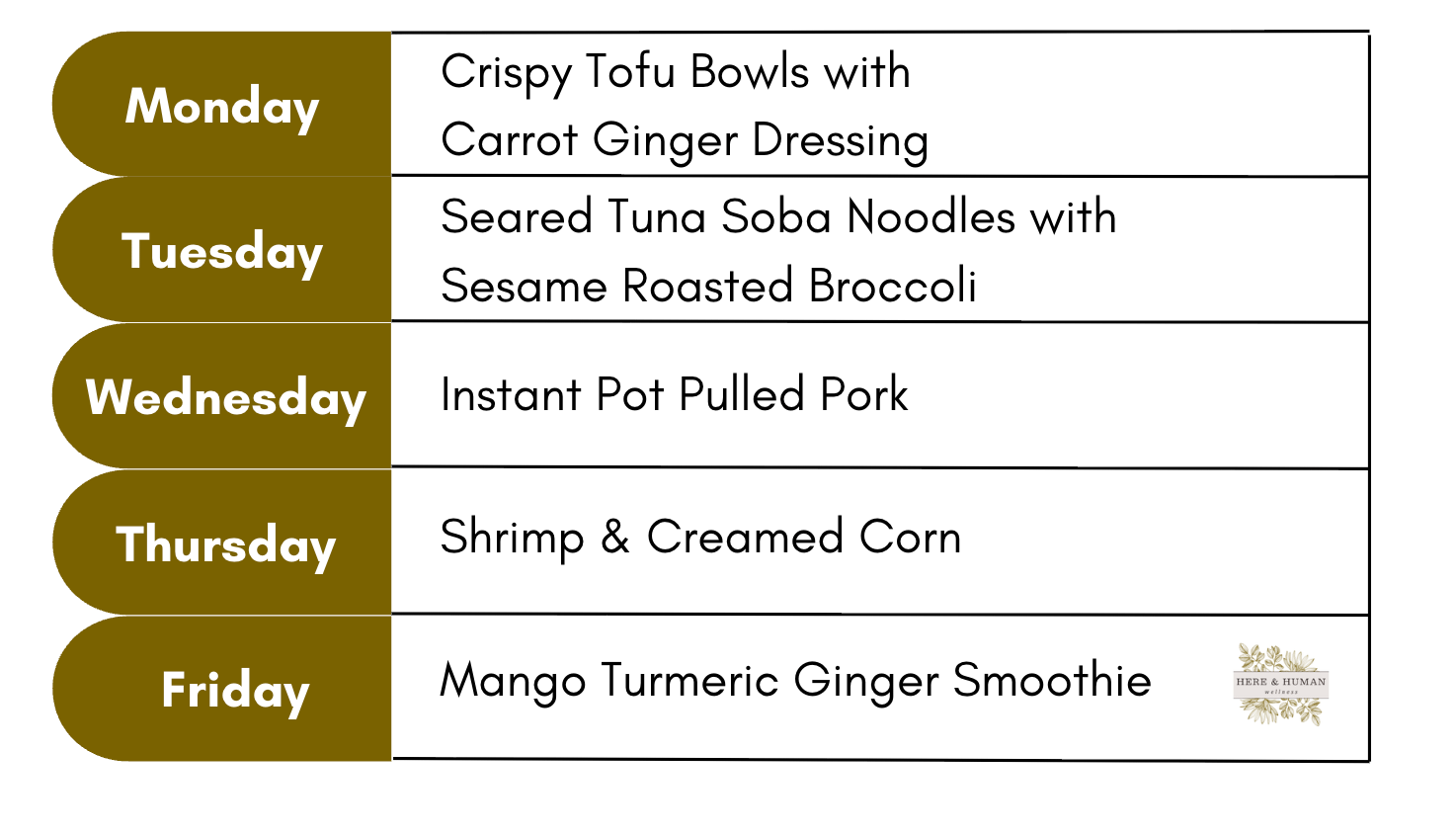
Crispy Tofu Bowls with Carrot Ginger Dressing

Seared Tuna with Soba Noodles & Sesame Roasted Broccoli



Mango Turmeric Ginger Smoothie

Well, summer is officially over for one of my kids... ☀️📚
Happy summer (for those still soaking it up!) and happy back-to-school to everyone beginning a new year.
XO,
Jen
No posts
Comments
Nothing yet. Say the first thing.
Sign in to join the conversation.