

Welcome into Flight School and it’s my delight to continue this conversation about the inner-workings of story that we are too often denied in our high end literary learning experiences. Which is a shame.
In my MFA program, stakes were discussed in an oblique way but without comprehensible definitions. And the idea of defining an antagonist was scoffed at. Three years and thousands of dollars later, I left thinking an antagonist was one thing—a bad guy outside the protagonist. The villain. The evil stepmother. The corrupt system.
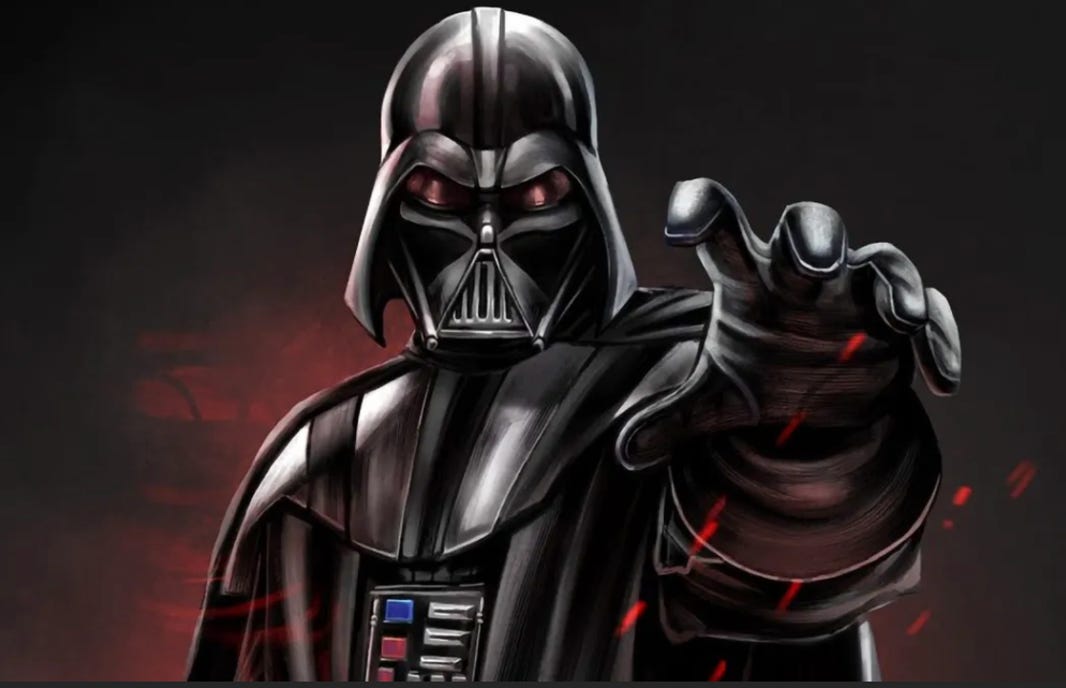
What I needed, which we all need if we intend on writing a memorable, life changing novel or memoir or short story, is hard look at the multi-dimensional layers of antagonism and systematic breakdown of what actually creates conflict that matters in our stories that looks less like a single deep eye’d villain and more like a complex human being with light and dark qualities. That looks more like this:
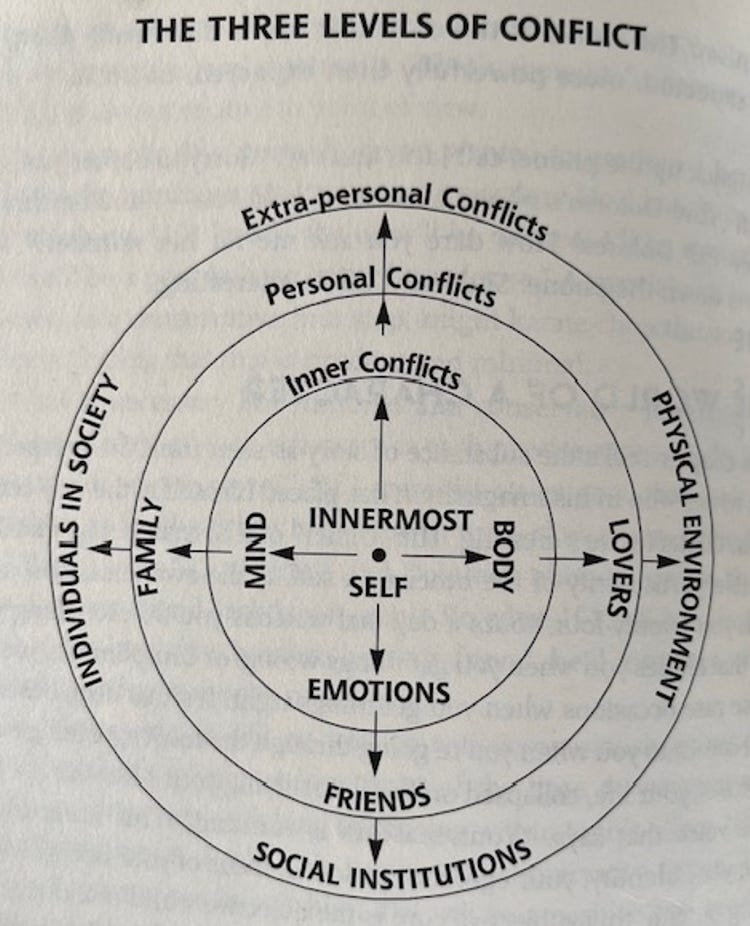
Did you know that every character in your book, both antagonist AND protagonist as well as sidekicks dark and light, work at nine dimensions of antagonism? They do and that’s why you are pulling out your hair trying to get your balance just right.
“Your hero is only as compelling as the forces of antagonism pushing against them.”
~ Robert McKee, Story
I was a child against the world. There were the parents who hurt me and the systems that failed me. These were the outside forces pressing in and so easy to see and somewhat easy to write. But as I aged up in my stories, and as psychological complexity—and personal accountability deepened—it was vital I learn about internal forces and the shadow part of me sabotaging my own survival.
But when I worked on a novel, it took years to understand that antagonistic forces are complex and crucial. They are where the story lives and dies.
To be a great writer, you must first be a great diver into the human experience and that means your own first. Flush out your own antagonistic forces mess:
Your relationships.
Your community.
Your body.
The state.
The educational system.
Your boss.
Whatever eats at you, has you make the wrong decisions again and again requires exploration, examination, and resolution—or at least some attempt of these things— before can do the same for your characters. In the end, you can’t write what you haven’t lived and what you’ll end up writing, without this work, is a portrait of your own dysfunction in the form of a memoir or novel that drags or cuts short at the wrong place or is one long expositional diatribe. You don’t want that and the world doesn’t need more of those books. Look around, they are all over the place.
Layer 1: Innermost Self (body, mind, emotions)
The hero at war with themselves. The shadow. The wound. The thing inside that sabotages what they want most.
Layer 2: Personal Conflicts (family, friends, lovers)
The people closest create the deepest pressure. Think Sophie’s Choice—values meeting impossible pressure.
Layer 3: Extra-Personal (society, institutions, physical environment)
The world itself as antagonist. Systems. Culture. Nature. Forces so big the hero can barely see them.
These layers don’t replace each other. They stack.
Early life = innermost. Childhood = personal. Adulthood = extra-personal. But all three keep running. The innermost wound affects every relationship. The relationships shape how you face the world.
A real example is from the movie with Emma Thompson and Will Ferrell. Ferrell plays an IRS auditor named Harold Crick who lives a rigid, routine life in Chicago. One day, he hears a disembodied voice narrating his actions and thoughts, revealing that he is the main character in a novel and is destined to die. Seeking help, he consults a literature professor who helps him identify the narrator as the reclusive author Karen Eiffel (Thompson). Harold hope to find Eiffel and change his fate, he also starts to fall in love with a baker he is auditing and learns to embrace life. The story culminates in a confrontation between Harold's desire to live and Eiffel's need to complete her literary masterpiece. It’s an an amazing writers movie worth watching.
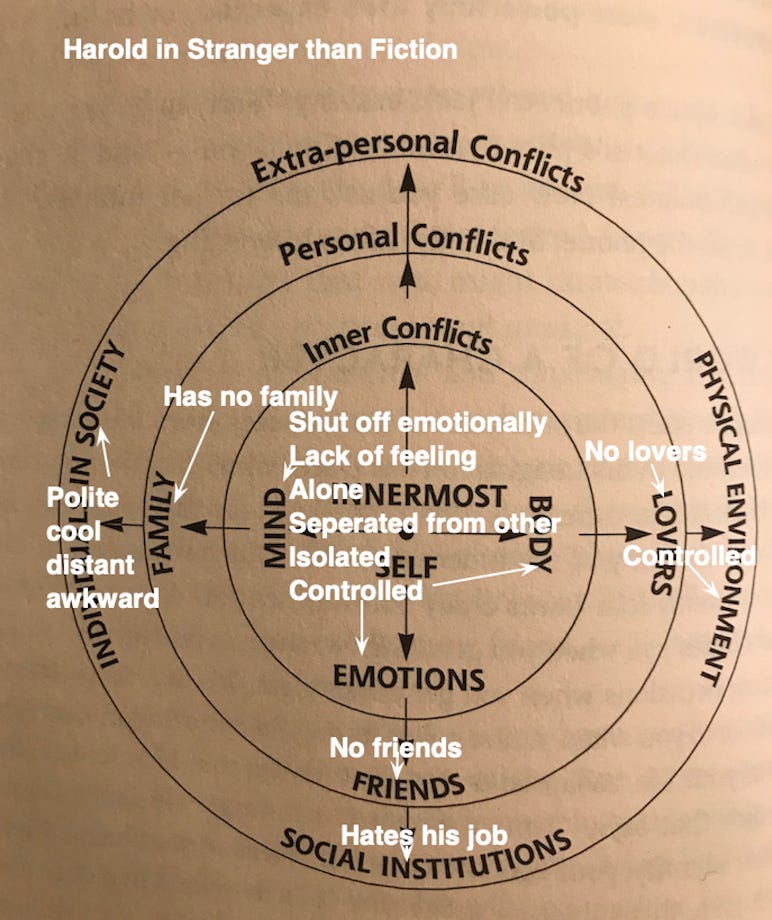
Here is Harold Crick’s multi-dimensional expression of antagonistic forces.
Your assignment (5 minutes): Open your manuscript.
Step 1: What is your hero fighting FOR?
Love? Justice? Freedom? Truth? Pick one core value.
Step 2: Name the three forces pushing against that value:
Internal: What inside your hero sabotages them?
Personal: Which relationship creates the most pressure?
External: What system/world/environment makes this impossible?
Step 3: Now do this for yourself. Your own life. Right now.
What are YOUR three antagonistic forces? Name them. Write them down.
If you can’t name your own, you can’t write your character’s: Again, this is the work MFA programs won’t make you do. They’ll workshop your prose. They’ll discuss your themes. But they won’t ask you to dive into the mess of your own pressure points. I am sick of talking about why but would rather tell you that there is a way out and this post is your start.
Antagonistic forces aren’t there to make your hero suffer. They’re there to reveal who your hero truly is when everything they want is threatened.
Pressure doesn’t break your hero. It shows what they’re made of.
And you can’t write that truth until you’ve lived it yourself.
Drop your three forces—yours or your hero’s—in the comments.
Jennifer 🐦⬛
PS: You are reading the third part in a series.
Structure is not a Dirty Word Pt. 1
Plot is Not a Dirty Word Pt. 2
And you can learn much more about antagonistic forces in the Hero Series.

No posts
Comments
Nothing yet. Say the first thing.
Sign in to join the conversation.