
What do Arthur Rimbaud, Modigliani, Louis Aragon, Marcel Duchamp, Man Ray, Kiki de Montparnasse, Foujita, Erik Satie all have in common? (If you don’t know these names, it’s ok; they were all very important creative figures.)
They all lived, worked, or spent time on Rue Campagne Première in Paris.
Les Années folles
The 1920s were known as ‘les Années folles’ (crazy years), like France’s version of the Roaring Twenties. (I would give my right pinky toe to travel back to that period.) Picture flappers, short haircuts, Josephine Baker and the charleston. It was a great time of artistic and cultural collaboration, and Rue Campagne Première was one of THE places to be.
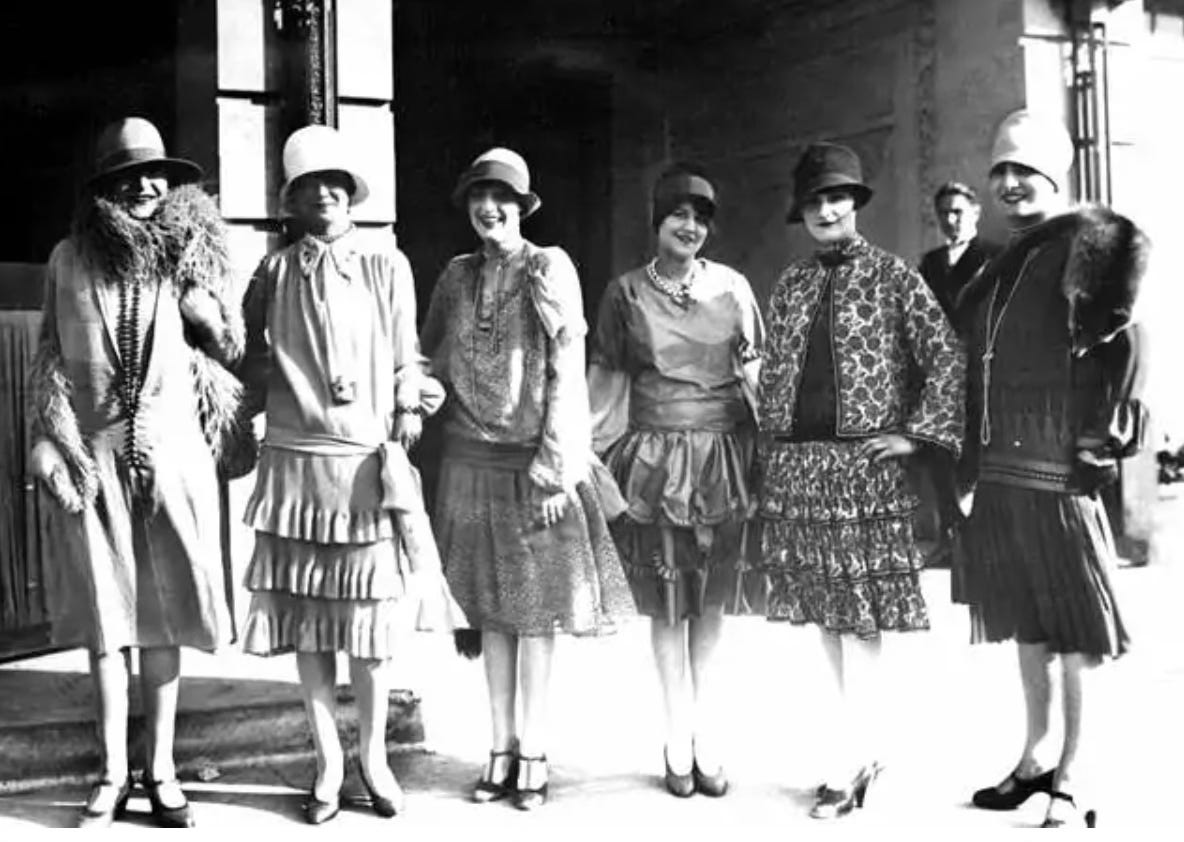
Interestingly, there was a migration for some artists from Montmartre in the north — where artists thrived (or at least commiserated) during the 19th century — to Montparnasse in the south, because of its cultural richness.
I can’t mention 1920s Paris without…
Let me tell you a little story.
Once upon a time, there was a photographer who made it his mission for 30 years to photograph parts of Paris before they disappeared. This was a period hovering around the 20th century. (If you want to read a great book about this time period from the eyes of an émigrée, I highly recommend ‘Parisian Days’ by the writer Banine.)
His name was Eugène Atget. If you know this Substack, you know I have a tiny obsession with him. Anyway, he had a wife and some good friends and loved the theater, but focused on his photography until he died in 1927.
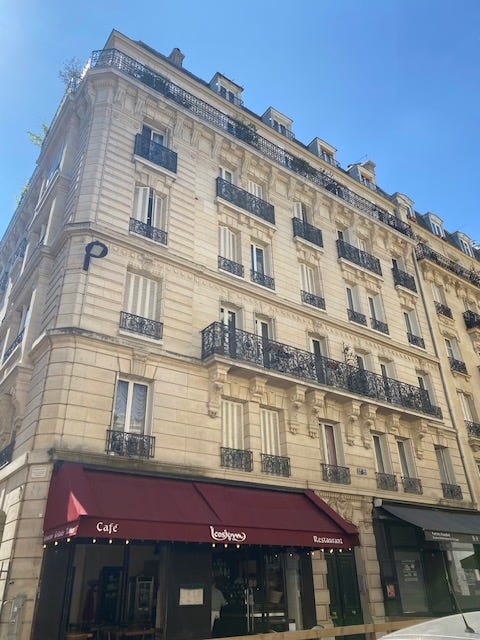
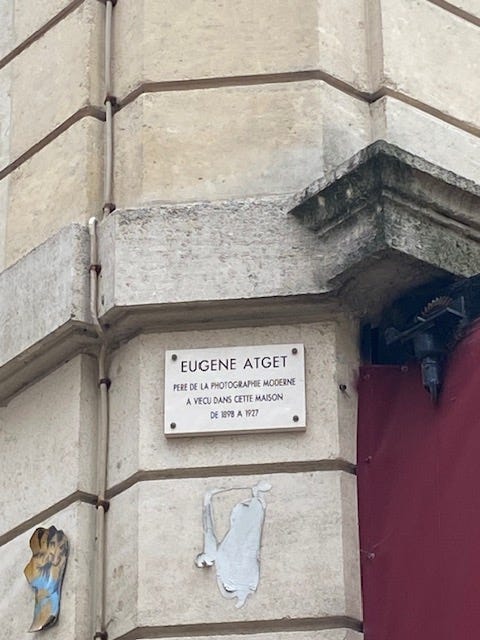
In 1898, Atget moved into an apartment on the 5th floor of 17bis rue Campagne Première. (If you want to know what the ‘bis’ is for in the address, have a look at something I wrote a while back.) It’s a beautiful building that still stands today and has a plaque dedicated to him on the front of it.
Atget would get up before dawn to take out his 20kg (44lbs) of equipment, including his camera stand, camera, and glass plates onto which he would capture images of whatever Paris door, railing, building, restaurant, or people he had on his list for the day. He lived on the 5th floor of his building — a walk-up — so you can imagine what it was like carrying all this equipment up and down those stairs for years.
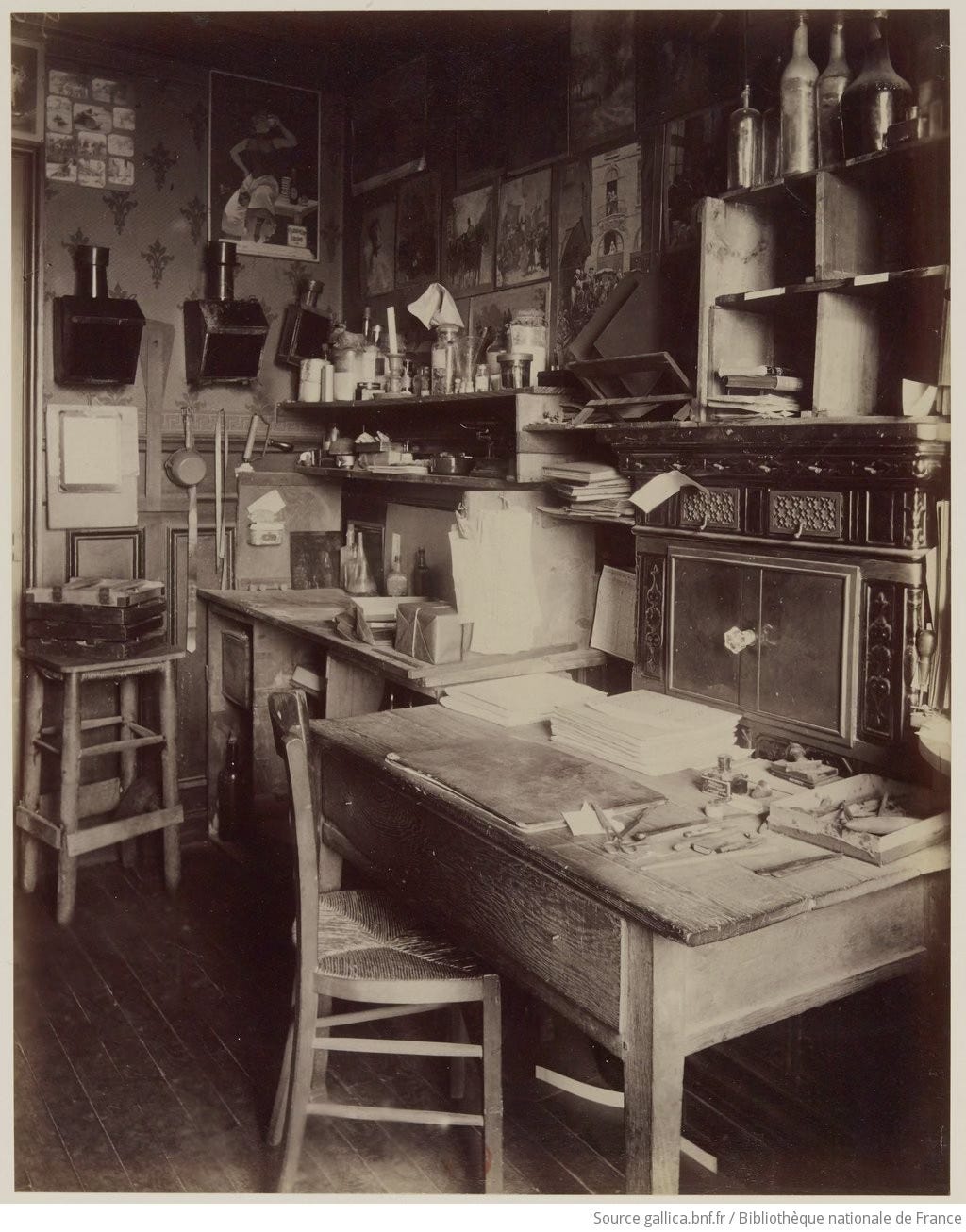
Out of his two-room apartment, Atget developed his photographs and kept meticulous records of clients and books of photos organized by theme: petits metiers (odd jobs), vehicles, design, nature, etc. Just for context, many of his contemporaries had a separate studio to do this work — but not Atget.
A journey to the artists’ street
A few years ago, I went to pay homage to the photographer by searching for his building on Rue Campagne Première. The street is not terribly long and is nestled between Boulevard Montparnasse and Boulevard Raspail, which touches the northeastern corner of the fantastic Montparnasse cemetery. As I strolled along the street, I noticed some other buildings that were remarkable and that’s how I discovered that this was a major artists’ street back in the day.
#31bis: Man Ray
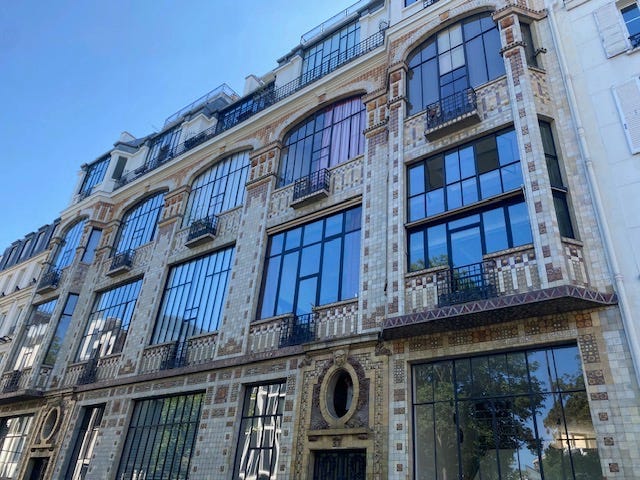
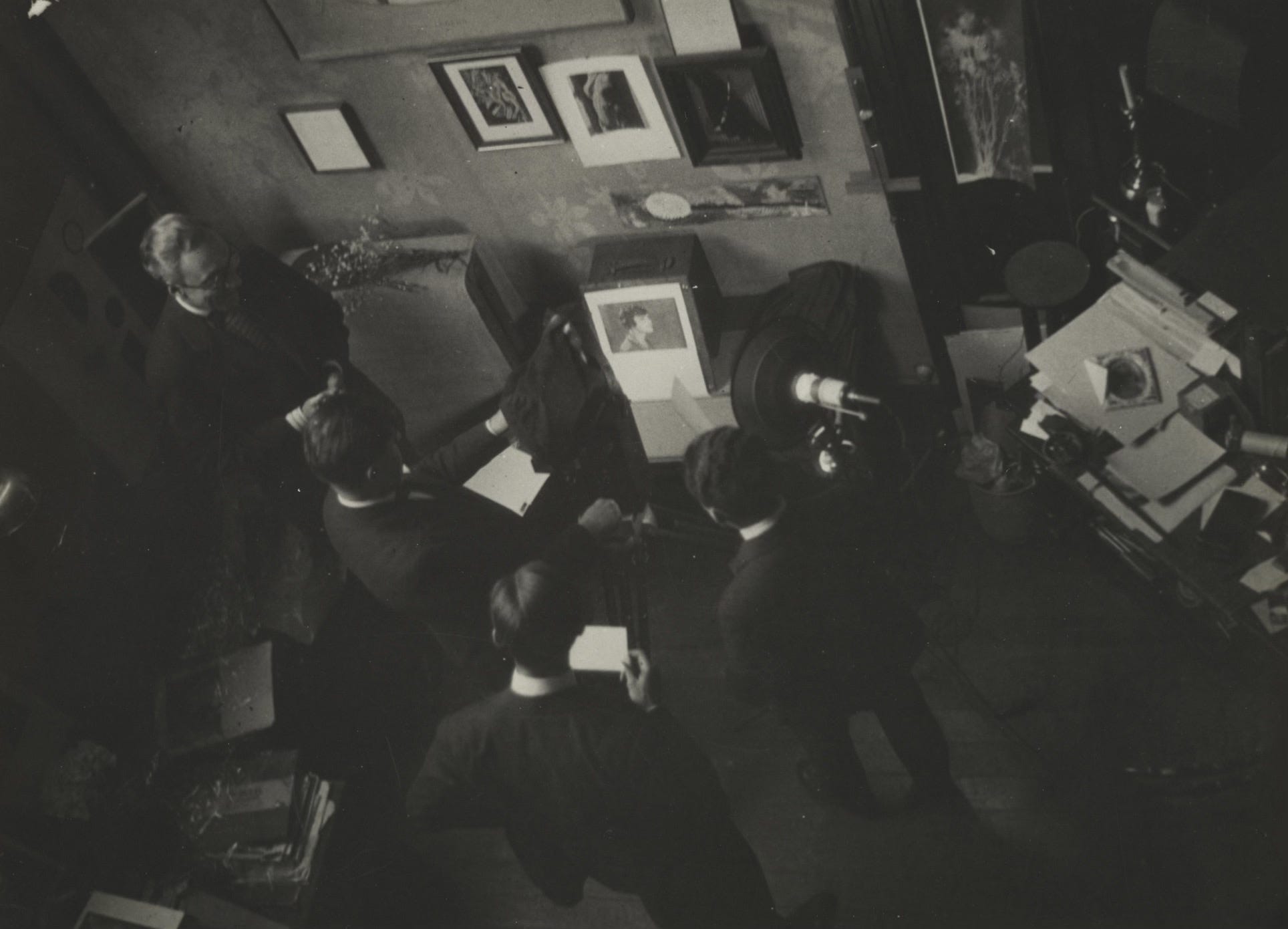
Part of Atget’s story involves an American photographer and artist, Man Ray, who had a studio down the street at #31 (pictured at the top and bottom of this article) — a gorgeous Art Deco building erected in 1912 that housed a number of artists. Man Ray became friendly with the aging Atget and later his assistant, American photographer Berenice Abbott. (After Atget’s death, Abbott would go on to promote Atget’s photographic work in Paris and New York — both cities hold many of the photos today, including the MoMa in NYC).
#9: Cité d’artistes
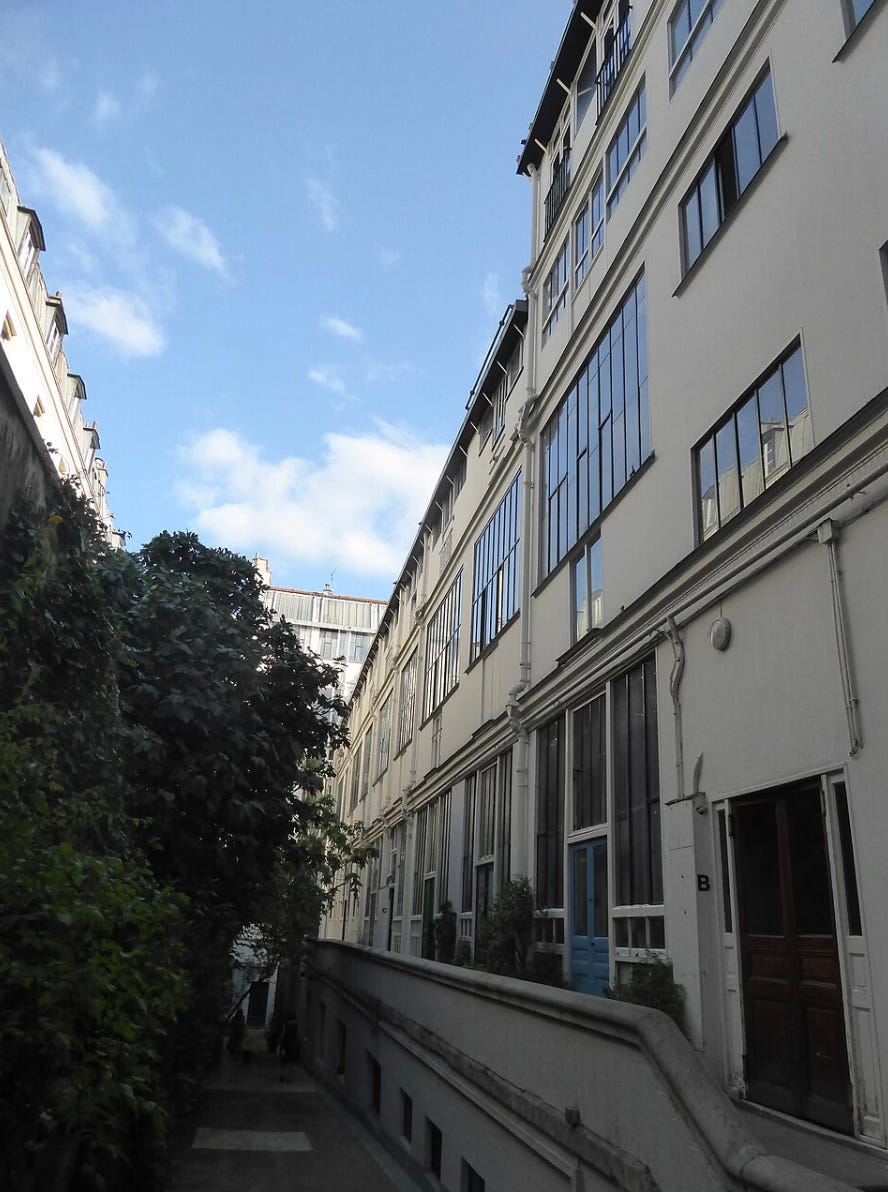
At #9 Rue Campagne Première, a collective of artists built little studios by reusing materials from the 1889 Universal Exhibition in Paris.
#29: Hôtel d’Istria
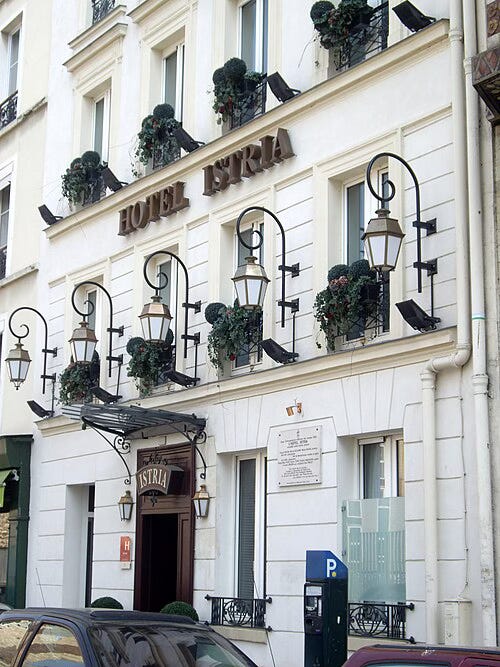
Hôtel d’Istria is a boutique hotel today, but during the 1920s, a number of well-known artists and writers, passed through its doors. The composer Erik Satie collaborated on a piece here. Today the front of the hotel has a plaque dedicated to the memory of its residents and visitors during the Années folles.
To get your bearings, Rue Campagne Première is located in the 14th arrondissement in the southern part of Paris. The closest metro stations are Vavin on line 4 or Raspail on line 4 or 6. If you’re around, just wander over there. Trust me, you won’t be disappointed.
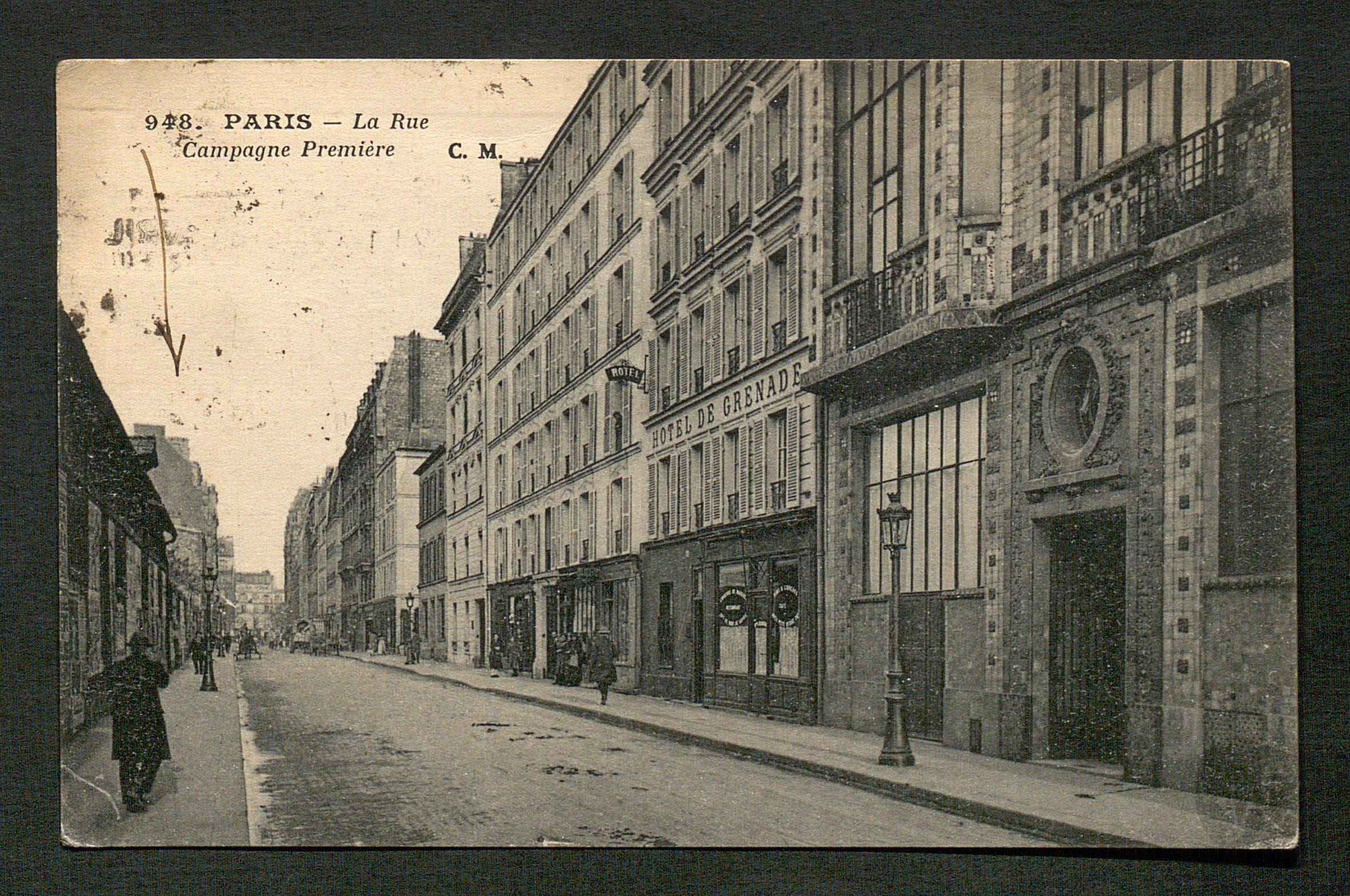
Remember when I said I’d give my right pinky toe to travel back to 1920s Paris? I’d give my left one to have an apartment on this street today…
Sources:
Paris Je t'aime: Rue Campagne Première
No posts
Comments
Nothing yet. Say the first thing.
Sign in to join the conversation.