
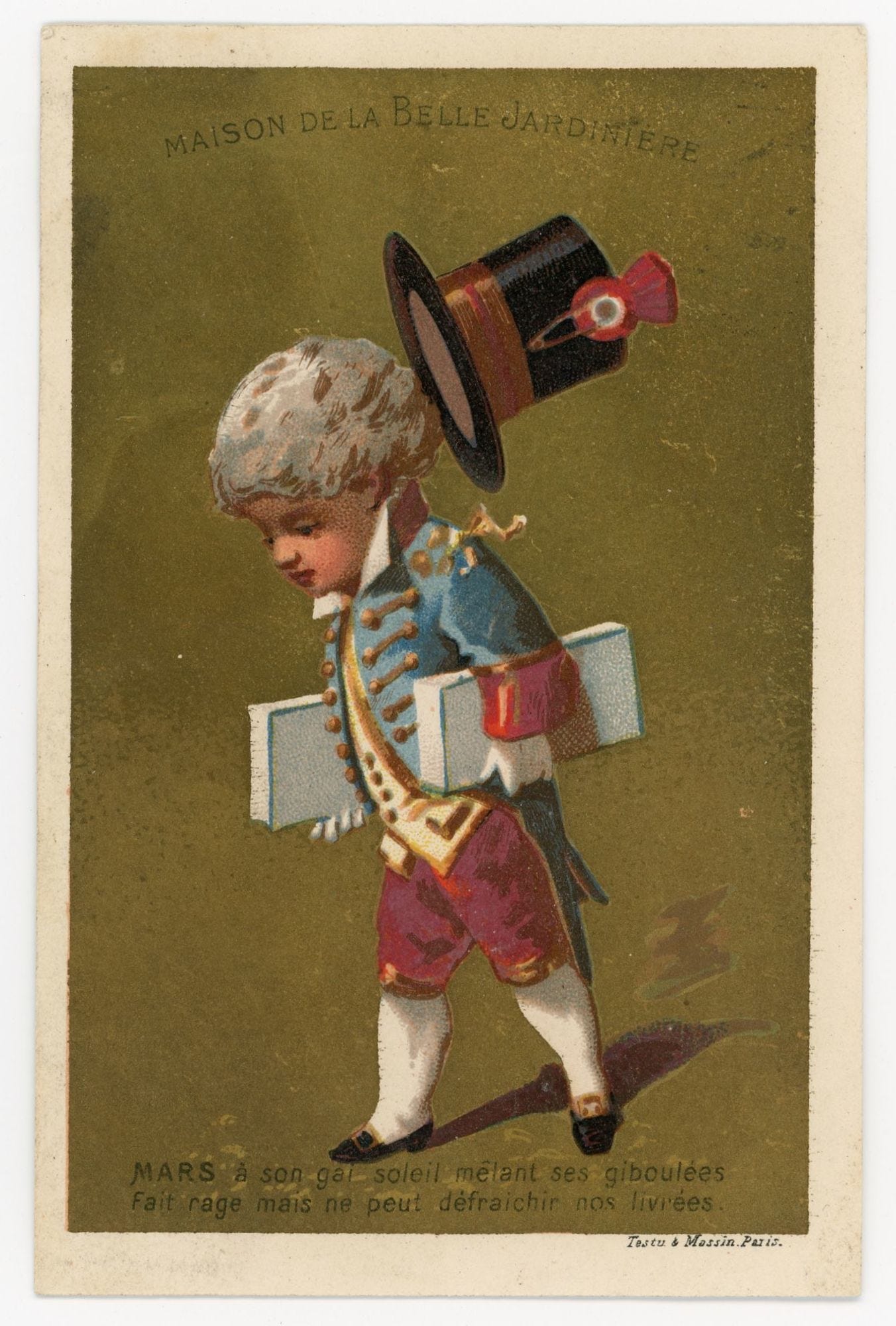
The 19th century saw many changes in Paris. Perhaps the biggest change was the massive modernization push under Baron Haussmann that lasted nearly 20 years. This is the Paris we know today.
During that century, the middle class grew and many urbanites had more money to spend. That meant shopping was no longer just for the very rich. Then, in 1852, a new department store — Au Bon Marché, said to be the world’s first — revolutionized the way people shopped.
It offered:
items at a fixed price, which meant no bargaining or haggling with shopkeepers
a sensory experience where people could touch and feel items for sale
a greater variety of goods under one roof like clothing, furniture, haberdashery, etc
Most importantly, from a cultural perspective — Au Bon Marché offered shopping as a leisure activity.
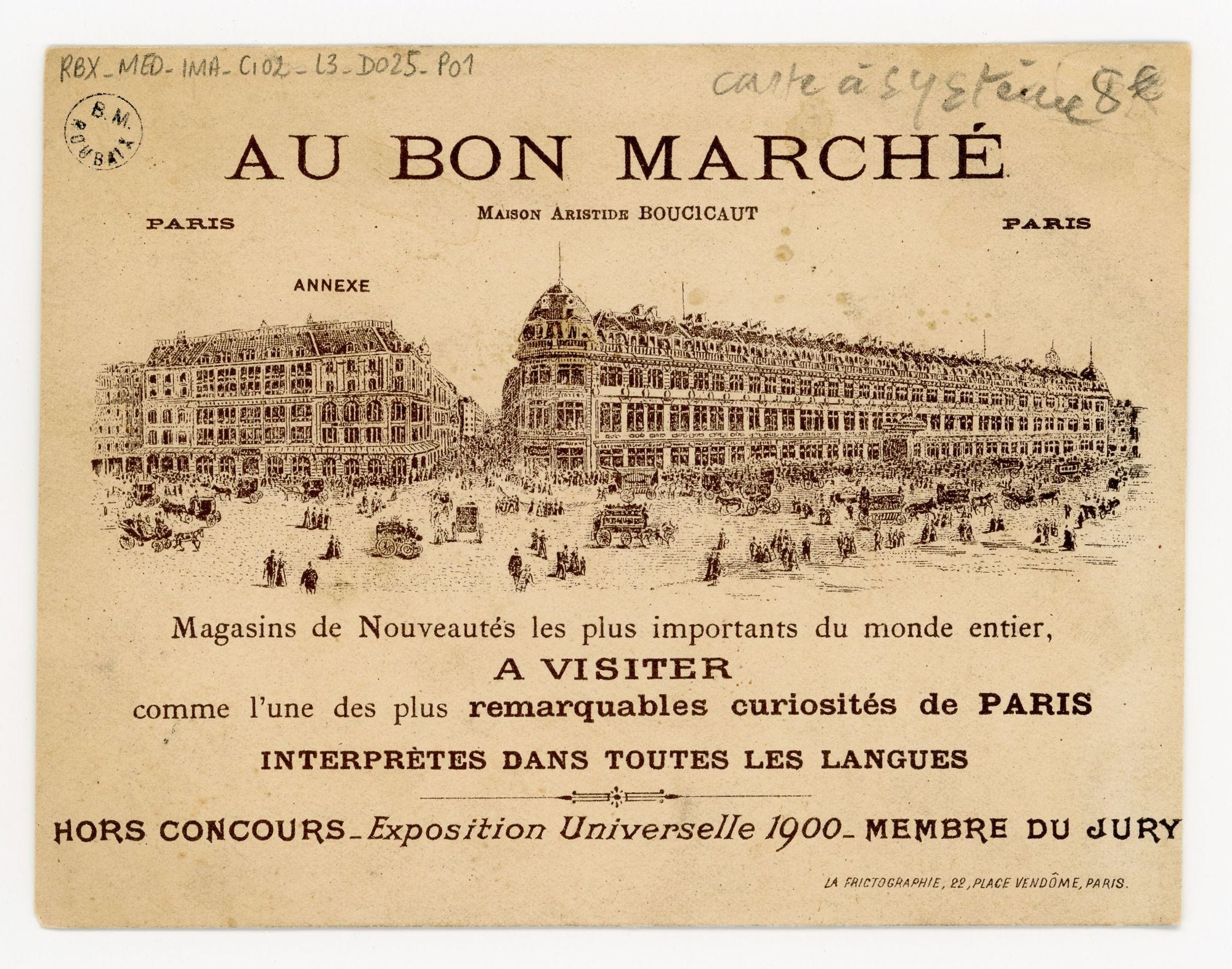
But how to draw in customers?
During the latter half of the 19th century, posters became a popular way to advertise a product or business. Talented illustrators were commissioned to create attractive advertisements to lure consumers into buying the best French chocolate or the finest clothing or a new travel destination. The use of lithography and color printing led to an explosion poster-making right into the 20th century. (Click on this link to read my article about those cool French posters)
But it wasn’t just posters that brought customers to the store…
Enter the chromo-carte
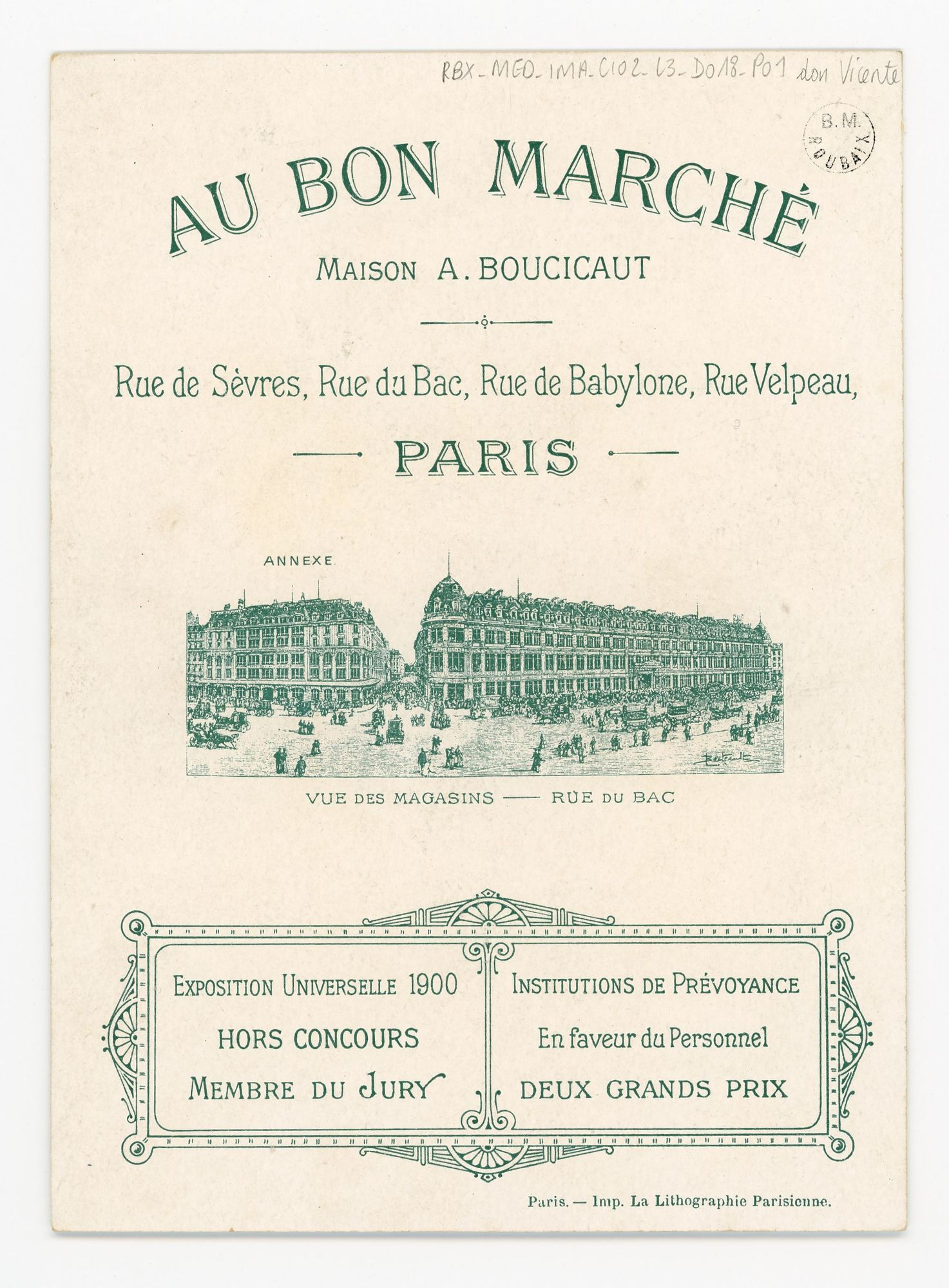
The man who built Au Bon Marché, Aristide Boucicault, was something of a marketing maven. He came up with the unique concept of printing little palm-sized cards to hand out (for free) to customers when they entered his store.
One example is below, from a series called Le Chien Savant or ‘The Clever Dog’:
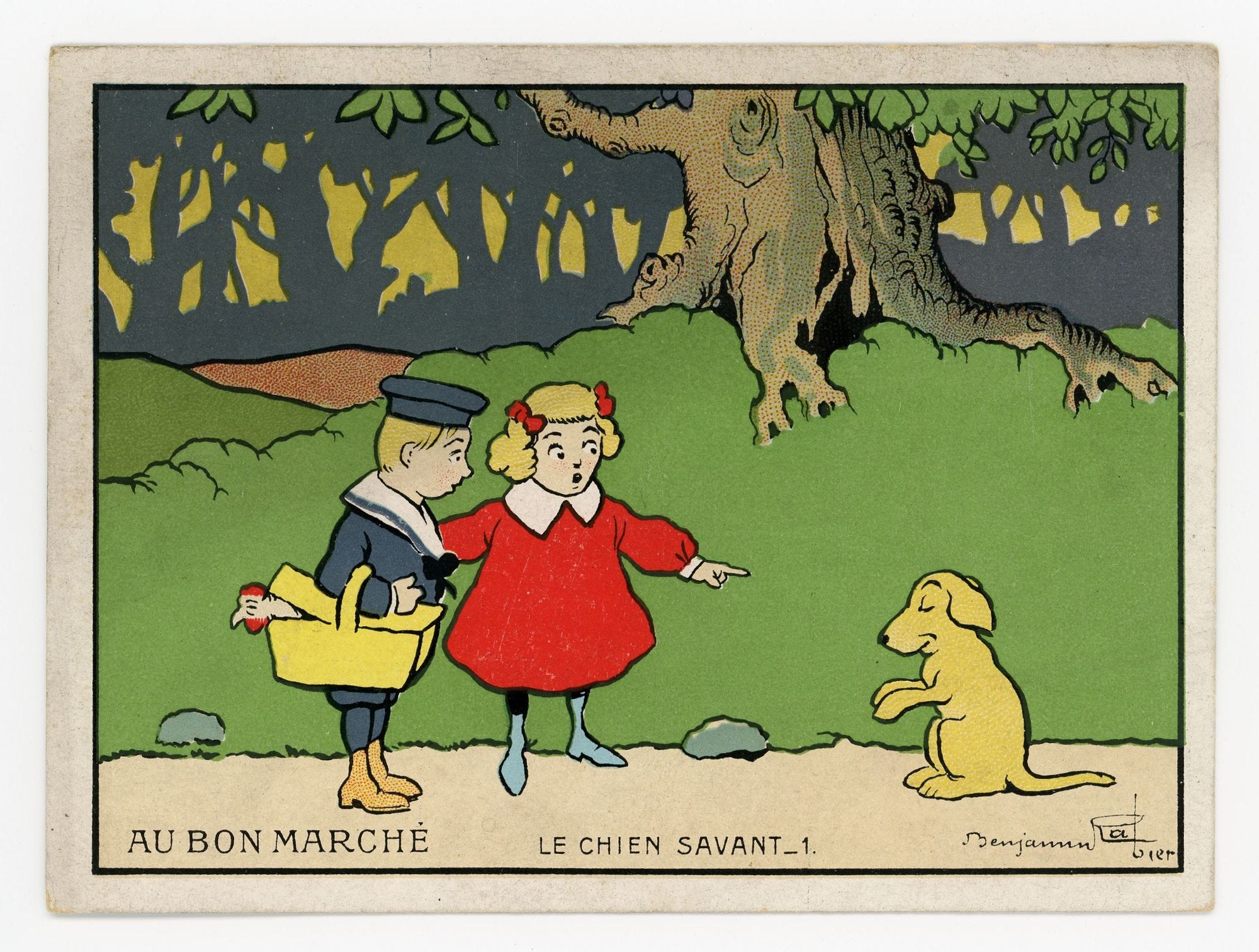
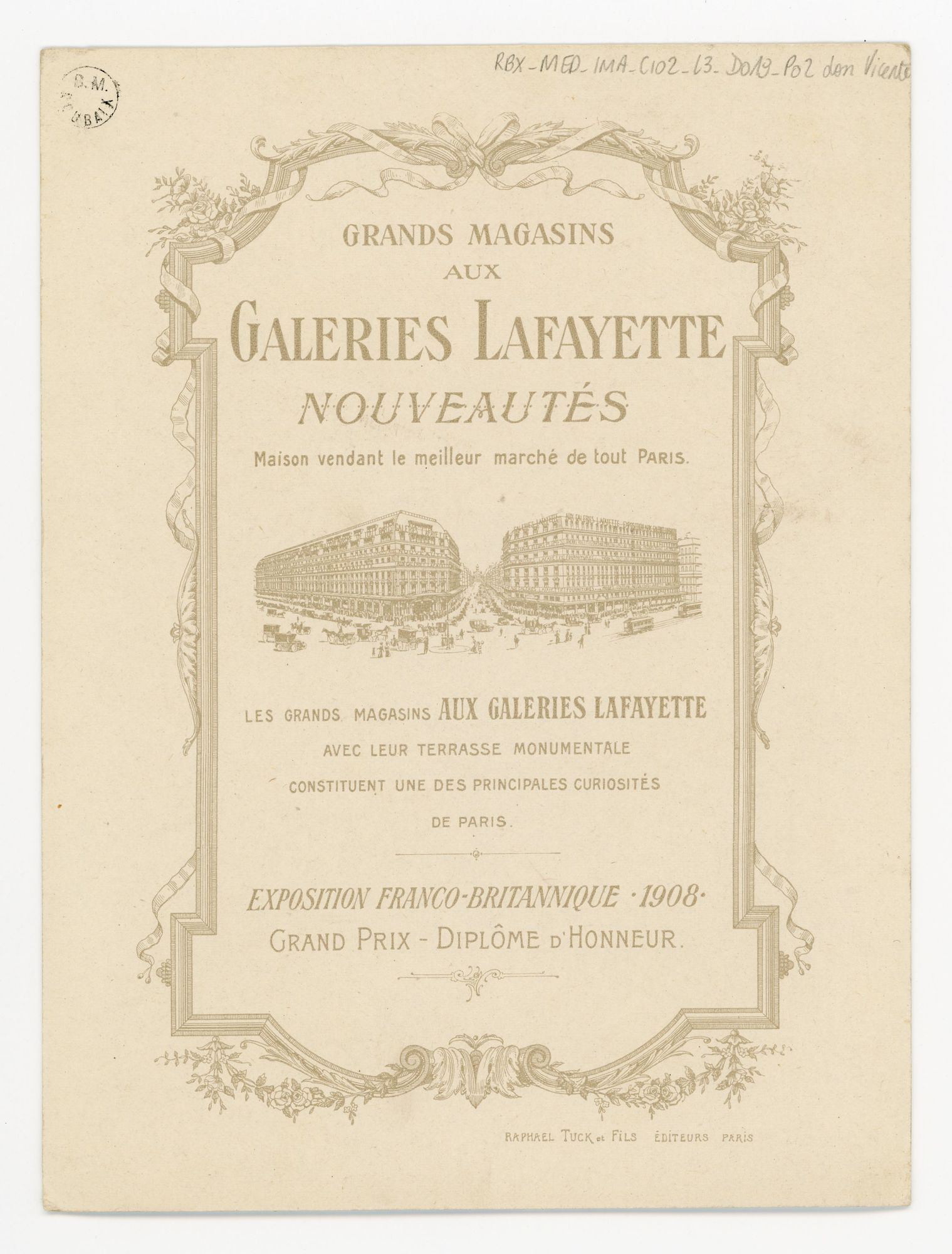
Each chromo-carte had a picture drawn on the front and the details of the store on the back — think 19th century trading cards. The pictures ranged from fables to cartoons to patriotic scenes. Every week there would be a new picture to entice customers to return to see what the next one would be. This little gimmick was a way to spark a little excitement in the children who’d be dragged around the store by their mothers. (Women and children made up the majority of clientele.)
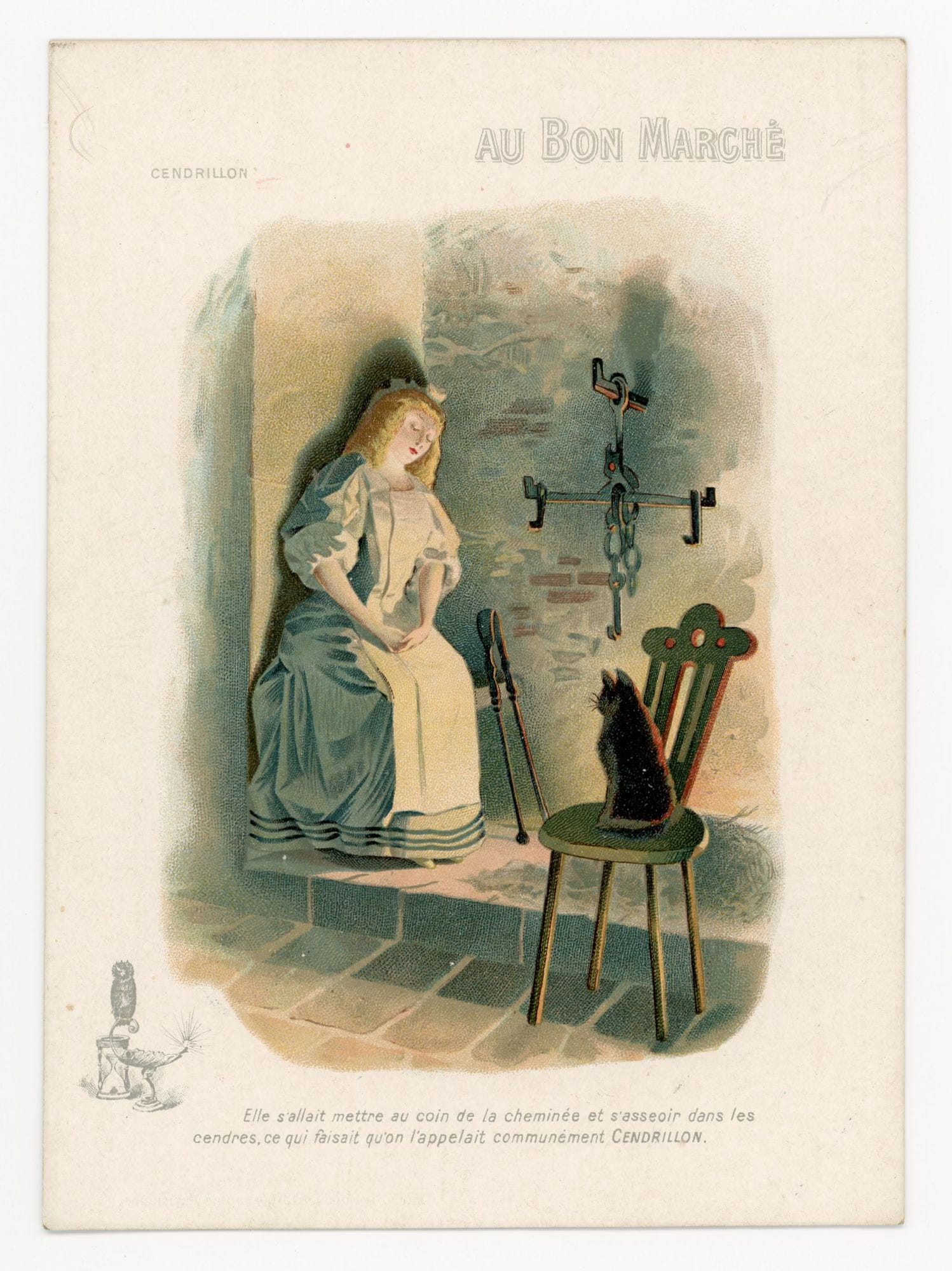
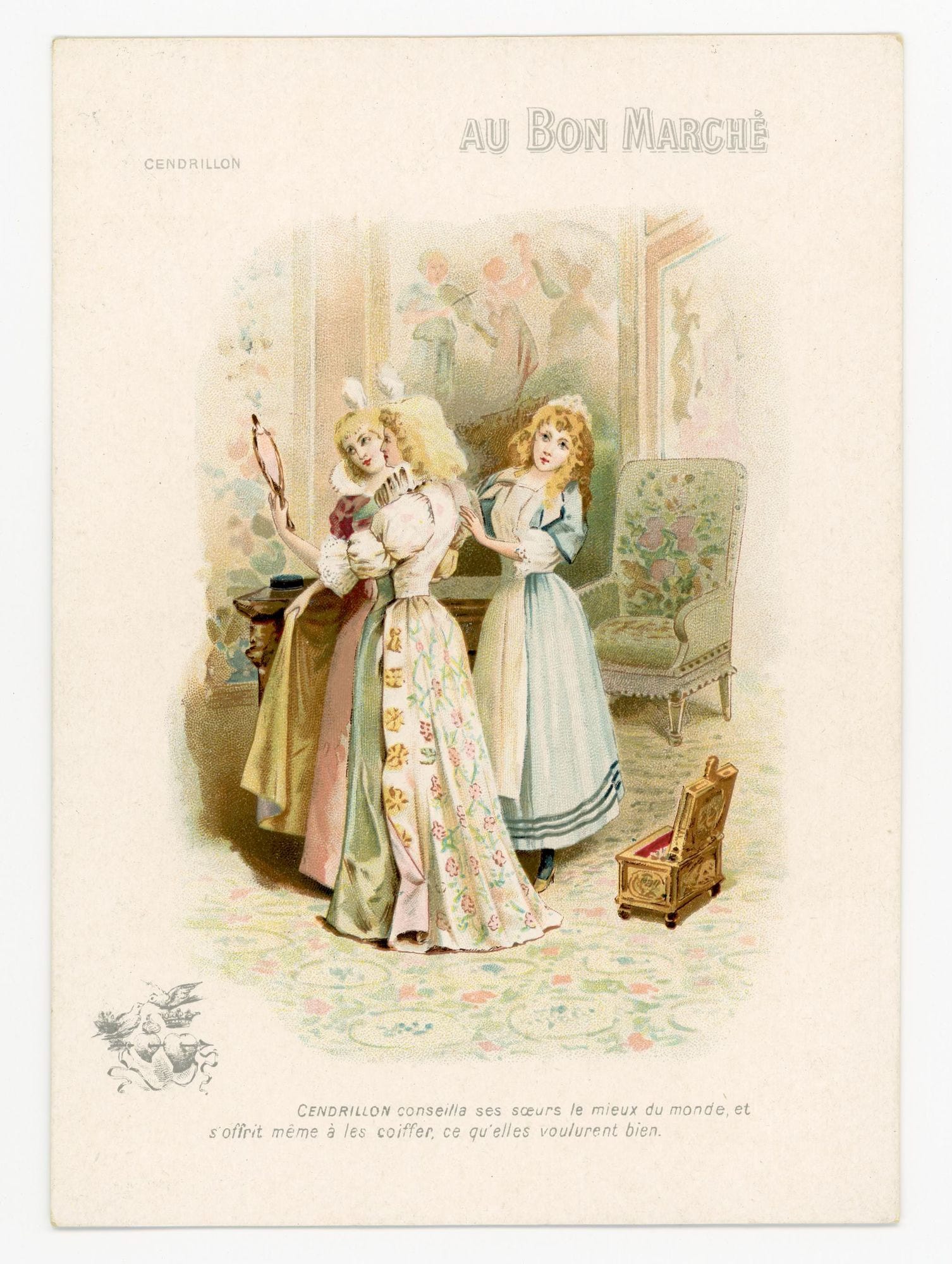
Below are two cards Au Bon Marché created for a series about Cinderella.
The caption below reads: “She would go and sit by the fireplace in the ashes, which is why she was commonly called Cinderella.” (Cendres means ‘ashes’ in French - so Cinderella is Cendrillon in French…)
The second card in the series reads “Cinderella gave the best advice in the world to her sisters, and even offered to do their hair, which they gladly accepted.” (We know her sisters were real b*tches to her, poor thing…)
Other stores followed the trend
Soon, other stores in Paris and around France (like Lille, Chartres, Angers) — and beyond — started using chromo-cartes to advertise their wares.
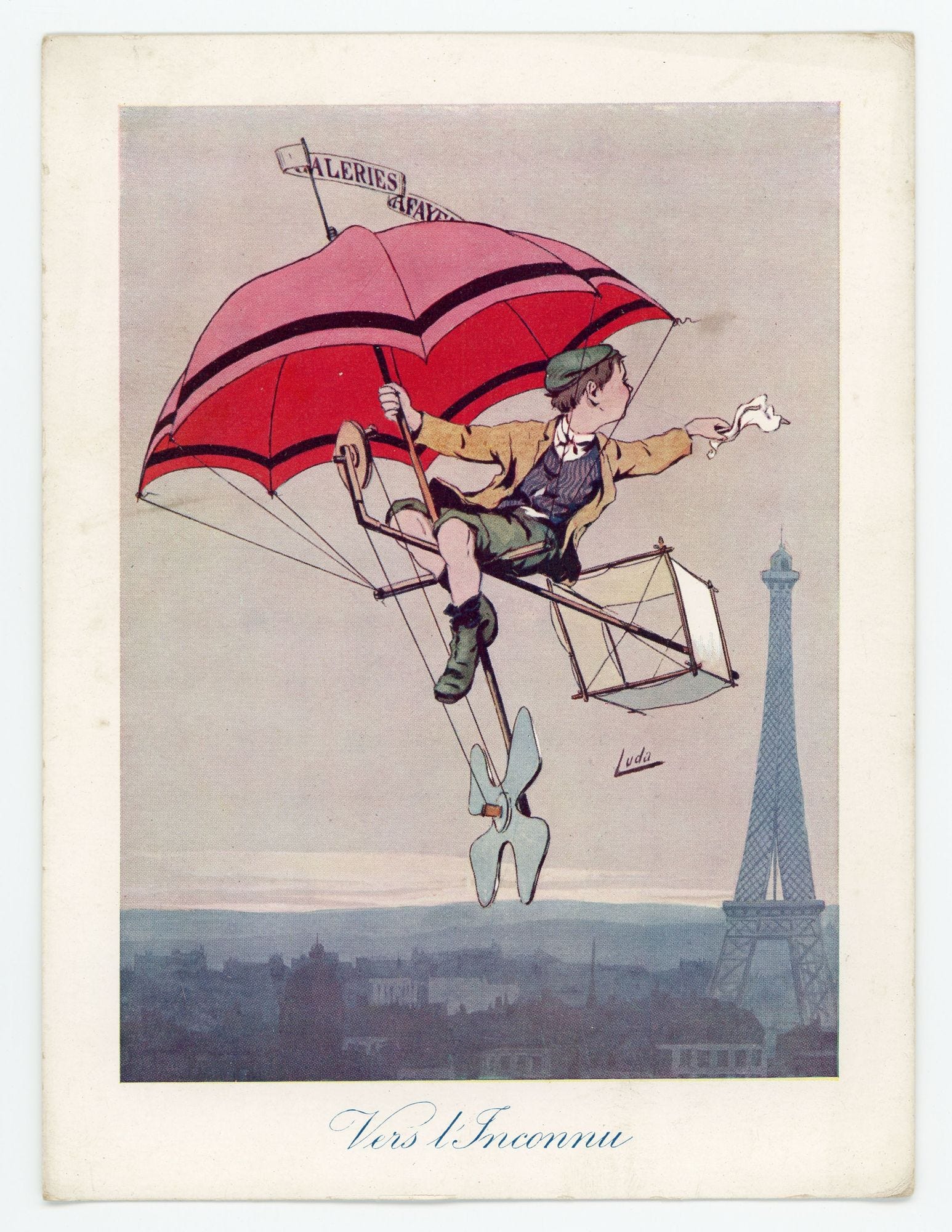
Here’s an adorable card from my favorite store, Galeries Lafayette. The caption reads ‘Vers l’Inconnu’ or ‘towards the unknown’:
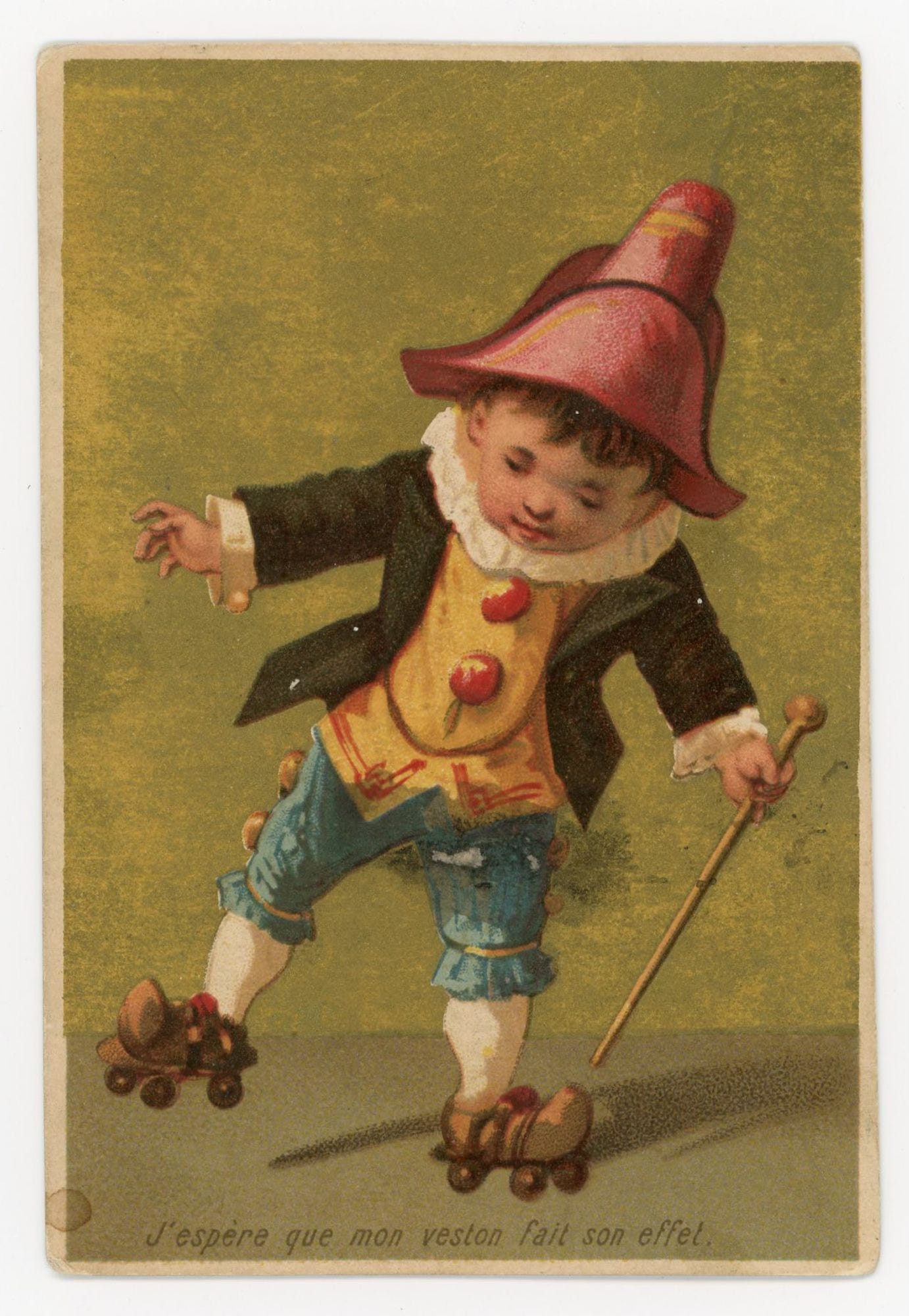
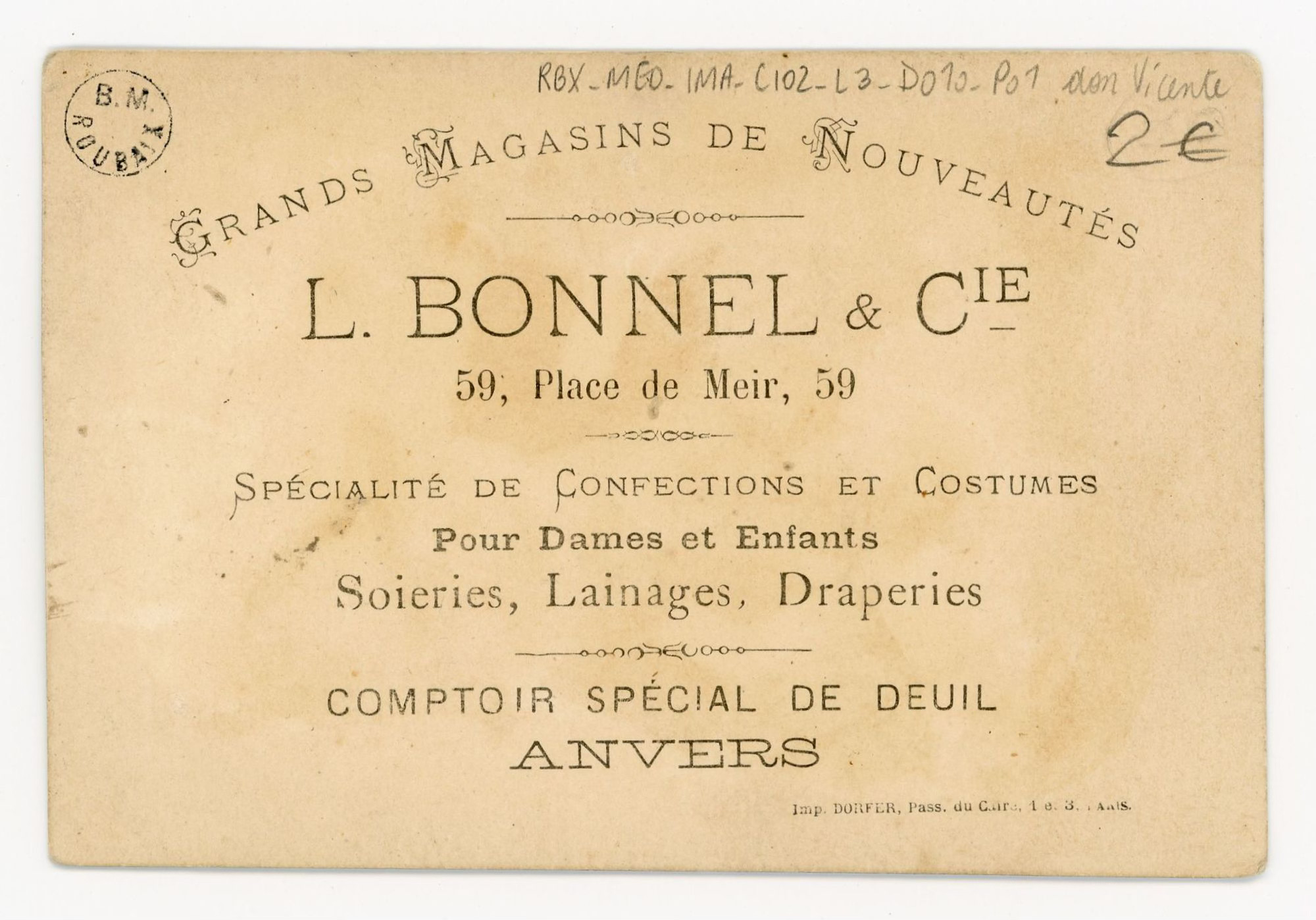
Then there’s this one for the Bonnel & Cie., a company in Anvers, Belgium (Antwerp in English). I can’t find much about that store, but it specifically marketed to women and children.
The quote at the bottom says: “I hope my jacket is making an impression.” Cute, non??
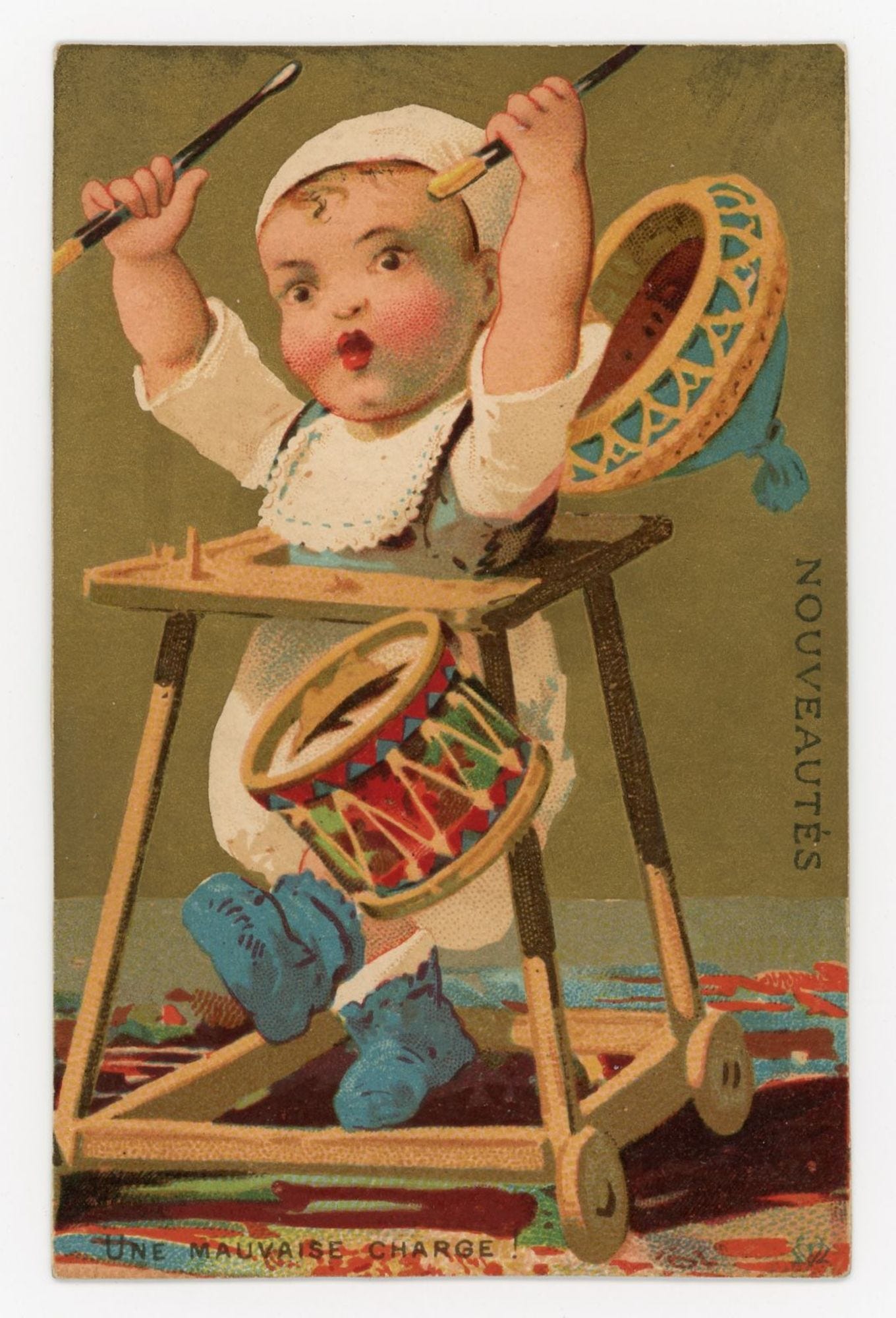
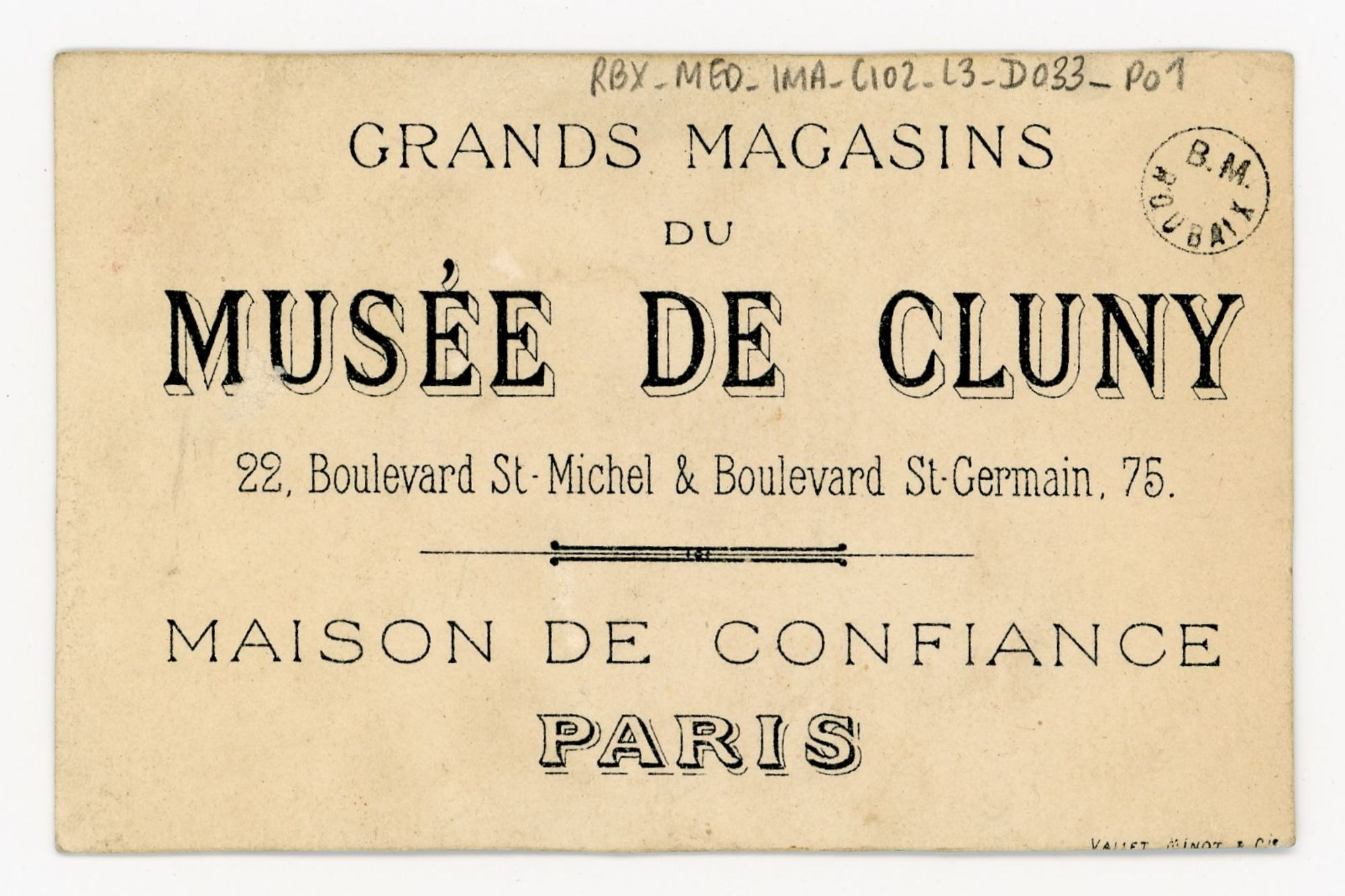
If I could, I would post an endless run of cute little illustrated cards, but Substack limits me on space. However, I have enough room to leave you this cutie, advertising the shops at the Musée Cluny, a Middle Ages museum in the heart of Paris:
Sources:
Full list of chromo-cartes - Bibliothèque numérique de Roubaix
Napoleon.org: French department stores during the Second Empire
No posts
Comments
Nothing yet. Say the first thing.
Sign in to join the conversation.