
We’ve been tightening our purse strings this month. After graduation celebrations and an overseas trip abroad, we came back to Brooklyn and back down to earth after a few weeks of “anything goes.”
When you’re traveling, it’s easy to rationalize overspending with FOMO and YOLO, especially since international travel isn’t something we do very often as a family. When else will we get the chance to eat this particular slice of cake on this specific street in France?
Your mind can rationalize anything while on vacation, particularly when it whispers in your ear that you deserve it. Fortunately, none of us have an interest in souvenir shopping and would rather eat our memories than buy things to bring home.
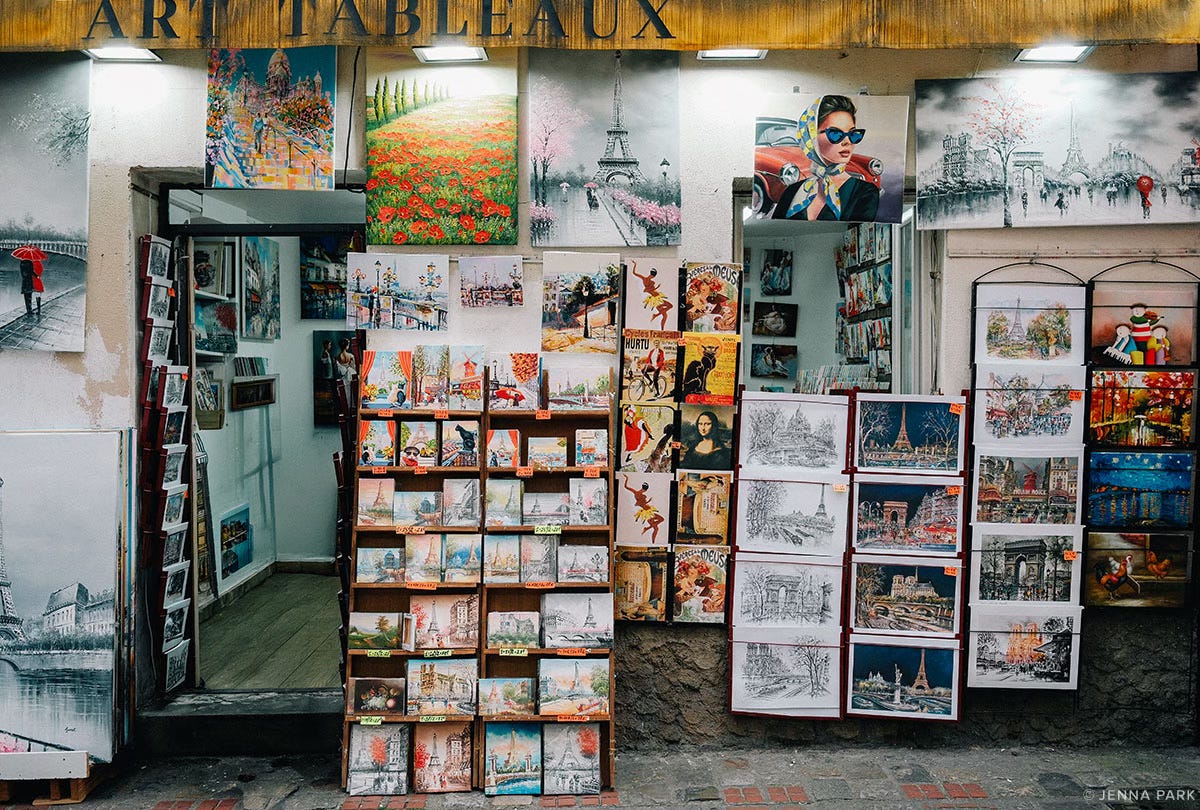

I don’t know if it’s correlation or causation, but as I get older and simplify my life, I’m learning that I don’t need very much. Leaving the workforce means I have little reason to shop for new clothes and I don’t go out nearly as often. Eating out is nowhere near as enjoyable either, not when restaurants pump music to the point where we’re practically yelling at each other in order to carry on a conversation.
My early (or forced) retirement has us on a tighter budget, so the timing of my post-consumer, anti-capitalist minimalism is brilliantly convenient. Either that or I’m just really good at talking myself out of buying shoes that I want but don’t really need (but sometimes the want wins).
I’ve become quite averse to stuff. Our lives are inundated with so much it. Even if I’m being discerning with what I buy, accumulated stuff takes up a lot of space. It all risks turning into clutter which inevitably gets trashed or put out on the sidewalk for takers. That’s money wasted, and it’s hard not to see it any other way once you envision the waste in dollars. Space is a premium in NYC and I’m a savage purger—so much so, that sometimes I have regrets, but I continue to guard our home from clutter with fierce resolve.
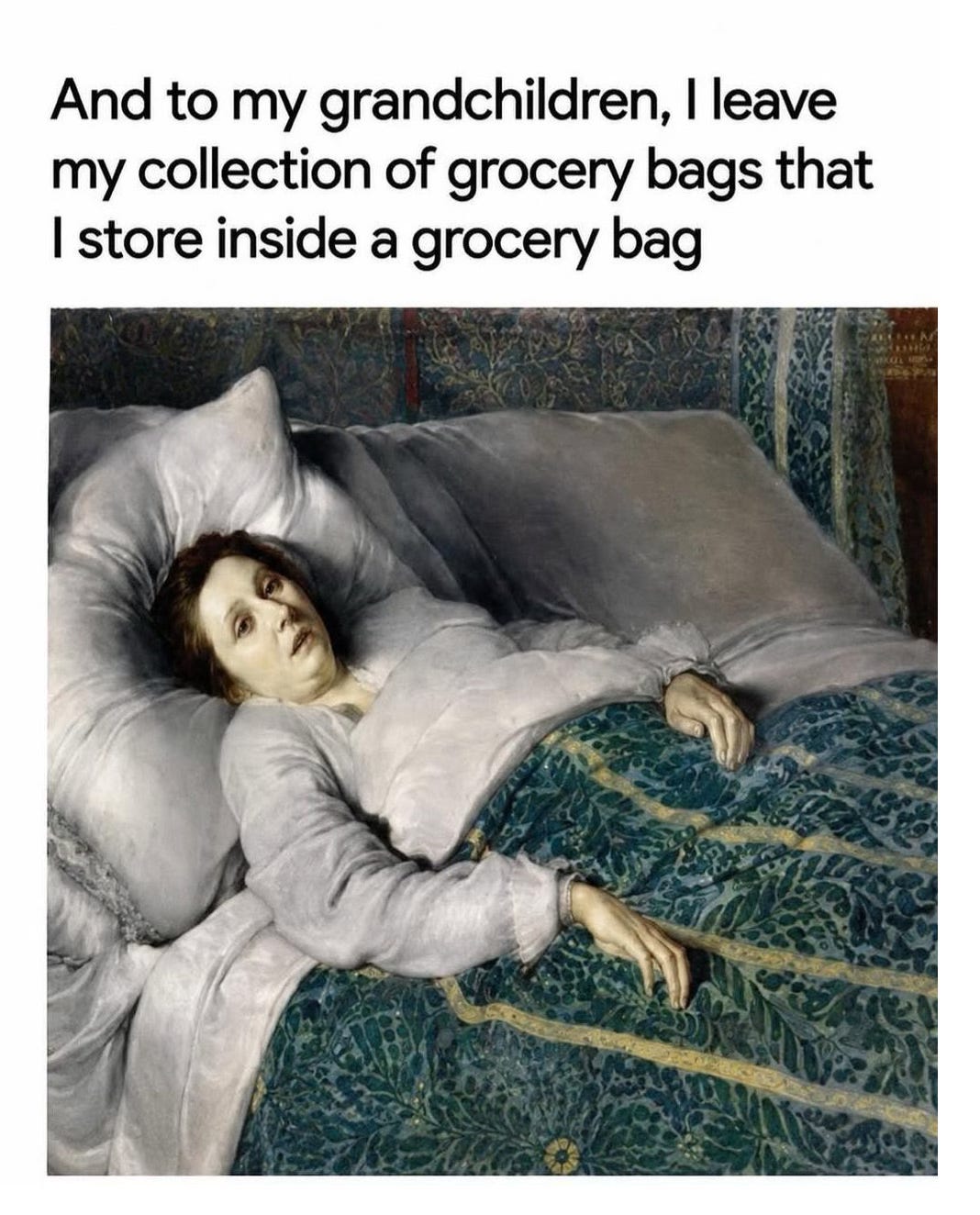
I’m also incredibly uncomfortable with all the waste that is created just by living. I have a collection of plastic bags, used plastic packaging, sleeves, bubble wrap, and mailers stashed away just in case there’s an opportunity to reuse any of it. It’s a visual reminder of all that we consume.
I know. It’s stuff taking up space, so how can I defend such questionable hoarding behavior? It seems I’ve become your weird old aunt who likes to save bits of aluminum foil because it’s wasteful to use only once.
Part of what makes early retirement possible is not because I’ve invested well, but because I’ve resisted the tyranny of endless consumption. Less time on social media helps curb the want of stuff too. There’s less chance to be influenced and less chance of falling into a comparison spiral.
Resisting the trap of lifestyle creep means resisting the urge to upgrade your phones every 2-3 years or your car every ten. Resisting the urge to buy fancier clothes, pricier labels, or eating at more expensive restaurants. It means banking that money instead of upgrading your lifestyle when you get a raise or a windfall. Financial literacy isn’t only about how and where you save, it’s about how much you spend.
While my desire for discretionary spending has dropped considerably, everything has also gotten more expensive. Everything desirable feels inaccessible, whether behind paywalls or high prices while wages are stagnant or worse. Inflation and the rising cost of living is out of our control, so all we can do is adjust.
I’ve shared that I have financial spreadsheets that give me a ridiculous amount of pleasure in its meticulous forecasting detail (we’re talking 10 years of nerdy forecasting). Lately, however, I’ve been having to tweak the numbers because of life creep. Not lifestyle creep, which can be curbed, but the increasing commodification of basics and the commodification of our attention.
For example: after switching carriers for our employer-sponsored health insurance plan, all our annual physical exams, which have always been fully covered, now come slapped with additional costs. That five minute conversation with my doctor about my hip pain is coded as a separate service and is billed to me at $79. Or a breast ultrasound that I’ve gotten every year is suddenly not covered. Neither is a followup mammogram when they want to get a closer look.
Do you know what a self-insured plan vs. a fully insured health plan means? It’s printed on your health insurance card. I didn’t—not until I started probing into why we were suddenly having to pay for routine services that were fully covered last year. I shouldn’t be surprised that there are loopholes designed to get around New York State laws that mandate coverage for certain preventative care.
And what about the sneaky way utilities and subscriptions quietly increase our monthly bills at yearly intervals for the same or worse service (I’m looking at you, Spectrum, Adobe, and AT&T)? Modest cost of living raises, paycuts, and rampant underemployment just can’t keep up.
Or the relentless ads that have become the backdrop of modern life. Ad-free streaming used to be the alternative to cable before the model changed. We’re right back to watching TV with commercials unless we pay to make them disappear.
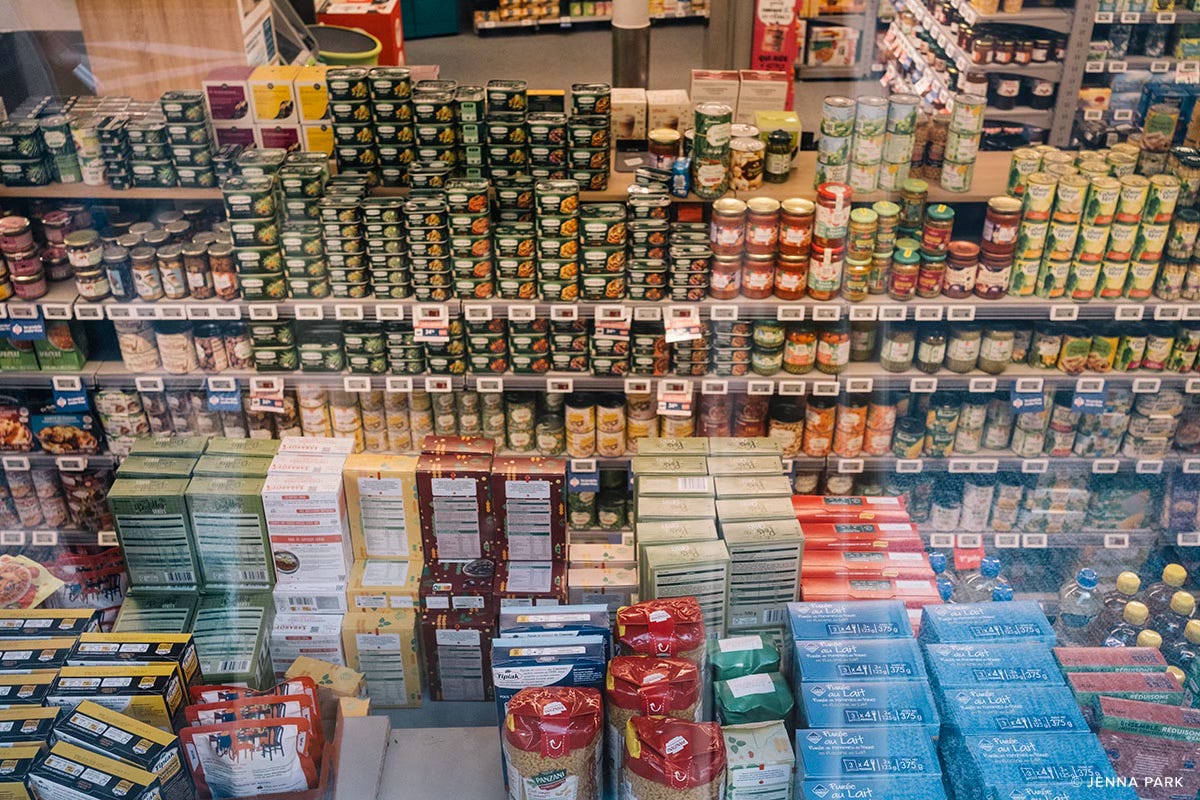
I said to a friend the other day that I feel like my days are spent swimming in life admin stuff. The endless to-do lists, the endless decisions. I don’t understand how I juggled it all while working jobs and raising children. I know you can relate: chasing after insurance claims, signing up for services, unsubscribing from services. Remembering to schedule doctor, dental, and vet appointments, remembering to take your supplements and medication. Remembering to order your supplements and medication. Remembering to transfer money to pay the bills. And every service has a different online portal, password, and interface.
The cognitive load of modern life takes up as much space in our brains as the physical stuff that’s cluttering our homes. Human attention is a coveted resource, but also a scarce one. As a scarce resource, it’s become just as valuable to companies as natural resources. It’s a commodity and we are the product. That’s the attention economy.
The convenience economy is designed to reduce friction, save time, and deliver services with speed, but have we actually gained more free time? What if we took some of that friction back? Learn to mend our socks instead of replacing them? Walk to the library to borrow books instead of ordering online? Convenience doesn’t just make our lives easier, it also increases our consumption.
We don’t need to keep spending money to find fulfillment and we don’t need an endless accumulation of things to live a comfortable, meaningful life.
The question to ask is: how do we decide what is enough? More isn’t going to make you happier once your basic needs are met, but once you determine your own definition of what enough is, walking away from the clutter offers a kind of freedom that money can’t buy.
Thank you for reading! Everything is Liminal is reader-supported publication. Weekly posts are free, but some are paywalled at a later date. If you enjoy this newsletter, I’d be grateful for your support with a paid subscription.
To read:
They Want to Be Better Fathers, One Braid at a Time (NY Times gifted link)
An event called “Pints & Ponytails” in London that teach dads how to style their daughters’ hair. I’m all for anything that challenges the norms of masculinity and fatherhood.‘How do I deal with my rage? I put it in everything I do’: Killing Eve’s Sandra Oh on fury, friendship and hitting her prime in midlife (The Guardian)
I first saw Sandra Oh in 1994’s, Double Happiness, a film about a young woman living at home with her Chinese Canadian family and struggling to live her true self while balancing the expectations of her parents (anyone with immigrant parents can relate to this!). I’m not sure anyone could predict back then that Oh would become one of the most prolific Asian actresses of our time who is still working consistently in her 50s.Judy Blume says she's done writing: '50 years is enough!' (npr)
You know how many letters I get? "We need Judy to write a book — Margaret In Menopause." Ha! Judy Blume was the author of my childhood. From the deeply personal relevance of Deenie to passing around and sneaking pages of Forever during middle school assemblies, it felt like we were always reading Judy Blume books.Pigeons are surprisingly good at detecting cancer (Popular Science)
Everything about this story is fascinating—from the average number of scans that a radiologist looking for abnormalities might miss, to how eye-tracking technology and radiology training for pigeons is being used to create a medical AI that will help doctors prevent these misses. How do scientists even think of introducing pigeons to their research?The radical act of slowing down (The Big Think)
We live in a culture obsessed with speed, productivity, and constant optimization. Is slowing down a radical act? Or maybe we’re all just tired.You can run (Atavist)
A long read about a true story that unfolds like a thriller novel. Imagine being two sisters who lived a life on the run and fled the country with your parents. Imagine thinking your dad was a fugitive because of tax evasion, but later finding out that he operated a huge cocaine smuggling operation. A truly wild story.
An exhibition worth seeing if you’re in NYC:
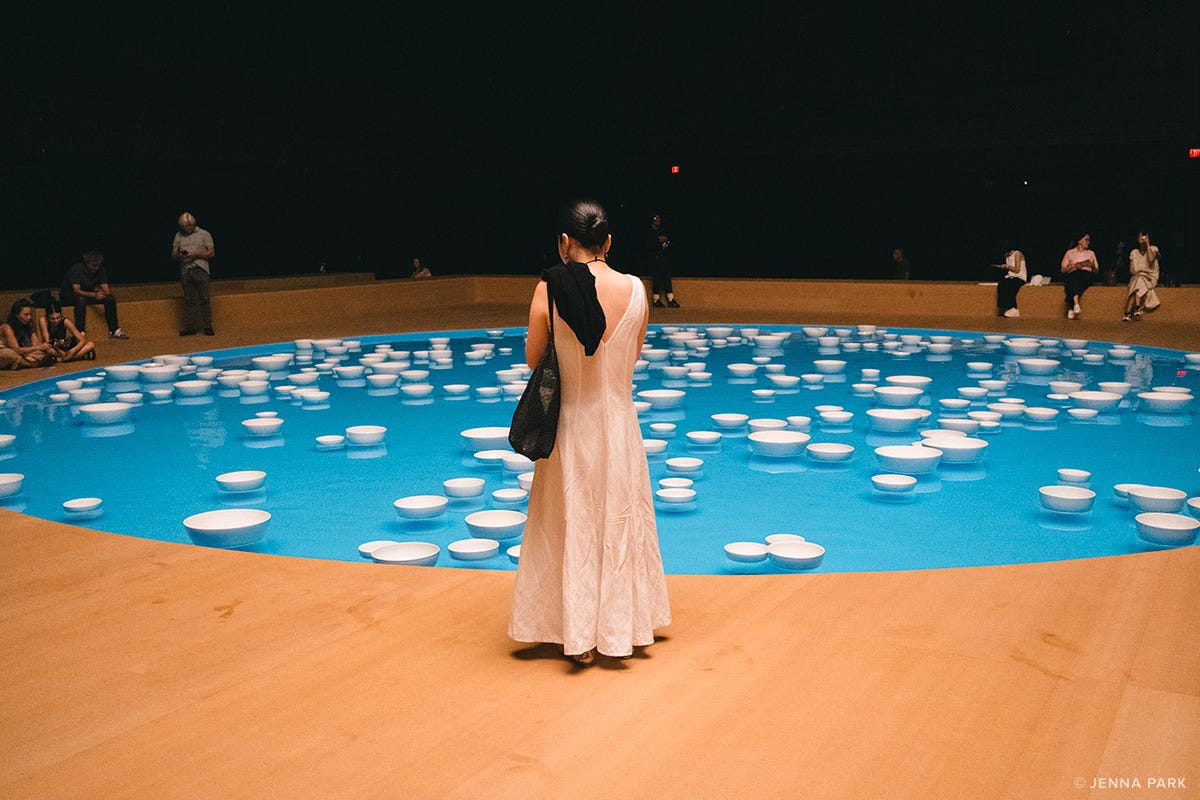
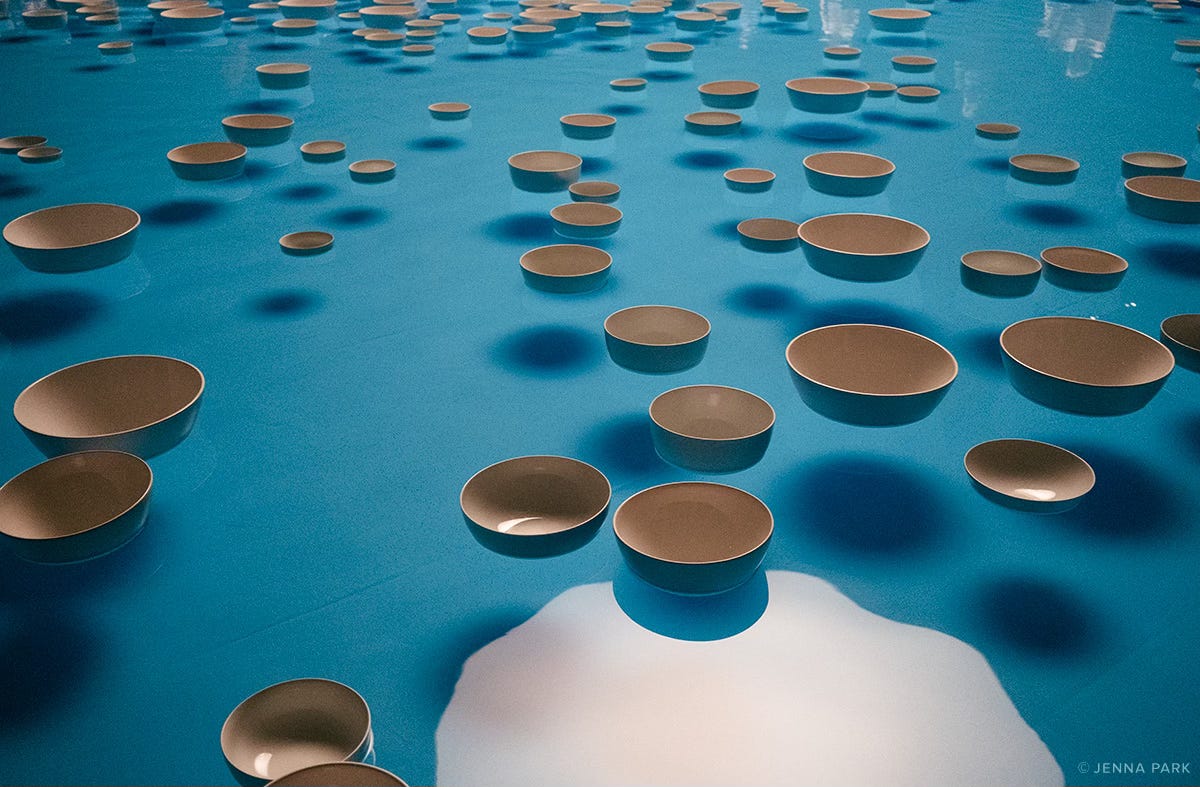
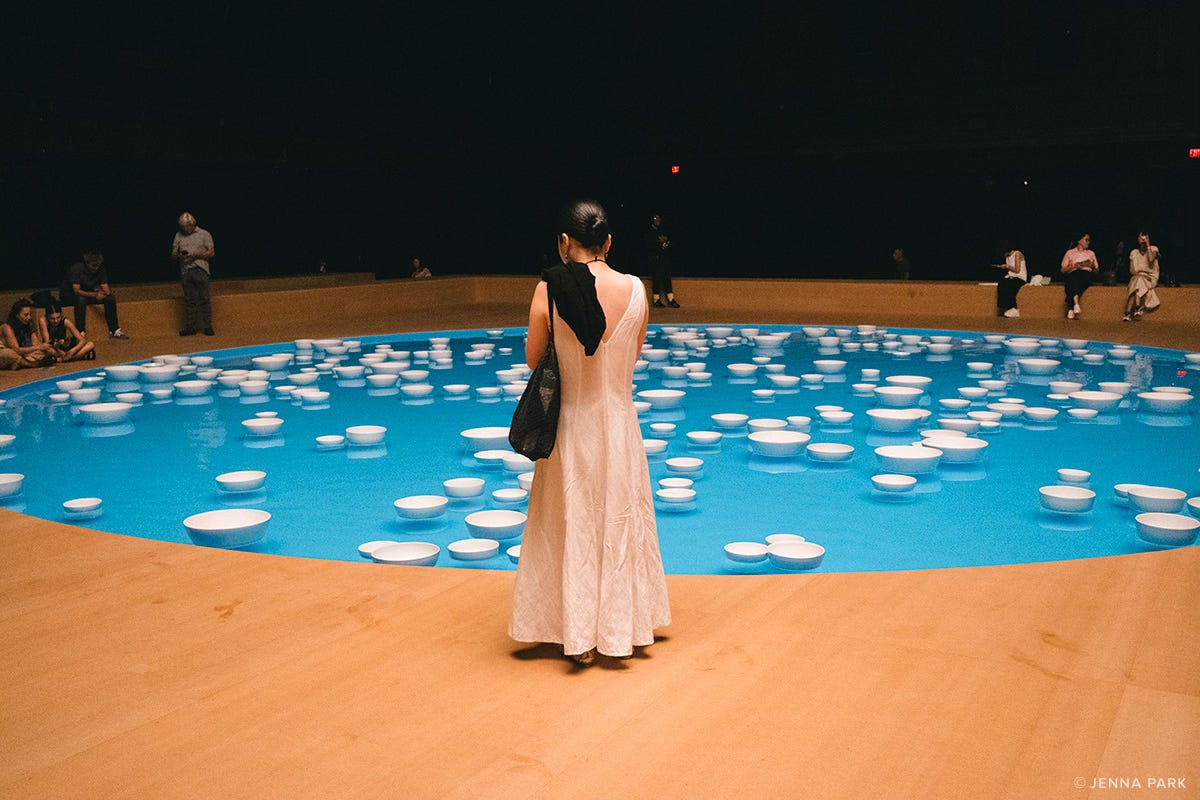
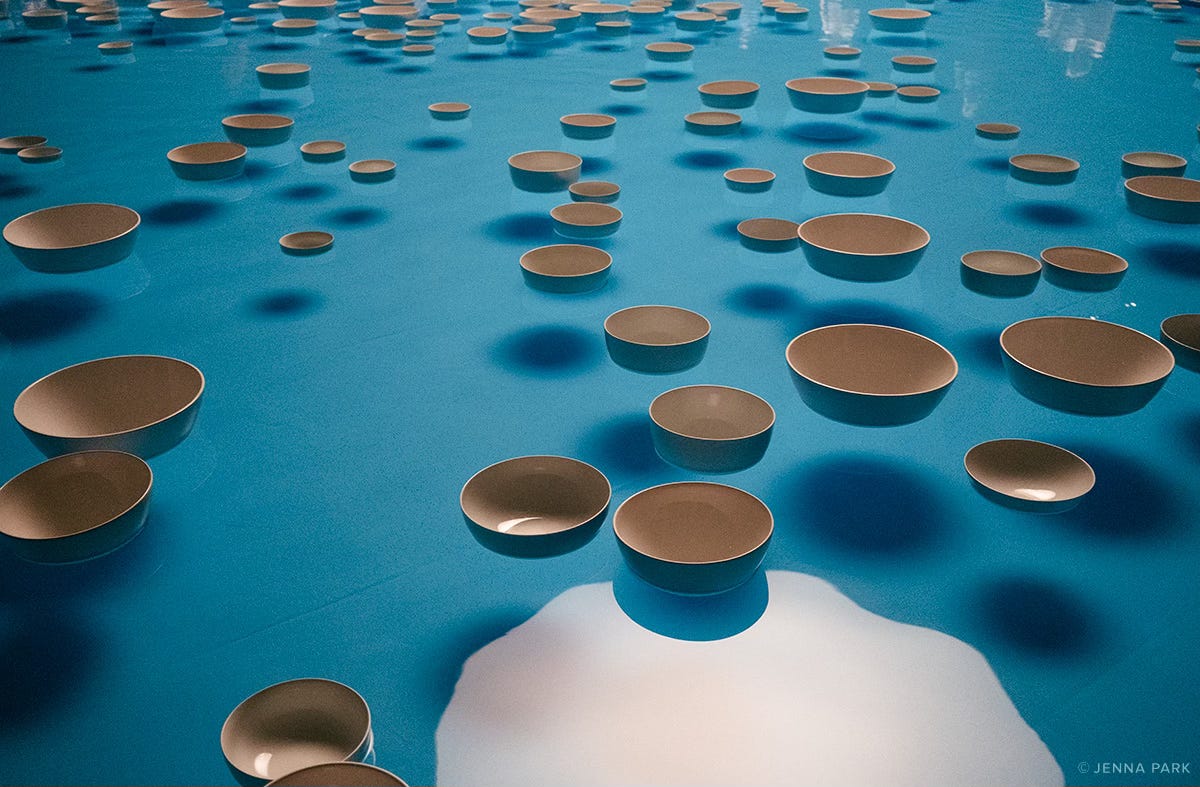
Clinamen (Park Avenue Armory, through Aug 2)
The Park Avenue Armory is a space like no other in NYC. Completed in 1880 and occupying an entire city block on the upper east side, the building was primarily used for military purposes for much of its history until the mid 2000s when it was converted to an arts space. It’s just rare to have such a magnificent indoor space as large as the Drill Hall, which over the years has been host to performances and immersive arts installations.I met an old colleague of mine last week and spent more than two hours at this aquatic and musical installation by French artist Céleste Boursier-Mougenot. It was super relaxing, but also top tier people watching. Hundreds of floating white porcelain bowls in three separate pools collide and drift, creating a a soundscape of melodic chimes. It reminded me of church bells. We were both struck by how simple a concept the installation was, but execution and scale elevate it to something so sublime to witness and hear. Here’s a little video:
Till next week – JP
If this post resonated, I would appreciate a share or restack. 🫶
Comments
Nothing yet. Say the first thing.
Sign in to join the conversation.