
0:00
-11:05
Listen to the audio version here!
When I first sent PK a text, I knew he had no idea who I was. He responded with a vague and polite message with the textual tone of Bill Lumbergh. Something like: “Yeah, it was great meeting you, too. Hopefully, we run into each other again one day.”
Cut to a week or so later, he sent another reply.
“Ahh I got it now! You’re Byung’s wife, Abbie’s friend!”
Knowing him like I do now - conscientious and intentional - I imagine he spent time wondering why this woman he didn’t know had sent him a text with such familiarity. I’m glad he figured it out.
Because not only did we find connection with one another in our mutual identity journeys as Korean adopted people, we also discovered that we both spent time in the same orphanage in Mokpo, Korea, an old and unassuming harbor city along the southwest coast of Jeollanam-Do.
From then on, he became one of my “cousins.” (It’s a title I give every Korean friend I know whose family is from Mokpo City.) After half a lifetime of being told just how much “love makes a family,” I’ve taken no issue with adding to my own self-proclaimed figurative bloodline in adulthood. I have “cousins,” “big sisters,” “little sisters” - and even a “wifey” - all in the Korean adoptee (KAD) community.
I saw PK this summer during my annual holiday back in the States. Pennsylvania-area KADs had gathered on a Friday at the end of the workweek so we could be together while I was stateside.
The efforts we take to be together as a community will always be special to me.
I asked about his recent trip back to Korea in and around the city where we were born.
I witnessed light in the face and voice of my Mokpo Cousin in a way I’d not observed in him before. He told me about the proprietors of bars he found around the city. Of drinks and stories they shared. Of locals he met who took him around Korea like he was already family. Of getting on a motor scooter 오토바이 otobai to explore Gyeongju. He spent time simply existing in Korea: not being on a tour, not traveling with anyone else, and doing so with zero agenda. He made close friends with people he met along the way while eating and drinking around the west coast of the peninsula, a woefully unexplored region of our country.
“I have never felt that welcomed or comfortable. Not in America. Not in New Jersey. Not in the Philadelphia community (where he’s been living for the past 25 years). Not anywhere.”
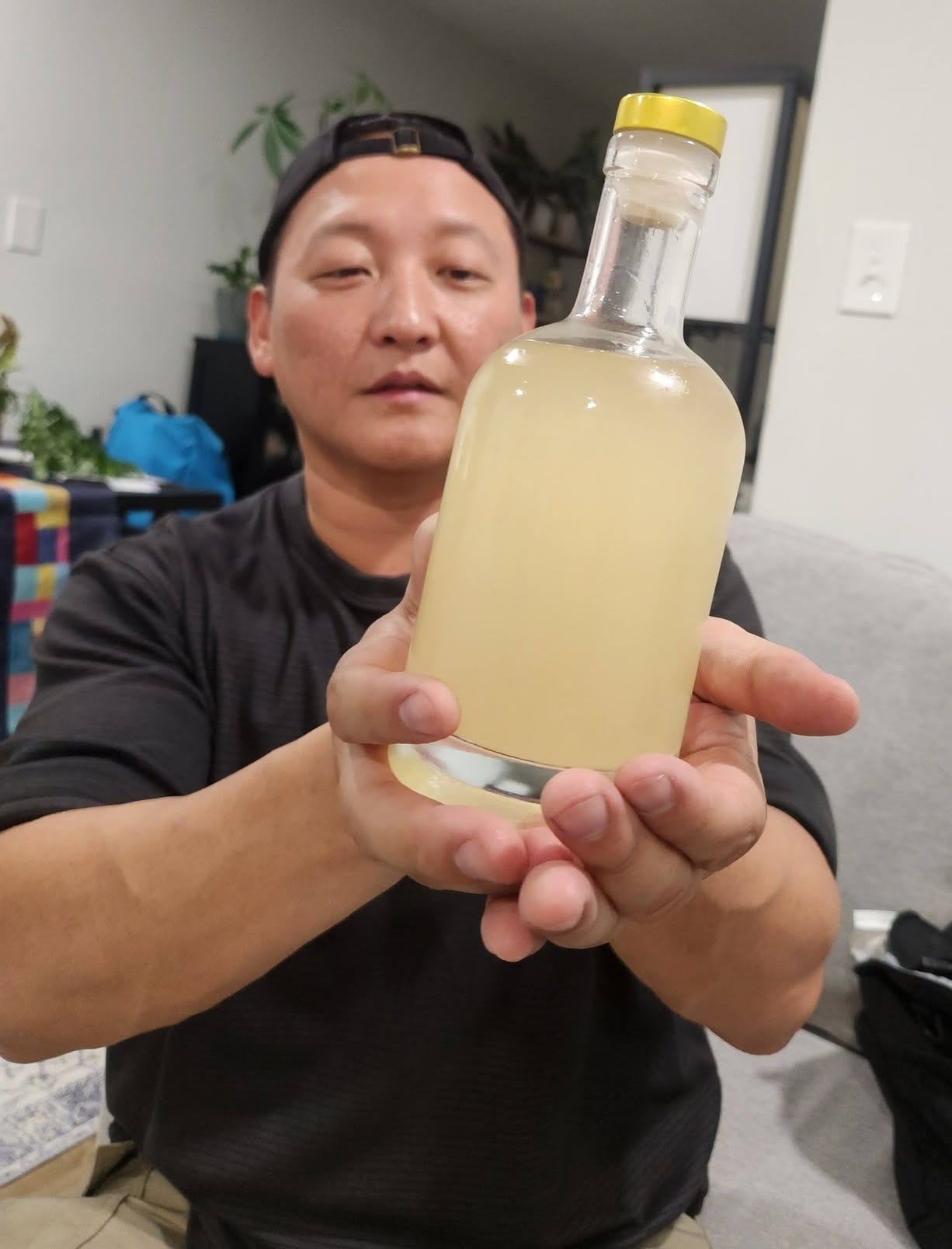
Later, PK pulled out a bottle of homemade 청주 cheongju. He’d brewed it special for the occasion. He shared this precious liquid gold - once only reserved for royalty in Korea - with me and two of our KAD friends after that adoptee dinner. He told us about the history of cheongju, how he practiced the technique of brewing it, and was looking forward to sharing it with his friends in Korea.
Another one of my KAD friends - 친구 chingu - is Kirsten. She sat on the other side of me as I listened intently about PK’s travels around Korea.
Also recently returned from a trip to our motherland, Kirsten spent precious time there as a solo traveler - a big deal as a mother of two young kids used to putting everyone else before herself.
She described the time she’d spent with her birth family as something similar to ethereal. And I understood. Those first moments with people related to you by blood - as they feed you too much food, show you Korean landmarks, and care for you - are akin to being somewhere far outside of your body, watching it all happen from elsewhere in another place and time.
It’s a lot.
And everything you assumed would impact you the most, simply doesn’t.
And vice versa.
Our contemporaries in Seoul are monotone dressers, but that’s not Kirsten. Like her spirit, she dresses in color, her loveliness showing on her face and in the patterns and vibrant fabrics of her clothes.
“I brought all black and white clothes so I would fit in,” Kirsten shared. “And then my bio mom showed up in bright pink leggings and sunglasses, and I thought, oh, no…”
I understood what had happened. I’ve been there, myself.
Like so many of us, when the stakes are high, when we want the outcome to go well, we sometimes conform to what we think we need to do and be.
And what has higher stakes than those first moments with our birth family? They are experiences we can’t possibly imagine, so we must fill in the gaps to soothe our nervous systems as we prepare for a huge thing… one that we hope will begin to heal parts of our selves we don’t yet know exist.
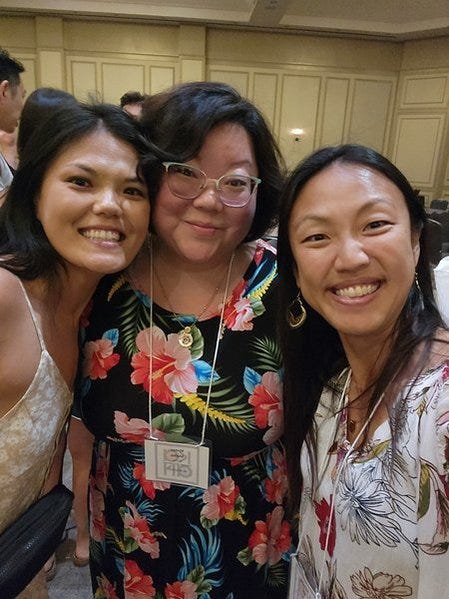
Seeing those pink leggings did something to Kirsten, especially when her birth mother shared, “I love pink and red and pastels” and that she takes dance lessons, dyes her hair with henna, and has multiple ear piercings. Seemingly small details created a huge connection point that was visual and felt cozy in Kirsten’s heart. In a stage of finding her Self again, meeting her mother reminded Kirsten of who Kirsten is.
It’s the same as PK spending meaningful time with business owners - now friends - in the city where he was born.
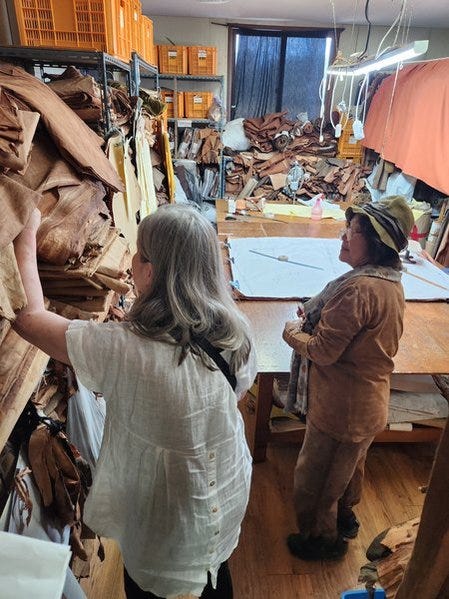
The same as my friend, Ruth who spent 15 years searching for her birth mother, with many leads and eventual dead ends, who found what she was searching for from Korean women while doing art with textiles during one of her returns to our motherland.
Or Kristy, an adoptee about my age who returned with her also-Korean-adopted (but not biologically related) brother and their partners last fall. They didn’t find their birth families, but they spent irreplaceable time together in places like Jeju Island and the small city of Jinju, experiencing one of the country’s best autumn lantern festivals.
Or like my friend, Rick, when a Korean proprietor said to him, “You ARE Korean,” speaking in our mother tongue that he, having studied and practiced, understood.
If you’re like me, you don’t know healing is what you are seeking.
And rarely do we find it in the people, places, or moments we imagine or expect.
If we do, it appears and soothes a part of us that is newly discovered and comforted at the exact same time.
As for me - I’ve found it, too.
I’ve found it in watching my kids stand on stage at school assemblies with their Korean classmates.
In cutting, mixing, and assembling the ingredients for 만두 mandu with Korean women who work the land here on Jeju Island.
In singing in a 노래방 noraebang room with a KAD brother and his Korean friends where I learned that you exclaim: “Unniiiii!” when your chingu is singing and killing it.
In sitting around an airbnb with my group of KAD friends after the KAAN conference this summer, eating a meal my wifey has made for us while sitting next to the love of my life, feeling comfortable in my own skin, not masking, not pretending, not doing anything other than being me for the very first time.

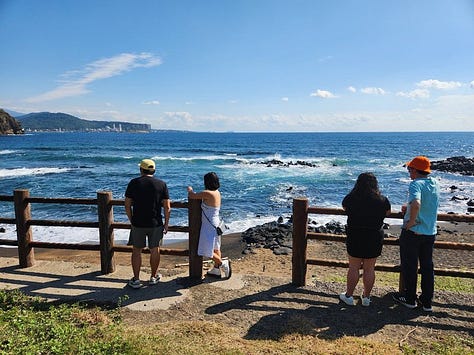


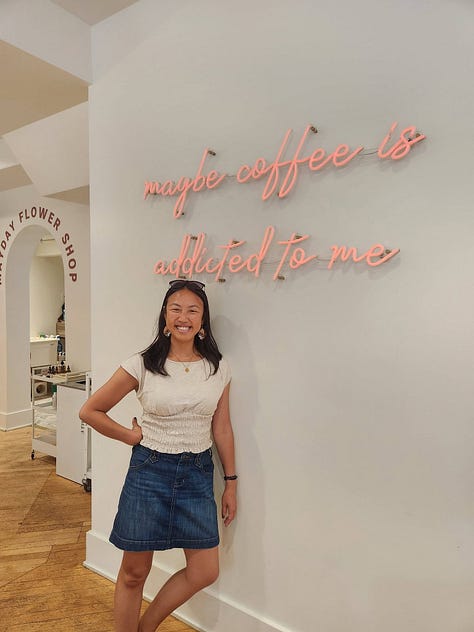
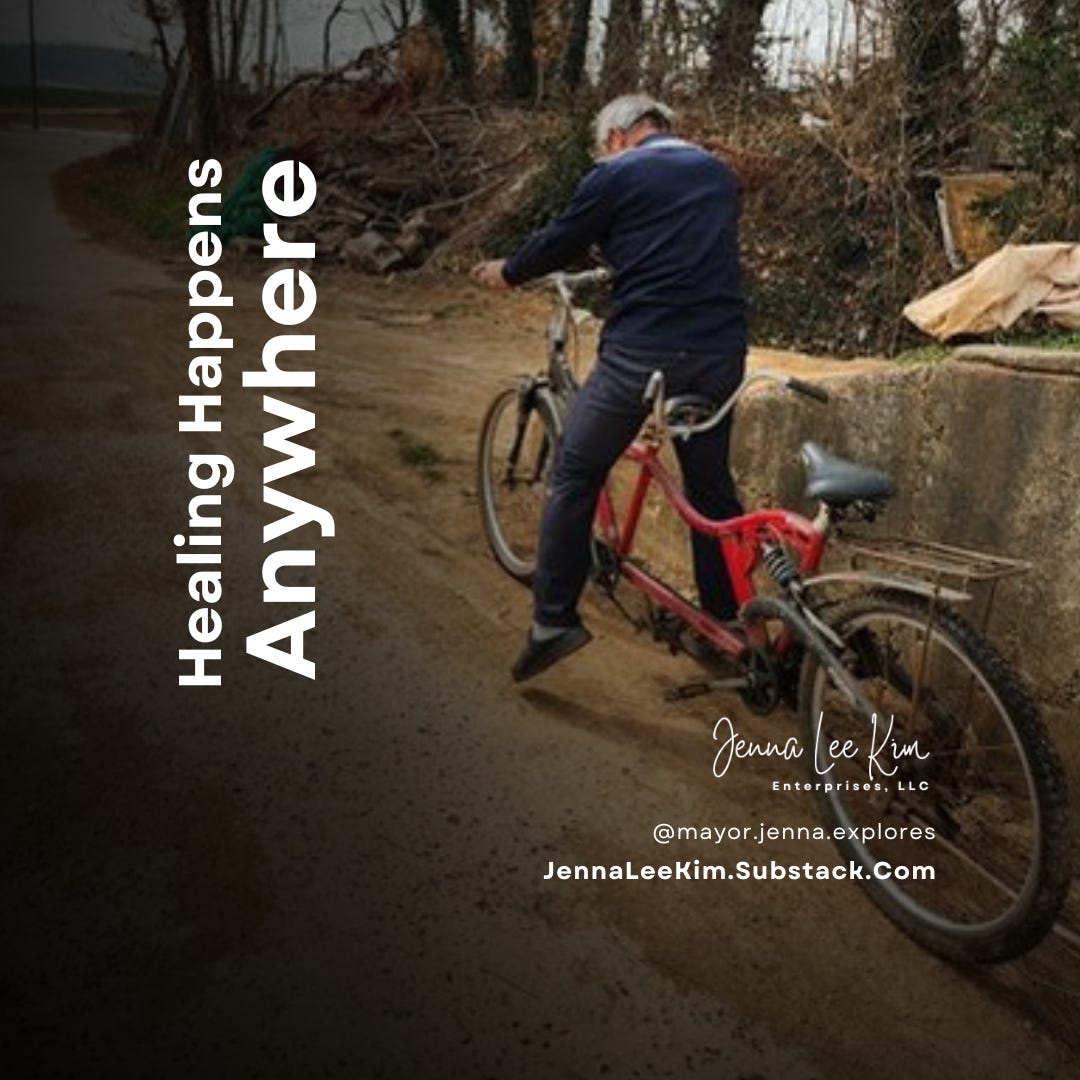
And in moments with my 아빠 Appa: Riding on a tandem bike with him along the country roads by his farm. Standing on a beach on the very southern part of the Korean peninsula as we talked about my birth mother. Drinking 소주 soju with him and my half sister around a 밥상 bapsang in his home in Haenam. Watching him watch my daughter, thinking about how he must wonder about the time when I was her age and couldn’t be with me.
That’s another thing about healing. In taking steps to find parts of our Selves, we may just help others find parts of their Selves, too.
Follow me on Instagram, Facebook, or learn about my professional background on LinkedIn or Linktr.ee. Questions? Comments? Leave a comment here and I’ll respond to it on my Spotify Podcast: Exploring with Jenna Lee Kim in an “unplugged” and unscripted way! You can also email me at jenna.tae.hee.kim@gmail.com
Comments
Nothing yet. Say the first thing.
Sign in to join the conversation.