
What makes something sentimental? Is it an object? Is it external or internal? Is it the memories we associate with it? Is it the value it holds in your heart? Does a house feel emotions? Do we absorb the energy that came before? In the captivating film “Sentimental Value,” the emotional story begins with a view of a spacious house in Norway. We learn that Nora, the protagonist, was asked in sixth grade to write an essay as if she were an object. She immediately chose to write about her house.
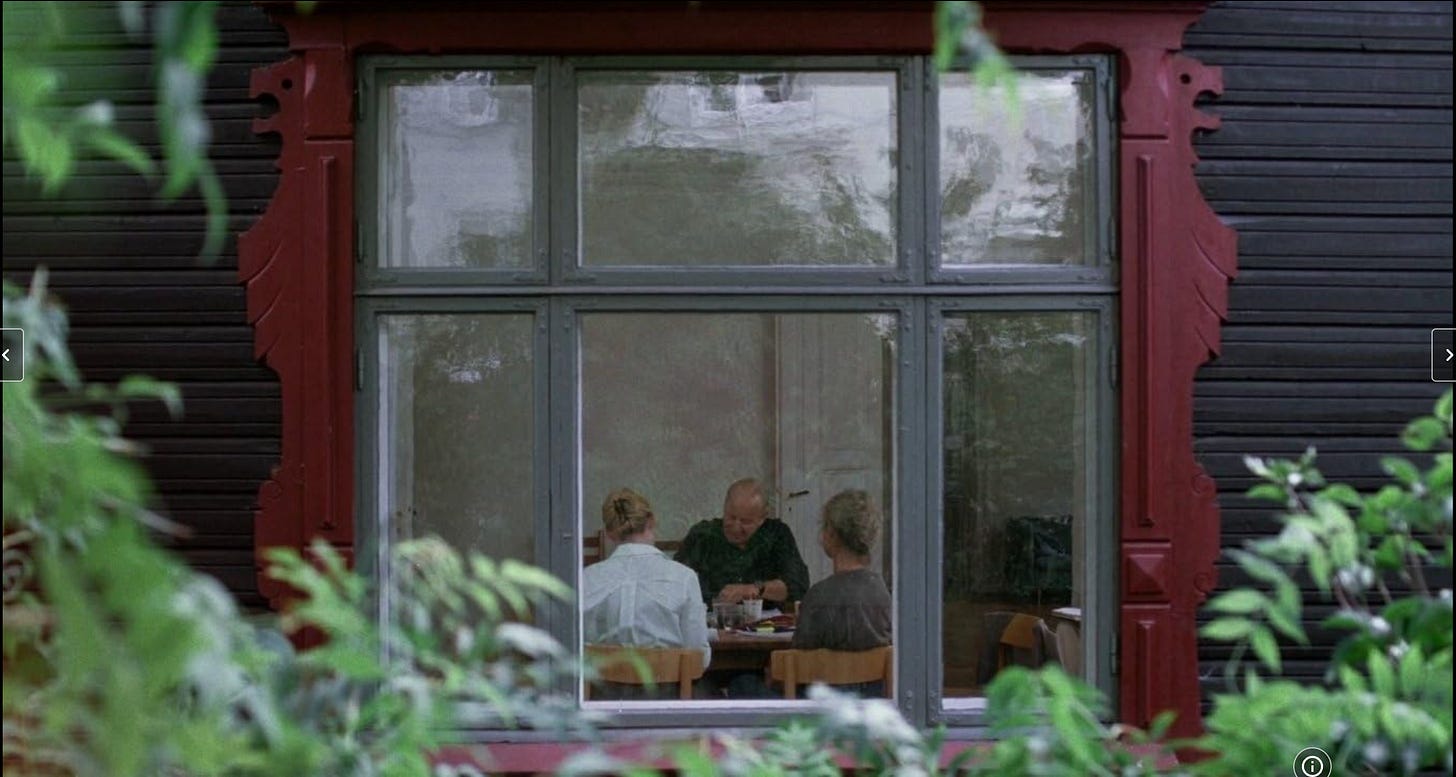
The idea of what these walls might say if they could talk, especially about homes and the generations that pass through them, is universally fascinating. I remember thinking about this as a kid. I would lie in bed, wondering about the families who lived in our house before us. What made them happy? What caused their family conflicts? How did they handle them? In this film, I love the idea of a child asking how the house feels about what happens inside, the pain it experiences, and the comings and goings of the family members. It makes you wonder whether a house processes conflicts or holds onto them. If a house suppresses emotions instead of working through them, does it carry them forward? Home is our foundation. But what happens when that foundation cracks?

Nora mentions her father pointed out a flaw in their home. She describes it as if the house is sinking and slowly collapsing, and their time there feels like just a split second in mid-air. An image shows a crack running up the wall, and we can sense the split. This relates to the story’s main conflict.
Nora mentions that she remembers both the noises and the silences in her house. She recalls hearing her parents argue while she recoiled by covering her ears with a pillow. From the house’s perspective, she remembers her father leaving. She writes, “the house feels lighter.” We sense the weight lifting through Nora’s words. Nora received an A on her essay about the house and says that her father liked it. She later planned to use it for acting, but when she read it as an adult, she found it too detached.
When my parents divorced after twenty-five years of marriage, I remember how my feelings about our family home began to change. What did it mean? Was there something wrong with the foundation from the very beginning? What new stories would emerge in the space I grew up in, which I thought of as my grounding? What happens to the old stories when new ones take their place? Does it lessen the impact of what came before?
In the film, after the thought-provoking opening that brings the house to life in young Nora’s mind and essay, we cut to Nora as an adult. She is backstage in a fancy theater, locked inside her dressing room. The auditorium is full. Nora has an anxiety attack. Several people try to help her through it since she is about to go on stage. One of the helpers is a gentleman. He attempts to calm her. Nora kisses him. He pushes her away and says they do not have time. She asks him to slap her in the face. He does. For a moment, she feels ready. Then, she has another setback. A group of people helps her recover. She goes on stage and performs. At the end, Nora receives a standing ovation. We see Nora’s flawed behavior and feel her emptiness from the start, stemming from an earlier wound — the rift with her family, the crack that led to her father leaving.

Later, we attend a gathering at the house where Nora grew up. We see everyone is wearing black, and the mood is somber. We find out it’s Nora’s mother’s funeral. This event triggers Nora’s old wound from her family’s breakup. Her mother is gone. WE now understand Nora’s void. Nora’s father arrives, and it’s clear that Nora and her sister haven’t seen him in many years. We realize this when he is introduced to his grandchild for the first time.
Nora’s father tells her he wants to sit down with her and has something to tell her. She asks why he can’t tell her right then, and he replies, “Not here,” referring to the house.
Nora and her sister clean up after the event. Her sister tells Nora that their father owns the house. Nora is shocked. She asks Nora, when she talks to him, to find out what he plans to do with it. Her sister explains that their mother received the house in the divorce, but they failed to file the paperwork. So, he owns the house.
Nora meets her father at a restaurant to discuss what he wants to tell her. He shares his latest script, saying that “Michael” believes it’s his best yet. He tells her he wants her to play the lead role. He wrote the script for Nora, and it’s about a young mother. Nora tells him he’s never seen her act, but he insists he has. He hints that he might have seen her latest play. She asks what he thinks, and he’s evasive, saying that “stuff” isn’t for him. He mentions that this part could be her big break and says he plans to film it at “our house.” She asks, “Our house?” and we feel a punch to the gut. He replies, “Yes.” He hands her the script and asks her to read it, mentioning he plans to call her. She tells him to stop always calling her when he’s drunk. He says he worries about her. She asks him not to, and tells him his script will never go anywhere before she leaves.
Does a house feel the emotions that happen inside it? This powerful story allows us to experience the feelings the house absorbs through Nora and her family across generations. We uncover the secrets that haunt the house’s foundation and cause its cracks. We see how the question of whether Nora will appear in her father’s film gives this family a chance to heal as they film at the house and revisit their past pain. We sense the relief that comes through Nora’s performance. We understand that family conflict shapes our voice and gives us something to say, based on what we learn and the meaning we find.
We find that what is sentimental is the presence we feel in the moments that create memories and define who we are. It’s not the objects we attach to but the emotional things that stand for or reflect a moment in time.
Comments
Nothing yet. Say the first thing.
Sign in to join the conversation.