
When I was attending college as a "mature" student (at 27 years old), I learned the history of photography. The history defined by a single perspective, a very white, male perspective.
Over 80% of photojournalists are male. 52% identify as white. Only 1% as Black¹. In 2018, even National Geographic admitted their entire archive reflected the biases of those behind the lens².
I didn’t question it much back then. But years later, preparing a lecture on Exploitation and Appropriation, I went down a rabbit hole about Dorothea Lange’s “Migrant Mother.”
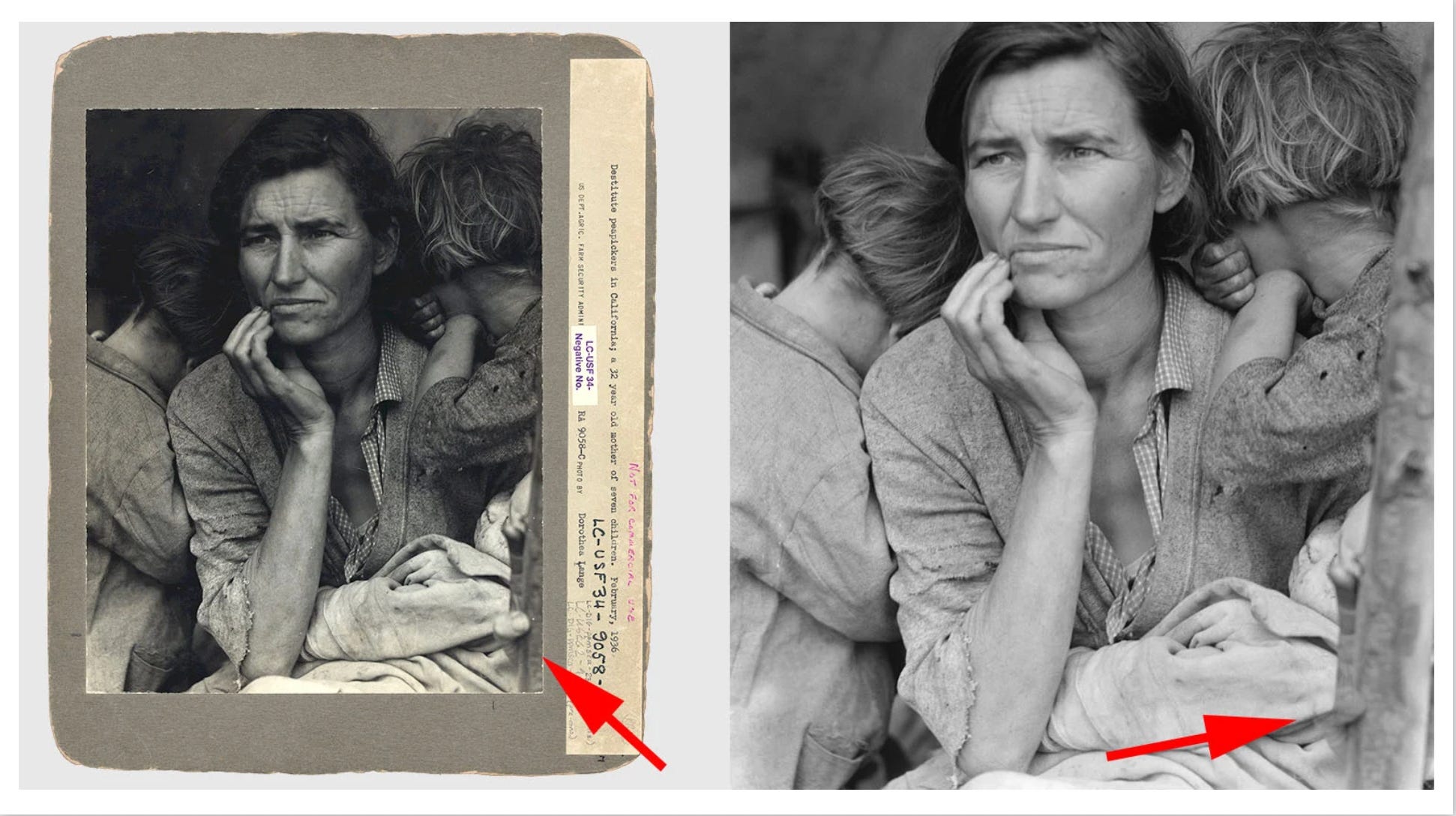
In college, I’d admired Lange for her work as a woman during the Great Depression. But that rabbit hole uncovered how staged and manipulated that “documentary” image actually was.
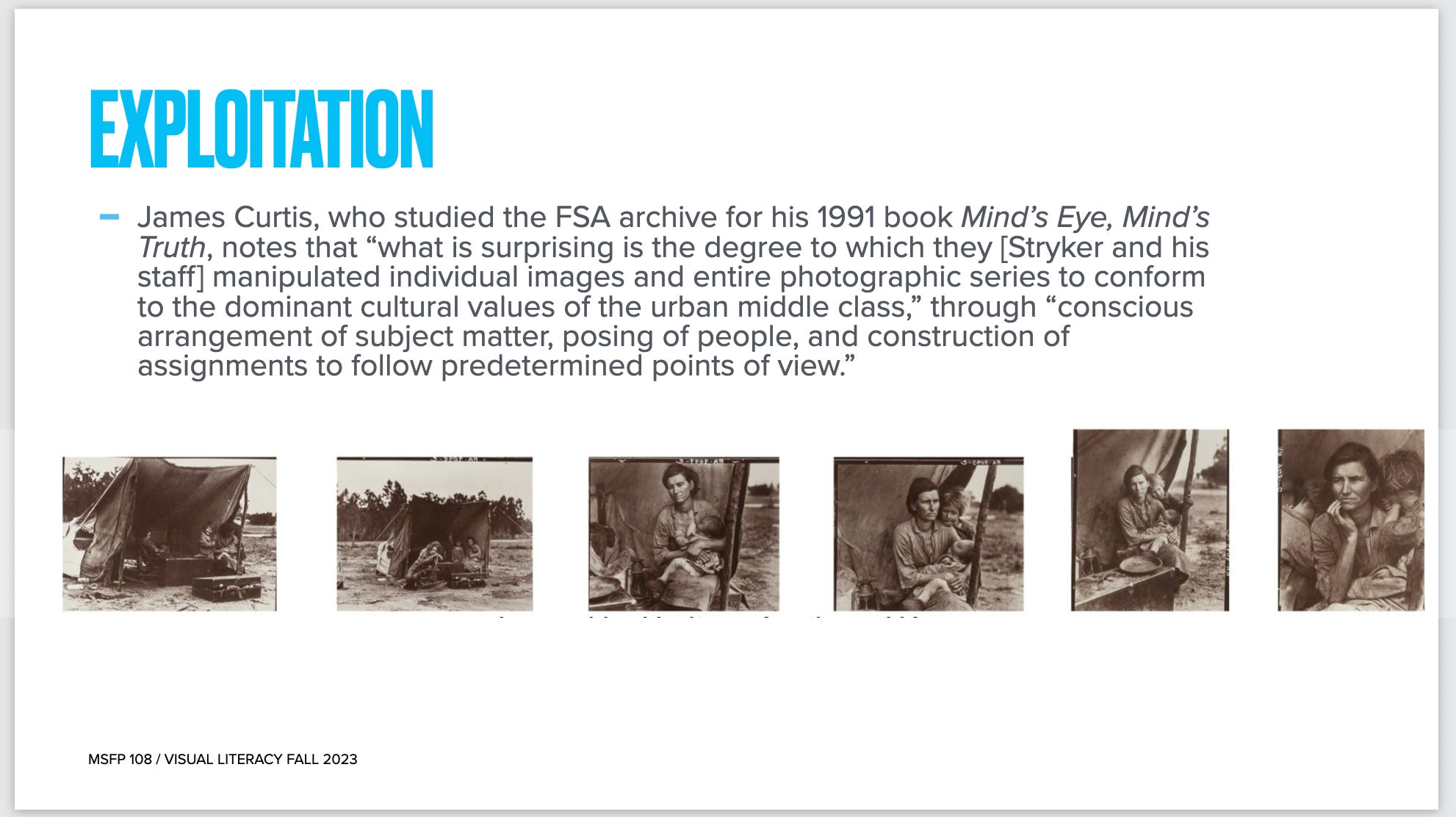
I didn’t learn this until years after I’d started my photography business. By then, I’d already built my practice around real, candid moments, the kind that couldn’t be staged.
Maybe that’s why those moments felt essential. Growing up, photos were a portal. After my dad died, they were all I had left. Preserving moments for families became about witnessing, not “fixing.” About being present without imposing my story on theirs.
But I didn’t fully understand what that meant until my son was born with a congenital heart condition.
I wrote about this recently, how photographing families at SickKids taught me about reciprocity. How witnessing their fear gave me language for my own. How being the photographer, not the parent in crisis, created the distance I needed to process what I’d been carrying.
But here’s what I didn’t write then: what that taught me about the camera itself.
In those hospital rooms, I learned the camera isn’t neutral. It’s a choice about what to center. Who to see. What story matters.
So that’s what I witnessed. That’s what I photographed. Not my story about them. Their story about themselves.
I saw this pattern again working with high school students on Debwewin: Threads of Truth. Every time I arrived with my vision and a student spoke up with theirs, collaboration became possible.
And again at TEDx rehearsal, when another speaker told me she was going to show up differently, to her talk, to her photo sessions, because she realized she didn’t need to wait for someone to tell her how to be seen.
Most people have waited for someone to tell them how to show up. Felt unseen, misrepresented, or flattened by someone else’s narrative.
Rather than waiting for permission to reclaim our stories, we can choose a different lens.
The lens we view life through gets dirty, bumped, dropped, skewed by lived experiences, trauma, inherited narratives. Stories morph and dig into our neural pathways.
That clarity helps us hold space for others.
The most powerful thing I’ve learned as a photographer isn’t about capturing the “perfect moment.”
It’s about creating the conditions for someone to show up as themselves.
And that’s true whether you’re holding a camera, holding a meeting, holding space in a classroom, or holding someone’s story.
That means listening first. Hearing what matters to them before deciding what matters to you.
It means recognizing that every photograph is a decision about whose perspective counts. And in collaborative work, it shouldn’t always be yours.
It means asking: Whose lens am I using right now? And whose should I be honouring instead?
We can choose a different lens. We can shift our perspective.
And when we do, we don’t just see our own stories more clearly. We hold better space for others.
I’m heading to SXSW EDU this weekend to explore exactly this: who holds the camera, whose story gets told, and what changes when we shift from extraction to collaboration.
In the meantime, I’m curious: Whose lens are you using? And whose might you need to honour instead?
With gratitude, Jen
¹ Hadland, Adrian, and Camilla Barnett. “THE STATE OF NEWS PHOTOGRAPHY 2018: Photojournalists’ attitudes toward work practices.” World Press Photo, 2018.
² Goldberg, Susan. “For Decades, Our Coverage Was Racist. To Rise Above Our Past, We Must Acknowledge It.” National Geographic, 12 March 2018.
No posts
Comments
Nothing yet. Say the first thing.
Sign in to join the conversation.