
The news cycle has blind spots, and they’re not accidents. Power, profit, and geography often dictate what makes headlines. The “Margins Matter” collection pushes back, spotlighting stories from Latin America and the Caribbean that matter just as much as the ones that dominate the front page.
When Hurricane Erick tore across southern Mexico in late June, it left a familiar trail: destroyed homes, flooded villages, lives uprooted. But for the Afro-Mexican communities of Oaxaca and Guerrero, the storm exposed something far deeper than collapsed roofs and washed-out roads. Days after the Category 3 hurricane passed, many villages remained cut off from aid. Local leaders accused federal authorities of neglect, pointing out that relief caravans seemed to reach tourist centers faster than they did the predominantly Afro-descendant towns along the coast.
Afro-Mexicans—officially recognized in the 2020 census after centuries of invisibility—have long lived at the intersection of poverty and systemic racism. Descendants of enslaved Africans brought to the coast during the colonial era, they’ve been central to Mexican history and culture but remain sidelined in national narratives. Their communities are disproportionately affected by poor infrastructure: patchwork electricity grids, unpaved roads that vanish in the rainy season, and underfunded schools. When disaster strikes, that structural inequality translates into prolonged suffering.
This is not the first time a storm has laid bare these inequities. In 2013, Hurricane Manuel devastated Guerrero’s Costa Chica, where many Afro-Mexicans live, and residents complained that government assistance was slow to arrive. Erick has revived those grievances and added new urgency. Community activists are now demanding not just disaster relief but also long-term investment: reinforced housing, storm-resistant infrastructure, and policies that recognize their vulnerability not as an afterthought but as central to disaster planning. Their call is clear: to be seen, not just in census data, but in the response that follows every hurricane.
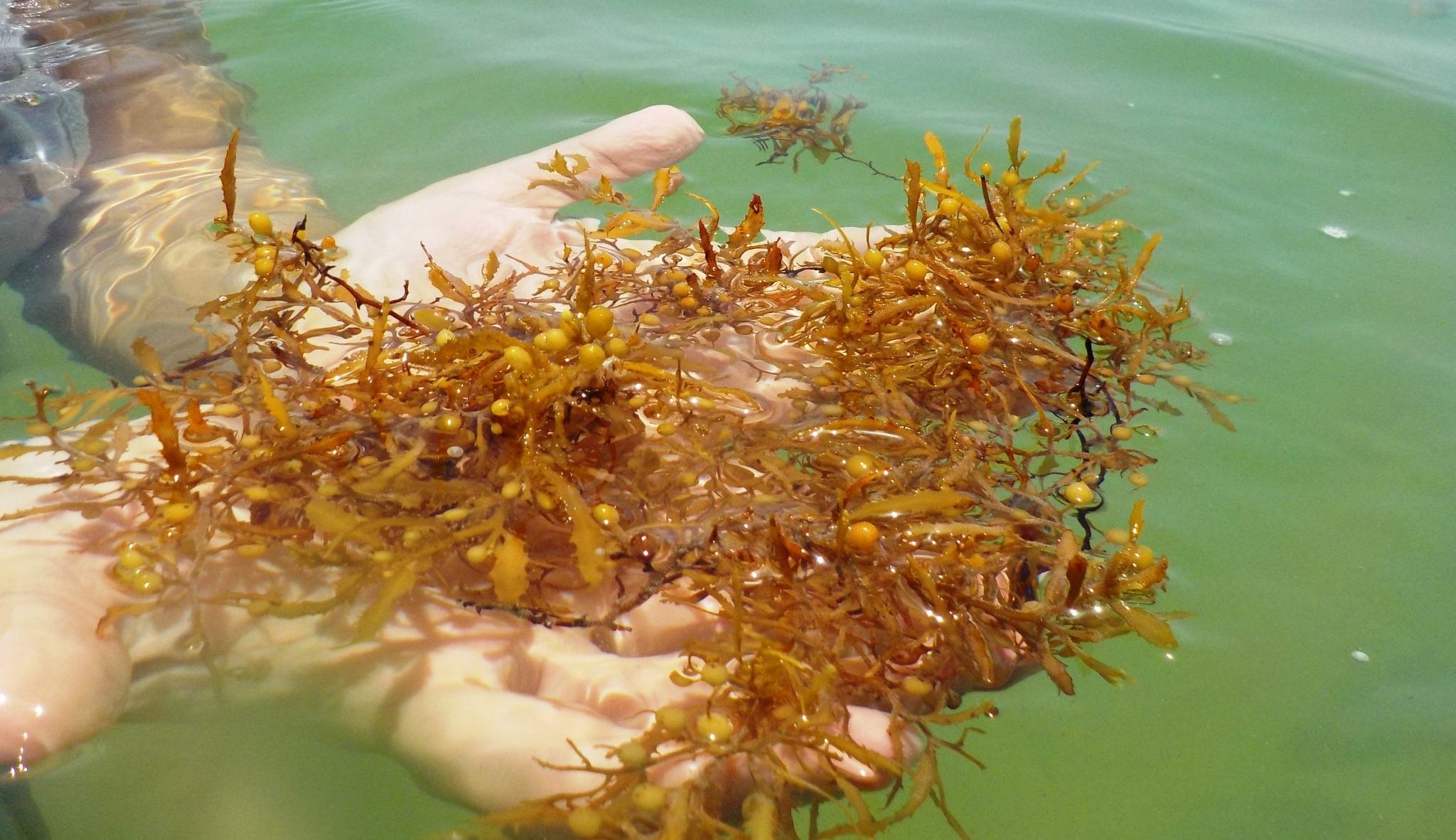
Sargassum seaweed has once again invaded Caribbean shorelines this year, smothering beaches, threatening tourism, and releasing a stench of decay as it rots under the sun. For coastal communities dependent on visitors, these seasonal blooms are more than an environmental nuisance—they’re an economic crisis. Hotels have to deploy daily clean-up crews, fisheries are disrupted as boats can’t pass the thick mats, and health officials warn of respiratory risks from the decomposing algae.
But amid the crisis, entrepreneurs and researchers see possibility. A wave of start-ups and grassroots groups are experimenting with turning sargassum into high-value products: textiles, vegan leather, fertilizers, even building materials. One Mexican firm has marketed it as the “cashmere of the ocean.” Still, scaling remains difficult. Transporting, drying, and processing the material is costly, and supplies are unpredictable. For now, sargassum remains a paradox for the Caribbean: a recurring natural problem that may, with ingenuity, hold the seeds of a green economic opportunity.
Between January and July this year, at least 13 journalists were killed across Latin America—already more than the total for all of last year. Mexico remains the deadliest country for reporters, with eight killings, mostly targeting local journalists investigating crime or corruption. The majority were community reporters, often operating without the backing of major media institutions or personal security.
The killings underscore a disturbing pattern: local journalists, not international correspondents, face the highest risks. They report on municipal politics, gang activity, or land disputes that rarely make global headlines but matter deeply to their communities. Advocacy groups like Reporters Without Borders warn that impunity remains the rule, not the exception, as few cases are investigated or prosecuted. The trend signals not just a human rights crisis but also a democratic one: when local journalists are silenced, entire communities lose their watchdogs.
Across Latin America, grassroots LGBTQ+ archives are preserving stories that might otherwise vanish. In Lima, the Queer Memory Archive collects personal letters, photographs, and oral histories documenting decades of struggle and celebration. In Argentina, the Trans Memory Archive protects fragile records of a community historically erased by both dictatorship and democracy. In Mexico, the Transmasculine Memory Archive seeks to capture stories often overlooked even within LGBTQ+ activism.
These efforts are more than cultural preservation—they are acts of resistance against forgetting. By cataloging the lives of those excluded from mainstream histories, the archives give younger generations access to a lineage of resilience and creativity. They also challenge state institutions that have often ignored or erased queer memory. In a region where repression has long coexisted with vibrant activism, these archives ensure that silence does not win.
In March, Bolivia experienced some of its worst flooding in decades. Torrential rains inundated all nine departments, leaving more than 55 people dead and affecting over 593,000 families. The devastation was especially severe in rural areas, where subsistence farmers lost crops, livestock, and arable land. President Luis Arce declared a national emergency, mobilized military units for relief, and secured a multi-million dollar loan to support reconstruction.
Yet aid has struggled to reach remote communities. Washed-out roads and limited infrastructure mean that for many, relief has been slow or inconsistent. The floods highlight a recurring challenge in Bolivia: a state stretched thin across difficult terrain, trying to respond to disasters in communities where poverty and geography compound vulnerability. The long-term recovery may take years, and for many families, the storm’s impact will be measured not just in lost homes but in livelihoods permanently altered.
While COVID-19 grabbed headlines, dengue fever has quietly surged to staggering levels across Latin America and the Caribbean. Between 2024 and mid-2025, the region has recorded roughly 16.6 million suspected cases and nearly 10,000 deaths. Brazil, Argentina, and Peru are among the hardest hit, but cases have spiked as far north as Mexico and the Caribbean islands.
The epidemic is straining public health systems already stretched by economic crises and post-pandemic recovery. Unlike COVID, dengue has no simple vaccine solution widely available, and mosquito control campaigns remain uneven. The sheer scale of the outbreak suggests that climate change—warmer, wetter conditions ideal for mosquitoes—is reshaping the region’s disease landscape. Yet despite the numbers, dengue receives a fraction of the international attention given to other global health emergencies.
Independent journalism across Latin America faces a quieter but also devastating crisis: the collapse of digital news outlets. In 2024, dozens of start-ups folded under financial pressure, political harassment, or changing algorithms that made it harder for their work to reach readers. A study by the LatAm Journalism Review described the closures as “unprecedented,” warning that the region is losing a generation of digital-native watchdogs.
For readers, the impact is subtle but profound: fewer independent investigations, less scrutiny of local power, and diminished diversity in the media landscape. For journalists, the closures mean precarious work conditions and shrinking professional avenues. As one editor in Central America put it, “The truth didn’t stop needing to be told—only the means to tell it collapsed.” The decline underscores the fragility of independent media ecosystems and the need for new funding models to sustain them.
No posts
Comments
Nothing yet. Say the first thing.
Sign in to join the conversation.