
One of the most quoted openings of all 20th-century poems in English is the start of Auden’s poem Musée des Beaux-Arts (1938):
About suffering they were never wrong,
The Old Masters
But the first time I read the poem, in my teens, I wondered, who exactly were these Old Masters?
I’m not sure I really know now, though a broad definition seems to be painters who worked with a certain level of skill in Europe between about 1300 and 1800. It’s a geographically specific white male club. It seems to include many painters, though I wonder how many of them thought of themselves as masters.
These days things have changed a little. When we talk about modern masters, this includes women too.
But what about the rest of the world?
Averting my gaze from this eurocentric lens, I note that China had its own (male) masters. These were a more exclusive band, however. One example is 明四家; pinyin: Míng Sì Jiā or Four Masters of the Ming dynasty. The dynasty lasted from 1368 to 1644, so the period was thinly populated with masters.
The term ‘master’ also exists in the Japanese art world, though there is a division between masters of Japanese art, Nihonga Gahaku (日本画画伯) and masters of Western art (洋画画伯, Yōga Gahaku).
This bifurcation only came about after the Meiji Restoration as Japan opened up to the Western world. Before that, there was no such thing as Nihonga: Japanese art was all that was practised, and it was divided into “schools”.
The painter Takeshirō Kanokogi (1874–1941) was born into the rapidly changing world of the Meiji Restoration. In this sense, he was like author Natsume Sōseki (1867 - 1916), whose novels reflected the Westernisation and industrialisation of Japan.
At a recent major exhibition of Kanokogi’s work in Tokyo, I was struck by the painter’s commitment to learning his craft systematically. And while the exhibition was subtitled “Return To Realism”, what really cried out to me as I walked through the museum’s rooms full of his works was Kanokogi’s single-minded pursuit of one goal: to become a modern master of Western Art in Japan, a Yōga Gahaku.
*
I didn’t buy the typically expensive catalogue, and there is little detailed information about him online in English. But from what I could glean from the notes at the exhibition, he came from a privileged enough background to travel. In 1900, he travelled to the US, crossing from West to East by railroad and holding a small exhibition in Boston.
He then went to France to immerse himself in French art and its traditions for several years. He made at least two later trips, each one apparently with a view to improving within a particular genre.
He picked up his own mentor: Jean-Paul Laurens (1838 – 1921), a ‘romanticist’ French painter and sculptor who worked within the French Academic style. Laurens has been described as the last great exponent of history painting.
In following Laurens, whose work looked to the past both in content and style, you might think Kanokogi was backing the wrong horse. But cannily, he seems to have hedged his bets, making copies of Courbet’s work and creating his own powerful work in homage to Millet’s moving and moody L’Angélus.
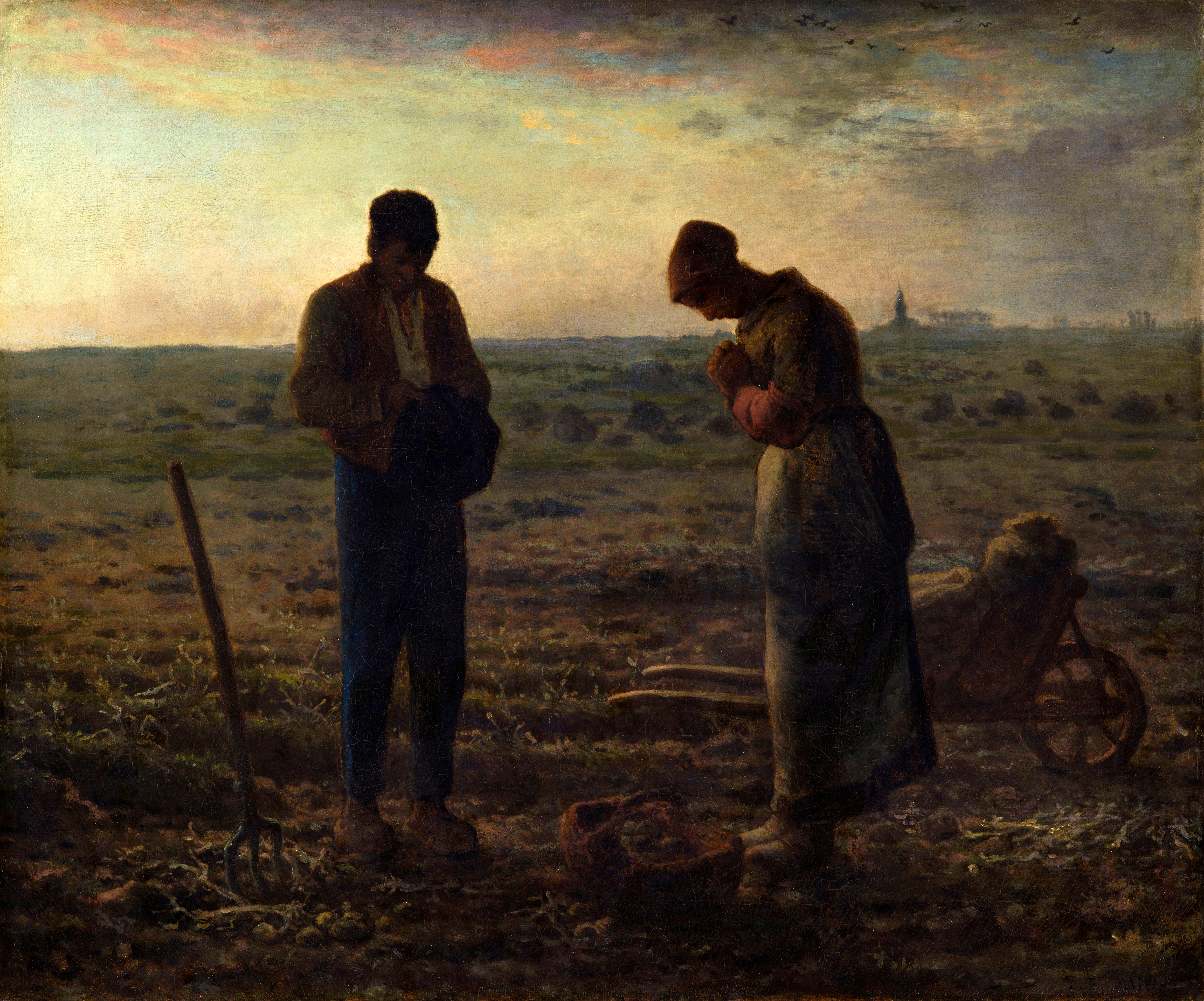
I’m unable to show Kanokogi’s own painting in this style because photography was forbidden for most of the exhibits. But his work’s convincing transposition of Millet’s work into a Japanese context clarified the meaning of the exhibition’s subtitle as he progressively edged away from the grand historical art of his mentor, Laurens, focusing instead on creating his own form of grittier realism.
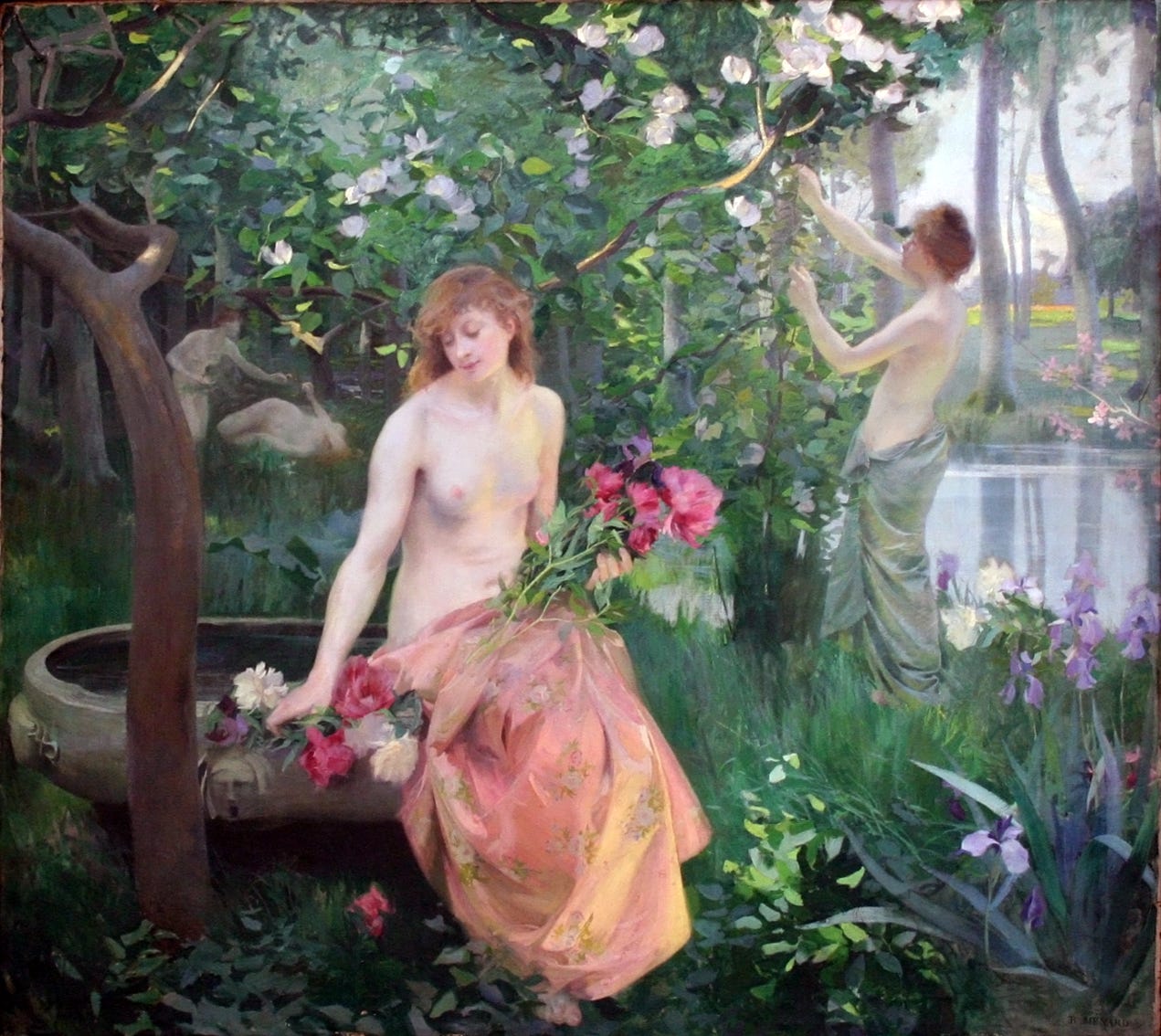
Kanokogi also studied with Émile-René Ménard, whose influence is clear in several of his paintings.
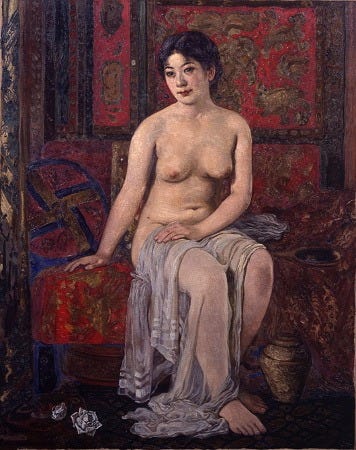
For example, his painting Girl with a white rose features a female nude in almost exactly the same pose as in the French painter‘s Spring (1850) with the same wry expression on the faces of the two sitters.
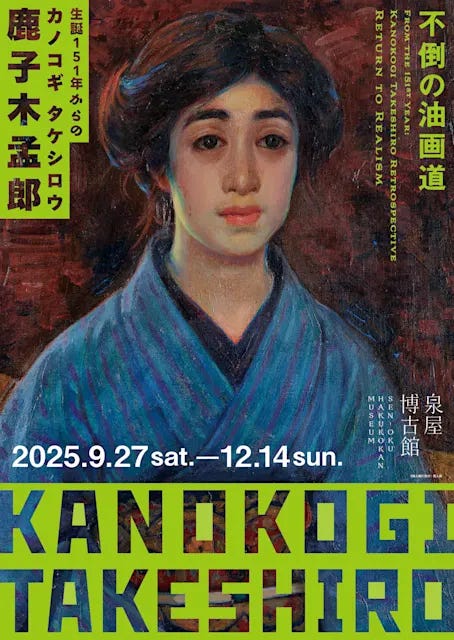
The exhibition displayed a large number of his early works, including landscapes and portraits. Some of his portraits, especially, it seems to me, of Euopean subjects, are rather gauche. However, the later portraits seem to gather real power. The poster of the exhibition features one example (as mentioned above, I couldn’t take a photo of the painting myself).
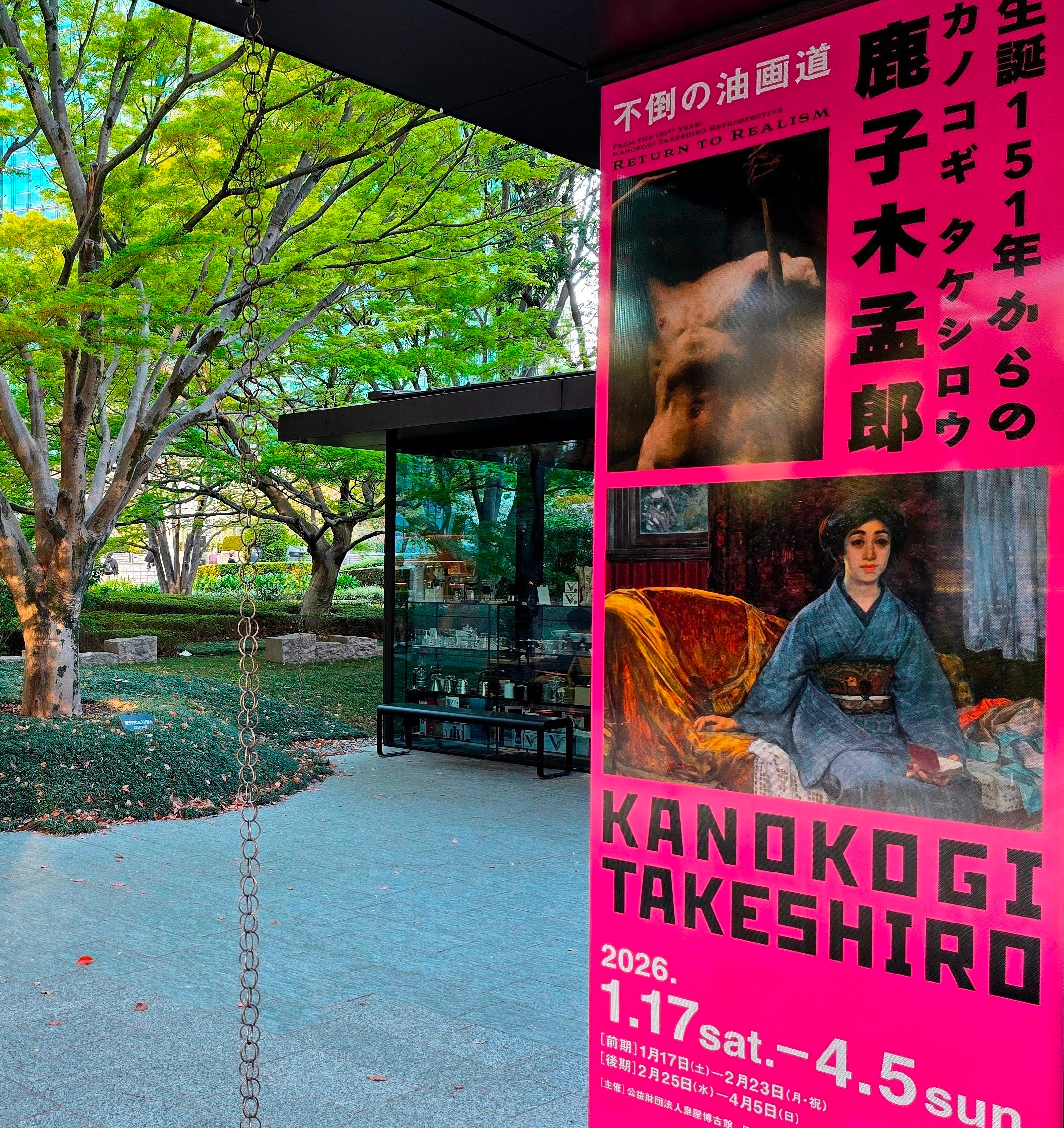
I enjoy paintings that immediately pose questions. I relish the mental back and forth, and it creates a dialogue between me and the work. In the case of this portrait, I found myself asking, ‘What’s the book in her hand?’ ‘Who or what is she looking at?’ ‘Why does she look so concerned?’
The portrait is painted in a modern house with modern furniture (the painting seems to be undated, but perhaps the late 1920s or early 1930s?). Yet the sitter is in traditional Japanese dress, a kimono, featuring a lovely obi (belt). When stood before this canvas, I found it hard to look away from her slightly startled gaze.
*
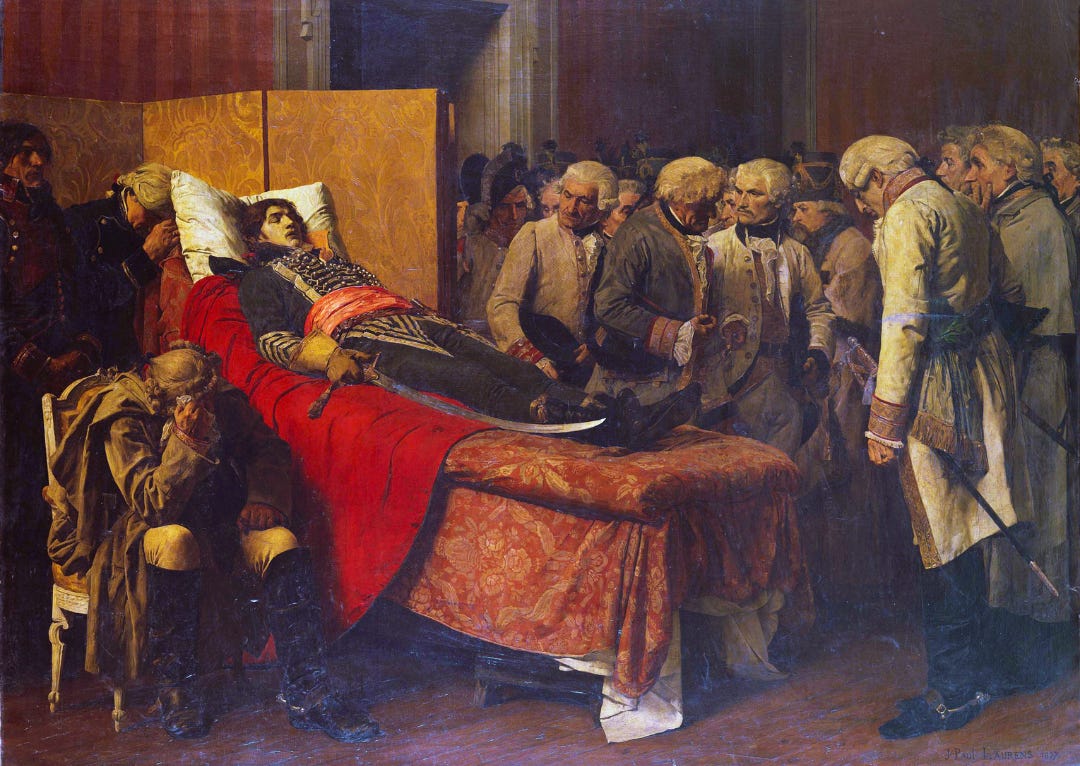
In the museum’s main foyer, before the start of the main exhibition, two large works were on display. Perhaps the curators thought of them as guides to our viewing of the rest of the exhibition. One was by Laurens, an example of his grand historical style:
Another was a monumental, dramatic work by Kanokogi himself:
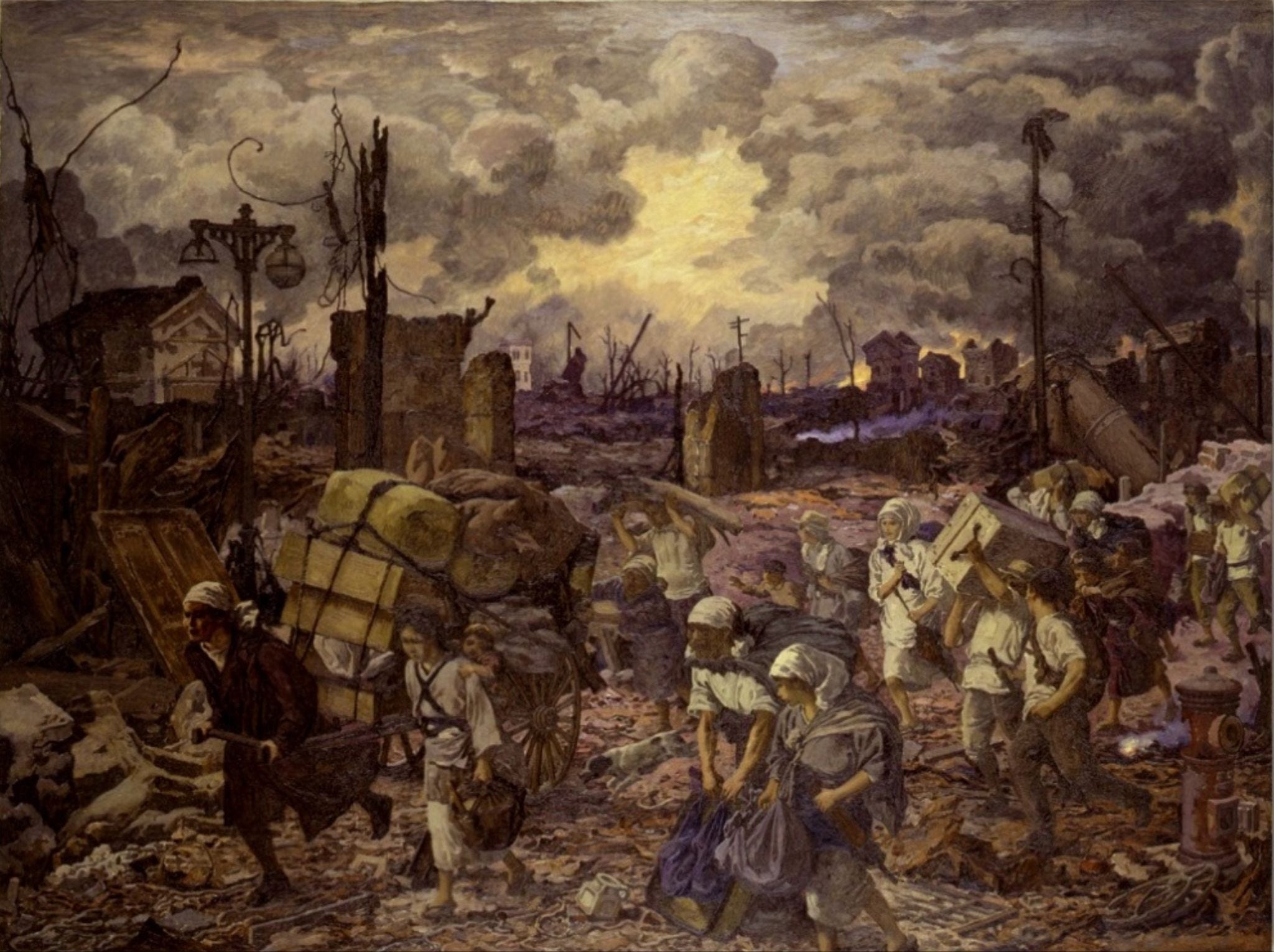
This huge canvas was painted in the wake of that huge natural catastrophe. It shows the influence of Laurens in its scale and concern with historical events. Yet despite its specificity in terms of detail and reference to a single event, it has a timeless feel to it too – this could be the wake of any natural disaster anywhere.
But more than that, as I stood in Tokyo in 2026 in the knowledge that another massive earthquake is fully expected to happen within decades, I felt I was also seeing a rather horrific vision of the future. That’s perhaps one reason I felt that the power of this painting surpassed anything in the work by Laurens.
*
Finally, the exhibition also gave me the chance to see another large canvas which is considered Kanokogi’s masterpiece: Beach in Normandy (1907). It’s a compelling work seen at full scale.
I confess I initially found the faces of the adults a little unconvincing – the standing figure, dressed as a woman, seems rather masculine, for example. I wasn’t sure whether this was deliberate.
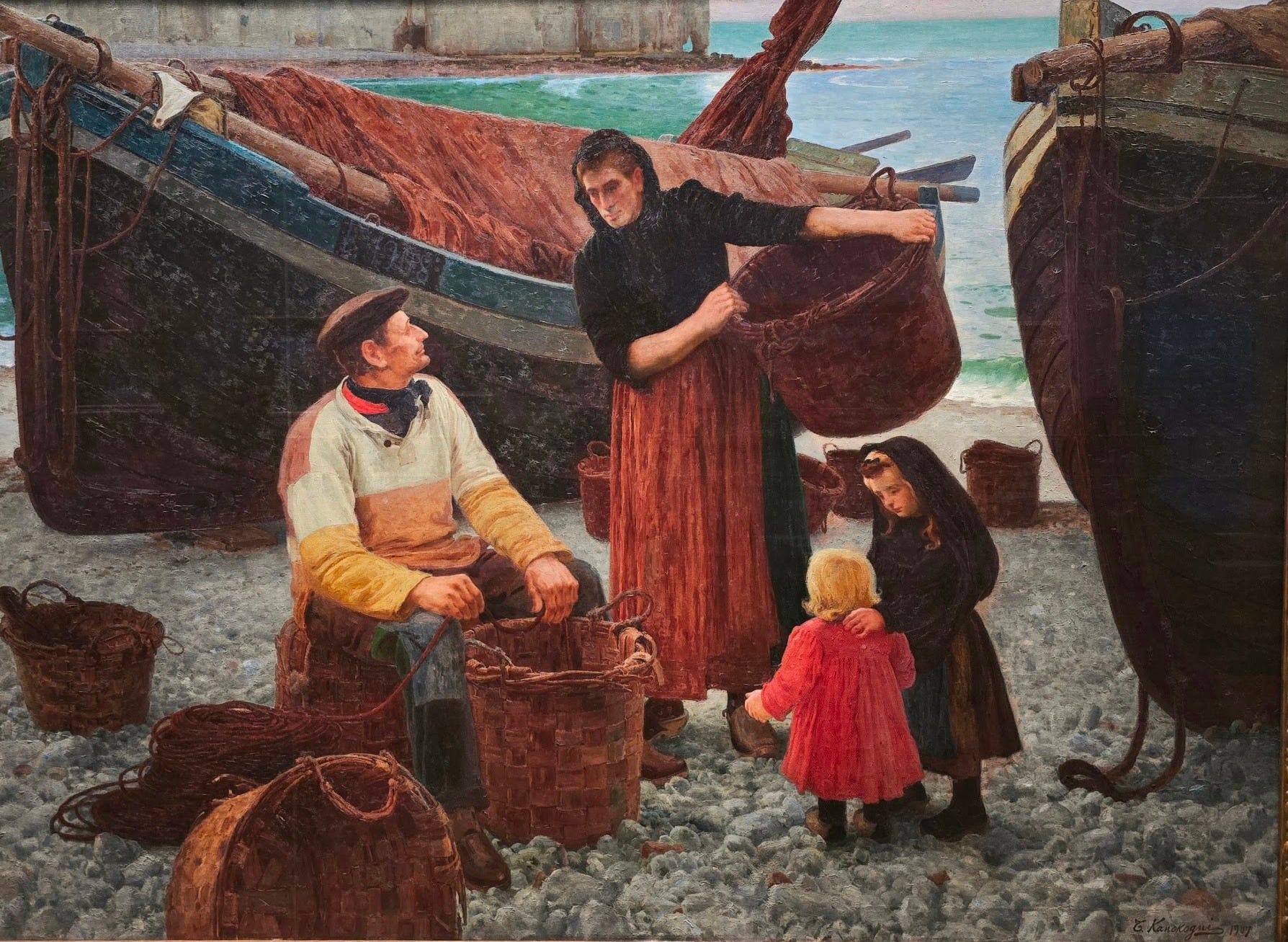
But the charm of the scene is generated by the depiction of the little children, with the girl tenderly looking after her sister amid the pots and fishing boats. I enjoyed, too, the blending of red and orange and yellow; the rough texture of hull and basket; and the green hue of the sea lapping on the pebble shore.
The humble scene brings us closer to real life than Laurens’s, taking me back to Millet’s realism and subject matter. And the painting took me all the way to the beach in Normandy, and I could almost smell the sea and the fishing boats as I gazed at it.
The painting also seems to have taken Kanokogi where he wanted to go.
On 26th March this year, the Japanese government’s Agency for Cultural Affairs announced that Beach in Normandy would be designated as an “important cultural property” of Japan. This is a very bureaucratic designation, and as such it will mean, among other things, restrictions or controls on the overseas use of the work.
But the importance of this move doesn’t lie in export restrictions or subsidies for restoration.
Rather, the message this sends is that Takeshirō Kanokogi, a century and a half after his birth, has become, in his own country at least, what he always strove to be: a modern master.
Comments
Nothing yet. Say the first thing.
Sign in to join the conversation.