
“What we have to prioritize as a country is compromise.” -Garrett Langley, founder and CEO of Flock Safety
The conversation of our time is no longer abstract. It is happening on street corners, in city council meetings, across legacy media newsrooms and even in the White House briefings. Pervasive digital mass surveillance and data collection has gone operational and so has the public resistance against it.
Corporate CEO’s and industry reps are hitting the PR circuits to massage the message and defend their marketshare.
Branded most visibly as Flock camera automatic license plate readers, intrusive surveillance has gone from obscure tools to a near-ubiquitous fixture across America. What began as a quiet rollout has exploded into a national flashpoint, and the implications stretch far beyond traffic enforcement.
Below are the current identified license plate readers. Two years ago the map was largely empty.
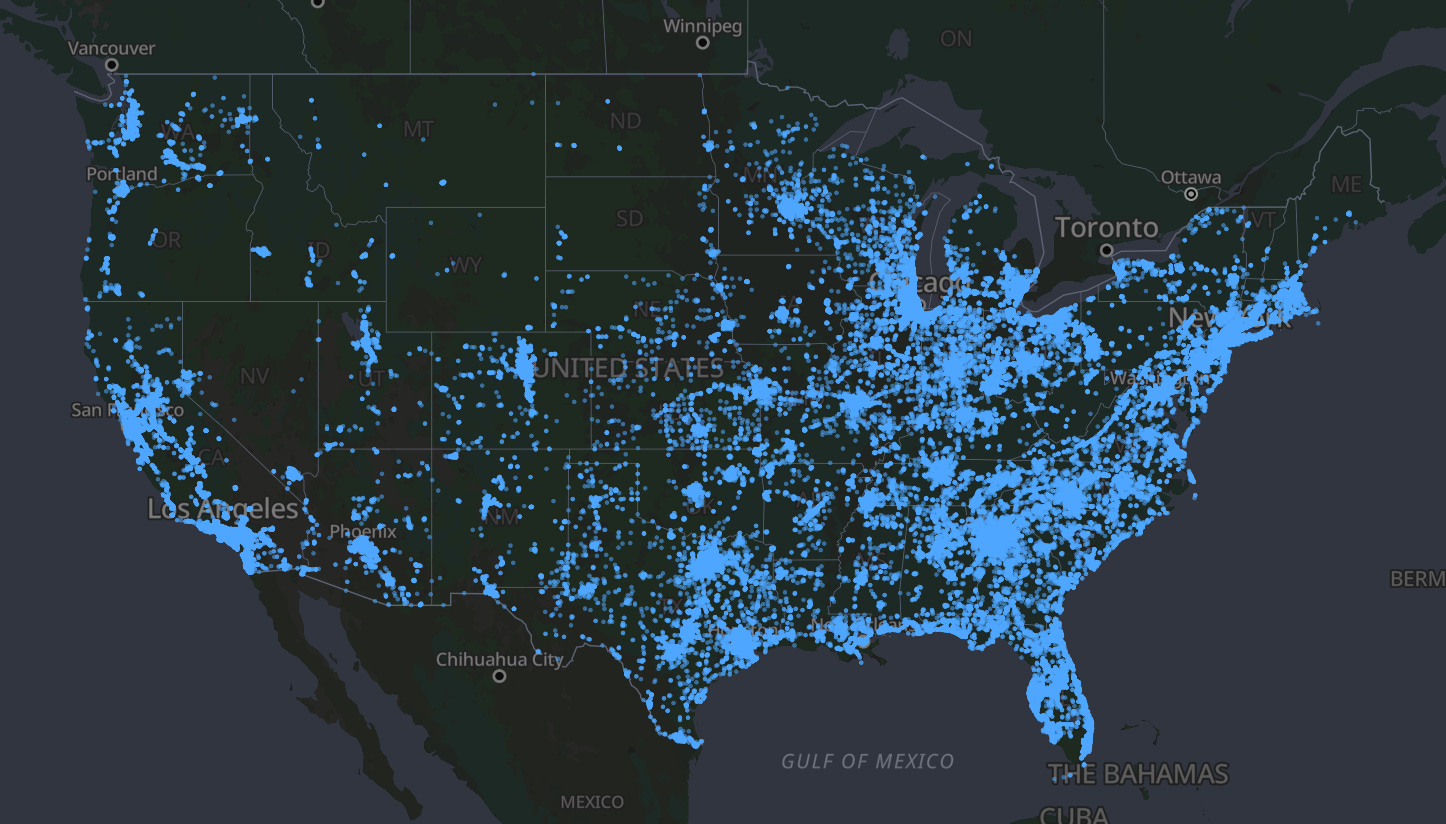
The speed of the build-out alone explains the backlash: more than 100 cities have already rejected the cameras. That resistance is healthy. It is also overdue. President Trump was asked about the technology in a recent press conference. His answer was measured—pros and cons, under study, a decision in a couple of weeks. Fair enough. But elected officials are not waiting.
Congressman Tim Burchett has introduced legislation to cut off federal funds for departments that deploy Flock-style systems.
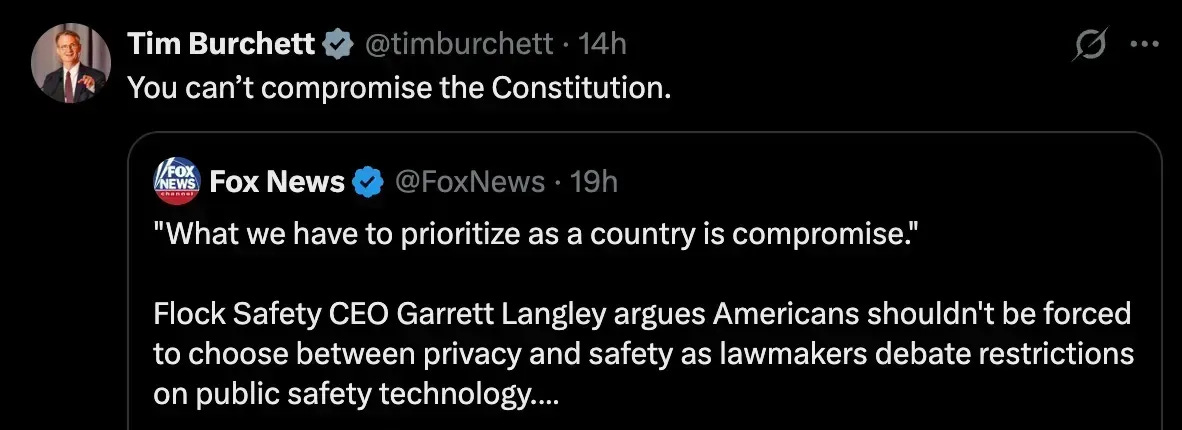
Congressman Thomas Massie has advanced a similar measure. Both understand the power of the purse threatening to strip federal funds from local governments that use the tracking systems on law-abiding citizens. The deeper problem is not merely the hardware. It is the normalization of this surveillance upgrade ‘for our safety.’
Meanwhile, private companies, not elected governments, hold the data. Flock’s lead investor, Andreessen Horowitz, has also backed Toka, a firm reported to allow clients to hack cameras, alter footage, and erase evidence without forensic traces.
Axon, the body-camera giant, plugs directly into Flock’s network. Leaked documents show Flock building expansive people-lookup tools that link a license plate to an owner, then to spouses, associates, and online footprints.
One pass by a camera can generate a dossier. Other players—Carbyne, which can activate a phone’s camera, microphone, and GPS during a 911 call, plus Paragon and SignalTrace—form a tightly interconnected ecosystem controlled by a handful of private funders.
Governments do not own this infrastructure. They rent access. The data lives with corporations that answer first to investors. What could go wrong?
We already have a recent historical preview. In 2020, Kentucky authorities proudly announced the following:
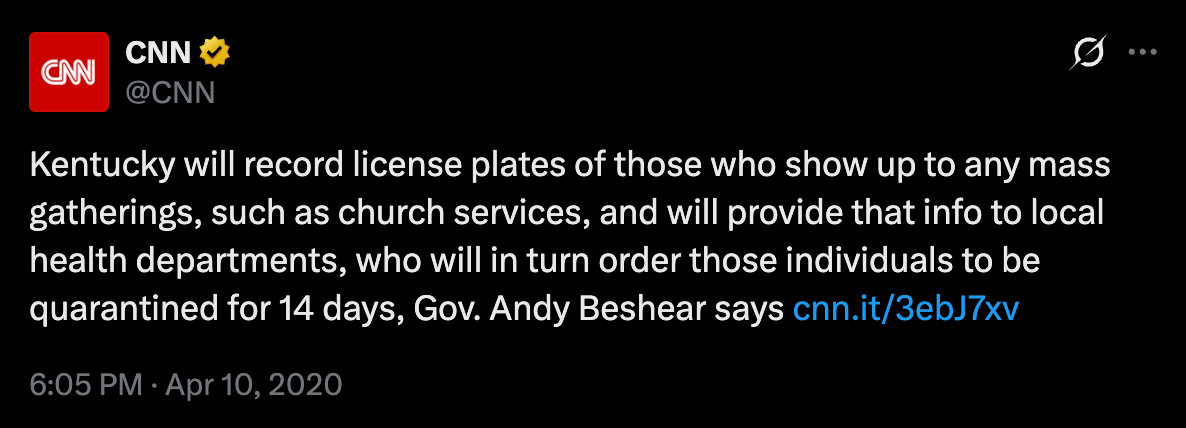
Six years later the same technology is exponentially more powerful. Contact tracing would be immediate and no longer require guesswork.
History shows that power changes hands and societal norms are interchangeable depending on the current ‘crisis.’
Comments
Nothing yet. Say the first thing.
Sign in to join the conversation.