
Friday, July 31
Grand Rapids, Mich.
A few days ago, as I was getting ready to drive north from Atlanta to visit my friends Barbara and Ed in rural Georgia, Facebook delivered a six-year-old photo to my phone.
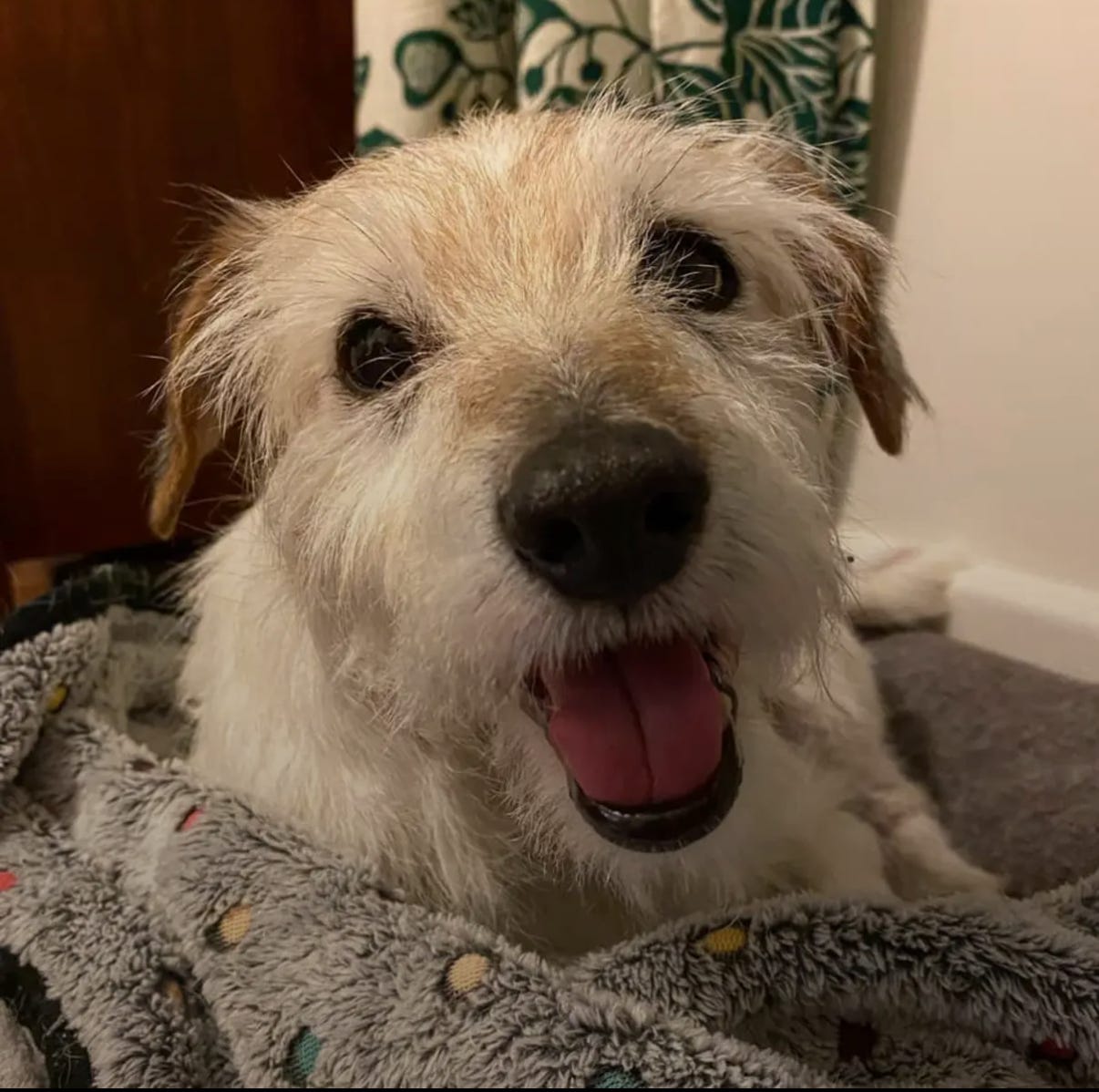
I have mixed feelings about how the machine surfaces memories; my restless brain does just fine on its own, without these extra inputs. But Barbara and I have bonded in part over our love of dogs and in particular for Jack Russells. My Fozzie and her Canty were Jack Russells, though Fozz was probably more of a mix than Canty. Somewhere, I want to believe, they’re now romping in peace and terrifying rabbits together.
I texted her the photo, along with my estimated arrival time. Time—what a strange thing: How can it have been six years since that photo, and more than two since we bid farewell to the Fozz? Sometimes I think about him and the grief still feels fresh. I’d like it to have softened more, but this is one of sorrow’s annoying attributes: It keeps to its own timetable.
As I drove north, the land began to rise gently, as if testing out the idea of making mountains. Its subtle rolls mirrored my emotions—anticipatory gladness at the thought of being among friends, sadness at things that have happened in the years since my last visit, a sudden worry (did I remember to get that sauce at H Mart? yes, I think I did), surprise as other memories sprang to mind.
When I first began working on Good Soil, one agent told me the story didn’t work, because there was too much death at the end. He urged me to move the death to about a third of the way through the narrative and resolve the grief for the reader by the end of the book.
I protested that I’m a nonfiction writer; he said that memoirists move things around all the time. What I actually wanted to say was that I didn’t want to lie; it happened when it happened, and how exactly does one “resolve” grief anyway? To write an impossible resolution, to give the reader a pretend picture of an easy out, would have been to bear false witness to a hard truth.
--
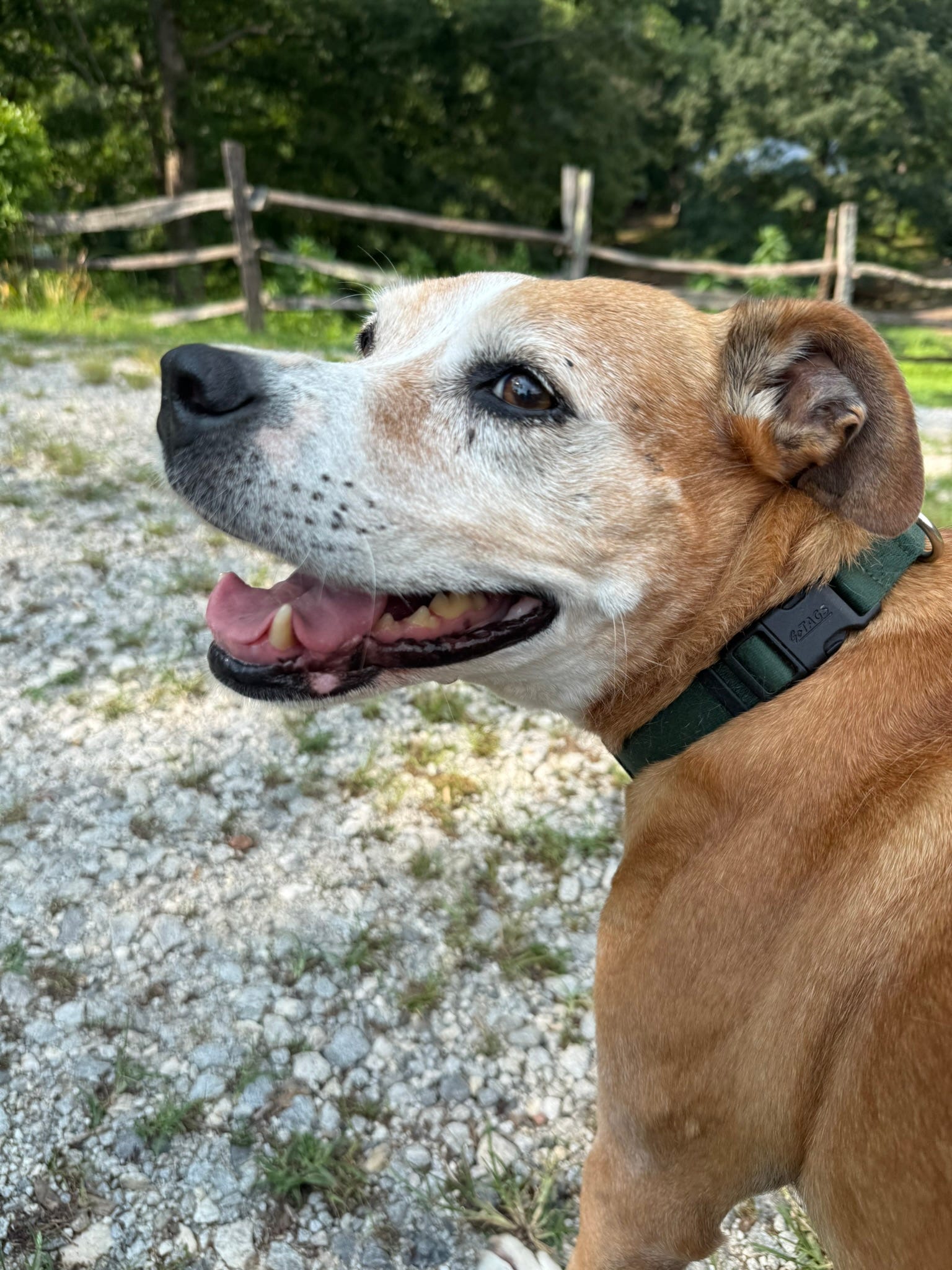
I arrived on schedule. When I pulled to the end of Barbara and Ed’s long, gravel driveway, I saw no humans. But the welcoming committee was ready. Their dogs, Sadie and Ellie, rushed up to the open car door, their bodies quivering with excitement, bobbing heads ready for scratches behind the ears.
After I greeted the humans, dragged my suitcase to the guest room, and began unpacking, I grabbed the bag of dog treats that I often travel with and went to find Sadie and Ellie to reward them for such a show of hospitality.
Then I returned inside to get my wok out of my suitcase, went to the kitchen, and began cooking. I am my mother’s child in many ways, chief among them that I’m not always fluent in the spoken language of human emotion. What we can’t say in words, though, we can say through food.
I see Barbara maybe once a year, twice at most—not often. Sometimes a text pops up from her, with a random memory or a dog video. Her timing is always right. Her ready laughter applies balm to my aches. She’s an expert at companionable silence. I’ve lost count of how many times she has held my sadness with tender hands, though I will never forget the first time it happened: In an extended conversation on a sofa in some stranger’s home, years ago in Tennessee, she asked and listened and asked and listened, waving away every single person who tried to interrupt.
How does one show gratitude to a friend who shows up like that? That night, my thanks came in the form of halibut with soy, ginger, and scallion; braised mushrooms with abalone on a bed of blanched romaine lettuce from our Grand Rapids garden; a mild curry of homegrown potatoes along with Japanese yam, carrot, and sweet potato; chicken stir-fried with peppers and onion; pan-fried tofu and zucchini with chili crisp; egg and tomato; Chinese greens with garlic; and plenty of jasmine rice to absorb all the goodness of the spices and sauces.
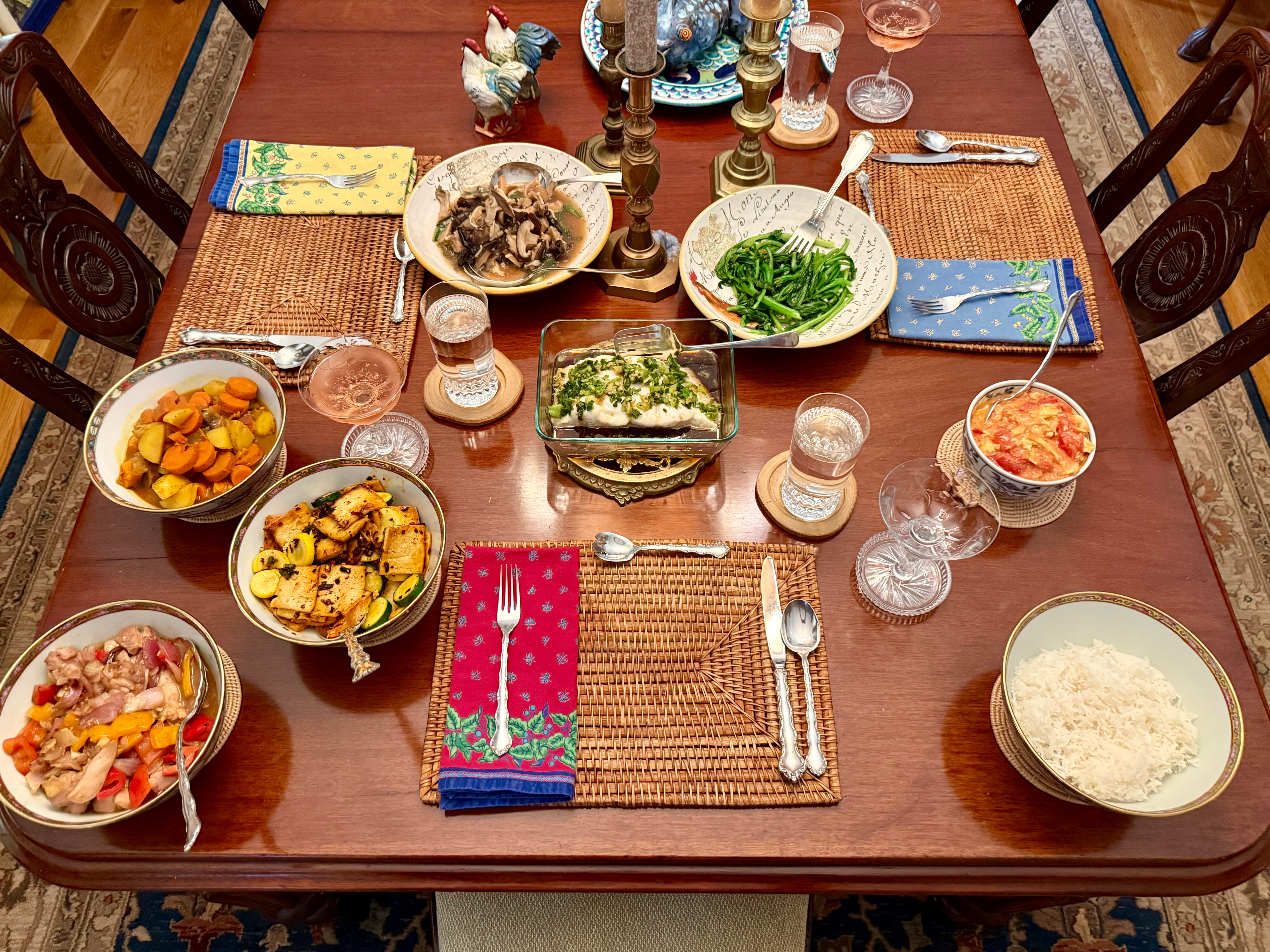
You could say it was way too much food for three people. I think it wasn’t enough.
--
Just after 8:30 p.m. on my last evening at Barbara and Ed’s, my phone started shrieking: A tornado warning.
Thunderstorms had erupted just to the north. Barbara put on the local radio, which reported that a tornado had been spotted to our northwest and the whole storm system was barreling southward. We debated what to do for a few minutes. Then Ed’s phone blared with another warning, and the local tornado sirens wailed outside.
We decided to head down to the basement. The rain was coming down in sheets as we exited the kitchen to access the outdoor stairwell. Sadie was already waiting at the bottom of the steps. How did she know?
As we waited out the storm, Ed puttered around the basement, while Barbara and I sat and chatted about this and that. The lights flickered occasionally. I don’t know why my brain is wired to imagine worst-case scenarios, but it does. Maybe this is how it ends, I thought. It wouldn’t be the worst way to go. Then Ellie came and sat right in front of me, nestling her head against my knee. How did she know?
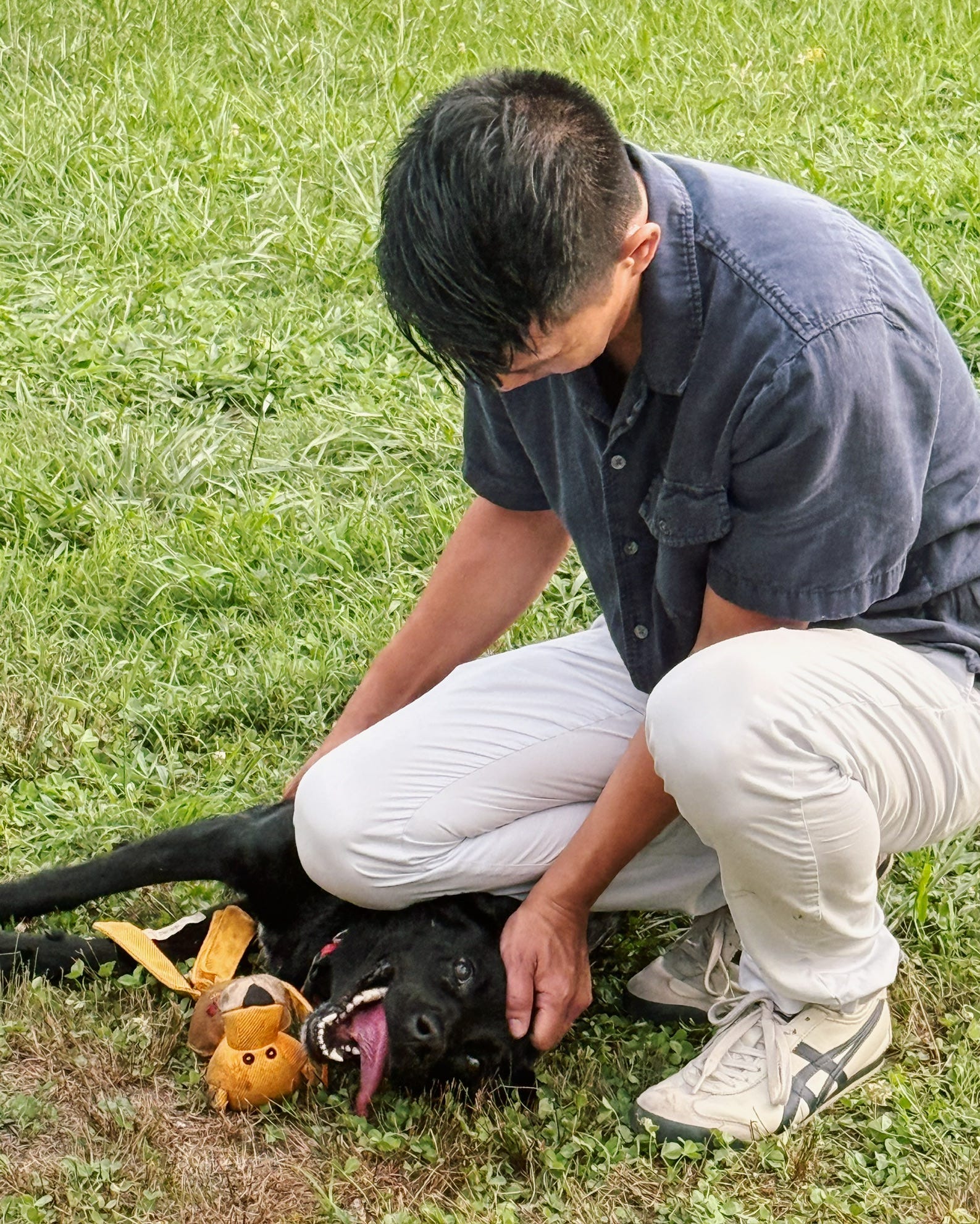
The storm passed.
--
Not too long ago, a friend gave me an odd and marvelous little book called The Dictionary of Obscure Sorrows, the writer John Koenig’s collection of words he made up to describe emotions and states of being that haven’t previously been named in English. In Koenig’s dictionary, tiris describes “the bittersweet awareness that all things must end.” “The impermanence of everything around us,” Koenig writes, is “a certain kinship shared by all things. The stars and the tombstones, the family dog and the honeybees.”
What some might understand to be grief and loss, though, can also be possibility and freedom, love enduring and treasure held dear. Consider the honeybees, he suggests: “To the honeybees, summer never ends. They live for a few months at most, barely long enough to feel the seasons change.... You can hear them buzzing deep in their hives, trading bits of sweetness they’ve gathered out in the world. How easily they pass the nectar back and forth between their bodies, freely mixing it all together as if none of it made a difference, knowing they’ll never live long enough to taste it all.”
Memories, stories, the afterglow of love—these are all bits of sweetness, I suppose. Do bees ever get indigestion? Do they ever tire of sweetness or crave something savory? What’s the apiarian equivalent of a potato chip? Anyway— “To decide for ourselves which fleeting, precious, interminable moments we’ll carry with us right to the end,” Koenig writes, is “an honor reserved for mortals.”
As I packed up to return home, Ed and Barbara kept handing me bits they’d gathered out in their corner of the world—okra, cucumbers, summer squash, chicken-of-the-woods mushrooms we’d foraged together—to take to Tristan. I thanked and hugged Ed, then Barbara. But before I went to my car, I returned to the packet of dog treats I’d left on the kitchen counter and took one each for Sadie and Ellie. I could see them waiting just outside.
Sadie and Ellie sat without being asked. I popped the treats into their open mouths, and I expressed my gratitude to them for their hospitality. “Good girls,” I said, scratching them behind the ears one more time. “Thanks for being my friend.”
Barbara Brown Taylor’s next book, Coming Down to Earth, will be published next March, but it’s available for preorders now. I had the honor of reading a pre-publication version of the manuscript, and, as anyone who has read her work before will expect, this book is a gem, glimmering with wisdom and wit. I’ll have more to say about it in the coming months. Her Substack, though, gives a glimpse of the kind of writing you’ll find in its sumptuous pages.
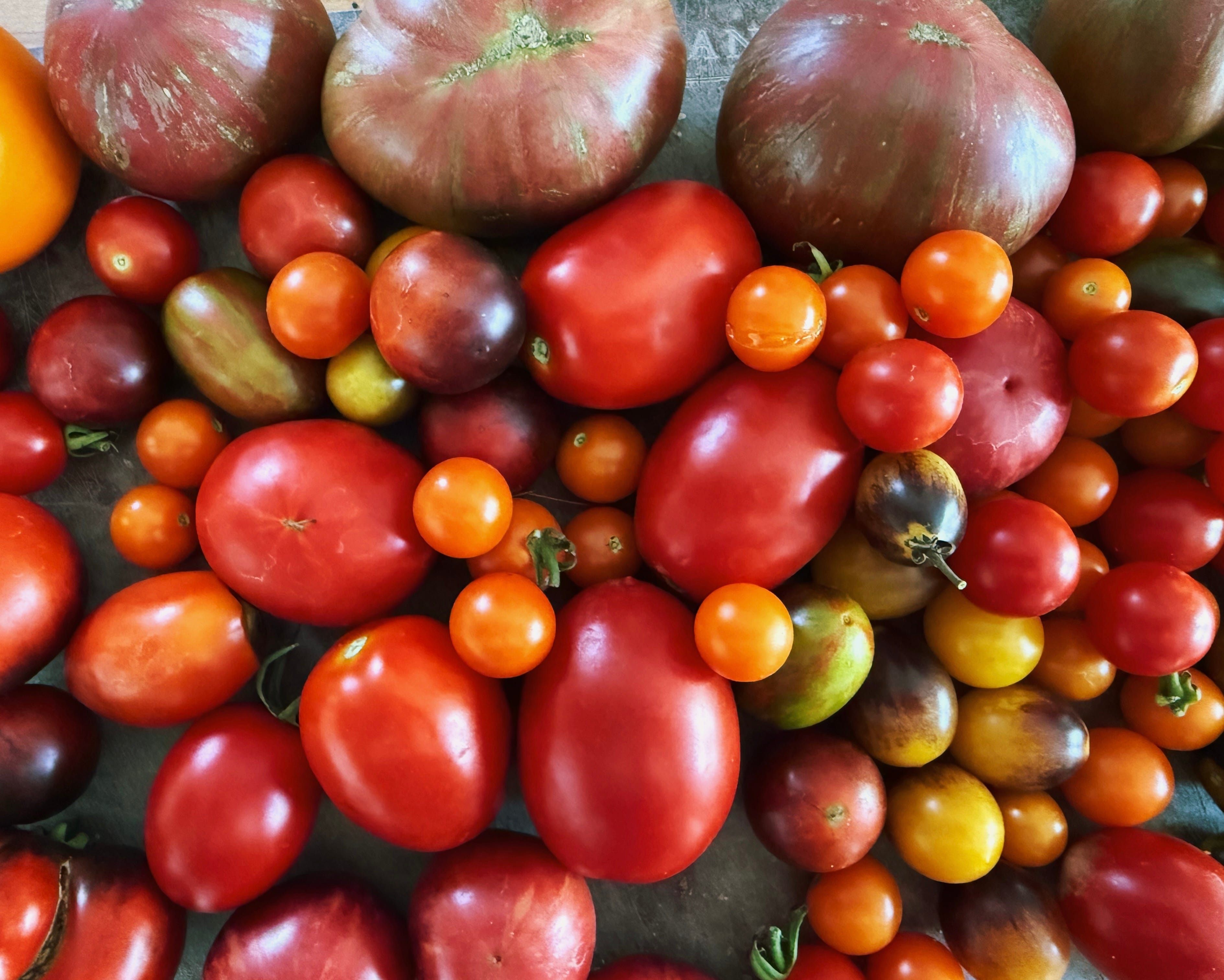
What I’m Growing: I’ve been neglecting my garden plot, as is my midsummer habit, and the bindweed and bean beetles have been delighted. Still, the tomatoes are coming on strong. The gladioli I never planted are blossoming, the tomatillos that grew up on their own are getting plump, and the sunflowers have come back beautifully, even though I haven’t put seeds in the ground in several years.
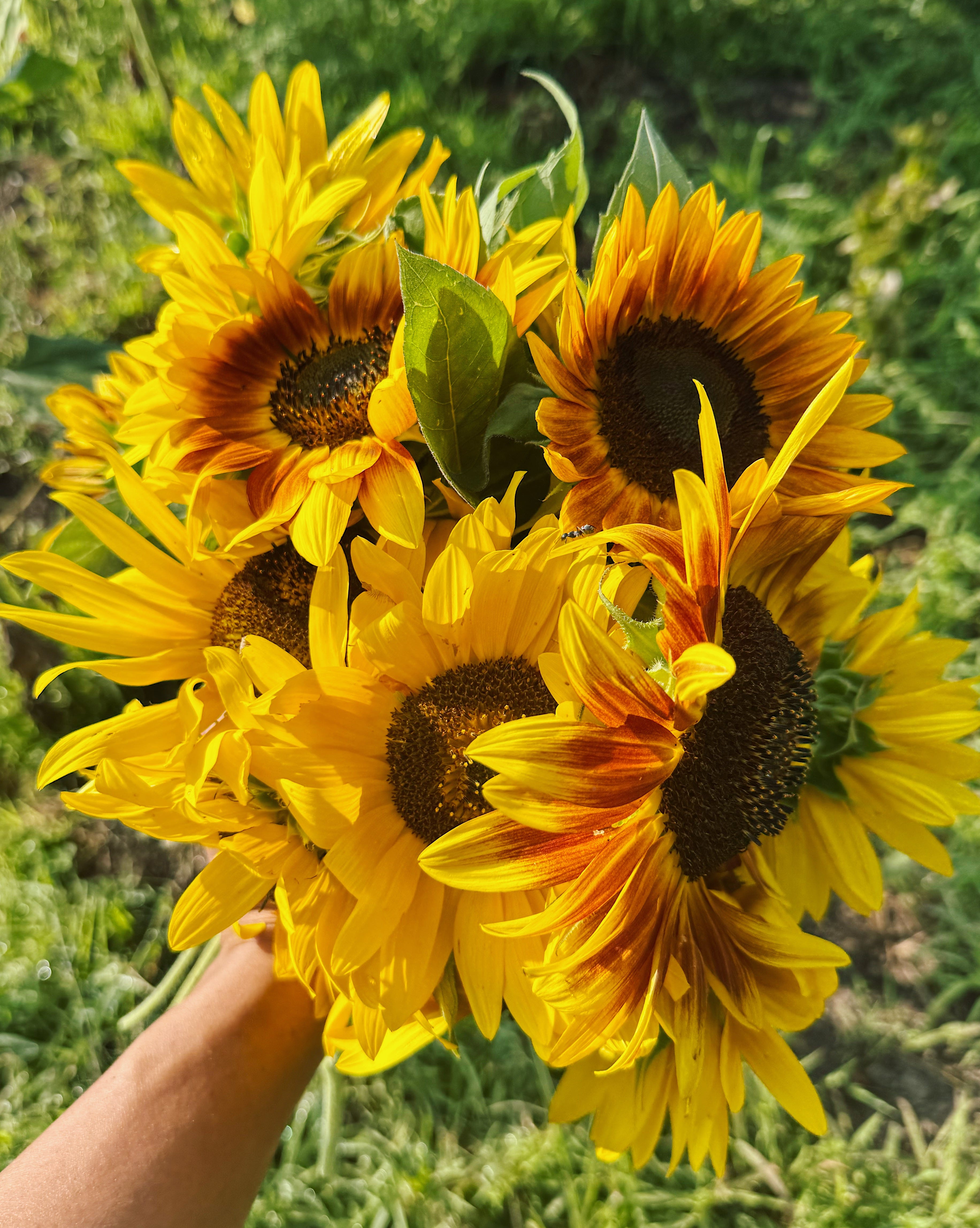
Grace upon grace upon grace.
Thank you, as always, for reading my ramblings—and extra-special thanks to those of you who have chosen to back my work in the world by being paid subscribers. I know I have not written to you as often this year because I’ve been trying to finish my PhD dissertation. (Prayers and good vibes are especially welcome as I wrestle with Paul Ricoeur, whose philosophy of writing seems to be “Why say in concise and easy prose what could instead be expressed with extreme wordiness and density?”) So your support has been particularly appreciated, not least because those health-insurance premiums keep going up.
If you have something you’d like me to remember in my prayers, and if there’s anything in your life that could also use some good vibes, know that I always welcome the opportunity to be alongside you in these ways. Post a comment, email me, or send me a note at P.O. Box 68565, Grand Rapids, MI, 49516.
Yours,
Jeff
No posts
Comments
Nothing yet. Say the first thing.
Sign in to join the conversation.