
Hi, everyone!
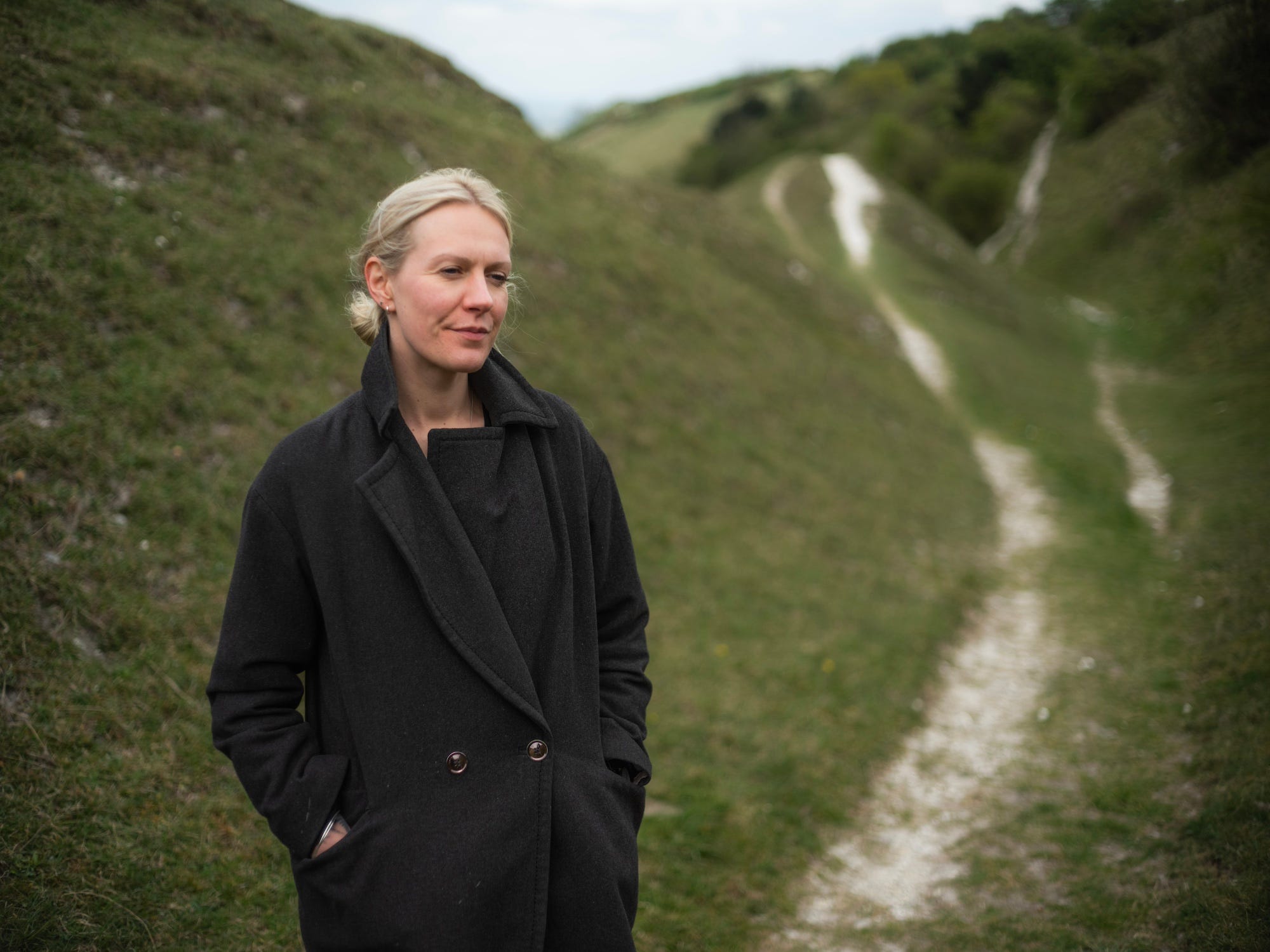
Today’s guest post is by Ellie Nova , whose stark honesty I found deeply humbling and connected to immediately with her story. Even her first line—”I used to believe there was something deeply wrong with me”—speaks to a lot of us with childhood wounds or a trauma history.
Please welcome Ellie and share your heartfelt affirmations at the end of her story. As always, thank you for being here and thank you for reading. You can find Ellie here on Substack, too, so please follow and/or subscribe to her, especially if her story touches your heart in a particular way today.
I used to believe there was something deeply wrong with me. As a child, I would lie in the darkness, going over all the terrible things I had done that day: every time I made my parents angry, teachers berating me, friends turning their backs on me. I believed I was bad and had to change, but I couldn’t figure out how. Sometimes I would cry from the hopelessness of it. I seemed to have been born someone who made everyone else unhappy.
I couldn’t figure out what exactly it was that made me so terrible. But there was something, I was sure of it.
When I was 19, I found out what it was.
*
The moment it clicked was when my father dropped me off at university in Leeds for my second term in January. After waving to him as he drove away, I walked up the stairs of the student halls and into the flat I shared with five others, then into my tiny room. I sat on the single bed and felt an ache of loneliness. Fear, too.
Then, a thought: wine. What I need is red wine.
Walking uphill to Costcutters, I bought myself the cheapest bottle I could find, then returned to my flat and put on a video of one of Eddie Izzard’s stand-up routines, Glorious.
The booze wasn’t new; I’d been drinking at house parties since I turned sixteen. But this time felt different. This was an empty Sunday night, and I poured myself another glass of wine. What a beautiful sound it as it filled the glass. What a beautiful warm colour.
As I drank, my body relaxed. A calmness fell over me. A little hazy, a little heavy.
Yes. There it was. What I’d been longing for. A warmth wrapping around me. Like the edges had all softened. I was not alone. I had not been abandoned.
More wine in my glass.
Lovely, lovely peace, carrying me into the night.
I texted my dad: Thank you for driving me up. I’m watching Eddie Izzard and feeling very happy for some reason. x
It seemed so soft. So benign.
But what a dangerous, dangerous connection was made that night.
*
When I became emotionally dependent on alcohol, it seemed like I had my answer to what was wrong with me. It was something to feel ashamed of, something that made me abnormal, something to hide. The self-hatred I had already felt finally had somewhere to go. I was weak, lacking in self-control, a failure. Everything I had been taught about alcoholics now applied to me.
‘You’re a bright girl with a good education,’ said my father despairingly. ‘Why has this happened to you?’
I didn’t know.
*
At age twenty, I went to see a counsellor at university. Not about my drinking, but because I had developed a terror of people leaving me.
‘When someone walks out the house and shuts the door, I feel so alone and so afraid,’ I said. ‘I can’t bear it.’
She leant forward. ‘Perhaps that has a connection with your mum dying?’ she said gently.
I was confused.
‘No, I don’t think so. That happened years ago,’ I said.
My mother had died from cancer when I was fourteen. I had off a couple of days of school to attend her funeral, and after that had returned with barely a mention of it from anyone. I got A grades. I was fine, wasn’t I?
It was a strange thought, that maybe I wasn’t fine after all. That maybe just some time passing wasn’t enough to have to come to terms with grief as huge as that.
I walked out of her room feeling disorientated. Then I remembered I had a bottle of wine at home. My shoulders relaxed. Relief. I had a way to escape this seasick feeling. I had a friend to soothe me.
‘Why is it so hard for us to admit that alcohol itself is the primary issue? That alcohol, like any other drug, is addictive and dangerous? That life circumstances, personality, and conditioning lead some victims down into the abyss of alcoholism faster than others, but that we are all drinking the same harmful, addictive substance?’
– This Naked Mind by Annie Grace
I read these words when I was thirty one. And I couldn’t believe it. All this time, I had thought there was something deeply wrong with me. That I was a sick, defective human being who had, for no reason at all, become addicted to a drink that others enjoyed as ‘an occasional treat’, as my father would say. Now there was information turning all that on its head.
Annie’s book showed me that I was, in fact, a completely normal human. A normal human who had experienced trauma and grief in childhood, who hadn’t been held in my feelings, and who had been thrown into university culture where drinking enormous amounts several times a week seemed to be the best way to fit in and make friends. It made complete sense that I had become addicted to a substance that is addictive to human beings.
With this knowledge, a window of light opened within me.
A light that looked like hope. That looked like love. That said, It’s okay, Ellie. You’re okay. You’re going to be okay.
Thanks to Annie’s book, I learned that the reason I kept drinking was that I had formed beliefs that alcohol was helping me. That seemed right, as the pull to drink was so strong it did feel like it was necessary for my survival. These beliefs were stored in my unconscious mind, so what I needed to do was bring them into the light and really see if they were true.
Was alcohol really helping me feel relaxed?
Was alcohol really helping me escape my emotions?
Was alcohol really helping me to have the connection, love, and belonging I so deeply needed?
By reading her book, listening to her podcast, and doing ‘The 30 Day Alcohol Experiment,’ I learned how alcohol affects our bodies and brains. How it alters our brain chemistry and ruins our sleep. How it temporarily numbs and sedates us, whilst increasing our anxiety and lowering our resilience over time.
I started to explore what actually made me feel comforted and safe. I tried out what it was like to go to parties sober and give people a chance to get to know me without booze. I turned towards my feelings, to be with them, to let them move through me, rather than reaching for a drink whenever I felt emotional pain. I learned to treat myself with love rather than cruelty.
I turned towards my grief for the first time with the support of a grief tender and by sitting in circle with other people who had lost someone. By being with my grief, I allowed it to unfurl beyond dread into a feeling of sadness that didn’t overtake me. That became something I could live alongside.
*
It took time. It took me twenty months until I had my last drink (in December 2019) but many more years of healing to get to where I am now. I am a mother to a five-year-old son. I help other women to break free from alcohol, just as I did. And when I look within, I can just see a normal human – with darkness, yes, and plenty of flaws. Just like all humans. A normal human who is deserving of love and acceptance, just the same as everyone. Who has her place here in the world.
And I know that this has always been true.
Comments
Nothing yet. Say the first thing.
Sign in to join the conversation.