
Every weekend I take my wife and son to The Floating Bookshop in OKC, where I tell them they can each get one book each. They buy several books, and I usually buy a manga or a notebook or both. It’s been a long time since I’ve worried about the amount of notebooks I own. It is what it is.

The Floating Bookshop is located in a small house in Automobile Alley. It’s got rainbow steps and the best selection I’ve ever encountered. When I first walk into a bookstore, I’m feeling out its vibe, looking to see if it has shit that I have read and enjoyed. This one had BLAME!, Brian Evenson, Yuri Herrera, and a bunch of cool indie authors. Once I trusted the store, I let it show me books. I found The Collected Greg Egan and Plastic, Prism, Void there a few weeks ago, neither of which I’d heard of, both I enjoyed. This week, I picked up Little Mysteries by Sara Gran.
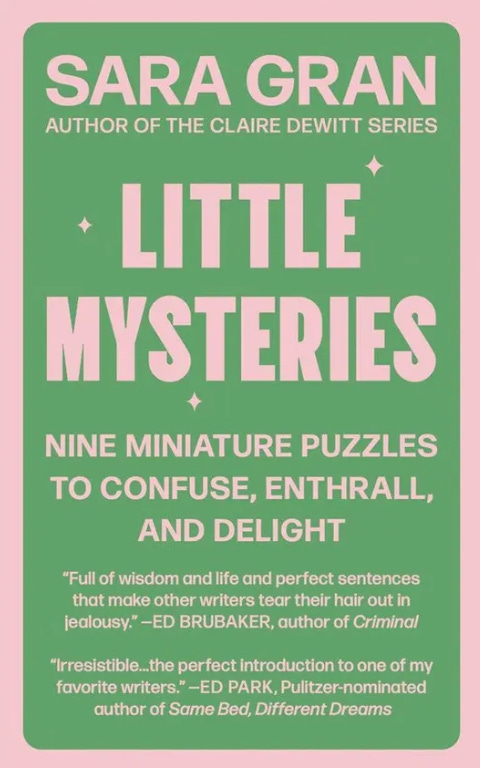
It’s always fun to discover a new book by a favorite writer in real life. No ads or anticipation, it’s just there! I took the book home and spent an hour reading the first four or five stories. I’m very glad I purchased the book, because it made a lightbulb go off.
When I found it, a couple things were working for me: first, I was already a Sara Gran fan, and second, I was intrigued by the cover. Six months back I got really into Japanese locked room mysteries, shit like The Decagon House Murders and Death Among the Undead.
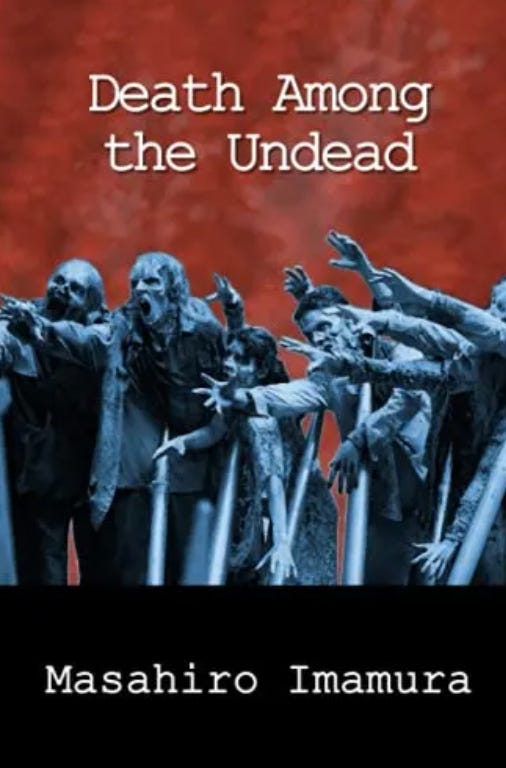
Don’t let the terrible cover turn you off. It’s fantastic. Anyway, when I saw this Little Mysteries book I thought for a moment that Gran had written nine short puzzles, like Murdle or something. I took it home and immediately started reading. About halfway through the third story, I had this sinking feeling where I realized it was “just” a collection of short stories. They say as much on the back cover, which I did not read, because I bought it without a second thought!
Now here’s the thing: this is not a case of buyer’s remorse. The stories are wonderful, and I would expect nothing less. There’s one that has two stories running concurrently down the left and right side of the page. I had a lot of fun figuring out where I was going to stop one and pick up the other. Gran is so effortlessly good at writing…but I started thinking about how excited I felt when I thought I was buying a puzzle book.
The kind of excitement I feel about reading a book is the same excitement I need to feel about writing a book. I have been feeling less than excited about writing since finishing Berserker Club. It’s been a slog.
And of course, it all makes sense! I’m trying to write a straightforward linear novel with good pacing and clear prose, but I’ve been reading (or listening to) something else entirely. With the exception of Lee Child’s Killing Floor, my reading habits as of late have been non-commercial.
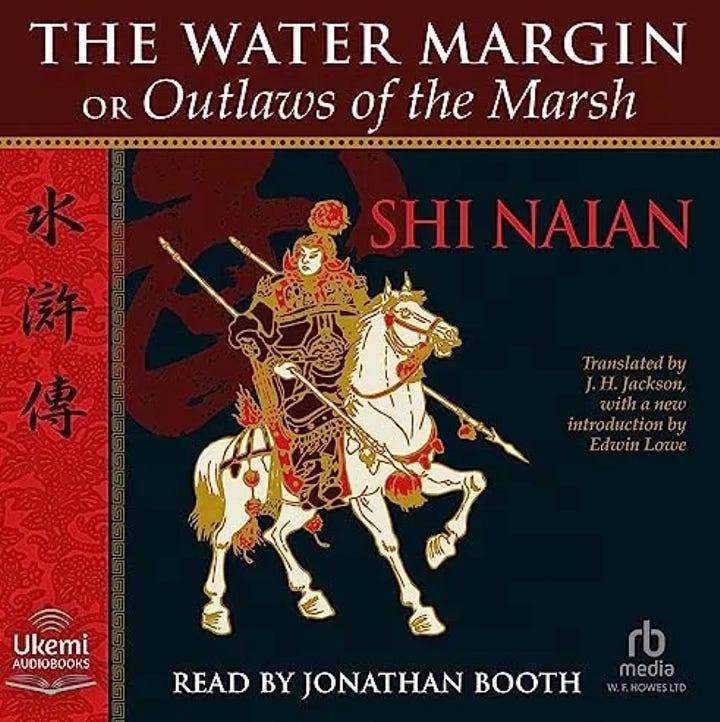
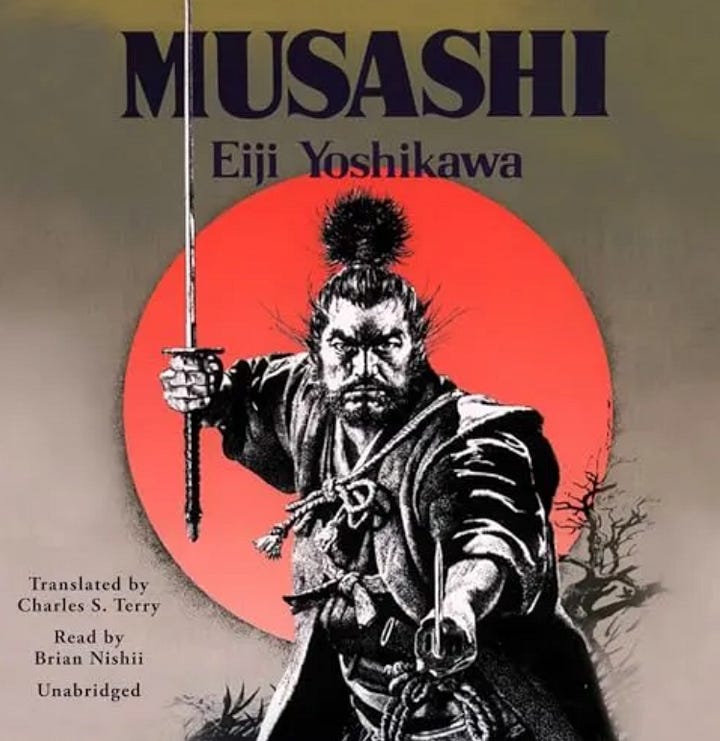
I’ve been bouncing between these two while in the car on my long work drives. Though they’re separated by about 500 years, I find these books have a lot of similarities in the way they are told. They are episodic tales (Mushashi was serialized) in which each chapter (usually) tells a complete story. The stories then stack on top of each other. Accumulating.
Which reminded me again that most of what I actually read when I have some spare time is manga. Rios got me Rooster Fighter for Father’s Day. But Father’s Day is next Sunday, you might say. Not when you have a five-year-old in the house. That wrapped present isn’t going to last long.
Anyhow, Rooster Fighter:
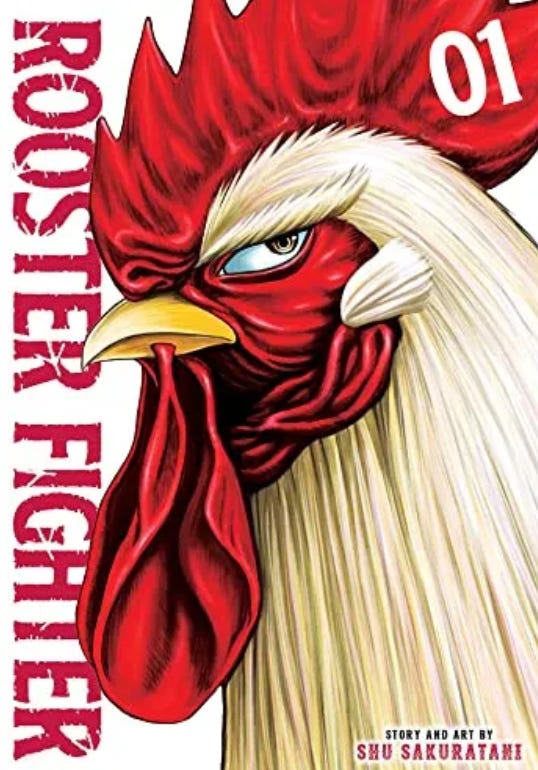
…tells the story of a demon-fighting rooster named Keiji. He’s searching for the demon who ate his sister, and he meets warrior sea turtles, toucans, and other friends and enemies along the way. It’s a very funny book, with most of the jokes stemming from Keiji’s lone-wolf hero quips and characteristics coming from a chicken.
This is the kind of thing that I enjoy. Whether it’s one of the oldest novels in the world, a serialized story from the 1950s, or a manga about a rooster, I enjoy this kind of storytelling, where a chapter isn’t so much a segment of a larger story as it is a cell of one. The Preston & Child books I’ve been enjoying are examples (along with 90% of fiction) of this segmented storytelling. Read Chapter 31 out of Still Life with Crows in isolation and you’ll be completely lost. It’s great, but trying to write that way leaves me cold.
I started writing this blog last night. This morning, I listened to the Creative Penn podcast with Austin Kleon as the guest. He’s most famous for Steal Like An Artist.
Some key takeaways:
People with aphantasia are often better at producing art. Since they can’t picture things in their heads, the drawing or writing or playing is how they “see” the thing. They don’t have to worry about a piece of art “not being what they had in mind”…because they didn’t have anything in mind.
Bibliomancy is an effective strategy for writing. If you’re stuck, open a random book and see what it tells you.
Joy is the key to creating anything. You have to be entertaining yourself while you do it. Kleon posits this as a “philosophical stance.” Whereas some folks believe you should suffer for your art, he believes it should be fun. He goes into several methods to recover that loving feeling, should one lose it.
I found that helpful. I’ve been using Zach Egger’s “elfing” technique to draft my new book, and every day I get better at distancing myself from the “vision” that I see in my mind. I get better at meeting the muse halfway. Directing the work, but not micro-managing it.
Once I started writing the things I enjoy reading, shit started rolling again. It might sound like the biggest no-brainer of all time, but you might be surprised how good we are at deceiving ourselves.
Remain vigilant!
-JDO
No posts
Comments
Nothing yet. Say the first thing.
Sign in to join the conversation.