
This post is long and your email client will truncate it. Read the whole thing at http://jdanielsawyer.substack.com
It’s the slow season in my business, so I am therefore officially for hire. I’m a world class researcher, analyst, editor, strategic consultant, and a pretty damn good tutor and mentor. I can furnish references on any of these points. I also do custom forge and woodshop commissions, and right now is the perfect time to order something for Christmas.
And, of course, if you’d like to help out, you can always drop a tip in the jar or upgrade your subscription here to become a paid supporter, and get extra goodies like the pre-publication serial of my forthcoming book The Art of Agency, which begins the first week of September.
At the request of a paid subscriber (this is one of the perks you get when you are a paid subscriber) I have just spent a very long several hours carefully reading through the following article by Substacker Postmodern Iconoclast:
Among other things1 it attempts to dismantle the “Hereditarian Revolution”—that is, the current concerted effort to build a scientific paradigm shift in the study of human behavior and psychology that gives pride-of-place to genetics over-and-above environmental factors such as economic situation, parenting, culture, and opportunity.
This is a huge paradigm shift from the mid-to-late 20th century, when awareness of the horrors of the Holocaust, and the extent to which they depended on American Eugenics Era policies,2 made its way into the public mind. Starting in the post-war period, eugenics policies and anything vaguely tainted by them grew taboo in the academy and in polite conversation generally.
Today’s “Hereditarians” argue that the politics of the Eugenics era were blinkered,3 but that the foundational instincts of thinkers like Francis Galton (the father of eugenics) were basically correct, and we’d better come to grips with that and figure out what to do about it if we make effective policy about equality, welfare, affirmative action, etc. (which is to say nothing of what happens when the tools to re-program DNA are in the hands of the few, who could then re-make the minds of the many without all that expensive fucking about with censorship and social engineering).
This is a view that threatens to change everything about how our civilization deals with human difference…assuming it wins the ideological war.
Let’s start with the perennial issue sitting in plain sight:
Egalitarianism.
Not attitudinal egalitarianism (i.e. “I don’t care about your race or religion or sex, I care about your character—if you treat me with respect, I will treat you with respect”), but formal philosophical egalitarianism (i.e. “all humans are equal”).
17th century English liberal thinker John Locke, in his determination to delegitimize royalty, faced a problem: habit. The near-universal human norm for governance (interrupted only briefly in historical periods of tremendous trade-driven prosperity) is that kings rule over everyone else. Human societies pretty much all have established, pyramid-shaped hierarchies, and this situation had long been considered to be ordained by God.
Some men rule. It is God’s way.
And if, in their nakedness, they appear to be but men,4 then God still has his reasons for picking that man rather than this man to rule. There is something about them that make them better—in some important sense—than the rest of us plebs.
That is the paradigm John Locke had to break.
He could have done it by arguing that England’s record of monarchs showed the country was clearly not well-suited to being ruled by a king (a case that would have been pretty easy to make at the time he was writing). He could have done it by arguing that royal bloodlines did not reliably preserve the best-and-brightest of the English people—the prosperity of the merchant and academic classes proved that—and therefore another mechanism for selecting rulers was needed.
But Locke wanted something more radical, so he made an argument that nobody in history had ever had the balls to make (outside of a few utopian messianic cults):
All men are equal.
Not “should be equal before the law.” Not “equal in dignity.” Born equal, with the only differences being those that are shaped by experience.
Let us then suppose the mind to be, as we say, white paper void of all characters, without any ideas. How comes it to be furnished? Whence comes it by that vast store which the busy and boundless fancy of man has painted on it with an almost endless variety? Whence has it all the materials of reason and knowledge? To this I answer, in one word, from EXPERIENCE.
—John Locke, Essay Concerning Human Understanding
On Locke’s view, a king is a king because he was trained to be a king, and a pauper is a pauper because he’s never been given the opportunity to know better. Thus, there is no transcendent (i.e. non-pragmatic) moral basis for political or social hierarchies.
This argument raises tremendous questions about moral deserts (i.e. who deserves what?). If the king is the king by dint of his experience, and you’re a pauper by dint of your experience, and there’s no qualitative difference between you other than experience…well, that’s pretty unfair, isn’t it? Why should he get all that wealth and power while you have to scrape by? Why should he get to declare war and send you, or your sons, to die for his territorial ambitions?
In this single maneuver, John Locke5 overturned all the justifications for all the monarchies everywhere in Western history.6 The Divine Right of Kings was no more.
This is great news for those of us who like political liberty, freedom of speech, and self-determination. Doubly great for those who were, in the 17th century, groaning under the endless wars that followed the Enlightenment and the Reformation (with all the heavy taxes that wars occasion). Now there was no moral barrier to revolution—one man is just as good as the next, so what one man can rule, another man can rule.
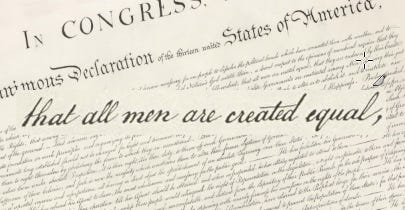
Here are some of the positive developments that used this idea in their marketing literature (whether the idea caused these developments, and to what extent, is a much more complicated question, but it’s fair to say that it at the very least greased the skids):
The end of legal slavery, the opening of educational institutions to (and building of them for) the middle class (an eventually also the poor), equality before the law for men and women and different ethnicities, and the rise of constitutional republics and other democratic governments around the world.
Those are gains worth holding on to, and there’s an impressive philosophical apparatus that has grown up to provide ongoing justifications for them.
That apparatus didn’t rise in a vacuum, they rose in response to the historcially-incontrovertible fact that governments premised upon egalitarianism have been the most ruthless, oppressive, tyrannical, kleptocratic, and genocidal in the history of the world.
The French Revolution, the Cuban Revolution, Cromwell’s England, Mao’s China, the American Yankee who waged the Civil War to punish evil (instead of taking any number of less destructive roads to end slavery), Lenin’s purges, Stalin’s Russia, the Holodomor, the Latin American adventurism of the American intelligence establishment, the horrors of Maduro’s Venezuela, the Killing Fields of Cambodia, the ongoing travesty of North Korea, the list goes on endlessly. Egalitarianism’s body count and atrocity record is more impressive than the justly infamous records of Christianity, Fascism, and Nazism combined (Islam’s record might still just edge it out—I am not familiar enough with the numbers to be sure).
Why does Egalitarianism achieve such wonder and horrors simultaneously?
Partly, it’s because both the wonders and horrors stem from the insecure position it puts political leaders in. Leaders who aren’t secure in their power (and leaders in egalitarian societies are rarely secure in their power) invite challengers. Sometimes those challengers provoke great achievements from the rulers—but sometimes they provoke atrocities as the powerful defend their positions. Sometimes (as was the case of the American Civil War) both happen at once.
Another reason for those wonders and horrors is that egalitarianism turns envy from vice to virtue. If I am just as good as you in a categorical way, then if you have something I want, I have the right to try to get it from you.7 Channeled healthily, envy stokes the competition that makes open economies enter virtuous spirals that create broad uplift. But without the combination of cultural and legal guardrails that channel envy in that fashion, it unleashes the Hobbesian war of all against all—any person of high achievement, rank, wealth, or cultural sophistication becomes a legitimate target for the rage of the envious mob (however constituted), giving those that lead or direct the mob an easy path to power.
But egalitarianism also has another problem, one that was already becoming obvious in the 19th century. This problem led directly to the Eugenics movement, and to the rise of the proto-fascistic ideologies that provided the pretext for World War 1 and the fully-fascistic ideologies that provided the pretext for World War 2.8
The problem?
It’s a lie—an obvious and provable lie—and the utter failure of the egalitarian doctrine had already become obvious by the 19th century. The glorious civilization built upon that lie is rooted in quicksand.
The central myth of the Lockean worldview is well-epitomized by the George Bernard Shaw play Pygmalion9 (which you may be more familiar with as the Lerner & Lowe musical My Fair Lady). In this story, a lowly guttersnipe named Eliza Doolittle is plucked from her Covent Garden flower booth by linguist Henry Higgins, who believes that he can make Eliza into a proper English lady through proper remediation.
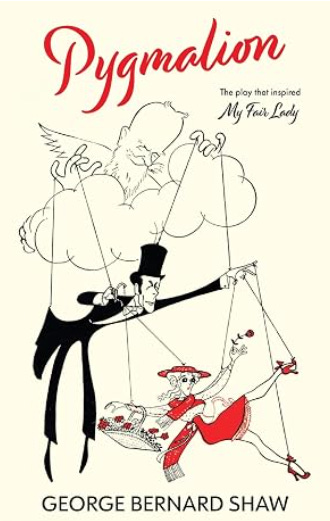
Higgins persuades Eliza to let him try. She is re-trained to speak as upper class people speak, walk as they walk, comport as they comport, and to generally shake the stamp of her lowly origins. Eliza is completely re-made in the image of Higgins’s genius—at the minor cost of total alienation from her past.
It worked in fiction. In real life, the results were somewhat…mixed. Throughout the 19th and 20th centuries, colonial and national authorities in Canada, Australia, and the United States stripped millions of native tribal children from their parents, families, and cultures and forced them into English boarding schools. The intention was two-fold:
First, as statecraft, breaking the chain of transmission of the culture of conquered peoples is a very old tactic for integrating the conquered peoples and eliminating the possibility of future political resistance. By taking these kids out of their homes, resettling them in a foreign culture, and forbidding them to speak their native languages, the state did everything they could to “kill the Indian to save the man.”
Second, from an humanitarian perspective, life in the tribe was materially disadvantaged. The children of the conquered tribes would otherwise grow up in ghetto-like conditions speaking a language foreign to that of the country at large, forever disadvantaging them and potentially locking them out of opportunities outside of their home village/reservation. It was therefore the responsibility of the conquerors to remediate the children of their conquered peoples according to the moral logic of “you break it, you bought it.”
There was, of course, a third motivation (religious indoctrination/conversion) that united both sets of concerns, but that’s less relevant to our discussion here.
In Pygmalion, the enterprise is successful. People are programmable, their experiential background is all that matters for their social position and conduct, so if you can manage to control the inputs into a person’s experience, you can transform that person from a reprobate pauper to a sparkling socialite.
Or control their destiny and consciousness in any other way that you want to.
But in the real world, things didn’t work that way.
While the tribal schools did provide pathways into mainstream culture for some of the children who were put into them, the majority did not find success or even stability—they were, instead, stripped of the one kind of wealth they had ready access to (their home culture) and left with very little else to fall back on.
The tribal schools were rife with problems that are well-documented (including abuse and exploitation of all kinds), but the outcome evaluation above is more-or-less what we see with a great many social programs, no matter how gentle or generous or ethical, over the past couple centuries:
A few of the subjects of aid gain long-term benefit. The majority either benefit only in the short term (as we see with programs like Head Start, Big Brothers and Sisters, etc.), or are harmed by the aid (as we see with welfare dependency in Appalachia and in a number of now-infamous West Coast cities). The harm comes due to induced dependency, social fracturing, and other secondary and tertiary effects.
If Locke’s Tabula Rasa (i.e. “blank slate”) is true, this should not be. People who receive roughly equal aid coming from roughly equal backgrounds should have roughly equal outcomes—but they do not.
What makes the difference between one person and another?
The 19th century British and American thinkers who were trying to puzzle this problem out landed on the same answer:
Genetics.
Animal Husbandry was the super-posh fad hobby among the Victorian-era gentry (not just in England—the Europeans and Americans got into it too). Pigeon breeding, dog breeding, and other sorts of animals were cataloged, systematized, propagated, and modified. Breeders competed with one another to change the body shapes, coloring, abilities, temperament, and intelligence of their stock.
How successful were they?
The ancestral stock of domestic canines comprised only around twenty varieties of shepherding dogs, war dogs, and hunting dogs.
The Victorians were able, in just a handful of decades, to create breeds specialized for everything from hunting rats, wolves, and lions to killing bulls to taking care of sheep and baby humans, some with intelligence so low that they have trouble finding their own feet and others with intelligence so high that they can autonomously manage thousands of herd animals, some with temperaments that are almost entirely independent of humans and others so deferential that—through pure instinct—they will not go through an open door without permission unless they are compelled by an extraordinary stimulus.
Whatever these folks turned their hands to—cattle, sheep, goats, pigeons, etc.—they accomplished similar feats, limited eventually only by the genetic complexity of the base animal (and thus its potential for rapid differentiation).
If you had to pick a single hobby that could change the world, you’d have a hard time finding a better one. Darwin’s theory of evolution through accumulated selection was informed heavily by his experience with pigeon breeding.
It’s not a coincidence that Darwin’s cousin, Francis Galton, formalized the discipline of human eugenics with the aim of optimizing the future genetic health of the human race through State control of breeding. It was quite obvious to him that if you wanted to reduce criminality, increase general intelligence, increase pro-social behavior, and maximize the future morality of civilization, you needed to take strong steps to ensure that the criminals, the insane, the indolent, the idiotic, and the immoral needed to be prevented from breeding—this was especially important because the new cities concentrated the lowest-order genetic stock where they could breed prodigiously instead of being limited to having traditional families in the country in an agrarian economy (where distance, disease, and war would naturally cull the most undesirable elements of the human population from the gene pool).
Galton’s chain of logic convinced Those Who Knew Best that civilization was in the grip of a genetic emergency: the less intelligent and less fit would out-breed the intelligent and self-disciplined people that are essential to the maintenance of free societies. The Industrial Revolution had removed the natural checks on population growth—checks that, previously, the intelligent and the disciplined were more likely to survive. Those previous limits had built the pedigree and character that could sustain a free Republican or Parlimentarian society that prizes liberty—now, with them gone, the future of free civilization hung in the balance.
You know this chain of reasoning—it’s the premise for the film Idiocracy.10
This reasoning convinced all Right Thinking People that emergency measures needed to be taken—and soon—to enable the State to take on the role that the industrial economy had robbed from Natural Selection.
That’s the schoolbook history, and it’s entirely accurate. The schoolbook history also fast-forwards to the consequences: vastly increased State power, meddling in private relationships, forced sterilizations of the infirm, the insane, and the promiscuous, renewed vigor for anti-miscegenation laws, compulsory nude photography of Ivy League students for the purposes of tracking genetic health of the elite class—all of this in the United States. Eventually, all the American Eugenics policies were aped by the Third Reich and then extended to extermination of the genetically feeble, those with birth defects, homosexuals, gypsies, and Jews.
It’s an ugly legacy. But the schoolbook history leaves out the most important, dangerous, and tragic part:
The science was pretty much correct, insofar as it went…but it didn’t go nearly far enough to get a complete picture that would allow anyone to form useful or coherent policy that would achieve its stated ends. The genetic health protocols the Eugenicists advanced could never have achieved the ends they desired (which is to say absolutely nothing about how horrific those means were, nor whether those ends were desirable, and on what grounds).
But it’s not just the science that was incomplete…it was the worldview around it as well.
The Victorian Era’s worldview tacitly (and sometimes explicitly) believed itself to be in possession of the complete and true understanding of the world (which makes them more-or-less just like everyone else in history in this respect). The English language ruled the world, the English gentry was the height of civilized behavior and morality (and the envy of most other developed countries to the point where the fashions of the English were imitated in the halls of power from Berlin to Washington D.C.).
It was a worldview that was uncommonly sophisticated (even by today’s standards), but also quite priggish, whiggish,11 and superior—most problematically for the issue of Eugenic controls, it assumed that it knew the platonic ideal of “fitness” in humans, categorically, leaving no room for the consideration that “fitness” is a measure of adaptation to environment rather than an absolute standard.
This kind of inflexibility would have inevitably led the Keepers of Human Genetic Hygiene to make disastrous errors that would have, in the long run, enfeebled the haplogroups over which they exercised dominion. If you think that’s unlikely, consider the genetic disaster of modern dog breeds—the more tightly controlled the line, the more genetic diseases and disabilities materialize.
Consider also that dog breeders are personally invested in their animals. Imagine now a genetic analogue to the previous century and a half of direct evidence of hapless central planners mismanaging every complex system that they get their greedy little mitts on. I see no reason to believe they’d have done better with Eugenics than they did with forestry, production quotas, meat rationing, and rent controls.
So how was the science correct, but incomplete?
Well, let’s start with the basic observation that the breeders understood and that Darwin systematized:
All genetic traits are susceptible to selection, and all traits are genetically encoded.
These two observations are entirely accurate, they are not in dispute. (despite what you may have heard from Creationists and their secular counterparts, the Blank Slate devotees).
It follows from those two very straightforward facts that you should be able to use selective breeding to reinforce traits that you think are desirable, such as eye color, height, muscularity/obesity, intelligence, geniality, courage, docility, etc.
This is also true, but this is where things get really complicated in humans in a way that they don’t in most other animals (though there are exceptions).
First, humans aren’t easy to cull. Killing or sterilizing “defectives” is not something that most of us put will up with. We are bonded to our Downs Syndrome siblings, we love our nutty schizoid uncle, and our best friend might be wheelchair-bound with Cerebral Palsy, but he’s still funny as hell and a damn good chess player. Death is the engine of selection, and as long as we live in a world where food is plentiful and caring for a disabled loved one is not so ruinous as to put our own survival in danger, most of us, most of the time, will die (or kill) to protect them.
Second, a lot of the traits humans care about are strongly polygenic (i.e. there are a lot of alleles involved in those traits), so it’s very difficult to arrange selection for or against them with a limited toolkit like selective breeding. Many of the same genes associated with high intelligence are also associated with increased risk of anorexia, bi-polar, and autism, for example. If you want a lot of geniuses in your population, then (barring future technology that allows such hairs to be reliably split) you have to accept that you’re gonna have a lot more pathologically undereating, emotionally volatile, antisocial weirdos running around.12
Dogs are also strongly polygenic. If you’re breeding for tameness you have to put up with floppy ears, because similar genes are involved in both traits are strongly linked (this is why breeds with prick ears tend to be more wolf-like in temperament and more prickly in personality—this is also why people who want their floppy-eared love bugs to look like vicious attack dogs crop their ears).


If you’re selecting for canine intelligence you must also often accept increased levels of autonomy and prey drive (such as you get with shepherding breeds).
In dogs, you accept your trade-offs and move on. With humans, this creates a number of thorny practical problems in terms of sociological effects, to say nothing about the ethical issues it raises.
Third, even in the case of genetic diseases, selection is really complicated (to the point where it is only now beginning to be possible “someday soon” to perform it). For example, a hemophiliac is a genetically defective (yes, I am using the term unironically and clinically) man with a deleterious gene on his X chromosome. He is never going to pass his disability on to his son, and he will only maybe pass it on to his daughter if his wife is carrying the same defective sequence on one of her X chromosomes—otherwise, the genetic defect will end with him. Hemophilia thus tends to cluster in families where there is close in-breeding over a long period—such as in Queen Victoria’s family or the Romanov dynasty in Russia (but I repeat myself). Otherwise it just pops up from time to time as the defective gene is passed silently down until some unlucky guy winds up with an expressed variant of it.
The collective upshot of these sorts of limitations means that, in humans, Eugenics-era thinking about “good breeding” works pretty well at an individual and family level, but it completely breaks down at larger levels. If you’re unusually tall, strong, or smart and you pick a spouse who has similar characteristics, your children will have an extremely good chance of retaining or amplifying those traits. If you have a genetically-caused or genetically-inflected disease or disability (such as borderline personality, muscular dystrophy, cystic fibrosis, schizophrenia, etc.) and you partner up with someone else who carries complimentary genes (whether expressed or latent), then the chances of your progeny inheriting or amplifying your problem are also very good.
You can make definite statements about an individual. You can make confident statements about a family group. But the further you zoom out, the less applicable your pronouncements about a group will be to its individual members.13
My Wyandotte rooster is an inquisitive, strategically-savvy asshole. He sits at one pole of the very narrow personality range exhibited by my personal line of Wyandotte-cross chickens (he is also profilic). Wyandottes as a whole have a somewhat broader range. Chickens in general have more varied personalities still. Birds as a group are more varied than you can imagine, which is nothing compared to all flying creatures…well, you get the idea.

The classification systems of the Eugenics Era was thoroughly inadequate to the task of describing and categorizing human genetic families, and their technology lacked the ability to confidently track genetic lineages that weren’t honestly documented—and it wouldn’t have worked with humans in the absence of these problems, because of the time scales involved.
Creating a new, distinct breed of dog from ancestral stock takes between ten and thirty generations. Assuming humans need a similar number of generations to differentiate under artificial selection pressures, doing the same with a human population would take, at minimum, several centuries. Performing eugenic (which, by the way, means “good genes”) experiments on a group as large and genetically diverse as the Victorian Britons (to say nothing of the Americans of the same era) would be a millennium-long undertaking at least—and for all of those centuries, breeding would have to be properly documented and completely controlled.
That kind of fantasy might work well if you’re a Victorian Briton sitting atop history’s largest empire (to that point), but fantasy is all it would ever be. Nothing lasts forever.
The different Victorian “races” were broken up more-or-less by continent-of-origin (the Caucasian, the Mongoloid, the American, the Malayan, and the Ethiopian). We now know that social barriers are much more durable than geographic ones for enforcing genetic isolation (and, frankly, the Victorians should have figured this one out given their experience both with the Indian caste system and the Ashkenazi vs. Sephardic Jewish populations).
The knowledge problem,14 then, with Victorian-era Eugenics and race science wasn’t that they were delusional or stupid, it’s that they had no appreciation for the complexity of the system they were approaching—rather like the same era’s relationship with environmental management. Just as the forestry and conservation practices of that era, once institutionalized, caused tremendous ecologically catastrophic mischief with consequences that reach right up to today (as I sit here typing this article on a mountain choked with wildfire smoke), so too the policies and practices of Victorian eugenics created tremendous mischief with far-reaching negative effects.
So this is the minimum fully-defensible position from which Hereditarians argue:
All animal traits that we have been able to study are entirely defined by the genes. Sometimes this means that a single allele gives a single phenotypical15 result, sometimes it means that a cluster of alleles gives rise to a certain trait, and sometimes (frankly, most of the time) it means that the animals genome sets a range of possibilities that are open to that individual animal, which will be inflected depending on the challenges in the environment it encounters.
Since humans are animals, all of this is also true with regards to humans.
On any given issue, the breadth of the range of genetic possibilities may be up for debate due to the strength of the scientific evidence at the moment (we know, for example, that hair color is almost entirely specified by specific genes, while intelligence is polygenic and inflected to some extent by environment—and that extent is currently the subject of great dispute due both to the complexity of the phenomenon of intelligence and due to ideological concerns).
It is, however, important to understand the directionality of the evidence as it has emerged over the past three-quarters of a century. Once we knew where genetic information was stored (thanks to Watson, Crick, and their colleague Rosalind Franklin), the ability to isolate genes and associate them with expressed traits grew, and grew, and grew, and with every new discovery another frontier of “social construction”16 was pushed back. Very little new evidence in favor of social construction has emerged since the behaviorist revolution in the 1950s, and that evidence did not militate against hereditarianism, but was instead concerned with manipulating the behavior of beings built from the hereditarian toolkit.
In scientific-revolution terms, this means there’s a hell of a pendulum swing building up energy behind the scenes where social policy and popular consciousness is concerned. Consider violence, poverty, and crime. The 19th century’s Eugenicist’s view of this cluster of problems was roughly as follows:
“The people who are poor are poor because they are violent, impulsive, and stupid, and they are this way because they are genetically inferior.”
A mid-to-late 20th century social scientist, on the other hand, would take the following view:
“The poor are the victims of a cycle of problems stemming from inequality: poor education, broken families, poor nutrition, past (and/or present) subjugation, and crime.”
The state-of-the-art now?
Violence and impulse control are strongly genetically linked.17
Time preference (the extent to which one is inclined to forego pleasure now for gain later, or vice versa) is moderately genetically linked.18
Both of these traits are strongly associated with crime, poverty, and poor education. To the extent that there is a scientific argument to be had in these matters, it centers around which direction the causal arrows are pointing (i.e. does a poor environment encourage deleterious genetic expression, do deleterious genes create a poor environment, or is there a feedback loop where a poor environment encourages selection for the deleterious genes and a consequent progressive environmental degradation, and so on?).
This kind of knowledge brings with it a burden of responsibility.
But responsibility to do…what?
Hereditarians and social constructionists are both inclined to argue as if the ultimate answer to these questions is of the utmost importance, because they will show us what is just and fair and right in terms of policy and ethics…
…but both of these models have already failed to yield satisfactory ethical paradigms, because both of them are guilty of what they accuse the other party of.

The liberal view, as it descends from John Locke and on to the present day, advocates meritocratic individualism on the grounds that all of us humans are essentially equal, and any morally-important differences between us are down to our formative experiences and our choices.
Meritocracy, therefore, is justice on this view. If everyone is basically equal, then the people who do best deserve to do best, and so they should get what they can win and not be taxed or disadvantaged to make things up to the losers in our system. All unforced outcomes are moral.
Therefore, capitalism is morally just, full stop.
Except…
…if we are all essentially equal, then the circumstances of our birth and upbringing are inherently capricious, and meritocracy is inherently unjust. Therefore people who are disadvantaged should be given expanded opportunities at every level, so that they can bootstrap themselves back into competition, and structural barriers (prejudices, old-boys networks, all kinds of nepotism, etc.) should be repressed ruthlessly in order to level the playing field.
We will be able to tell when we have achieved justice when the outcomes of the system match the inputs to the system in terms of the proportional achievements of different traditionally-disadvantaged groups. It would be fundamentally unjust to force anyone to bear the consequences of the bad luck they were born into.
That logic is the logic that supports right-wing meritocracy (in the first case) and left-wing social programs (in the second case). So long as the premises of liberal individualism are true, the logic of both is inescapable—and, since the left-wing case builds itself atop the right-wing case, then the left-wing case should win.
And that leaves a horrible question hanging in the air:
Why have generations of social welfare policies, affirmative action, and DEI-style initiatives failed to close the achievement gap? Why have they failed to make, for example, black neighborhoods as peaceful as white neighborhoods, rendering everyone equal?
And let me be very specific about that question: I’m not saying that some individuals have not benefited from those measures, I’m saying that by all measures of inequality, the group-level differences in achievement (especially as measured by meaningful contributions to human knowledge and industry, rather than as measured by proxies such as credentials), in preferred careers (ex: women go into nursing, men go into engineering), and in crime-prevalence in neighborhoods dominated by different ethnicities have remained relatively constant in recent decades even as the baseline measures for each group have improved.19
In our current political landscape, the conservative will explain this by invoking “morality” or “culture.” The liberal will invoke “oppression” or “inequality.” The economist might invoke “incentives.” A student of political science might point out that it is to the advantage of politicians to perpetuate grievances around inequality even where inequality is slight or imaginary (which would be a domain-specific inflection of the economist’s answer).I wouldn’t be surprised if all of those are, to some extent, correct. But all of them ignore the elephant in the room:
The persistence of inequality, by itself, proves that all men are not created equal.
And our ethical system has no way to handle that horrific, incontrovertible fact.
It is, in fact, built in such a way that it exacerbates it.
John Rawls was the late 20th century’s defining liberal ethicist and legal theorist, and he was very concerned with the unfairness of life.
Justice, he argued in his 1971 A Theory of Justice, is about making life fair in an unfair universe. For a society to be morally constituted, it must strive in all things to be proactively fair, and to eliminate unfairness in the structure of society wherever possible. To this end, he proposed a thought experiment that he called the “Veil of Ignorance.”
The “Veil of Ignorance” encourages the reader to consider how one might design a society’s principles of justice (implicitly also including the laws and institutions) when the designer can not know what position he might occupy in that society, nor can he know what capabilities or characteristics he himself might have in this alternate reality (in other words: he’s not imagining themselves in this alternate reality, he is imagining experiencing the life of a random person within that reality). Working in such a blinded fashion, thinkers who care about social justice are better able to distinguish actual injustices from matters of personal preference.
Rawls proposed that the consequences of this thought experiment were that (so long as equal basic liberties are preserved) inequality is justifiable only insofar as those who are least advantaged in society benefit most from the inequality, and that any position or privilege attained by one person is done so under open conditions that are theoretically accessible to everyone.
From Rawls’s reasoning, we get the popular philosophical grounding for all political and institutional acts that put a thumb on the scale in favor of the little guy20—everything from subsidized small business loans to opportunity scholarships to DEI hiring practices. These interventions are considered just because they benefit people who would not otherwise have access.
Equality of opportunity is thus a high good. Equality of outcome? Well, if it can be engineered without creating too much injustice in the wrong direction, it is surely desirable.
For individualists (which I unapologetically am), the reasoning is, again, irresistible so long as the premises hold.
But that reasoning is a tradition which is premised upon “fairness,” which takes Locke’s Blank Slate as an implicit starting point.
Since the Blank Slate is (at best) howlingly incorrect, Rawls’s formulation has a fatal flaw. It cannot address the question:
If people are unequal, how can you make a just society where people get what they deserve (good and bad)?
You can’t make the problem go away by proposing to equalize opportunities—as a matter of bare empirical experience, opportunity cannot be equalized.
Consider a field of cheap land, and two friends who walk by it.
Both men have spare cash to buy the land. Both are looking for a business opportunity.
One comes from a ranching family. One grew up in the suburbs and has no clue.
One is able-bodied. The other has a horrible limp and get sun-stroke easily.
Is the business opportunity presented by the land equal?

What if both were from ranching families, and able-bodied, but one was a bit flighty and the other was well-organized? Is the opportunity for both equal then?
You can iterate and drill down all you want, but the fact is that unless the two people are clones of one another who underwent fission only moments before, they are not the same person, they will not make the same choices, and therefore the opportunity before them is not equal.21
That, of course, isn’t exactly what we mean when we say “equal opportunity.” When we use that term, we are drawing an imaginary line whereat two (or more) people there situated can be considered to have an equal shot at the game of life. If we get those people to the starting line, we’ve done our bit for king and country. We are therefore justified in believing that we live in a just world, in a just society, and that the individuals in our world are doing well, or poorly, on their own merits, for which they are morally accountable.
And, you know, for the kind of rough approximations that most of us use in day-to-day life, that’s pretty good. It’s not perfect, and can’t ever be perfect, but we know that, and we can live with it. Hell, sometimes we can even live with it when we get the short end of the stick. At least it preserves our right to render moral judgments against other people who do things we wouldn’t do (or, at least, that we’d like to think we wouldn’t approve of ourselves doing) in their position. And, really, who’d want to give that up?
But there’s a big problem with this way of doing things—and, while it gets more obvious the more correct that the hereditarians turn out to be, it’s been hiding in plain sight all along.
Make an argument in favor of affirmative action (or DEI, or any similar kind of thumb-on-the-scale program) and you get a pretty predictable set of responses:
People who benefit directly are usually in favor, except and unless they believe they’re capable enough to earn a high position without the help, in which case they’re opposed (because the existence of the program calls their reputation into question).
People who benefit indirectly—because they can be seen to be righteous, compassionate, and champions of the underdog—are always in favor.
People who do not benefit directly or indirectly are usually opposed, especially if they are among those who get pushed aside by the program.
Everyone above is working from self-interest, and I don’t have a problem with that.
But nobody above is working from enlightened self-interest, and that presents a thorny problem:
Even on the most conservative hereditarian grounds and on Creationist-level social constructionist grounds, everything that you are, everything you love, every in-born advantage or disadvantage you have (including your family, your height, your culture, your era, and more) is due entirely to one factor and one factor alone.
Luck.
You didn’t pick any of it. So you shouldn’t be worthy of credit or blame for any of it.
Who you are is not a morally-relevant issue. It follows, then, that what opportunities you have is also not a morally interesting issue (it’s very interesting to YOU, of course), because that is also almost entirely a matter of luck. The reason we admire people who escape from mean circumstances is that they exhibit qualities like intelligence, cleverness, courage, strength, grit, determination, perseverance, opportunism, charm, etc. that we consider admirable and desirable.
Notice, though, that we don’t choose to admire or desire those qualities, we find those responses already within us because when you have babies with someone like that, your children are more likely to have those qualities.22
But whether endowed by culture, or genetics, or upbringing, or a combination of the three, your capacity for these qualities—whether they come easy to you or you have to work to develop them or whether experience provokes their expression—is also entirely a matter of luck.
And that single, horrible fact makes considerations of justice along liberal lines completely unintelligible. It is not justice (or injustice) that I cut down an oak rather than a fir when I need wood for a rocking chair—it’s just life.
That means that Rawls’s approach to evaluating things like opportunity—predicated as it is to prizing the perspective of the aspirational individual in its model of systems design—simply does not hold water.
Liberal ethics (i.e. everything from Locke on forward) reaches a dead end the moment you discover luck. And, if you read critiques of liberalism stretching back to the beginning, you’ll find that this problem was always present. Liberal thinkers never addressed it so much as they harrumphed at it. Why should they bother to do the hard intellectual work when the world that they introduced was so dynamic, so rapidly growing, and so prosperous that everyone was on board with the program?
But given the rapid devaluation of credentials and the institutions that provide them over the past 55 years,23 it’s unsurprising that the cracks in that ethical structure are becoming a hot topic for conversation again.
In our day-to-day personal lives, things like “philosophical foundations for ethics” don’t matter all that much. Whether I think you’re a child of God with free will or a mindless genetic machine that produces post-hoc rationalizations for actions that are the natural outcome of your biological machinery, I’d still be a damn fool if I put up with you attacking or betraying me, a dumbass if I didn’t repay your kindness and respect in kind, and a heartless bastard if I didn’t extend courtesy and care unless and until you proved yourself unworthy of it. Humans have gotten along for a hundred thousand years on pragmatic ethics that helped adapt them to their environment (this includes their social environment).
Where these issues do matter is in the kind of territory that Rawls was concerned about:
The design of institutions and the eligibility of individuals to ascend to power within them.
Should we put a thumb on the scale in college entrance exams or hiring? Or should we hire strictly on a person’s talents and education? Either way we are basically favoring luck of one sort or another—we are either attempting to change the odds on the cards that history has dealt, or we’re straight-out favoring the cards that history has dealt.
Nobody “deserves” their luck—good or bad—so it’s an open question whether there’s a moral desert at all given how sensitive all lives are to their initial starting conditions.24 After all, “merit,” on an individual level, is strictly a short-hand, morally-weighted word to describe a something far more basic and amoral:
The way a person measures up to a standard.

Moral evaluations are strictly unnecessary where objective criteria exist.
Viewed without moral weight, as a purely utilitarian measure, the question of justice in social structures shifts sideways into another dimension. It matters not who has the “right” to be “represented” in an institution, and it’s ridiculous to keep someone out of any institution on any grounds other than “they aren’t suited for the work.”
A woman who can’t hit the same physical standards as a man has no claim or right to be a Navy SEAL, but the SEALs also have no right or claim to keep her out if she’s able to meet the standards, willing to share tents and accommodations with alpha-male killers, and understands that she’s at a higher risk for rape than her comrades should she be captured in the field.
And why should that be the case? Why shouldn’t women be afforded laxer standards in deference to their smaller stature? Why shouldn’t the SEALs be allowed to keep her out just because she’s a woman?
The answer to both is the same:
If we are to assume that the bargain of civilization is protecto ergo obligato,25 then we in the public have the absolute right to demand that we not be protected by weaklings.
The same rule applies everywhere. Police departments, fire departments, hospitals, construction, auto mechanics: the public has the right to demand that the people being hired to do a job are those who are suited to do the job.
The have the know-how, and the mental capabilities, and the physical capabilities, and the temperament required to execute with competence the duties they are charged with, and for which they are being paid—because those duties are ones that other people’s lives, freedom, and well-being depend on. From this point-of-view, the racist boss who filters his candidates by skin color is committing the same crime as the progressive HR chief who’s burnishing cred through maximizing diversity hires.
And when you get to the actual business of leadership, the situation is even more stark.
Incentives matter, of course. Someone who thinks “If I work hard at X, I can become a master at X, because the game is fair” will do better work for longer than that same person who thinks “It doesn’t matter what I do, the game is rigged against me, so why should I waste my time?” The concerns of the likes of Thomas Sowell (American conservative philosopher), Derrik Bell (American intersectional philosopher), and the Race Realists (a subspecies of Hereditarians who are hyperfocus on the differential IQ distribution between officially recognized racial groups) all essentially reflect this concern about the incentives faced by people in the job market.
There are practical reasons for setting up incentives so that people are encouraged to reach their potential—and very good practical reasons for not incentivizing people to get themselves into positions where they are not well-suited for their career by dint of temperament, cognitive ability, or any other issue whose parameters are more-or-less fixed by the time puberty ends.
Things such as sophistication, philosophy, and facility with a given set of tools can all be remediated, and thus should not be considered a hard barrier-to-entry (as indeed they aren’t—the entire purpose of trade schools, higher education, hobbies, and autodidactic pursuits is this kind of remediation).
But if we are concerned about justice, individual incentives are not a relevant consideration. At the lower levels of the social hierarchy having people well-suited to their jobs is the most just outcome possible, because when people are well-suited to their jobs everyone in the system benefits.
When we reach the commanding heights of government, industry, and the arts, however, there is another consideration that comes into play where “merit” and “desert” are concerned.
I’m gonna to get vulgar here and use hard IQ numbers, because even though IQ is an incomplete measure of intelligence, it is a direct measure of the most relevant kind of intelligence for high-level positions in fields like politics, the arts, mathematics, engineering, and academia. These, collectively, constitute our political, cultural, and economic ruling class.
To live and work at the level that these fields, and to do so effectively and competently in our world with all its complexity, one requires and IQ of at least 135. To execute competence in a support role, one needs an IQ of at least 120 (and that’s just to scrape by). At 120, a person possesses the requisite abstraction ability to be able to interact with artificial systems (like regulatory frameworks, database structures, coding frameworks, symbolic art, and machinery) as if they are real, and to hew to them even when they are terribly complicated. At 135, a person possesses the abstraction ability to understand why the system behaves the way it does and to reliably model the probable knock-on effects of changes to the system.
Those are the kinds of people you need if you want a society with hundreds of thousands of laws, regulations, technological gadgets, supply chain steps, etc. to function in some kind of orderly and intelligible fashion (it also helps if these people are well-trained and of a conscientious and ethically-inclined disposition).
Some of the fields in this ruling class (such as writing, entrepreneurship, invention) have avenues to entry that lie outside of institutional structures—these avenues are harsh, unforgiving, and cruel, and they select for people who are uncommonly ruthless, relentless, possessed of outsized abilities compared to their institutionally-vetted counterparts, and who generally have a high opinion of themselves (an opinion that is, in some senses, justified).
But the majority of the people who shape and maintain our civilization pass through gatekeepers: institutions who grant access to the social networks that run the power structures of our civilization and the training necessary to do the job. We call these gatekeepers “Universities.”
Consider what happens if you put a thumb on the scale in these institutions—in admissions, in advancement, etc.—for any reason not directly pertinent to a candidate’s abilities. For the sake of argument, let’s say that this thumb is in the service of racial justice. What have you done by weighting the scales?
Conservative thinkers like Thomas Sowell would say you’ve done a horrible and racist thing by creating the precedent that minorities can’t achieve on their own. You’ve attempted to advantage an individual at the expense of their entire ethnic group, who now moves under a cloud of suspicion because everyone knows that diversity hires are a thing. Worse still, the individual will find themselves in a course of study or a career path that they’re not cut out for, which may induce them to quit, erode their self-confidence, or despair to the point of suicide when someone finally notices that their career is a sham.26
Left-ish thinkers like Derrick Bell would view such a thumb on the scale as restorative justice, helping to correct and atone for the long and sordid history of the systematic disadvantaging of minority thinkers in powerful American institutions.
Race Realists—who fret so much about the population-level differences in average IQ, aggression, and impulse control—similarly argue that advantaging people from lower-potential racial groups (like lower-cast Indians, Black Americans, and Arabs) is a great injustice because that thumb on the scale disadvantages people from higher-potential racial groups (like East Asians, Ashkenazi Jews, and European Whites).
Despite their massive disagreements, all three of these categories of argument—like Rawls—are concerned, at bottom, with the individual’s right to advancement and recognition, and calling it justice. Like Rawls, they consider “justice” to be synonymous with “fairness” (they just disagree about what makes something “fair”).
But if genetics, upbringing, socio-economic context, and the rest of experience are all luck, then “justice” defined this way is not only meaningless, it is also vapid, childish, and entirely irrelevant.
What is justice when it comes to this issue?
It boils down to the most basic and important question a human can ask of his civilization:
“Who rules?”
Remember those IQ numbers? To rule well requires cognitive abilities associated with a 135 or better IQ, and to administrate well requires at least 120. Guess how many of your fellows have that kind of cognitive ability?
For that 120 administrative level—the people that make the support staff that you need to run a bureaucracy—only ~9% of the entire population qualifies. That doesn’t seem all that bad—9% of the population fills the high-level middle-man slots that make the system work. They manage the stores, do the payroll, prepare the taxes, collate reports, do first-pass reading on project proposals, and manage sales teams and small task forces. 9% seems like the right proportion of people to have in that slot.
But for the actual rulers, who need 135 to be qualified to do the job?
1%.
Only one percent of the population even has the biological makeup that makes it possible for them to plausibly and competently take on a job of running a company larger than a tradesman’s shop or a small storefront, sit as a judge in a courtroom, formulate an original mathematical theorem, crack a security system, run an intelligence operation, make laws, run a war, or boss a government.
From that tiny pool of candidates, you must then subtract those who don’t have the right temperament to do a given job. After that, subtract those who don’t have the self-discipline to pursue a given career path. Then subtract those who aren’t interested in a given job. And then those who lack the charm required to maintain the social and political network they need to make one of the higher-social careers in that ruling-class basket work.
Your residue is vanishingly small. Perhaps a tenth of a percent of the population, or less, of viable candidates for a given field.
When you bias college admissions, hiring, or advancement in these fields, you don’t just let under-qualified individuals into the system, you also kick out candidates who can actually do the job (either directly, or through degrading the prestige and rigor of the fields in question).
You can see the results of such policies by looking at South Africa. For all its problems and injustices (i.e. the decades of aparthied and the mischief they caused), it was, for over a century, the flower of the African continent. Advantaged in minerals, sea ports, climate, agricultural productivity, industrial productivity, and finance, it produced more economic uplift for more people than any other spot on the largest continent on Earth. The legally privileged Afrikaner businessmen were happy to harvest black talent into white industries when they found the risks for doing so sufficiently low.
Then, with the 1994 ascent of the African National Congress, the country entered a period of decline as the emphasis of the governmental and business institutions shifted from “racial heirachy is important, but the country must flourish” to “racial redress first, all other concerns are secondary.” Early growing pains in any changeover are to be expected, but as time wore on the ANC’s early governance successes gave way to failure upon failure. Now, thirty years on, South Africa is rapidly slouching towards levels of crime, social trust, financial prosperity, and institutional competence more readily associated with drug-war era Colombia than South Africa as it once was.
This kind of broad institutional decay is what happens when you stop looking to the job to set the standard for governance and start looking to other criteria. South Africa makes an excellent example because its characteristic form of injustice—racial apartheid (whether formal or de facto)—is the same today as it was in the previous era, just with the poles reversed, yet the priorities attending to the maintenance of that injustice are very different indeed. The old South Africa cared about the success of the state because it wanted to prove that its white population was superior (and it cared so much about that success that its racial ideology eroded—at least in practice—in the face of the demands of economic growth). The new South Africa cares far more about its racial philosophy than it does about maintaining a functional system.
This distressing, dirty real-world example shows clearly:
The person who puts a thumb on the scale in college admissions doesn’t advantage or disadvantage an individual, or a group.
He endangers the future of his civilization, because he takes it upon himself to subvert the most basic and legitimate demand that the public can place upon its government:
That we not be ruled by fuckwits.
When not haunting your Substack client, I write novels, literary studies, and how-to books. If you’re feeling adventurous click here to find a ridiculous number of fiction and nonfiction podcasts for which I will eventually have to accept responsibility.
This column is a big part of how I make my living—bigger now due to recent exciting events which you can read about here. Because of this, I’m offering a 20% lifetime discount off the annual subscription rate. If you’re finding these articles valuable, I’d be honored to have you join the ranks of my supporters!
Iconoclast’s article is also an investigation in to the sociopolitical views of Nate Confas, the guy who published the plagiarism analysis that brought down Jason Aday and rode that into a broader advocacy against DEI. I won’t be going into that here because I frankly don’t really care about Confas’s politics or agenda for the same reason I don’t care whether or not Edward Snowden was a Russian Agent—his whistleblowing holds water, and needed to be done. If he blows a fake whistle, then by all means take him down, but the current effort to get him fired for the whistleblowing is predictable bullshit. Iconoclast goes to great pains to defend the whistleblowing while still beefing with Confas’s ideology, and kudos to him!
I will be ignoring the academic politics and bouncing off of the Iconoclast’s philosophical discussion and show some very important problems that are about to sweep over our civilization.
Characterized in the US by government-mandated sterilization of the retarded, the morally suspect, the racially disfavored, and those who were deemed genetically undesirable, anti-miscegenation laws, and in Nazi Germany by the extermination of the genetically undesirable.
Which isn’t to say you can’t find the occasional hanger-on who likes to cheer “The Nazis were Right” because this is the Internet, where humans tend towards spectacle-laden dumbassery.
Henry V (Act IV, Scene I) by William Shakespeare.
You can read the Essay Concerning Human Understanding here: https://archive.org/details/in.ernet.dli.2015.223061/page/n5/mode/2up
I say “Western” because the justifications for the equivalent of Divine Right in India are far more complicated and tied in with religious teachings, while the Mandate of Heaven in China is less stable and more circumstantially dependent than the Western Divine Right. Each of them require separate discussions.
On the other hand, if our differences exist because God or nature decreed it so, I might hate you for your cruelty or love you for your kindness, but I won’t envy your position, because it’s just a baked-in part of how the world is built.
World War 2 was fought for geopolitical reasons. Ideological conflict provided a handy lever to motivate the public to get on board with the war effort (especially in the U.S., which wasn’t under direct threat in the conflict), and in the process the fascist powers lost the war to the nominal liberals and the nominal communists. The actual ideologies of the leaders of the major powers engaged in World War 2 were far closer to one another than the ideologies of the populations they ruled.
If you’re thinking that the early 20th century is a long time to wait for a late 17th century philosophy to gain serious mythic fictional traction, you’re right. Pygmalion is a rewrite of an mid 18th century novel called The Adventures of Peregrine Pickle by Tobias Smollett.
A “Whiggish” view holds that the current moment is the height of human development, that previous eras were blinkered and backwards, and that history proceeded with the purpose of producing the current moment. It’s basically the trust-fund-baby view of history.
https://pmc.ncbi.nlm.nih.gov/articles/PMC5987166/
For those of you into Race Realism, this is why average racial IQ differences have (some) explanatory power but not prescriptive power. Since ALL genetic groupings have long-tail distributions, and both the low and the high-IQ portions of the human race sits way out on the long tails, a person’s race doesn’t matter for things such as their personal prone-ness criminality on one hand or for their suitability for a given job or degree track on the other.
Again, leaving ethics problems completely off the table for now. I’m going to tackle those in a bit.
That is, expressed in the body.
By the way, for those of you who are new to my writing, you should understand that I am not arguing that social construction is not a real phenomenon—it is, and I have argued at great length elsewhere [insert links] that socially constructed phenomena are tremendously more difficult to contend with than biologically determined phenomena (which is exactly the opposite of Rousseau’s intuition about how human culture works, but I digress…).
The breakthrough work on this was Brunner et al. (1993), and there have been numerous follow-ups since then. The link between genetics and the tendency to violence and poor impulse control is one of the most strongly-established findings of behavioral genetics (and it ain’t just one gene that does it—there are a lot of them).
See, for example, https://www.nature.com/articles/s41593-017-0032-x and https://www.nature.com/articles/s41380-025-03356-8
By “relatively constant” I mean this: As near as I can tell from the public data, measured gaps in each of these areas have fluctuated in a fairly narrow range without much movement, with the exception that there has been a very gradual narrowing of the gap between men and women in professions such as nursing and engineering.
Yes, I know Rawls was considerably more careful than to argue for this experiment as a basis of policy, but this is what happens when ideas escape the lab and infect undergrads.
The irony is not lost on me that most of my fellow rugged individualists completely fail to appreciate how distinct individuals truly are from one another.
In other words, we find these qualities desirable because our ancestors found them advantageous over a fairly long stretch of time.
This is the point at which aptitude and intelligence testing were deemed, by the US Supreme Court, as a mechanism with disparate impacts across ethinicities and therefore impermissible to use in hiring or admissions under the Civil Rights act. You can find the 1971 case here: https://supreme.justia.com/cases/federal/us/401/424/
I actually think there is something real about the idea of “deserves,” but for the purposes of this article, it’s not relevant. I have a whole book about how I think personal agency (and, consequently, moral desert) coming next month for paid supporters.
Rather like recent events at Cambridge.
No posts
Comments
Nothing yet. Say the first thing.
Sign in to join the conversation.