
I’m a dinosaur: I write.
I write in a world where everyone can read, but nobody is literate anymore.
Literacy ain’t just the ability to decode these weird little squiggles on your screen—even a computer can do that (more or less)—it’s also the ability to follow arguments and engage with the material in a way that enriches your life.
Schooling and (more recently) social media have ruined literacy by making it unappealing and arduous (in the former case) and too attention-intensive (in the latter case). I’ve written books designed to help people over the hump in a way that returns to them control of tools that shape their lives (one of them, Reclaiming Your Mind, saw first publication in serial form on this very Substack), but it’s not lost on me that writing a book on deep literacy is sort of like performing an opera to teach music theory.
So in this post, I’m going to give you a literacy cheat sheet through other media, ones that are a little easier to approach, and that may help you bootstrap your thinking kit before you dive into heavier fare like the Great Books of the Western World (or even the Pretty Good Books of the Modern World, among which I arrogantly count at least some of my on oeuvre).
You’ve seen me demonstrate this kind of literacy where movies are concerned in my movie posts. Now I’m going to give you a handful of movies to start out with. The following films all demonstrate, in different contexts, the fundamental skill for winning in life.
The skill?
Surely to win at life one needs a variety of skills and talents, right?
Well, yes. But there is one fundamental skill that will make or break any life. Without it, you can forget getting anywhere. With it, there are still ways you can screw yourself up, but it takes concerted effort to lose at life if you’ve got this fundamental tool nailed.
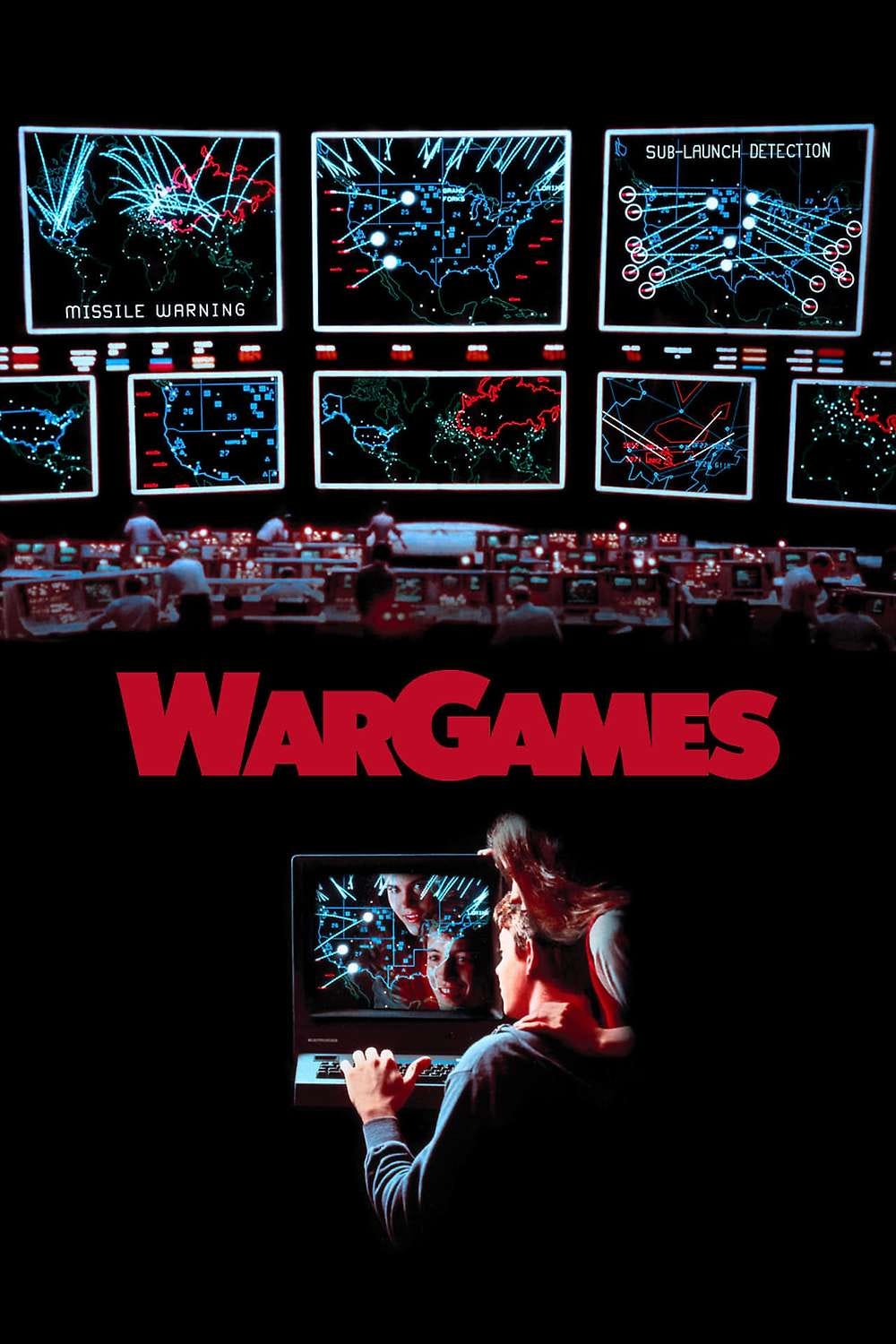
A fairly-low-budget thriller directed by subculture explorer John Badham, WarGames follows the adventures of slacker hacker and high school student David Lightman as he tries to break into a video game company’s server to get an early (and free) look at next season’s real-time strategy games. His antics earn him the attention of the FBI, the Pentagon, and land him right in the middle of a runaway ramp up to nuclear war.
Scriptwriters Lawrence Lasker and Walter F. Parkes go to great lengths to keep things real, introducing the general public to legit-for-the-time techniques in phone phreaking, social engineering, prefix-scanning, and other pre-Internet intrusion and cracking techniques. They then impose upon themselves the hard constraints of game theory at every level of the film (from the metaphorical on down).
This technical precision allows the film to stay grounded and believable even as the stakes escalate to literally apocalyptic levels. The film’s naive point-of-view characters (played by Matthew Broderick and Ally Sheedy) add a sense of gravity and heart to the action, and the net result is simultaneously heart-breakingly endearing and one of the most abjectly terrifying films of the Cold War era.
More importantly for our purposes, the film’s commitment to realism lays upon its characters a burden uncommon in Hollywood films, both of that era and of our own:
They must save the world without the help of script contrivances, idiot plots, stupid villains, or any of the other sorts of plot armor that usually accompanies movie magic.
In this film, nobody gets lucky. It is only by dint of creative thinking applied to nearly-impossible problems that anybody on Earth survives to see the end credits roll.
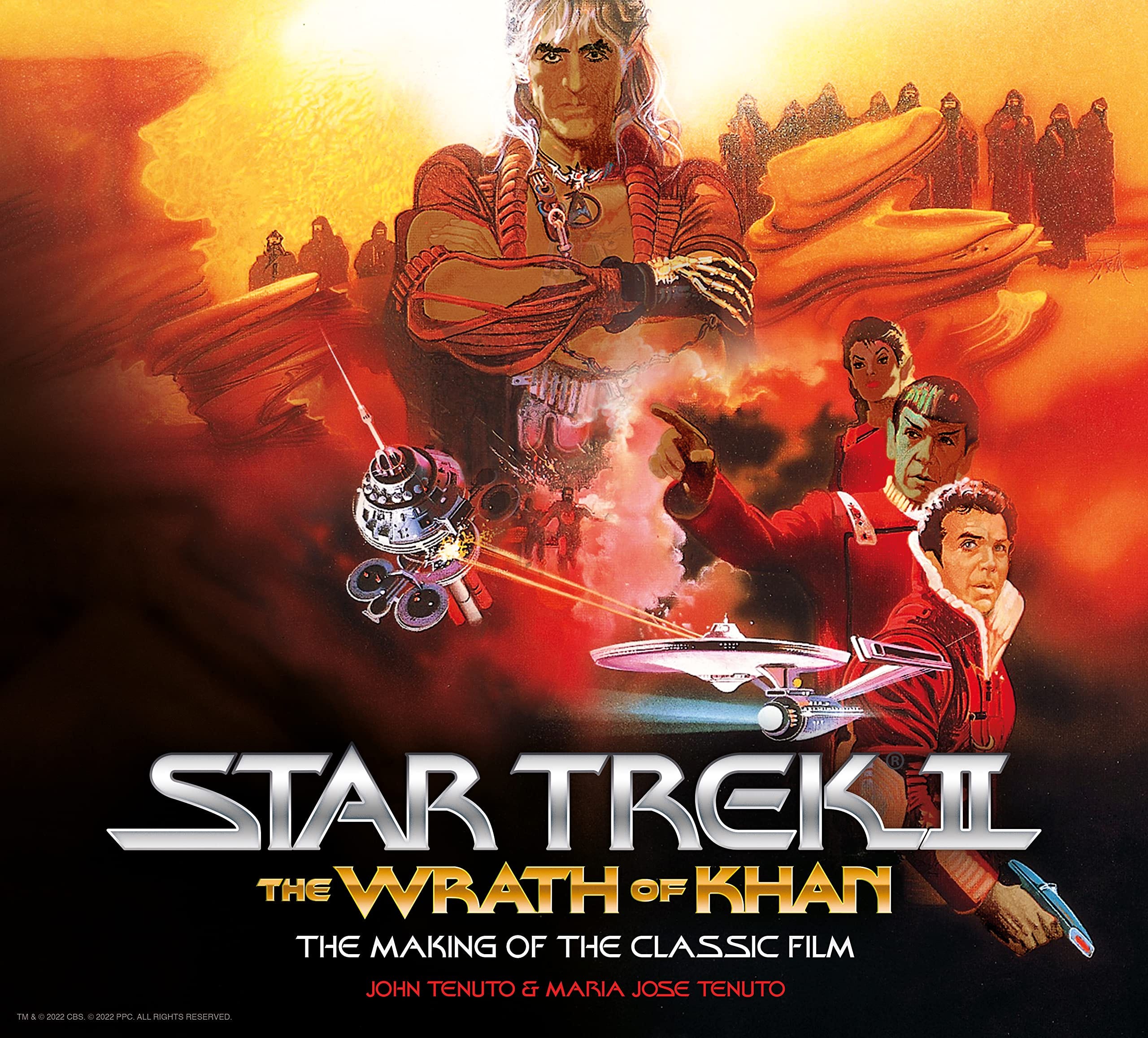
The second (and best) Star Trek film that plays like an old-style submarine suspense film, The Wrath of Khan pits an aging hero in the midst of a mid-life crisis against a super-genius bent upon revenge. With only a crew of trainees and a handful of reliable officers at his disposal, James T. Kirk finds himself ambushed and nearly destroyed by a criminal he long ago sent into exile.
The intensity and stylistic discipline of this film work on every level, stripping the drama down to a central question that gets played out over and over:
When you’re outmatched physically and mentally, how can you hope to win?
When asked by an officer trainee why he’s fiddling around with minor subsystems during a firefight, Kirk tells her that she doesn’t understand what he’s doing because, while she’s memorized all the textbooks and knows how things work, she doesn’t know why things work.
Four times over the course of this film, Kirk finds himself caught in the teeth of the trap set by his in-all-ways superior enemy, and the first three times he pulls a rabbit out of his hat because his experience has given him unusual insight into why things in his world work the way they do.
Kirk’s ability to assess a situation and see through distractions to its underlying reality give him the ability to outmaneuver everyone and everything except his own advancing years. From the beginning of the film he is shown as “old and worn out,” keenly aware of the approach of the decrepitude of old age and mourning his lost vitality and lust for life. He can work his way around every problem in life…but not this one.
And as the plot unfolds, the weight of this exhaustion and depression becomes clearer and clearer until it seems as if, even if he ultimately triumphs over his enemy, he will do so at the expense of the last of his vitality (if not the expense of his life and his ship).
Ironically, the final time Kirk finds himself over a barrel he fails to extricate himself because the only available solution is, to him, unthinkable (literally—it does not occur to him). He’s saved only by someone else being willing to think the unthinkable, because that someone else also knows why things work.
So, in the end, Kirk loses—and, because of that loss, he is finally forced to confront the source of the ennui that has been edging him towards a walking death. In so doing, he finds the victory he most longed for. His last line in the film?
“I feel young.”
In The Wrath of Khan, guile and wisdom are the virtues that save the heroes, because guile and wisdom allow the heroes access to the mechanics of the world they’re in. But even guile and wisdom can’t help them get away clean when that same world is turned completely against them—in the end, the hero’s ultimate redemption comes as a result of his failure to beat the system.
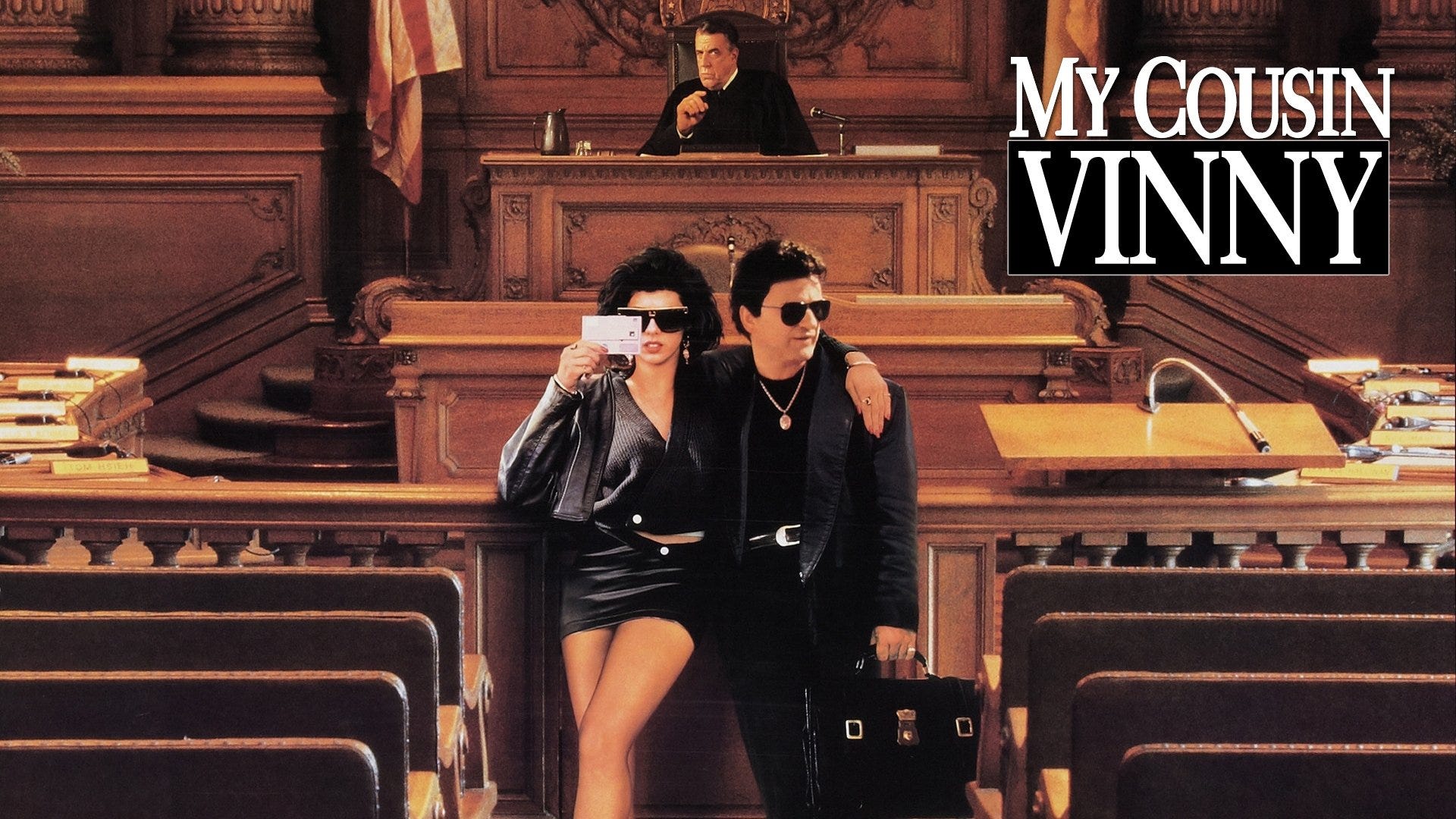
This early-90s legal drama/screwball comedy hybrid begins when a pair of New York college students, due to a combination arrogance, ignorance, and bad luck, get arrested for a murder that they didn’t commit. With no other options, they call in the one lawyer in the family—a cousin named Vinny—who drives down from New York to help them out.
Vinny is a fast-talking mechanic, freshman lawyer, and borderline grifter who isn’t just a fish-out-of-water as a New York Italian in rural Alabama, he’s also perpetually out of his depth as he undertakes his first litigated case of any kind. He finds himself conning the judge into allowing him to practice law in Alabama, fighting hustlers who stiffed his fiance on a bet, and beset on all sides by cultural difficulties and his own ignorance and inexperience. He slides spectacularly into domestic hell as he vents his stress onto his fiancee (who refuses to put up with his bullshit), all while weighed down with the increasingly crippling responsibility of trying to save the lives of his two young-and-innocent friends.
He gets thrown in jail for failing to follow the customs of the court. He nearly blows the case twice by not considering basic rules of procedure and discovery.
All of Vinny’s difficulties in the film stem from a single, unassailable source:
His unwillingness to play the game he’s signed up for.
When he finally figures that out, the reversal in his fortune is swift and sure, as obstacles that would previously have ruined him become the very ladder to his triumph.
Each of these fantastically entertaining pictures belong to a school of filmmaking that almost doesn’t exist anymore: the mid-budget popcorn movie.
By today’s standards, these are all fairly low-budget movies, and their productions are constrained and disciplined. Every dollar of the budget is on the screen, and once you notice that it’s not hard to see how much the production depends on the acting, the writing, and the uniting vision that the director provided.
But the reason they work, they common thread that unites them, is that all of them tell essentially the same story:
The hero is a resourceful, wily sonofabitch who expects to win…but he doesn’t. He resents his problem—the unfairness of it, the indignity of it, the weight of it—and determines not to play the game he’s stumbled into. Through his stubborn resentment he almost destroys everything he holds dear.
Vinny’s early failures are summed up by this monologue, delivered to defend himself against his clients charging him with incompetence for not fighting for a pre-trial dismissal:
“Stan, you’re in Ala-fuckin-bama. You come from New York. You killed a good-ol-boy. There is no way this thing is not going to trial.”
Kirk brags about his unwillingness to entertain the possibility that he can lose, when answering why he cheated at the intentionally-unwinnable command test known as The Kobyashi Maru:
“I reprogrammed the computer so it was possible to rescue the ship. Got a commendation for original thinking…I changed the conditions of the test…I don’t like to lose.”
And David Lightman in WarGames?
When faced with the immensity of the challenge of averting a nuclear war by persuading other humans, this boy who literally hacked into the NORAD mainframe simply gives up:
“I wish I didn’t know about any of this. I wish I was like everyone else in the world, and tomorrow it would just be over. There wouldn’t be any time to be sorry about anything.”
In each case, due to his repeated failures to fix his problem, the hero is brought into a destructive confrontation with his worst enemy: his desperate desire to move the world on his own terms, from the outside. It is only through submitting to the rules of the game that he figures out how to win.
And, most importantly, the rules he submits to are not the rules everyone else is insisting that he should play by. They are, instead, the actual rules of the underlying game.
Vinny finally realizes that the game he needs to win isn’t “charm the jury” or “please the judge”—those are just minor battles in the grander game that centers around a single, straightforward mission: “dismantle the structure of the prosecution’s erroneous case.”
Kirk’s turn comes when, mourning the horrific tragedy that saved his ship, he realizes that in running from the reality of death he has also wound up running from life. He embraces (metaphorically) his own morality by embracing (literally) his hitherto unclaimed son, and in so doing he finds himself freed from the burden of his terror.
David finally wins the day and literally saves the world when he stops worrying about being taken seriously, stops worrying about getting the right answer, and pays attention to the fact that nuclear war is a game, and treats it as such.
See the common thread?
These three films are all films about people struggling against, and then learning to navigate within, fundamental, impossible-to-defeat limits.
This is the fundamental secret lesson that these films teach:
“Take your ego out of the equation and figure out what game you’re playing.”
Life, in all its multitudinous manifestations and inflections, is a game. The game is defined by its fundamental limitations, and those who do well at life are invariably those who figure out how to make the limitations work in their favor. Everyone you know (or who have heard about) who’s “beaten the system” hasn’t actually beaten the system—they’ve just figured out something about the bigger system that “the system” operates within.
Everything you know (metabolism, nature, evolution, religion, economies, governments, neighborhood extortion rackets, etc.) are systems that, themselves, operate inside other systems.
The characters in these movies are characters that had no option but to play the hand they were dealt. They couldn’t cheat. They are faced with problems that they have to understand their way out of, so to speak.
And so it is with all of us, whether we recognize it or not.
Tune in next week for a trio of films that show the secret to living an enjoyable life.
If you’re looking for fresh stories, you can find my novels, short stories, visions, and dreams (along with some how-to books and literary studies) by clicking here.
When not haunting your Substack client, I write novels, literary studies, and how-to books. If you’re feeling adventurous click here to find a ridiculous number of fiction and nonfiction podcasts for which I will eventually have to accept responsibility.
This column is a big part of how I make my living—bigger now due to recent exciting events which you can read about here. Because of this, I’m offering a 20% lifetime discount off the annual subscription rate. If you’re finding these articles valuable, I’d be honored to have you join the ranks of my supporters!
No posts
Comments
Nothing yet. Say the first thing.
Sign in to join the conversation.