
We’re 13 weeks into Trio Logic, a 52-week curriculum tracing the history, form, and evolution of the jazz trio. The full series is reserved for paid subscribers. Each week begins with a free preview—offering a substantial look into the core arguments—while the complete analysis, listening guide, and curriculum thread are available to those who support this work. If you haven’t joined us yet, I would love to have you on board. My goal is to ensure the depth and utility of this series make the investment feel like an easy choice. Your support is what sustains this project, and either way, I am glad you’re here.
June 25, 1961 was not an isolated session. It was the closing Sunday of a two-week engagement at the Village Vanguard, and the trio of Evans, Scott LaFaro, and Paul Motian played five sets that day: two in the afternoon, three at night. Riverside sent an engineer for the occasion. What the tape machine caught was not a lucky afternoon but the endpoint of accumulation, three musicians at the height of a form they had spent eighteen months building together.
Eleven days later, LaFaro fell asleep at the wheel on Routes 5 and 20 between Geneva and Canandaigua, New York. He was 25. The conversation the trio had developed, the specific three-way dialogue that made these recordings unlike anything before them, could not outlast him. Evans didn’t return to a recording studio for ten months.
The trio began with the bassist recruiting the pianist. LaFaro approached Evans in mid-1959 at Basin Street East, having heard the harmonic language on Everybody Digs and understood, apparently on contact, what it would require from a bass player. He suggested Paul Motian, whom Evans already knew from his 1956 debut session. Portrait in Jazz followed that December, Explorations in February 1961. On records, the progression looks orderly. In the rooms, it wasn’t.
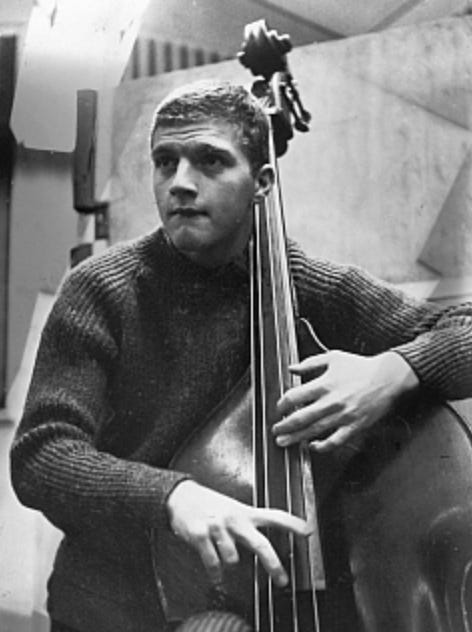
The working reality was thinner than the discography suggests. Evans’s heroin habit kept the gig calendar sparse and the money erratic, and LaFaro, the most in-demand young bassist in New York, filled the gaps with other people’s music: Ornette Coleman’s Free Jazz that December, tours with Stan Getz, sessions with Booker Little. He didn’t fill them quietly. At the Explorations session in February 1961, LaFaro was blunt about his reluctance to tour behind a leader who was a junkie, afraid of being stranded somewhere when the habit won. The two argued that day badly enough that the tension is part of the session’s lore. This is the part the reverence tends to sand off: the most telepathic trio in jazz history was, off the bandstand, a fragile arrangement held together by what happened on it. The Vanguard fortnight that June was rare sustained work, and by its final Sunday the band had a run of consecutive nights behind it that their studio records never had.
The recording itself was modest in scale. Engineer Dave Jones set a portable Ampex machine on a table beside the bandstand, close enough to catch the room. During the first take of “Gloria’s Step,” the power failed and cut the tape mid-performance; the fragment survives on the 2005 complete set, a reminder of how near we came to none of this existing. And the complete tapes preserve something the two original LPs edited around: an audience that talked, ordered drinks, and clinked glasses through all five sets. The most studied afternoon in jazz trio history was, to most of the room that heard it live, pleasant background music. Nobody knew. Not the crowd, not Riverside, not the three musicians packing up that night with eleven days left. That is part of what the tape documents: how greatness actually arrives, unannounced, into rooms that are half listening.
Comments
Nothing yet. Say the first thing.
Sign in to join the conversation.