
If you’ve followed me for any amount of time, you’ve probably noticed I’m a huge cheerleader for Substack.
I genuinely believe it’s one of the best platforms creators have access to right now. I’ve seen what it’s done for my own business, and I’ve watched clients use it to build audiences, launch offers, and create meaningful revenue.
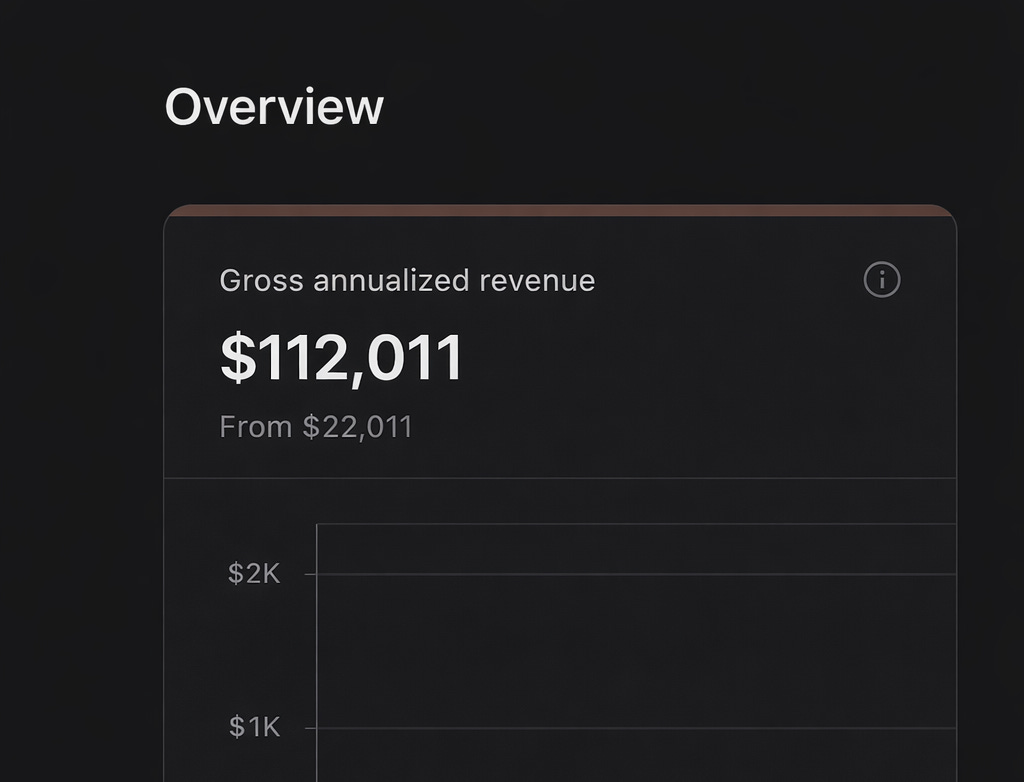
But I think we’ve accidentally started focusing on the wrong thing.
Scroll online and you’ll see screenshot after screenshot of people making thousands of dollars every month from paid subscriptions.
And don’t get me wrong… that’s valuable.
Monthly recurring revenue is one of the best types of revenue you can build.
But those screenshots only tell part of the story.
They show subscription revenue. (Many of those screenshots also annualize monthly recurring revenue (ARR), which can make the numbers look much larger at first glance, but that’s a conversation for another day.)
They don’t show the consulting client who found you because of an article.
They don’t show the speaking opportunity that came from someone binge reading your work.
They don’t show the course sales, partnerships, products, software, or businesses that were built because people spent enough time with your ideas to trust you.
That’s the part nobody talks about.
Making money from subscriptions is part of the equation. The real opportunity is everything those subscriptions and that audience make possible.
So let’s talk about it…
I’ve mentioned this before, but the reason I love Substack has very little to do with one feature.
It’s because of what happens when you combine all of them.
What normally requires several different paid platforms now lives in one place.
Blog instead of WordPress
Newsletter instead of Mailchimp or Kit
Paid subscriptions instead of Patreon
Podcast hosting instead of Riverside
Community chat instead of Telegram
Notes, which acts as its own social network and discovery engine
Video content, which is another distribution channel
For a lot of creators, that’s hundreds of dollars a month in software.
“So what’s the catch?”
Substack takes a percentage of paid subscriptions.
Personally, I think that’s a fair trade.
Because here’s the part I LOVE…
You still own your subscribers.
If you ever decide to leave Substack, your email list comes with you.
You’re building an asset, that you OWN.
One of the biggest mistakes creators make is treating social media like an asset when it’s really a distribution channel.
Social media is incredible for discovery, but it’s borrowed. Algorithms change, reach fluctuates, platforms evolve, and sometimes accounts disappear altogether. You can spend years building an audience and still have no guarantee they’ll see your next post.
Email works differently.
When someone gives you their email address, they’re choosing to continue the relationship. They’ve invited you into a space they check every single day, regardless of what Instagram, TikTok, or YouTube decides to do next.
That’s why I’ve always believed emails are like currency.
The more trust you build with that audience, the more valuable it becomes. Not because you’re constantly selling to them, but because you’ve consistently shown up with something worth opening. Over time, that relationship becomes one of the most valuable assets in your business.
There’s a reason so many online businesses generate around 30% of their revenue through email. It’s one of the few marketing channels you actually own.
Traditional email marketing usually sounds like…
“Buy now.”
“Here’s our latest sale.”
“Don’t forget.”
Newsletters feel different.
They’re built around value.
“Here’s what I learned.”
“Here’s what’s working.”
“Here’s something I’ve been thinking about.”
That’s why newsletter open rates are often dramatically higher than traditional marketing emails.
Healthy open rates on newsletters are often 30 to 50%.
Some creators regularly see 60%.

Why does that matter?
Because more people are actually seeing your work.
Compare that to Instagram, where organic reach is often around 10%.
If you have 5,000 followers, maybe 500 people actually see your post.
Email gives you direct access.
Outside of SMS, there really isn’t another channel that offers that kind of reach.
Articles create something short form content simply can’t: depth.
A seven second Reel can introduce someone to your work, but an article gives them the chance to spend time with your ideas. They begin to understand not only what you know, but how you think, how you solve problems, and what you believe.
Think about the creators, authors, or business owners you trust the most. Chances are it wasn’t one Instagram post that earned your trust. It was time. You listened to a podcast on a walk, read an article over coffee, or found yourself coming back because every piece of content taught you something useful.
That’s how trust is built.
And trust is what drives sales. (or at least should)
Whether that’s a product, a service, a paid subscription, or someone referring you to an opportunity, people buy from people they trust.
Long form content gives you the space to earn that trust in a way short form simply can’t.
Every week I try to give away something genuinely useful. Sometimes it’s a business lesson. Sometimes it’s a system that’s helped me. Sometimes it’s a behind the scenes look at what I’m building in real time. Other weeks it’s simply an idea I can’t stop thinking about.
If someone trusted me enough to give me their email address, I want every email they receive to feel like a worthwhile exchange. I want them to leave with an idea they can apply, a new perspective, or something that helps them build a little better than they did yesterday.
Paid subscribers are a little different.
I don’t see paid subscriptions as paying for more articles. They’re paying to shorten the distance between having an idea and taking action.
The subscriber chat has become one of my favorite parts of this platform because it’s where 1:1 conversations happen. People ask for feedback on offers before they launch them, workshop business ideas, talk through decisions they’re wrestling with, and get another set of experienced eyes before they spend weeks going down the wrong path.
Sometimes all someone needs is a quick conversation to get unstuck. Other times it’s knowing they have someone in their corner who’s built businesses before and is willing to help them think through the next move.
To me, that’s the real value.
Not just another piece of content, but access to over a decade of experience while you’re building your own.
P.S You can finally see some of what i’ve built over the last decade here.
They’re one of the best nurturing tools you can create.
Every article gives someone another opportunity to spend time with your ideas. As that library grows, so does the trust you’ve built with your audience. That’s why I think of every article as its own micro funnel. It isn’t there to hard sell anyone. It’s there to educate, build credibility, and naturally guide someone to the next step if and when they’re ready.
Maybe they discover your podcast.
Maybe they join your community.
Maybe they enroll in a course six months later.
Maybe they hire you a year from now after reading a dozen articles.
Every article has the potential to start a relationship that continues long after the day you hit publish.
That philosophy is also the reason people always ask me how I create so much content.
Everything starts with writing.
Writing forces me to slow down and fully develop an idea before I try to teach it anywhere else. Once I’ve written the article, the rest is duplicated. The same idea becomes a podcast episode, Instagram posts, Reels, Notes, Threads, LinkedIn content, emails, and short-form videos.
Instead of constantly asking myself what I should post next, I’m simply finding different ways to teach the same lesson.
One idea can support weeks of content when it’s developed deeply enough.
I’m not building Substack as the business.
I’m building it as part of the foundation underneath my business.
The articles build trust.
The trust builds relationships.
Those relationships create opportunities that extend far beyond subscription revenue.
Consulting clients, partnerships, speaking opportunities, product sales, and course enrollments have all started with someone reading an article.
That’s why I don’t measure the success of my publication by subscription revenue alone.
Every article becomes another asset. Another opportunity for someone to discover my work six months from now instead of only today. Another chance to build a relationship with someone who may eventually become a client, customer, collaborator, or simply someone who shares my work with another person.
That’s what makes this such a long-term investment.
If you’ve made it this far, my guess is you’re not just curious about Substack. You’re probably thinking about building one yourself.
My hope is that this changes the way you think about Substack. Not as a place to chase subscription revenue, but as a place to build an audience, a body of work, and a business that stacks over time.
If you’re looking for a simple guide to help you build your own publication, I put together an 8 Day Build Series right here on Substack. It’s designed to walk you through the foundations step by step, and you can start it here:
Thanks for reading Behind the Build! This post is public so feel free to share it.
No posts
Comments
Nothing yet. Say the first thing.
Sign in to join the conversation.