
On the morning of June 30, 1956, two airliners departed Los Angeles just minutes apart. It was the type of morning that rafters on a photography expedition love: blue skies accentuated by dramatic white thunderheads building over the plateau, the canyon walls aglow in the morning light.
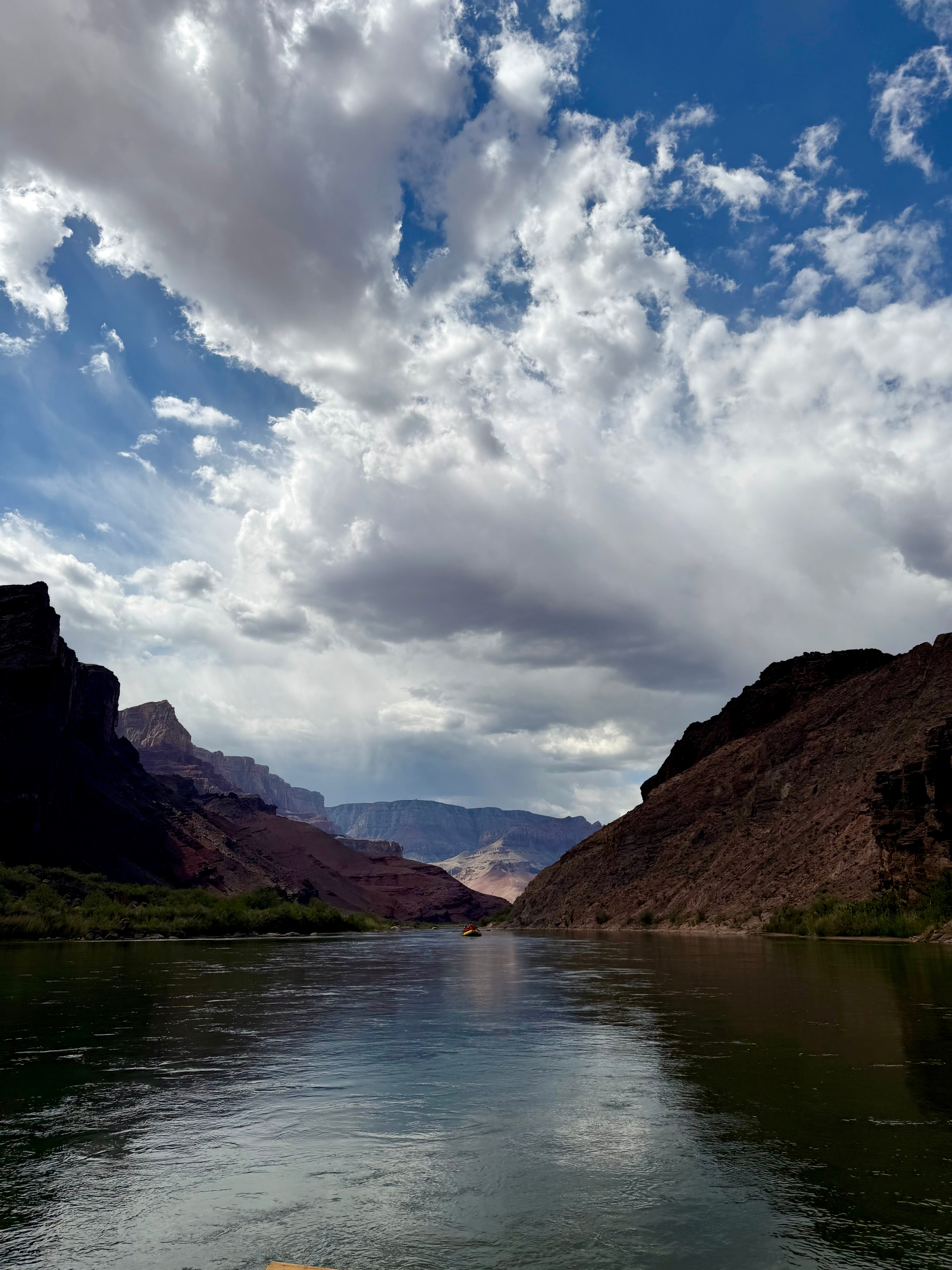
Though radar coverage was limited and, in some airspace, pilots were responsible for “see and avoid” separation, it was not uncommon for pilots to try to offer passengers a view of one of the most remote and spectacular sections of the canyon, at the convergence of the Little Colorado River and the Colorado River.
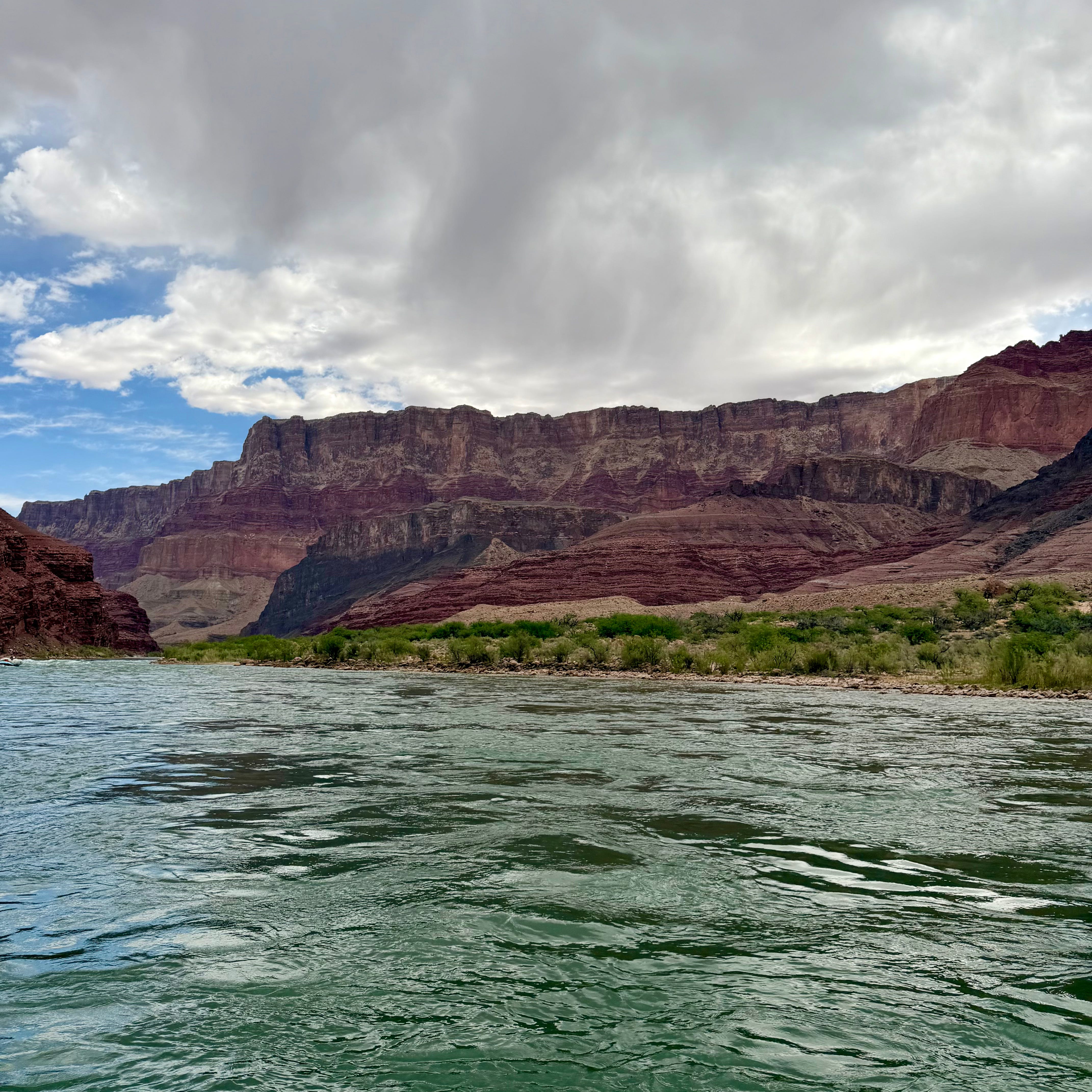
That morning in the skies over northern Arizona, United Flight 718 was cruising at 21,000 feet. TWA Flight 2 requested and received permission to fly just above the cloud level, near 21,000 feet. An investigation would later show, perhaps due to partially obscured visibility, that even if one or more crew members had spotted the other aircraft, it would have been too late for an evasive turn.
At 10:32 a.m., the two aircraft converged over the canyon and collided, killing all 128 people aboard. It was the first commercial aviation accident to claim more than 100 lives. The shocking crash revealed many flaws in the U.S. air traffic control system, and led to the creation of the Federal Aviation Administration in 1958.
From my journal:
Morning, Day 6 - A group returned to the LCR (Lower Colorado River) at 4:30 am for a 5:30 sunrise. I woke at 4:30, but decided to sleep in—until a luxurious 6:15. My hands are still very swollen, especially the right one. I can barely see my knuckles. (I showed Bugs later, but he was unconcerned, so I took an Aleve and tried not to think about it.)
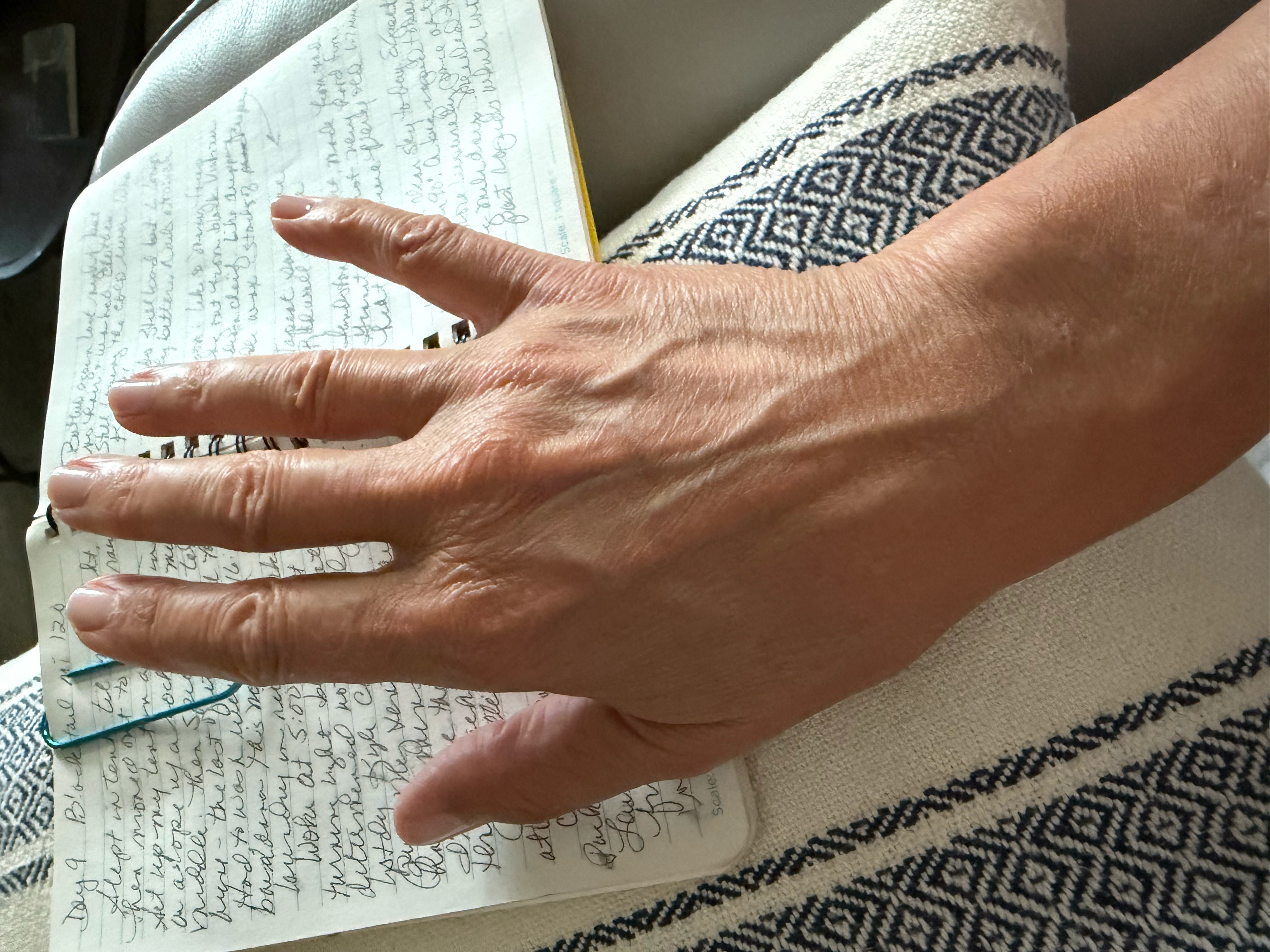
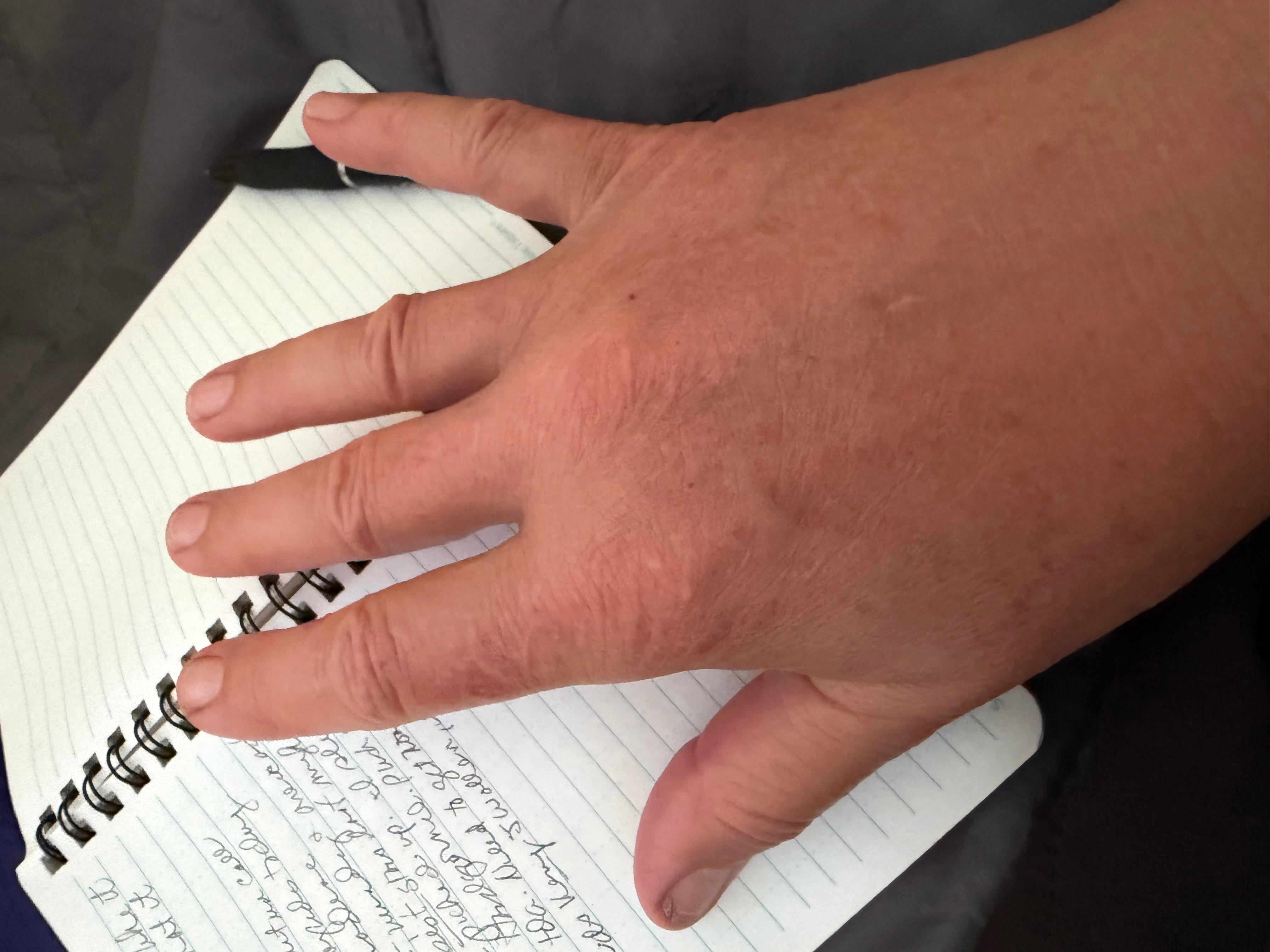
8:00-12:00 on the river. We passed the site of the tragic 1956 plane crash just after pulling out of camp. Kyle looked for flashes of metal high along the cliffside where debris remains to this day.
At Mile 64, the Great Unconformity first appears. I am delighted that we have three actual geologists in our group, so there is always someone nearby I can ask about what I am seeing.
Thanks to my rock-loving travel companions, I now know (among other things) that the Great Unconformity is one of Earth’s most famous geological features and that the Grand Canyon is one of the best places on the planet to see it.
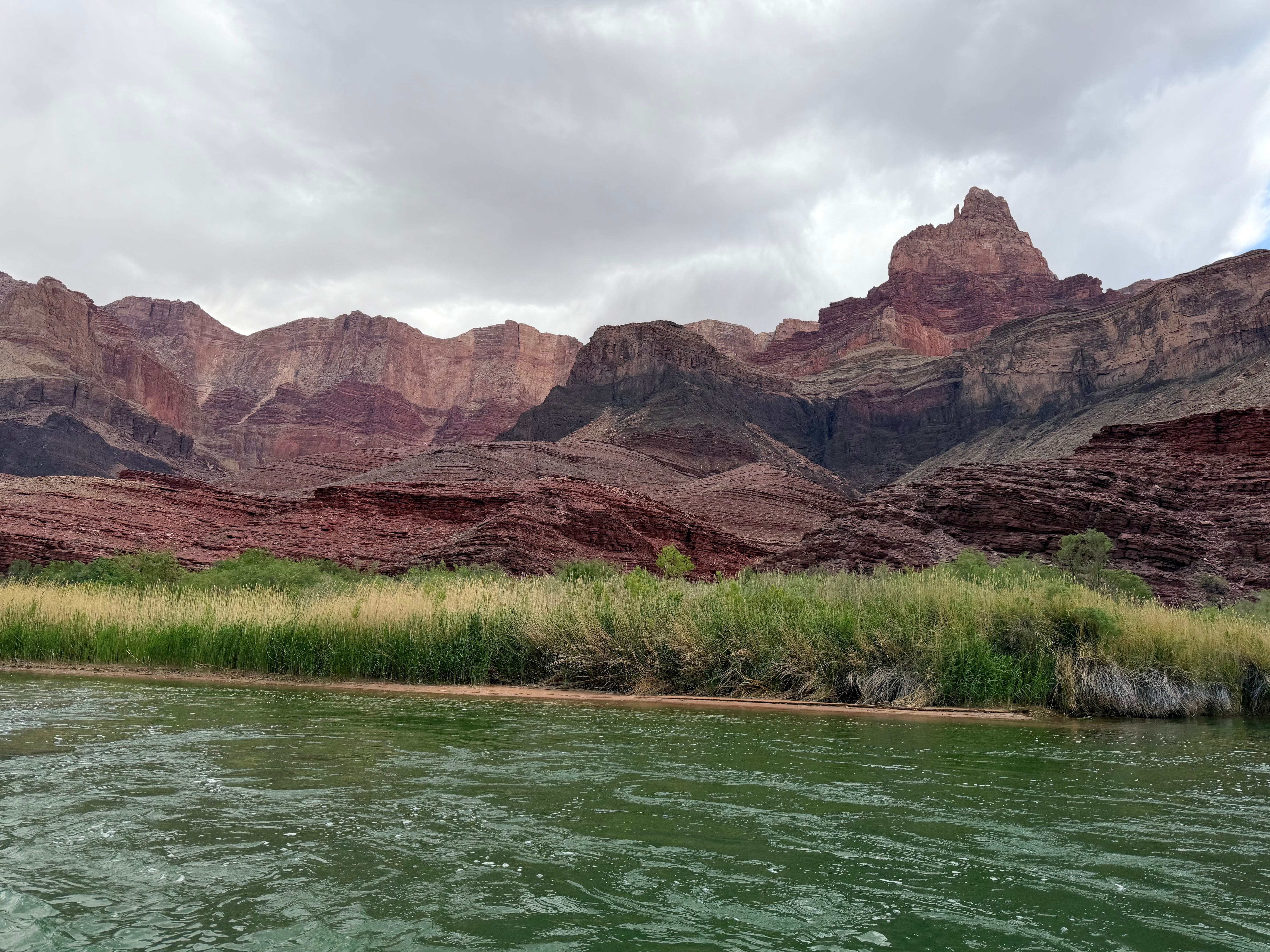
Simply put, it is a gigantic gap in the rock record—where hundreds of millions, and in some locations (right here!) more than a billion, years of Earth history are missing. Notice the vastly different layers in this photo:
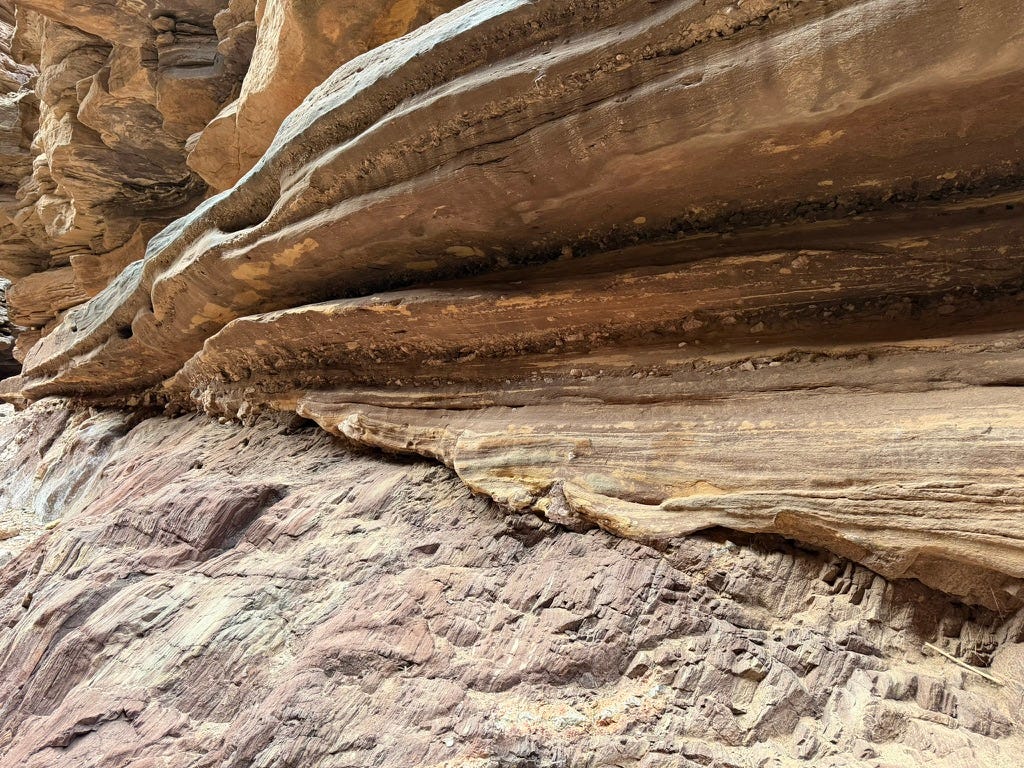
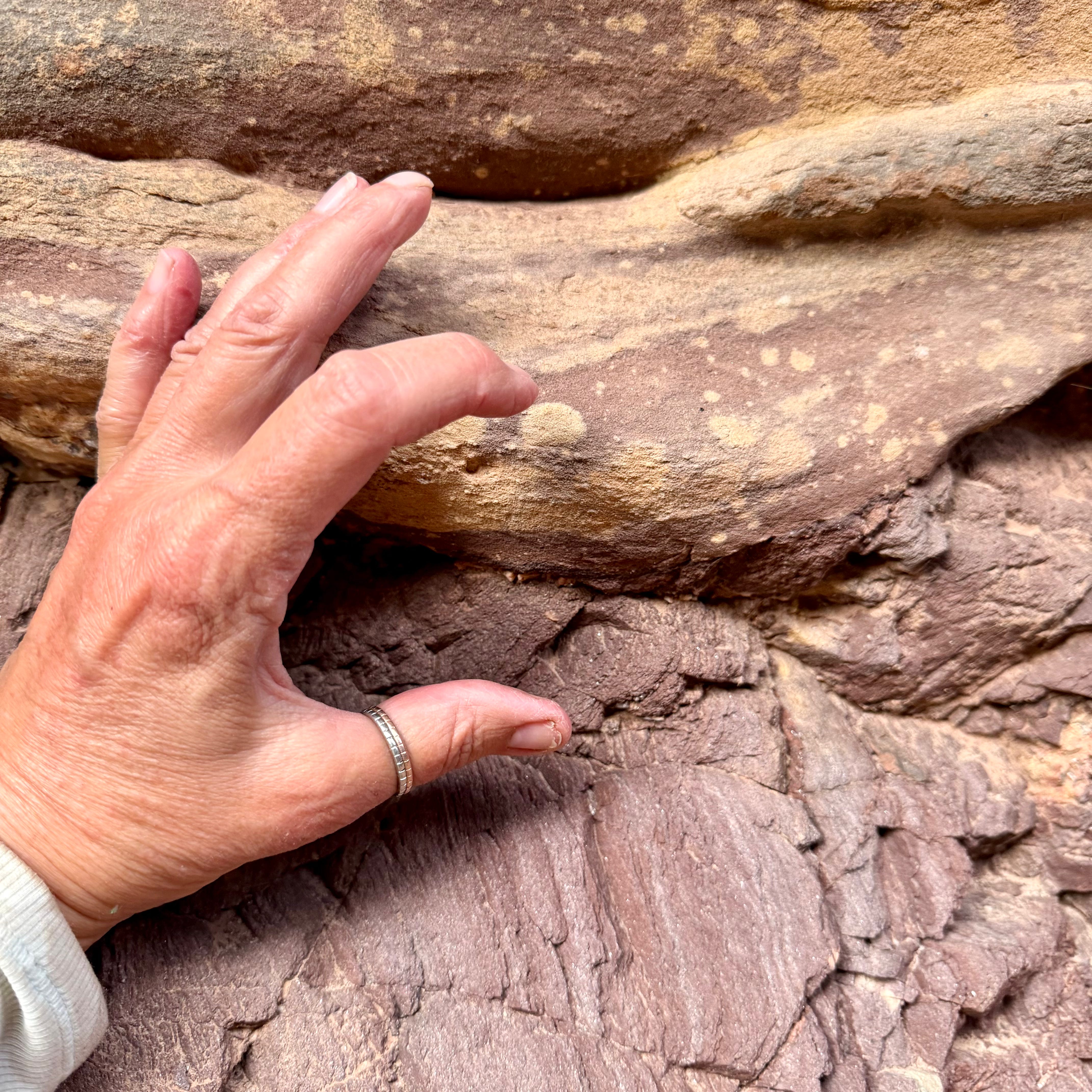
The Vishnu basement rocks are about 1.7–1.8 billion years old, and the Tapeats Sandstone was deposited about 525 million years ago. You don’t need a calculator to realize that roughly 1.2 billion years of geologic history are absent.
I’m jumping ahead a couple of days in my photo album, but the following photo represents 1.2 billion years between my fingers. (A little cheesy, maybe, like balancing the Tower of Pisa on your palm, but I had to do it.)
Later in the day, we planned to hike to the ancient ruins at Unkar Delta at Mile 72, but were prevented from doing so by a private party with poor beach etiquette who had left their boats to hike. They had strung their rafts and kayaks along the entire beach, leaving no room for our group to pull in. If not for their carelessness (which I assume was unintentional, but still disappointing!), we would have seen the largest known prehistoric settlement along the river, a rare place where the Cohonina and Puebloans successfully farmed and raised families from AD 950-1150. (Oh, well. Maybe next time.)
We made camp at Upper Rattlesnake. There had been a few raindrops on the river, and we were expecting a storm. For the first time, a pile of tents made an appearance at river’s edge. Thanks to Bruce and Turner, I, too, was able to pitch a proper tent.
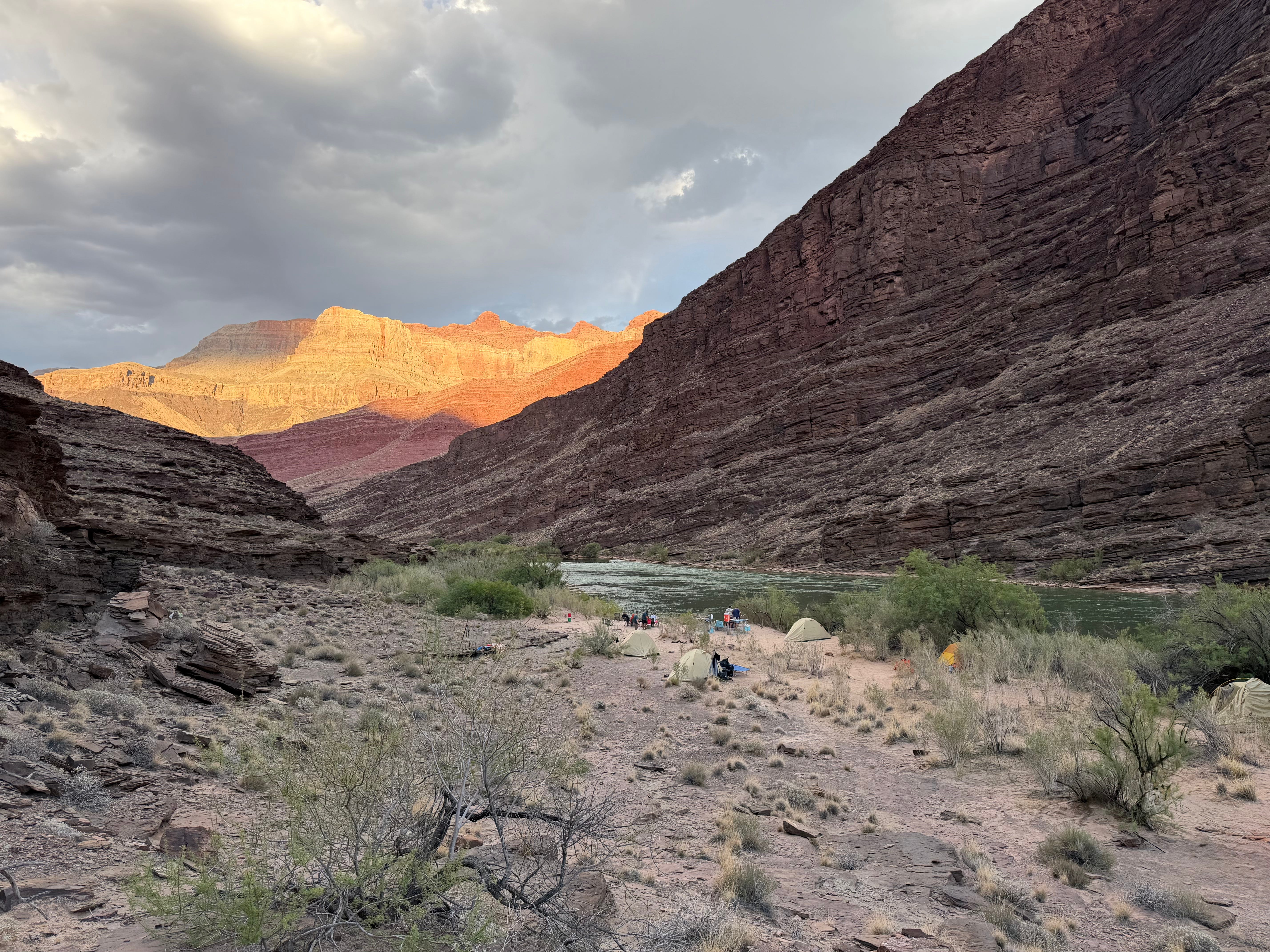
2:00 pm - I am in my tent waiting for rain. I hear thunder in the distance. Only a few half-hearted raindrops have fallen so far, nearly evaporating on their descent before spattering weakly and disappearing into the parched ground.
3:15 pm - Still no rain. I am dozing comfortably in my tent while Kyle plays the viola from his boat. It is dreamlike. The sky is cloudy but not terribly dark. The music blends with the wind, and both are carried along the cool current.
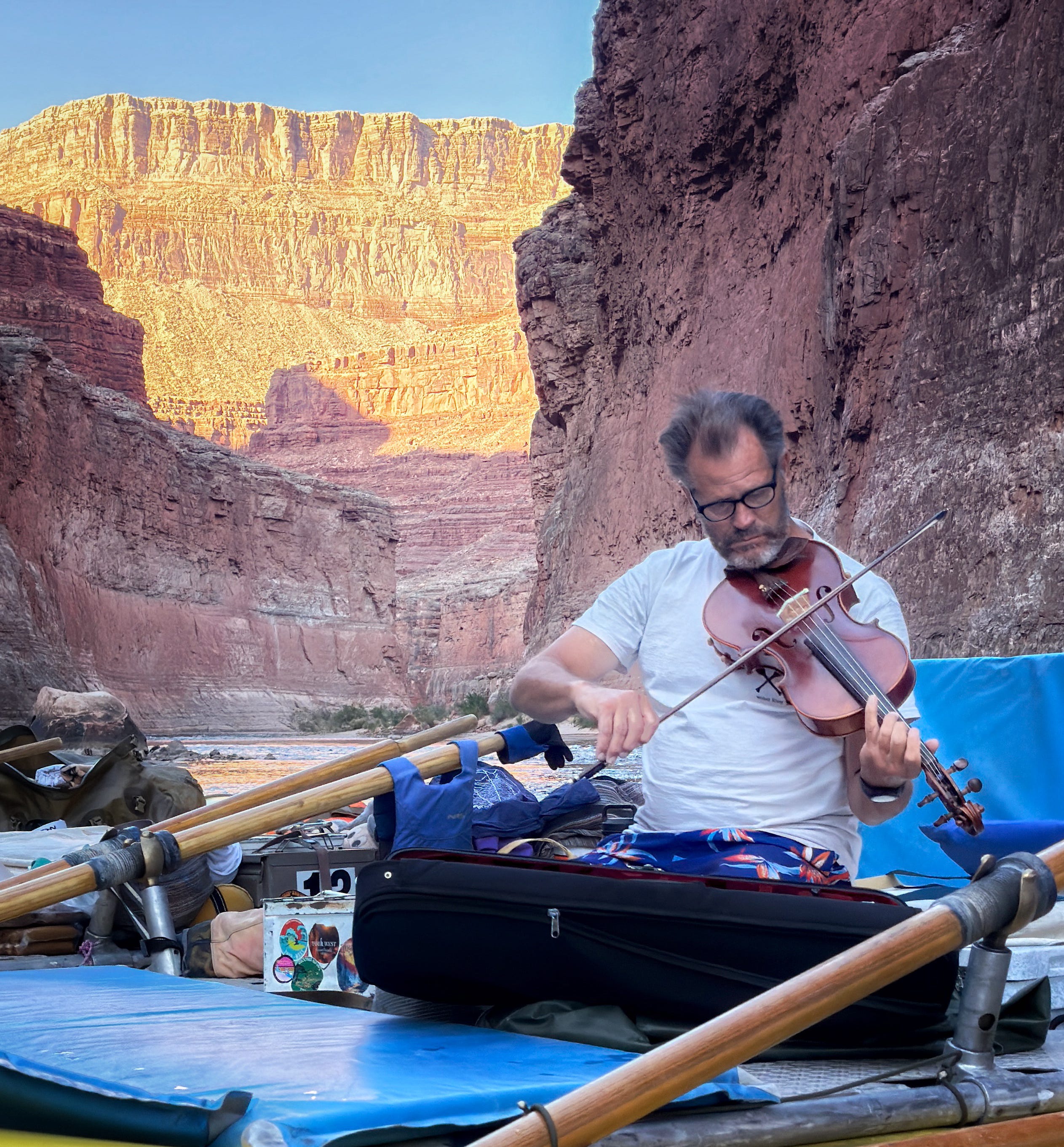
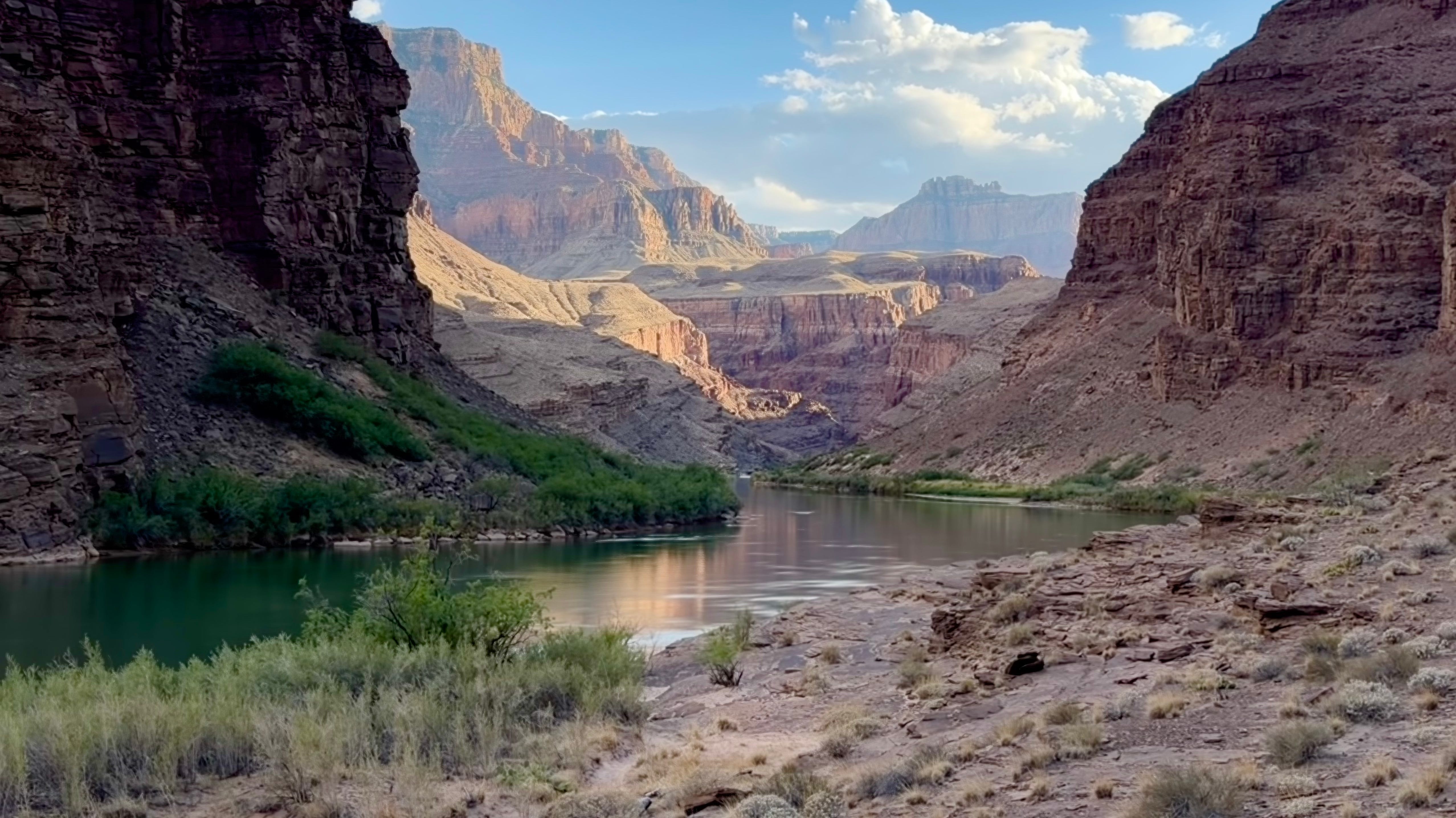
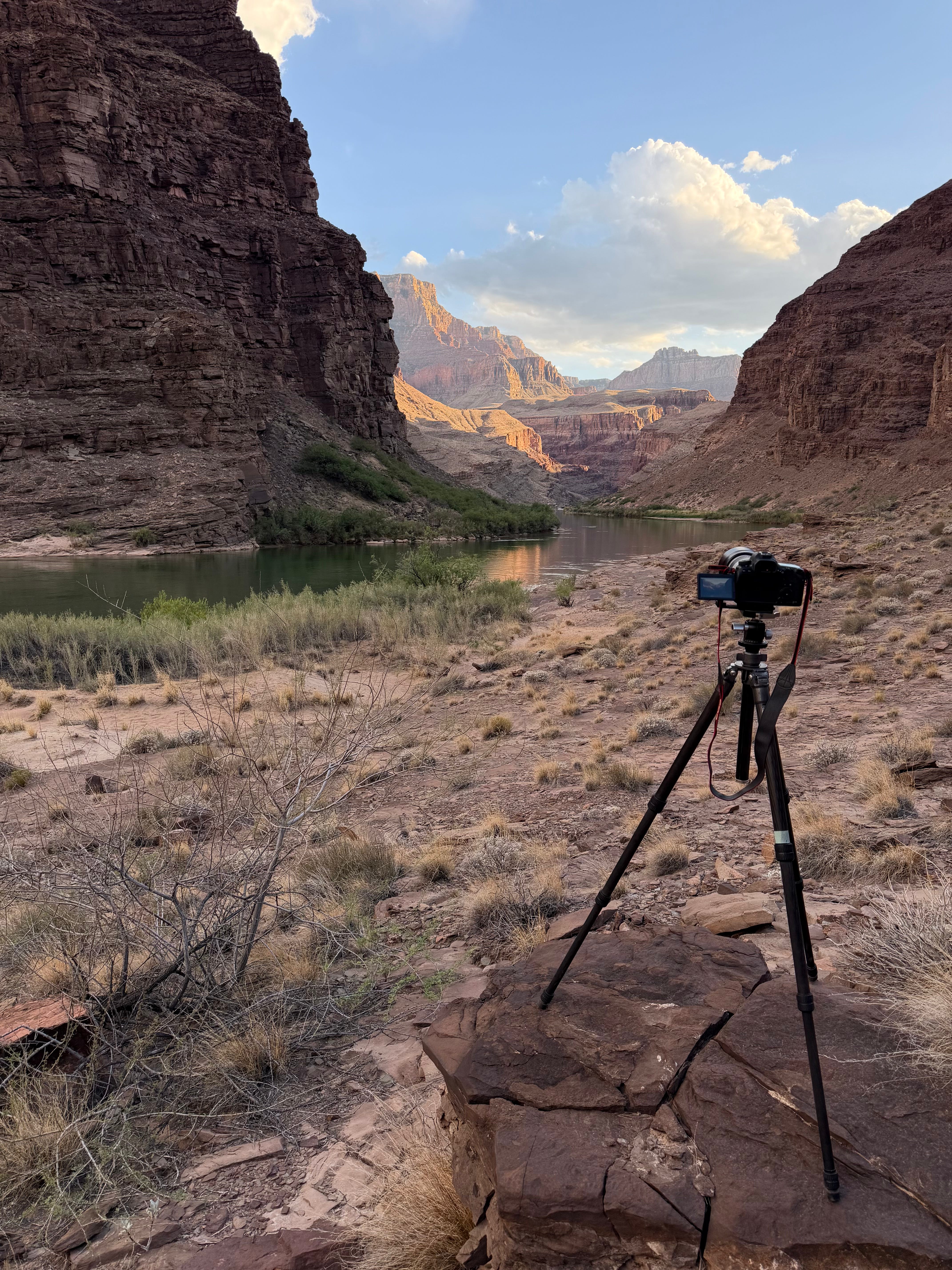
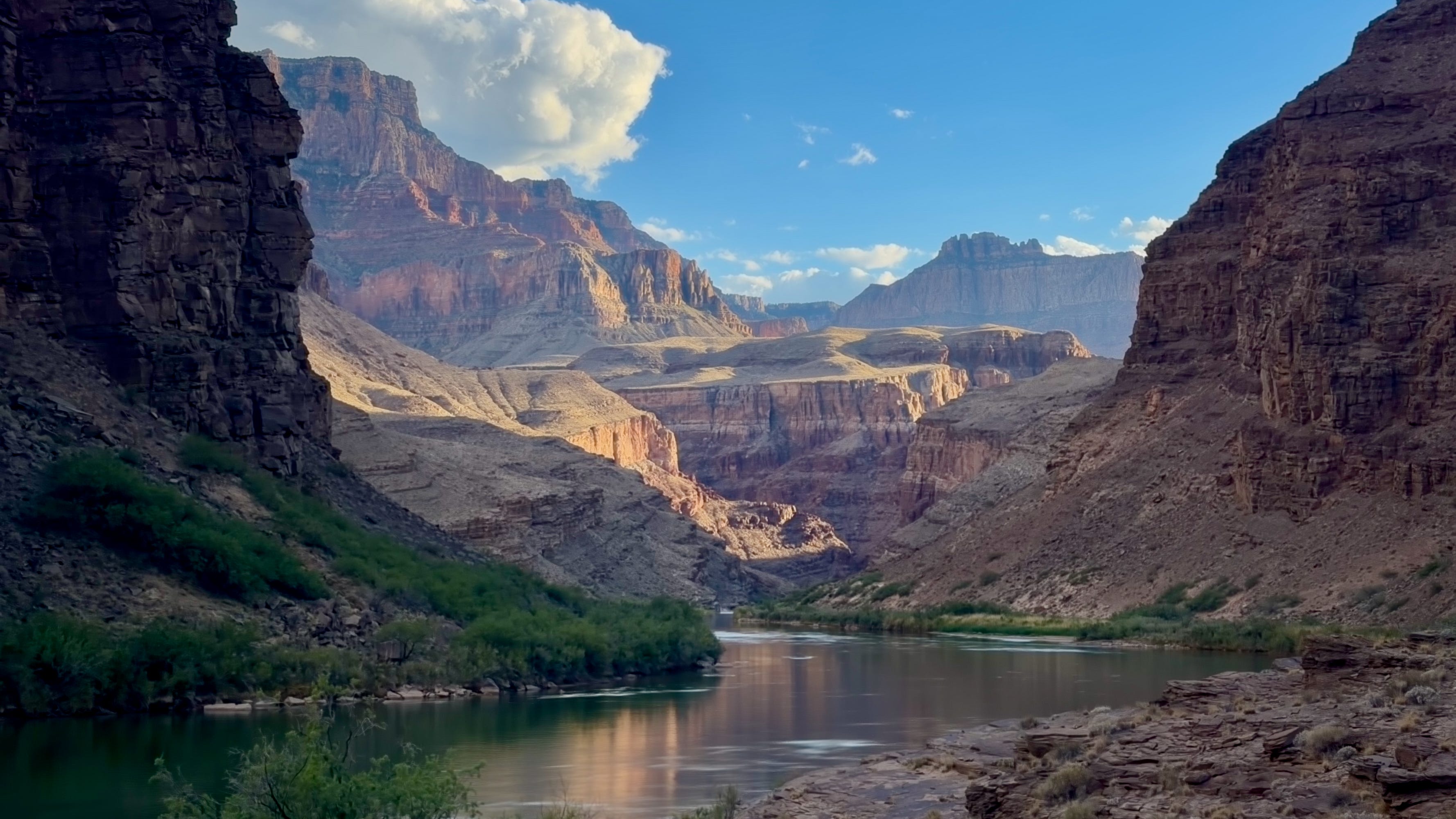
Before dinner, we wander around the area, and Bruce finds a nice composition looking downriver.
About the food and the people who prepared it:
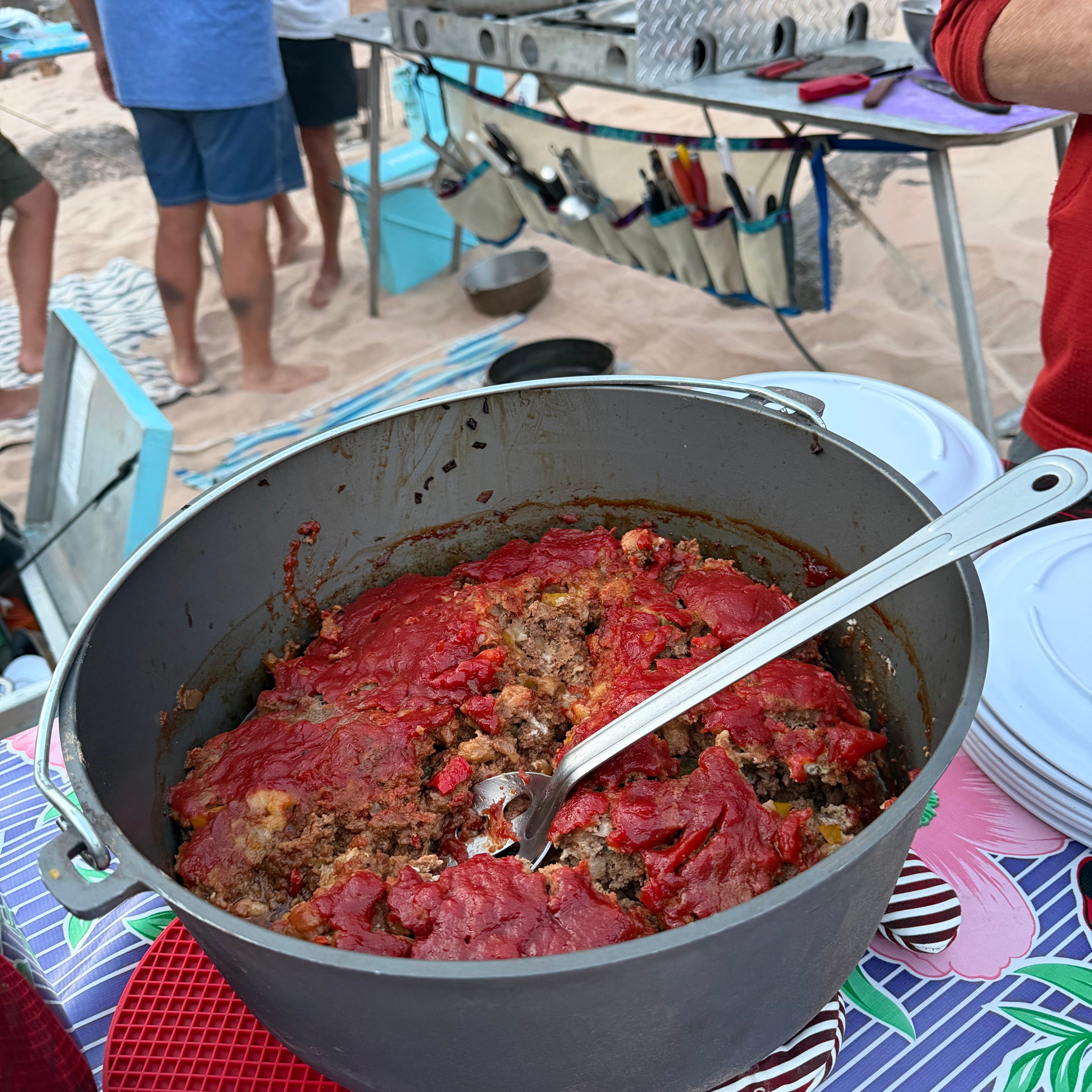
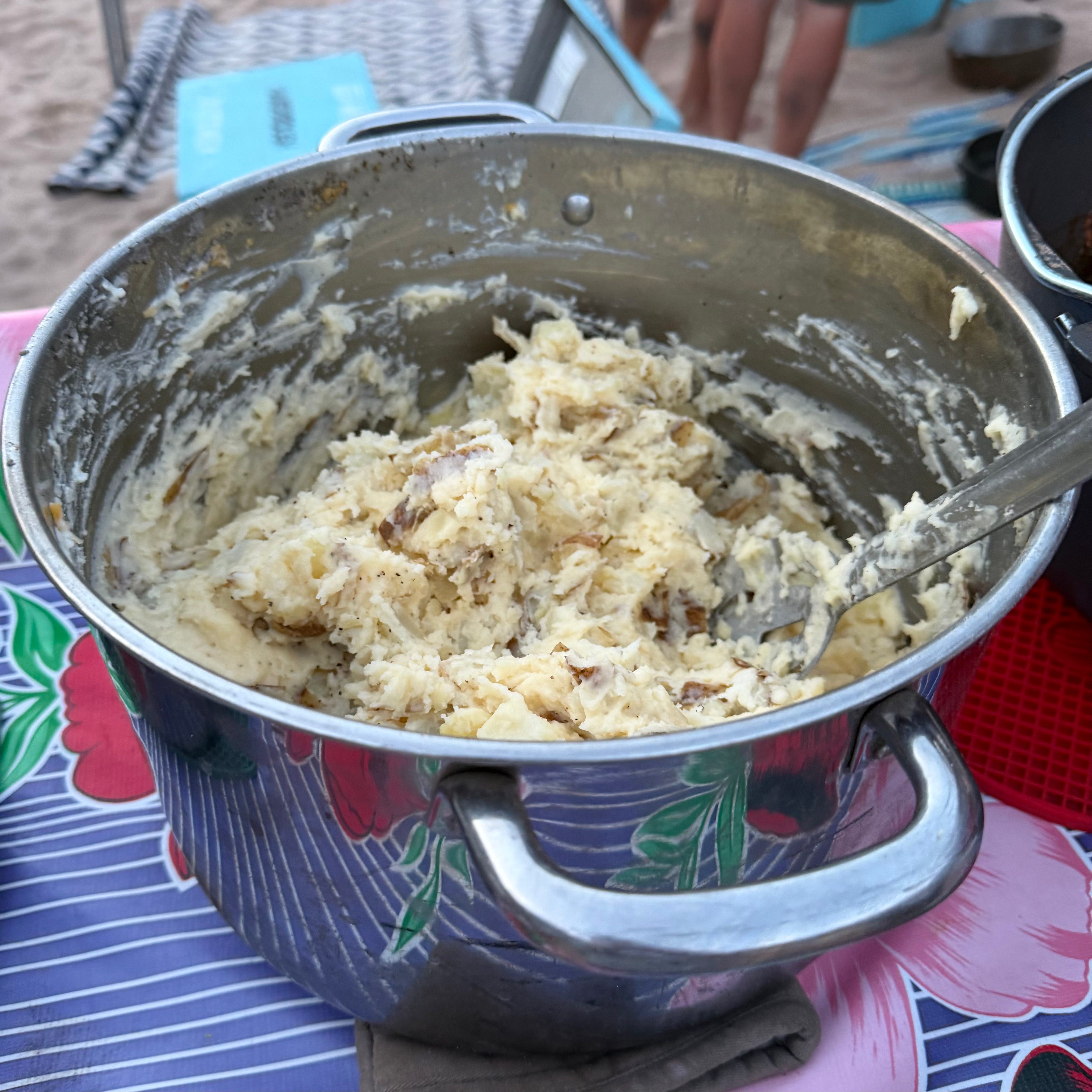
One comfort that we were never short of was an abundance and variety of really good food. Tonight, we will have steaks cooked to perfection over an open fire. Other menu items were burgers and brats (previously mentioned, along with the best damn brownies EVER!), mouth-watering meatloaf (Alex’s creation, I believe) served with green beans and cucumber salad, Bugs’ chicken curry (I could’ve eaten that for three days straight), BBQ chicken, some sort of Italian pasta dish ala Kyle, similar to lasagna, with amazing garlic bread and salad, Mexican with all the fixings, and more.
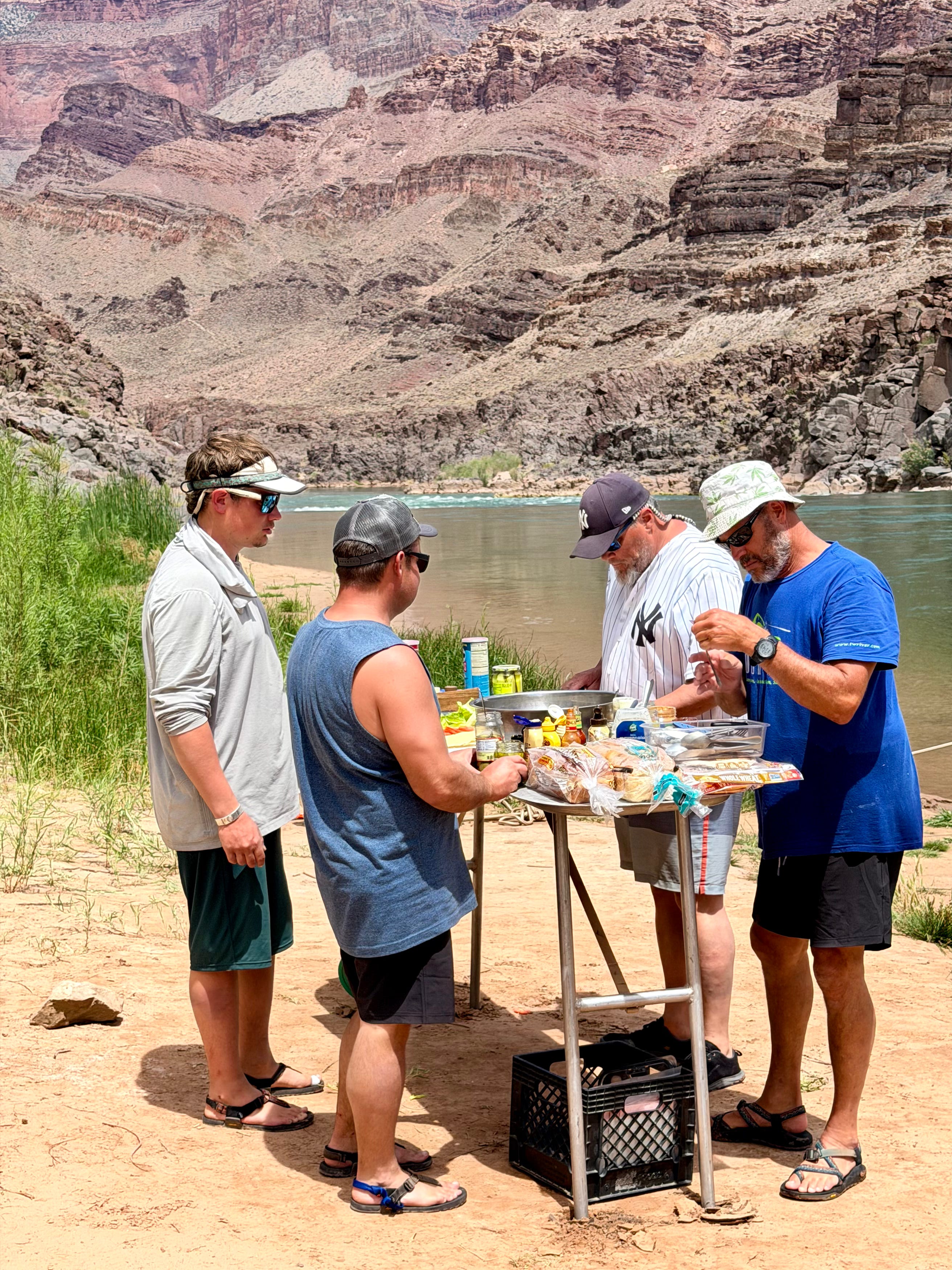
The four boatmen, along with our Wonder Woman of a swamper, Amanda, not only worked from dawn hauling and securing everything we needed—the food, kitchen gear, stoves, chairs, shade tents, cots, and, of course, the groover—but they also rowed a raft or drove the motorboat all day long, THEN set up the kitchen each afternoon, served us a happy hour snack, fetched us our personal cold drinks from the community cooler, cooked dinner (cheerfully) and made dessert (usually a Kyle-creation, peach cobbler and the aforementioned kick-ass brownies stand out in my memory), washed all the pots and cooking gear, AND cooked and cleaned up after breakfast AND led the hikes, AND socialized with us in the evening, AND graciously answered all my annoying questions at all hours AND basically tended to our every (reasonable) need. (They did not carry my gargantuan dry bag to and from my campsite—my only complaint.)
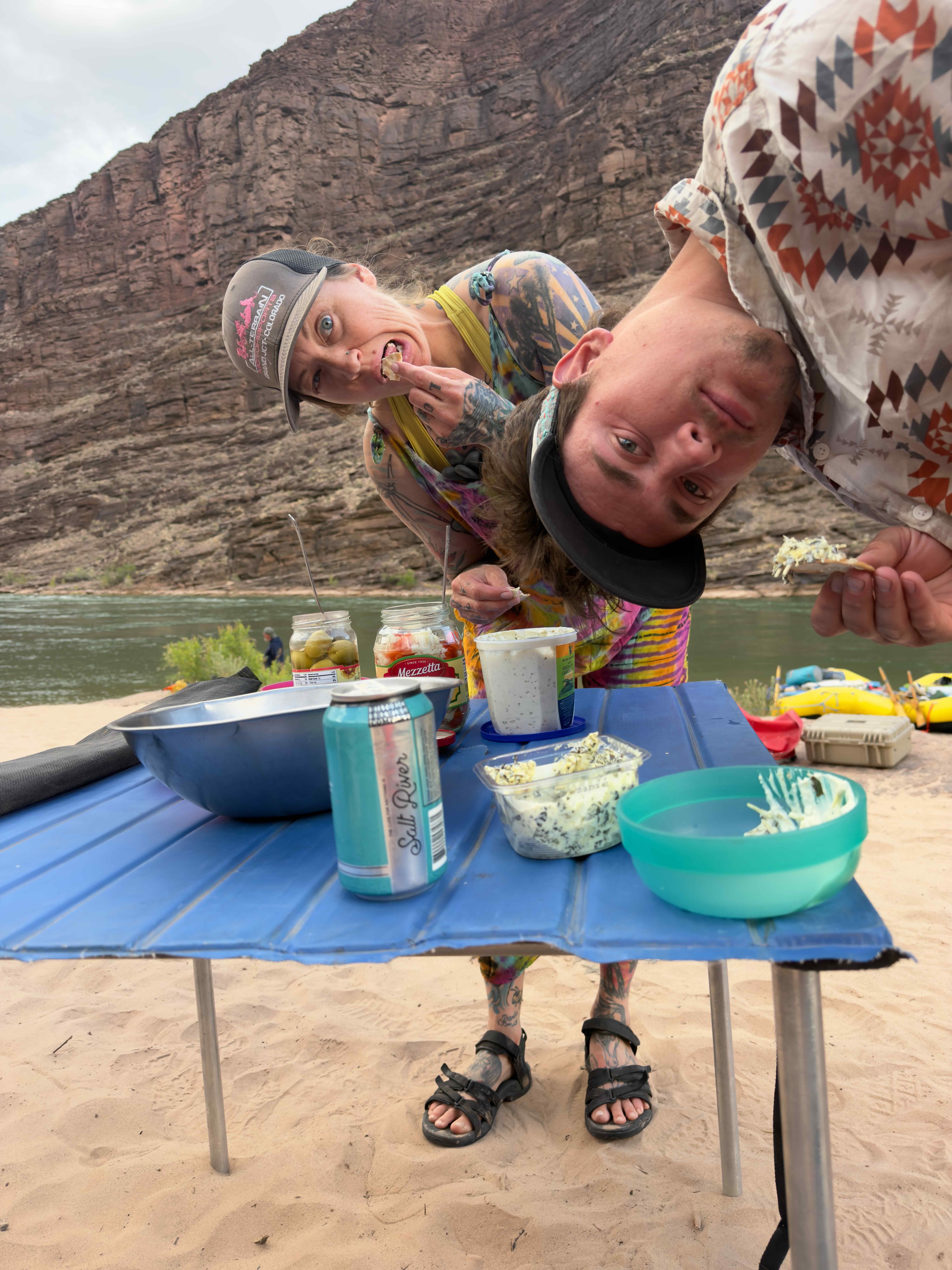
In short, they did everything in their power to create a magical, memorable experience. I think I speak for everyone when I say they did that and more.
Thoughts at day’s end: A boulder sits at the edge of the river where it landed after rolling down. . .from where? When? 100 years ago or 100 million? Time stands still here. The river flows. The clouds drift and roll. The wind is either gentle and warm, or blustery, or the perfect amount of cool on your skin. These things are real. These things connect us to this place. They have always been here, and they have always been changing. Since the beginning. And when was that? How many feet have stood in this sand where I am standing now? How many prayers have been released into this same dust? How many joys celebrated and deaths mourned?
I look around and see stone that has been here for millions of years—billions of years—and that will be here for longer than my mind can comprehend. I can walk up to it and touch it. And I do.
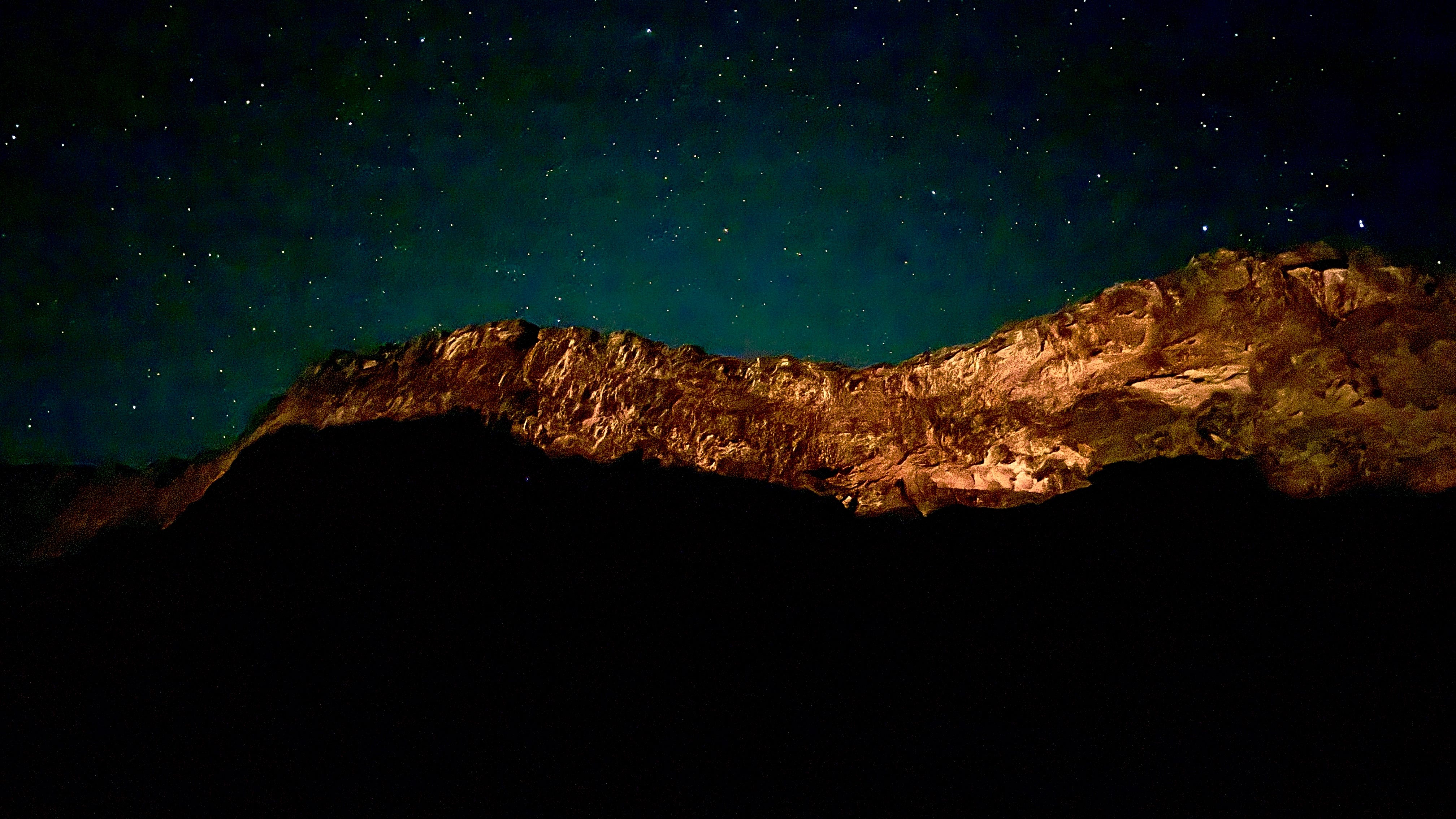
The canyon is on me and in me. It is literally disintegrating around me, and the fine dust of its demise settles everywhere. My hands feel like sandpaper—no, like they’ve been sandpapered. They burn, and nothing soothes them. Still, I am happy and content.
One last tidbit: Just downstream from Unkar Delta is Nevills Rapid (Mile 75), named for Norman D. Nevills. Nevills started commercial river trips in the canyon in 1938. He is known to have bragged, “I never flipped a boat.” The true river runners say it’s because he never rowed a rapid. Rumor has it that he would get out and walk along the shore. Unlike our talented boatmen who go by the adage, “You either have a good run or a great story,” Nevills might have been a wimp overly cautious. I bring him up for two reasons.
(1) He is credited with moving from the era of exploration to the era of recreational river running that exists today.
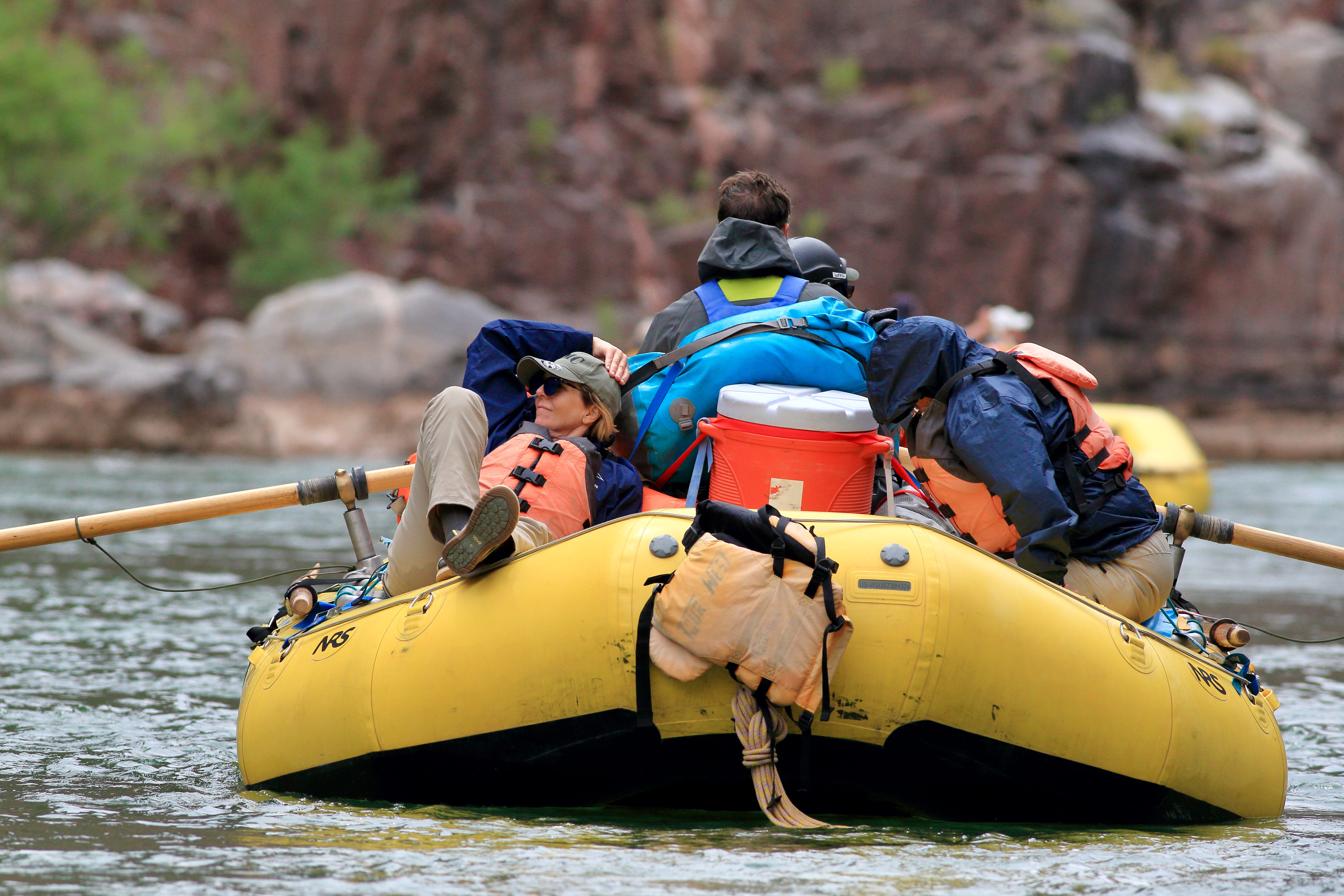
A quick chat with my GPT tells me that, based on the estimated number of river runners annually since 1938, I am one of about 800,000 people who have ever taken this trip. I have to pinch myself when I think of it.
and
(2) Coming up, we will start running 18-20 rapids a day, the guys will begin to worry that we might flip a boat if we’re not careful, and (spoiler alert) not everyone will stay in the boat!
Lastly: Hot off the press!
BOTTOM OF THE BREATH: Finalist, 20th Annual National Indie Excellence Awards (Women’s Fiction).
I just got the notice! Congratulations to all the winners, especially to my fellow She Writes Press authors! For more information, click here.
That’s it for now.
Thank you, as always, for being here. Remember. . .
Life is short. Read fast.
From one lover of the written word to another,
With love,
Jayne
BOTTOM OF THE BREATH, Winner 2025 Best Book Award in Fiction: Women’s Fiction

BOTTOM OF THE BREATH, Finalist, 20th Annual National Indie Excellence Awards: Women’s Fiction

Coming July 8, 2025! IT’S HERE!! Bottom of the Breath is the story of a woman catapulted from her tranquil life on the Florida panhandle onto a cross-country road trip with her recently estranged husband. She must outrun a hurricane, digest a shocking, decades-old family secret, and come to terms with her own pain-filled past. Laced with mysticism and set among the majesty of Sedona and the Grand Canyon, the novel explores the power of friendship, the importance of forgiveness, and the vital need to create a future that embraces the past.
Comments
Nothing yet. Say the first thing.
Sign in to join the conversation.