
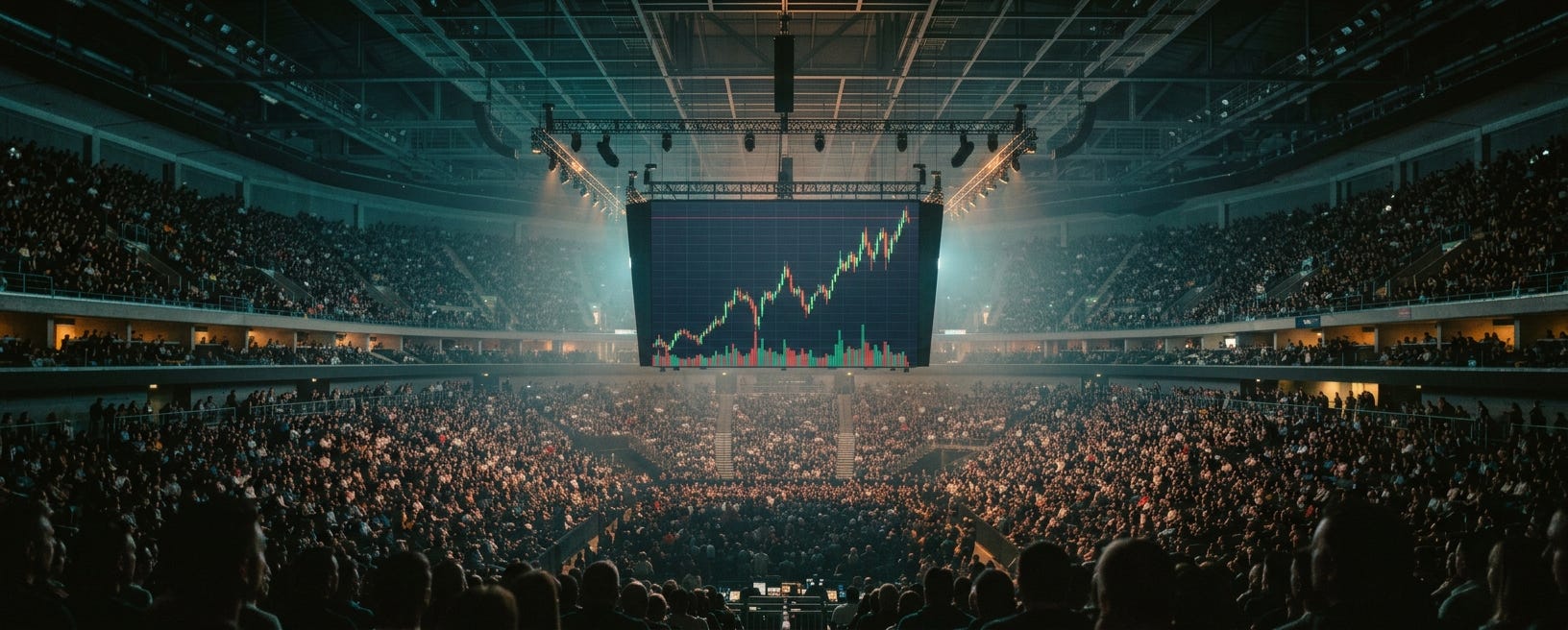
Jim Cramer will always have a job. He is the Kai Cenat for 40 year-old white men.
Is he good at picking stocks? No. Absolutely not. He’s so not good at picking stocks that Cramer’s calls are often treated as counter-signal by both retail and Wall Street’s sharps. Still, Jim Cramer having a job on air is as certain as Jensen Huang wearing a leather jacket.
Jim Cramer is a media star. Cramer is closer to Kai Cenat, Kim Kardashian, or Mr. Beast than he is to Warren Buffett or Stan Druckenmiller.
CNBC pays him a pretty penny to yell on screen because he’s selling time and attention, not stock picks. Sure, CNBC plays on bank trading floors, but you’ve probably come across Cramer in hotel lobbies, airport terminals, and the TV bolted above a StairMaster that nobody asked to be tuned to the market. No one on the stairmaster is trading but they’re watching.
Cramer’s takes are consumed passively. The same way you might watch a Knicks game that you have no money on. They are a single set of data points, thinly weighted against quarterly earnings, 13F filings, WSJ headlines, CEO interviews, or tweets. So why the hell do we watch?
Because the financial markets are one of the greatest shows on earth. Markets themselves are media, and they are rapidly becoming one of society’s greatest forms of entertainment. Jim Cramer is just one small actor on a massive, global stage.
I’ll make the claim even more specific: people winning or losing enormous sums of money, live, is one of the most universally captivating entertainment products that exists today. Winning or losing money (or watching it happen to someone else) captures many of the same emotions as the most potent forms of media (games, movies, books): inspiration, fear, euphoria, ruin, jealousy, joy, fun. It cuts across geography, race, religion, and class in a way almost nothing else does. I’ve previously written about financial nihilism, younger generations feeling like home ownership is out of reach, and other factors pushing consumers towards more speculation. I believe the levers pulling people towards speculation are equally strong.
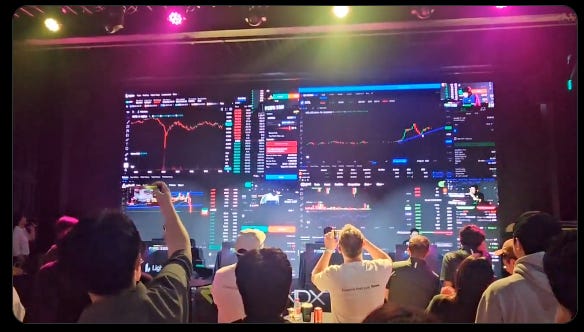
In short, the surface area for speculation has exploded over the last decade: more assets, better instruments, better apps.
There are more things to take a position on than any point in history.
There are more trading instruments and exchanges. More importantly, many of the new instruments are better, making exposure to the underlying assets cheaper, more capital efficient, or more legible.
The interface between a user and a market or asset is as thin as it’s ever been. With an internet connection, a consumer can trade almost any asset, any time, from anywhere in the world. Some of today’s fastest growing apps make speculating more informative, intuitive, fun, social, or even addicting.
As access to speculation has grown, so has participation. Markets have become the grandest MMO ever built: millions of players, real stakes, a persistent world, and no off switch. Still, participation in financial markets pales in comparison to attention; much like leading media platforms, a small portion of a network actively contributes, while the rest consume. For every individual with an NVDA position, there are fifty people that watch, consider, and debate the stock’s valuation with zero skin in the game. They watch because the game has global implications AND because there are characters and events worth watching. Markets mint and destroy these characters constantly, often in private, but increasingly in public.
Every MMO has its server-wide events, the ones that drag in people who don’t even play. Last month gave us the highest-rated event in recent memory. If you read this blog, there’s a good chance you’re quite familiar with Leopold Aschenbrenner and the Situational Awareness x Citadel saga that went down in July.
TLDR: Aschenbrenner’s AI-themed hedge fund (named after his own viral essay) rocketed from a $225M AUM to a $45B peak on heavily leveraged bets. Then the July sell-off hit. When the size and leverage of Leopold’s book became clear, the market smelled blood. Funds targeted Leopold’s positions and anticipated his unwinding and potential liquidation. SA was forced to fire-sale most of its public book to Ken Griffin’s Citadel at a discount before the markets ripped higher the following day.
Like a great episode of television, the entire ordeal dominated group chats for a week. Ken Griffin vs. Leopold. East coast shark vs. silicon valley optimist. The seasoned unc vs. the wunderkind. Korean retail as collateral damage. Hubris, inspiration, euphoria, ruin, jealousy, fear…all of it played out live, with real stakes.
That is the product. The forces that made the event so magnetic – live P&L, public characters, multiplayer stakes, a continuous narrative, and a slew of emotions from those inside and outside the arena – are being productized and scaled by incumbents and startups alike.
Text, photos, videos all became ubiquitous forms of media, creating a class of decabillion and centibillion dollar companies in the process. Earlier forms of media scaled in three ways:
Creation and distribution costs went to zero. A camera in every pocket. Exponential growth in bandwidth capacity.
The media object became feed native. Easily consumed and reacted to.
The media objects became tied to identity. A tweet/photo/video is a statement about who you are and a status accrual mechanism.
Markets are following a similar path.
Creation costs have collapsed: permissionless, user-created markets are becoming the default. Pump.fun turned token launches into a one-click event. Prediction market venues expanded the ability to create a liquid market on almost any future outcome. The line between “I want financial exposure to X” and “I have a market” is dissolving.
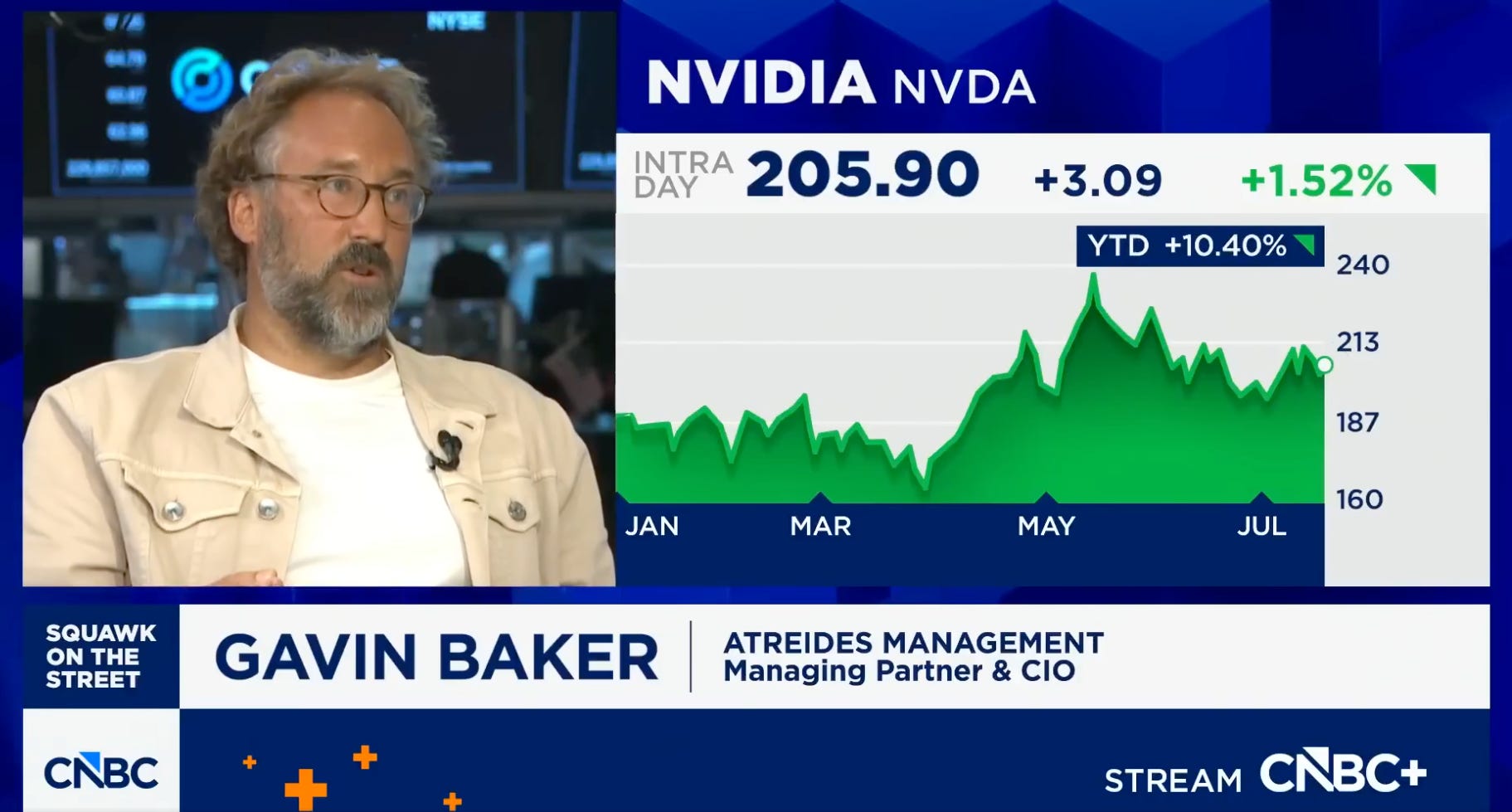
A trade is a statement about what you believe. A public track record becomes a form of status, a signal of acumen, and an invitation for others to pile in (or fade) your calls. Every media platform runs on characters who carry it. Instagram has Kim K and Cristiano Ronaldo; YouTube has Mr. Beast; Twitch has IShowSpeed. Markets have @gavinsbaker, @chamath, @blknoiz06, @notthreadguy, and @amitisinvesting. The best (or at least the most well-known) investors and traders have a media presence that is critical to the success of the entire industry. Investors like Gavin Baker and Brad Gerstner operate with a degree of visibility, thesis-sharing, and personal branding that would’ve been foreign to asset managers a decade ago. Traders like Ansem and Threadguy do the same for onchain markets.
The harder, largely unsolved problem is making the media object (a position) feed-native. The long-duration side of markets (e.g. venture) is quite easy where the media artifact is a (often vague, high-level) blog post. Trades are more challenging: it has to live inside a continuous stream, making them social, reactive, narrative-rich.
This is where Fomo is making the clearest dent. Its PnL cards flood X; its user base is up and to the the right; its feed is replete with trades, takes, and reactions. Tens of startups and incumbents, Robinhood and Coinbase, have failed for years to do what Fomo is figuring out: the markets are the content.
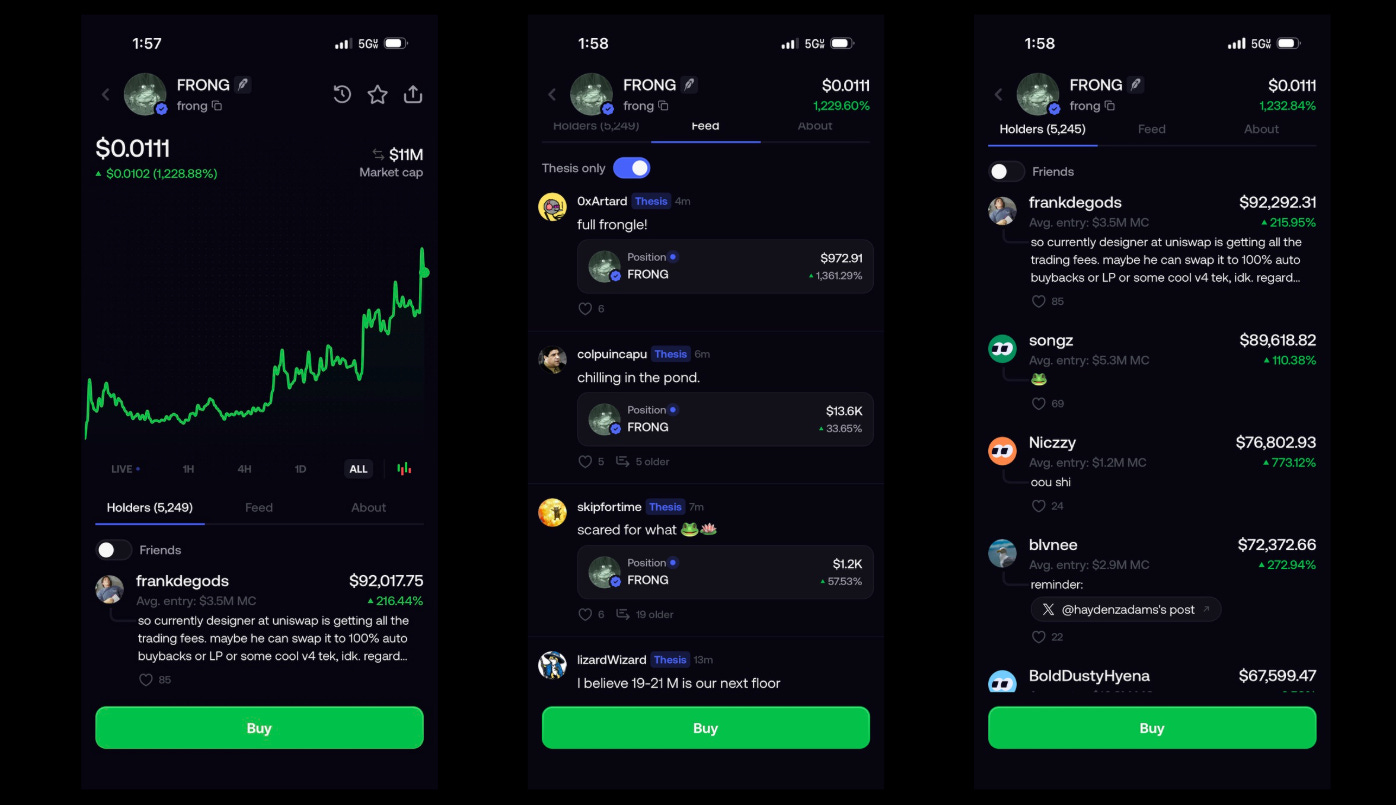
Previous attempts have largely layered a social graph on top of a trade (or vice versa); few have treated the trade as a media object itself. Fomo collapses discovery, trading, identity, and public dialogue into a single feed and is reaping the rewards of their design. The app recently passed $5B in total volume and had already exceeded 100M social interactions in June 2026.
Kalshi is running a similar experiment at a larger cultural scale. There’s a generation of consumers that believe having money on the line is both normal and core to watching sports or following politics. In a Nick Catucci interview, Liz Franczak, co-host of the True Anon Pod, described the shift:
...You don’t really watch basketball anymore. You watch micro-events resolve. The game becomes the underlying asset, and your attention shifts to the derivative: props, odds, whether the world is conforming to the model. It’s subtle, but it changes spectatorship in a way that’s hard to undo…we’re increasingly trained to experience the world through models and odds and expected outcomes.
Markets are becoming ambient media. They used to occasionally generate great television but they may very well become the television itself.
If we extend this notion to its most ambitious conclusion – a world with billions of markets running 24/7 – there are a couple of potential second order effects that we take into account when making investments.
Entertainment value > fundamental value: At its simplest, most reductive form, this notion explains memecoins and meme stocks. At its most charitable, it also explains why Tesla was one of the first true meme stocks: an extremely ambitious meme (electrify everything, autonomy, multiplanetary life) paired with a loud, high-agency distributor (Elon) turned $TSLA into a cultural object. Its memetic premium gave Tesla a lower cost of capital, and it could raise money on more attractive terms to fund the ambitions the market was investing in. Elon understands this phenomenon better than most so it’s no surprise X has increasingly integrated markets into its core feed.
In a an extreme version of this dynamic, markets may become better at producing entertainment and less efficient at pricing reality. Liquidation cascades and crowded, high-leverage trades will almost certainly become more common.
Regulatory bodies and incumbents will have to play catch-up: Today’s market-structure rules of today were written when trading was a largely private game, most played by professionals. Today, the sport is democratized: 24/7 global trading, user-generated markets, and interfaces that optimize for attention. Radically new products will require new rules.
Similarly, a long list of brokers, exchanges, and wallets will have to evolve towards the new paradigm or be outcompeted by it. There’s a graveyard of media companies that serves as a lesson.
Markets have come a long way since the first ticker tapes began transmitting stock prices over telegraph lines in the 1860s. What started as sparse, delayed, and highly specialized information has steadily become faster, more visual, more social, and more continuous. Their evolution toward ambient media will only accelerate from here.
Believe it or not, we are only in season two. The characters are getting better, the stakes are getting bigger, and the plot is thickening. For better or worse, everyone is tuning in.
No posts
Comments
Nothing yet. Say the first thing.
Sign in to join the conversation.