
When Uber dispatches surge-pricing jobs, when Netflix refreshes CDN caches, or when your bank runs end-of-day reconciliation, exactly one scheduler instance must decide what runs and when. Run the same cron on every pod and you double-charge customers. Run none and reports never ship.
The fix is not “turn off scheduling on followers.” You need an explicit leader election contract, lease-based heartbeats, automatic failover, coordination primitives, and idempotent execution so retries never corrupt state.
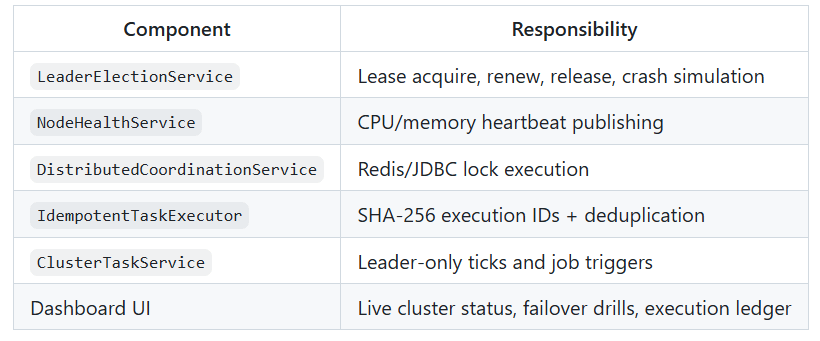
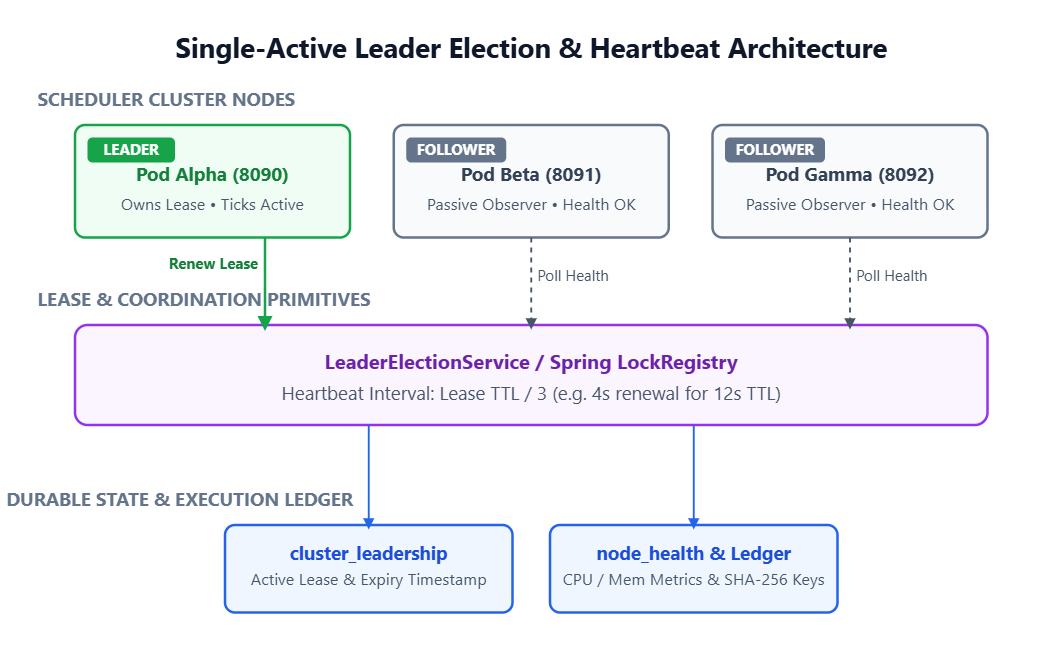
In a horizontally scaled cluster, one node holds a lease in shared storage. The lease has an expiry timestamp. The leader renews it on a heartbeat interval (typically one-third of lease duration). Followers observe an unexpired lease owned by someone else and stay idle.
This is how Google’s Chubby-inspired systems, Kubernetes lease objects, and JDBC-backed Spring schedulers keep one brain in charge.
PostgreSQL stores a cluster_leadership row per service. Acquisition uses optimistic versioning plus conditional updates:
Renew: update only if you still own a non-expired lease
Takeover: update only if the lease is expired
Failover: force-expire a stale leader after health checks fail
Comments
Nothing yet. Say the first thing.
Sign in to join the conversation.