
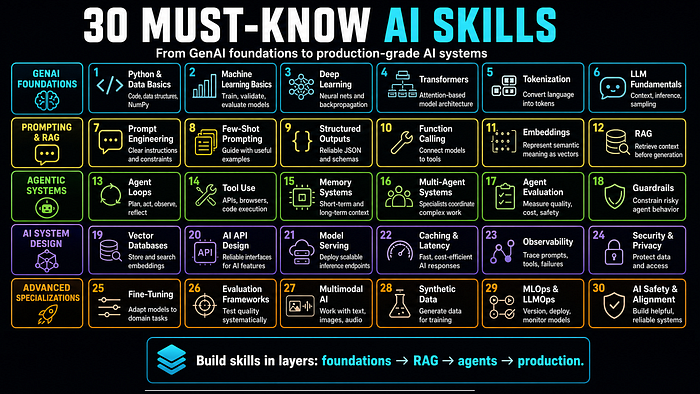
Hello guys , the AI engineering job market in 2026 is simultaneously the most exciting and the most demanding it has ever been. Salaries for senior AI engineers at top companies are breaking records (you must have heard about million $ pays by OpenAI, Anthropic, Meta etc).
New roles that didn’t exist two years ago like Forward Deployed AI Engineer (FDE), Agentic AI Engineer, LLM Systems Architect, AI Platform Engineer are being created faster than universities can produce graduates.
But here’s what most developers miss: the path to those roles is not about knowing every AI tool that launches on Product Hunt each week. It’s about building five specific layers of knowledge — deeply, sequentially, and practically.
Engineers who build all five layers become the architects designing systems. and otherss who skip layers become the ones implementing other people’s designs.
I have been learning AI skills since the ChatGPT came in and over the last few years I have invested a lot of time mastering Prompt Engineering, AI Engineering, Context Engineering, LLM Engineering etc.
I have tried 100s of books and courses on platforms like Educative.io, Towards AI, Udemy, Coursera,, DataCamp, Frontend Masters, Udacity, and ZTM Academy. I learn a lot by following multiple teachers and instructors but I also wasted a lot of time in search of practical and hands-on courses which not just teach you theory but also how to apply that theory into real world problems.
After researching the most in-demand AI engineering skills and evaluating the best course resources available in 2026 to learn them, I’ve mapped those five skill layers to the most effective courses, primarily from Educative.io, the interactive text-based learning platform that I’ve found most effective for building deep, practical AI engineering skills.
Here’s why Educative specifically: every course is interactive text-based (not video), which means you read the concept and immediately write and run code in the same browser window — no switching tabs, no local setup, no friction.
For building the kind of muscle memory that makes concepts actually stick, this format outperforms video-based learning significantly.
💡 Before diving in: If you’re planning to take more than two courses from this list — which the learning path below strongly recommends — the Educative Premium 2-Year Plan is by far the most cost-effective and hassle-free way to access all of them.

Before the courses, let’s be precise about what you need to learn and why each layer matters:
Layer 1 — Generative AI and LLM Fundamentals
You cannot effectively build with AI systems you don’t understand. How do LLMs generate text? What are embeddings and why do they matter? What’s the difference between fine-tuning and prompting? These aren’t academic questions — they’re the basis for every technical decision you’ll make as an AI engineer.
Layer 2 — Prompt Engineering and RAG
Raw model capability is table stakes. What differentiates AI applications is how you extract reliable, accurate, context-grounded outputs from models.
Prompt engineering and Retrieval-Augmented Generation (RAG) are the two techniques that close the gap between “impressive demo” and “production application.”
Layer 3 — Agentic AI and Agent Design Patterns
In 2026, the frontier is autonomous AI agents — systems that plan, use tools, coordinate with other agents, and execute multi-step tasks.
Understanding agentic architectures, design patterns, and frameworks like MCP (Model Context Protocol) and Google’s ADK is rapidly becoming a baseline expectation for senior AI roles.
Layer 4 — Generative AI System Design
Building a working LLM application is very different from designing a system that serves millions of users reliably, cost-efficiently, and safely.
GenAI system design, understanding trade-offs between models, architectures, retrieval strategies, and deployment patterns is what separates engineers from architects.
Layer 5 — Advanced LLM Engineering (Fine-Tuning, Vector DBs, Graph RAG):
The top 10% of AI engineers have depth in the techniques that allow you to customize, optimize, and scale AI systems beyond out-of-the-box capabilities. LoRA fine-tuning, vector database architecture, knowledge graph RAG — these are the skills that unlock the roles commanding $250K–$400K+ packages.
Now let’s find out the best resources you can take in 2026 to learn each of these layers. I mean not, just learn but master enough to go ahead of your competition.
This is the foundation layer and every developer should know about these fundamentals before learning Agentic AI and building real world automation pipelines using AI. The goal here is to build the conceptual foundation that every other AI engineering skill depends on.
This course is your foundational starting point. This course introduces the full landscape of generative AI like how models are trained, how they generate outputs, what foundation models are and how they differ, and the core technical concepts (tokens, temperature, context windows, embeddings) that you’ll reference constantly in every other course.
What you’ll learn: Foundation models, tokenization, temperature and sampling, model families (GPT, Claude, Gemini, Llama), key generative AI capabilities and limitations, practical hands-on exercises throughout
Here is the link to join — Generative AI Essentials

1.2. Essentials of Large Language Models: A Beginner’s Journey
The companion course that goes deeper on how LLMs specifically work — transformer architecture, attention mechanisms, training dynamics, and what happens under the hood when you prompt an LLM.
After this course, you’ll understand why certain prompting techniques work and others don’t.
What you’ll learn: Transformer architecture, self-attention mechanism, pre-training and fine-tuning distinctions, instruction tuning, RLHF (Reinforcement Learning from Human Feedback), evaluation approaches for LLMs
Here is the link - Essentials of Large Language Models Here

The comprehensive reference for Layer 1. Keep this open alongside your projects. Covers the full generative AI landscape including multimodal models, diffusion models, code generation, and the current state of AI capabilities across domains.
What you’ll learn: Complete GenAI landscape survey, multimodal AI, diffusion models, code generation systems, the GenAI tooling ecosystem, responsible AI practices
Here is the link to get this course → Access Generative AI Handbook Here

This is one of the most important skill for day to day working with AI tools and building systems using them. The goal here is to extract reliable, accurate, grounded outputs from AI systems.
2.1 All You Need to Know About Prompt Engineering
Prompt engineering is the skill that immediately differentiates AI application quality.
This course covers every major prompting technique — zero-shot, few-shot, chain-of-thought, tree-of-thought, role prompting, and meta-prompting, with hands-on exercises for each.
The difference between an engineer who prompts well and one who doesn’t is measured in application reliability and user satisfaction.
What you’ll learn: Zero-shot and few-shot prompting, chain-of-thought reasoning, ReAct patterns, prompt chaining, system prompts, prompt injection and defense, evaluation frameworks for prompt quality
Here is the link to join — All You Need to Know About Prompt Engineering

2.2 Fundamentals of Retrieval-Augmented Generation with LangChain
RAG is the most important AI application pattern of 2026. Every serious AI application that needs to ground responses in specific, current, or proprietary knowledge uses some form of RAG.
This course teaches the complete RAG pipeline, right from document ingestion and chunking through embedding, indexing, retrieval, and generation — using LangChain, the industry-standard framework.
What you’ll learn: Document loaders and text splitters, embedding models and semantic search, vector store integration, retrieval strategies, LangChain LCEL for RAG pipelines, evaluation and optimization of RAG systems
Here is the link to join this course — Fundamentals of RAG with LangChain

2.3 Vector Databases: From Embeddings to Applications
Vector databases are the backbone of RAG — and understanding them deeply is what separates engineers who implement RAG from engineers who architect it.
This course covers embedding models, similarity search algorithms (HNSW, IVF), vector database architectures, and the trade-offs between different solutions (Pinecone, Weaviate, Chroma, pgvector).
What you’ll learn: Embedding models and how they convert text to vectors, similarity search algorithms and their trade-offs, vector database architectures (Pinecone, Weaviate, Chroma, pgvector), hybrid search combining vectors with keywords, production deployment considerations for vector stores
Here is the link to join this course — Vector Databases: From Embeddings to Applications

This is one of the most important skill and the goal here is to learn enough to build autonomous AI systems that plan, use tools, and execute complex tasks.
3.1 Master Agentic Design Patterns
The foundation of agentic AI engineering. Agentic design patterns like ReAct, Plan-and-Execute, Reflection, Multi-Agent, Tool Use are the reusable architectural templates that make agent systems reliable rather than unpredictable.
This course teaches you to recognize which pattern fits which problem, and how to implement each one cleanly.
What you’ll learn: Core agentic patterns: ReAct, Plan-and-Execute, Reflexion, Tool Use, Router, Orchestrator-Worker; when to apply each pattern; composing patterns for complex workflows; common failure modes and how to prevent them
Here is the link to join this course — Master Agentic Design Patterns

From individual agent patterns to full agentic system architecture. This course covers designing complete multi-agent systems: memory architectures, state management, agent coordination protocols, and the infrastructure required to make autonomous systems reliable at scale.
What you’ll learn: Multi-agent coordination architectures, short and long-term memory systems for agents, state machines for agent workflows, fault tolerance and recovery in agentic systems, monitoring and observability for autonomous AI
Here is the link to join this course - Agentic System Design Here
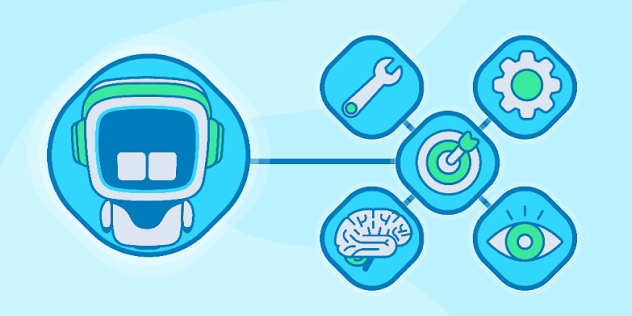
3.3 Mastering MCP: Building Advanced Agentic Applications
MCP (Model Context Protocol) is the most important emerging standard in agentic AI. It defines how AI agents connect to external tools, databases, APIs, and services creating an interoperable ecosystem where agents can use any MCP-compatible tool.
Mastering MCP in 2026 is like mastering REST APIs was in 2012 — the engineers who get there first have a significant advantage.
What you’ll learn: MCP architecture and protocol design, building MCP servers that expose tools to AI agents, connecting agents to databases, file systems, and external APIs via MCP, MCP in multi-agent systems, the growing MCP tool ecosystem
Here is the link to join this course — Mastering MCP: Building Advanced Agentic Applications
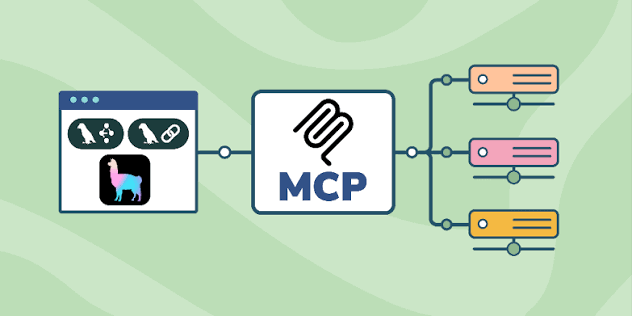
3.4 Build AI Agents Using Google ADK
Google’s Agent Development Kit (ADK) is the most production-ready open-source agent framework available in 2026.
Built by the team that designed Gemini’s agentic capabilities, ADK provides battle-tested patterns for multi-agent systems, tool integration, state management, and deployment.
This course takes you from ADK basics to building sophisticated multi-agent applications.
What you’ll learn: Google ADK architecture and core concepts, building single and multi-agent systems with ADK, tool integration and function calling in ADK, state management and session handling, testing and deploying ADK agents to production
Here is the link to join this awesome course — Build AI Agents Using Google ADK

3.5 Claude Code: Workflows and Tools
Claude Code is one of the most sought after skill at the moment when it comes to generating production quality code using AI. It represents the state of the art in AI-assisted development.
And, this course teaches you to use it at the level that multiplies your productivity rather than just occasionally helping you autocomplete.
Understanding how Claude Code works, what its agentic capabilities are, and how to integrate it into professional engineering workflows is increasingly a baseline expectation.
What you’ll learn: Claude Code’s agentic development capabilities, orchestrating complex multi-file coding tasks, custom tools and MCP integration in Claude Code, prompt patterns for engineering tasks, Claude Code in CI/CD and automated development workflows
Here is the link to join this course — Claude Code: Workflows and Tools

This is the most advanced level stuff for those who not just want to use AI system but want to design them, very relevant for senior software engineer, software architects and solution architech.
The goal here is to learn enough to architect GenAI systems that serve millions of users reliably, cost-efficiently, and safely.
4.1 Grokking the Generative AI System Design
This is the course that takes you from “I can build an AI app” to “I can design an AI system.”
GenAI system design is what FAANG interviews are testing for senior AI roles and this Grokking course applies the same structured interview framework to GenAI-specific design problems: LLM gateways, RAG systems, content moderation, recommendation engines, code generation systems.
What you’ll learn: A framework for GenAI system design interviews, designing LLM API gateways with rate limiting, cost allocation, and model routing, RAG system design at scale, designing AI content moderation systems, real-time AI inference architecture, evaluation and A/B testing frameworks for AI systems
Here is the link to join this course — Grokking the Generative AI System Design
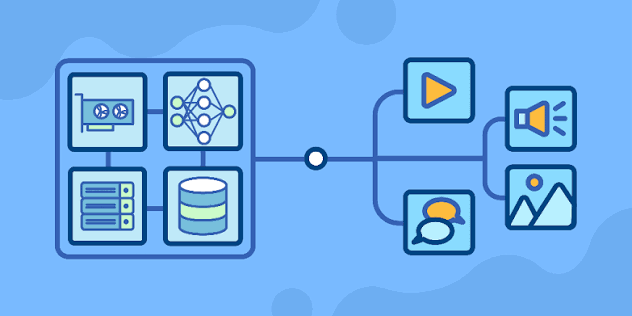
4.2 Advanced RAG Techniques: Choosing the Right Approach
Basic RAG gets you started. Advanced RAG gets you to production quality.
This course covers the full spectrum of RAG optimization techniques like the query transformation, contextual compression, hypothetical document embeddings (HyDE), multi-vector retrieval, reranking, and hybrid search , with clear guidance on when each approach is worth the added complexity.
What you’ll learn: Query transformation techniques (multi-query, HyDE, step-back), contextual compression for reducing noise in retrieved chunks, reranking strategies (cross-encoder rerankers, Cohere Rerank), hybrid dense-sparse retrieval, self-RAG and corrective RAG patterns, evaluating RAG quality with RAGAS
Here is the link to join this course — Advanced RAG Techniques
4.3 Build AI Chatbots with Open-Source LLMs, LangChain, Streamlit, Agentic RAG
System design knowledge needs to be applied to real projects. This course builds a production-quality AI chatbot using the full open-source stack like Ollama for local LLM serving, LangChain for orchestration, Streamlit for the UI, and Agentic RAG for knowledge retrieval.
The end result is a deployable application that demonstrates every skill from Layers 1–4 applied together.
What you’ll learn: Setting up Ollama for local and cloud LLM serving, LangChain conversational chains with memory, Streamlit UI development for AI applications, Agentic RAG with tool-using agents, streaming responses, session management, deploying AI chatbots to production
Here is the link to join this course —Build AI Chatbots with LangChain and Agentic RAG
This is the most advanced set of skills you can build to truly shine in this AI area. Very few people now have this skill and its demand is going to explode in coming years when everyone want their specialized LLM just like their Website and Mobile apps.
The goal here is to develop the specialized, high-value skills that unlock the highest AI engineering roles.
5.1. Fine-Tuning LLMs Using LoRA and QLoRA
Fine-tuning is the technique that lets you customize a foundation model for your specific domain, use case, or style requirements without the compute cost of full retraining.
LoRA (Low-Rank Adaptation) and QLoRA (Quantized LoRA) are the current standard techniques for parameter-efficient fine-tuning. This course teaches both with hands-on implementation.
What you’ll learn: When fine-tuning is better than prompting or RAG, LoRA theory and implementation, QLoRA for fine-tuning on consumer hardware, dataset preparation and curation for fine-tuning, evaluation and comparison against base models, deploying fine-tuned models for inference
Here is the link to join this course — Fine-Tuning LLMs Using LoRA and QLoRA
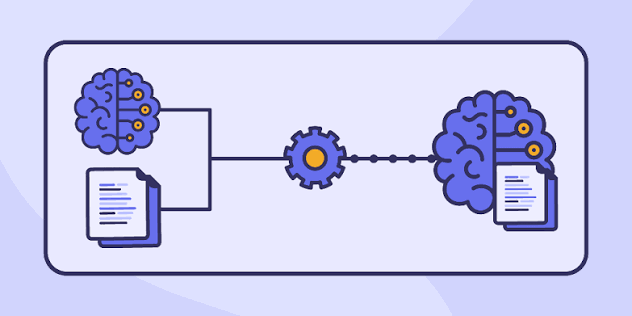
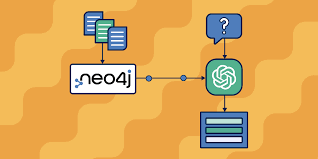
5.2. Master Knowledge Graph Retrieval-Augmented Generation with Neo4j
Graph RAG is the most powerful advanced RAG technique for knowledge-intensive domains. Traditional vector RAG retrieves similar documents. Graph RAG retrieves structured relationships between concepts, enabling AI to reason over connected knowledge in ways that vector search alone cannot.
This course implements Graph RAG using Neo4j, the leading graph database.
What you’ll learn: Knowledge graph fundamentals and graph data modeling, building knowledge graphs from unstructured text, combining graph traversal with vector similarity search, Neo4j for AI applications, comparing graph RAG against traditional RAG on complex reasoning tasks, production deployment of graph RAG systems
Here is the link to learn more about this course — Master Knowledge Graph RAG with Neo4j
That’s all about the key AI skills you need to learn guys. I have shared a lot of courses here but you don’t need to complete it within one week or one month, you won’t. This for a long time structured learning and ideally you should start with the basics first but if you already know basics then you can pick it from the skill level as per your experience.
I also recommend to instead of joining these courses individually or equivalent courses on different platform, just get the Educative Premium plan for 2 years.
It’s not just the most cost effective option as you can get it now for over 60% discount but also great for hassle free learning, no need to buy course again and again.
If you purchased each course above individually, you’d be spending $30–$50 per course — and making 10+ separate purchase decisions, tracking multiple enrollments, and hoping each course gets updated as the field evolves.
The Educative Premium plan gives you:
Unlimited access to all 1,200+ courses — every course on this list, plus Grokking the Coding Interview, Grokking System Design, and hundreds more
All future courses included — as new AI courses launch (and they do, constantly), you get them automatically
No individual purchasing decisions — one subscription, no friction, just learning
Interactive coding environments — write and run code in the browser for every exercise
Certificates of completion for every course finished
The 2-year plan is the best value.
For a field that changes as fast as AI engineering, having 2 years of unlimited access without worrying about subscription renewals, price changes, or “which course should I buy next” decisions is genuinely valuable. It removes the friction that stops most learners from following through on their learning plans.
At ~$14/month over 2 years for access to the most complete AI engineering curriculum available, it’s not a question of whether it’s worth it. It’s a question of when you start.
Here is the link to Get Educative Premium — The 2-Year Plan

You can also start with a 7-day free trial to explore the platform before committing.
The AI ladder is real and the gap between the engineers at the top and everyone else is growing, not shrinking, as the field matures. The engineers commanding $250K–$400K+ AI engineering packages in 2026 have all five layers: GenAI fundamentals, prompting and RAG, agentic systems, system design, and advanced specializations.
The courses mapped to those five layers above are the most complete, most practical, and most current curriculum I’ve found for building exactly that skill stack.
And the Educative 2-year Premium plan is the most cost-effective and friction-free way to access all of them — without the fatigue of individual purchasing decisions, without worrying about what’s included, and without interruptions when a subscription lapses.
Start with Generative AI Essentials to build your foundation. Follow the path above. Build something real with each layer before moving to the next.
The ladder exists. These are the rungs.
Other AI Resources and Article You May like
P.S. — If you want to start for free before committing to a subscription, Educative offers a 7-day free trial with access to all courses. Start with Generative AI Essentials in your trial week — it’s the best single demonstration of what the Educative format and this AI curriculum deliver. If it resonates, the 2-year Premium plan is your most cost-effective next step.
Comments
Nothing yet. Say the first thing.
Sign in to join the conversation.