
Preparing for System Design Interviews? Join ByteByteGo now for a more structured preparation. They are also offering a huge 50% discount now on their lifetime plan.
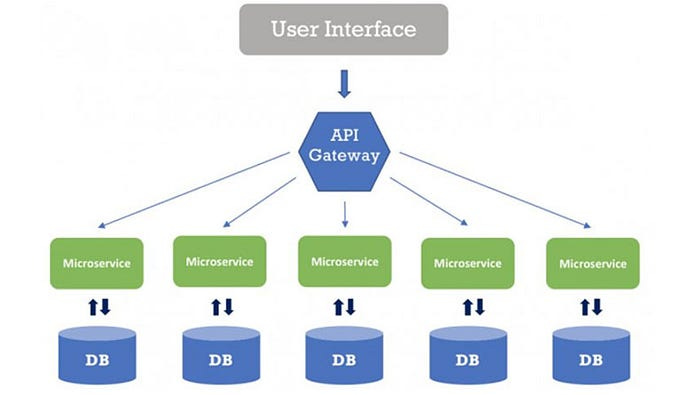
Hey folks, in the last few years Microservices has quickly become the darling architecture of many tech companies, so much so that everyone is following Microservices.
I have done Software Development for a long time so I know things have changed from development to deployment and Microservices is the next chapter on that.
I remember once I was asked this question “Two microservices, A and B, share the same database for some entities due to legacy design. Microservice A makes a change to the entity, but Microservice B does not reflect the change immediately, leading to inconsistent behavior.
How would you refactor the system to solve the shared database issue without creating downtime?”
That was my first taste of Microservice interview questions, ever since then I have asked multiple different questions from basic to advanced level which I am going to share in this article.
By the way, if you are new to Microservice architecture or just want to revise key Microservice concepts and looking for resources then here are a few online courses you can join:
Grokking Microservices Design Patterns [DesignGuru.io]
Master Microservices with Spring Boot and Spring Cloud [Udemy]
Building Scalable Java Microservices with Spring Boot [Coursera]
Developing Microservices with Spring Boot [Educative]
Master Microservices with Java, Spring, Docker, Kubernetes [Udemy]
However, if prefer watching YouTube videos then I also suggest you first watch this 4-minute video on Microservices from ByteByteGo, to learn what Microservices are and When Not To Use Them.
Microservices is nothing but a small program that does one thing and does it well, much like a class. Contrary to Monolith where all of your app functionality resides inside one application, Microservices split them into multiple services
For example, you can have a Microservice for authentication and authorization in your application, one Microservice for handling order flow, and another one for Users and so on.
In recent years, demand for Microservices has grown a lot, but is not a silver bullet, it has its pros and cons much like anything else in Software Development.
But many people in tech are busy breaking their monolith and making the same mistake. I am not a big fan of Microservices, especially if they are small, dependent on others and they are in the 100s.
Instead, I like to be pragmatic and create more modular Microservices than smaller ones, kind of Mini Services
The problem is when you have to be in a system you have to follow system rules and that’s why you also need to prepare for Microservices architecture and application development if you want to get that Java developer job you want
I have divided the article into 3 sections, The first one discusses common questions on Microservices architecture, in the second section we will revisit interview questions on Microservice Design Patterns and principles, and in the last section, we will see more advanced Microservices questions for experienced developers.
Here are common Microservices Interview Questions which are based upon general Microservices knowledge and you must know them to use Microservices in your project.
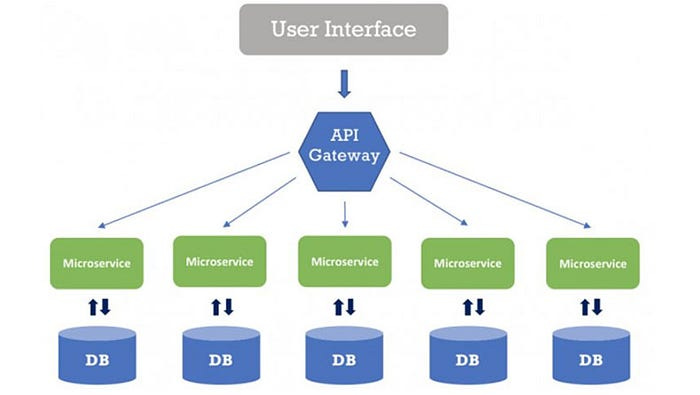
Microservices as the name suggests is a small service (a Java, .NET, JavaScript, or any other program) that provides a specific functionality. For example, the Authentication Service can provide authentication functionality and UserService can provide all the functionality related to Users.
Here is a simple example of how Microservices look like:
1. What are the benefits and drawbacks of a Microservices architecture? Pros and Cons?
Microservices architecture is an approach to building software systems that involve breaking down a monolithic application into a set of small, modular services that can be developed, deployed, and scaled independently. Here are some of the benefits and drawbacks of this approach:
Pros of Microservcies :
Flexibility: Microservices architecture allows for flexibility in terms of technology choices, as each service can be implemented using different languages, frameworks, and databases. For example, you can implement one Microservices in Java and other in C++ or Python.
Scalability: Microservices can be scaled independently, which allows for better resource utilization and faster scaling of the overall system. With Cloud computing, Kubernetes can scale Microservices very easily depending upon load.
Resilience: Microservices architecture allows for more fault-tolerant systems, as a failure in one service can be isolated and handled without affecting the entire system.
Agility: Microservices architecture allows for faster development and deployment cycles, as changes can be made to a single service without impacting the entire system.
Reusability: Microservices can be reused across multiple applications, which can result in cost savings and increased efficiency.
Drawbacks:
Complexity: Microservices architecture can increase the complexity of the system, as there are more moving parts and more interactions between services.
Testing and Debugging: Testing and debugging a Microservices architecture can be more complex, as it requires testing each service individually, as well as testing their interactions.
Monitoring and Management: Microservices architecture requires more monitoring and management, as there are more services to keep track of and manage.
Inter-service communication: Microservices architecture increases the number of network calls between services, which can lead to increased latency, and if not handled properly, to cascading failures.
Security: Microservices architecture can make it more challenging to implement security measures, as each service may need to be secured individually.
In conclusion, Microservices architecture offers many benefits in terms of flexibility, scalability, and resiliency, but it also increases the complexity of the system and requires more monitoring and management.
It’s important to weigh the benefits and drawbacks and choose the right approach that fits the specific requirements and constraints of your system.
And, if you want to watch, here is also a nice video from ByteByteGo, to learn 5 most used Software architecture patterns, most of the questions will be from these patterns, particularly Microservcies.
2. How to design and implement a Microservices?
You can use any framework to develop Microservices in different programming language but in Java you can use Spring Boot and Spring Cloud to implement Microservices.
3. What are the key characteristics of a well-designed Microservice?
Well-designed Microservices have clear, single responsibilities, are loosely coupled, have high cohesion, communicate via APIs, have bounded context, and are independently deployable, testable and scalable.
And, here are few more Microservices questions for you to practice, you can find answers in web but if you don’t find let me know and I will add
Comments
Nothing yet. Say the first thing.
Sign in to join the conversation.