

In June of 2017, my husband and I were in Colorado celebrating our four-year anniversary.
On the second day, my phone rang.
It was my sister.
I remember looking at the mountains, trying to understand what she was saying. The mountains didn’t change. The air didn’t change. But everything had shifted.
My dad had gone to the hospital. Stage 4 liver cancer. Months to live. If that.
The rest of the day felt suspended as we kept asking the same question in different ways. Do we finish the trip or leave now? How much time do we have? Will we make it in time? What are we supposed to do? Could this really be happening?
Nothing felt like the right decision because none of it should have been happening.
We decided not to risk it and booked an earlier flight for the next morning.
That same night, my dad died.
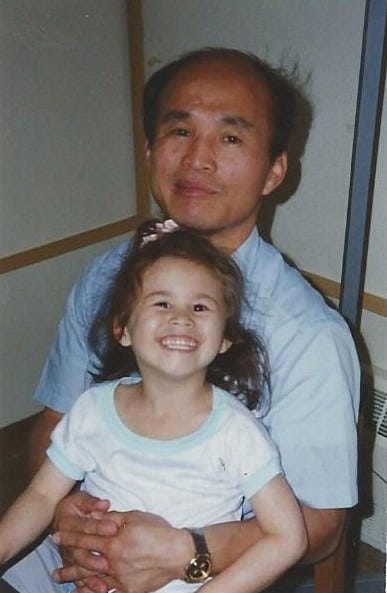
There were funeral arrangements, phone calls, and details that had to be handled whether I was ready or not.
And amid all the funeral arrangements and phone calls, we found out we were pregnant.
There was excitement about the life we had hoped for, but also numbness settling in from the grief. I was mourning one life while anticipating another.
Alongside all of this, that year, eight of our close friends got married, and I was in six of the weddings. There were bridal showers to host, bachelorette parties to plan, dresses to coordinate, and celebrations to show up for.
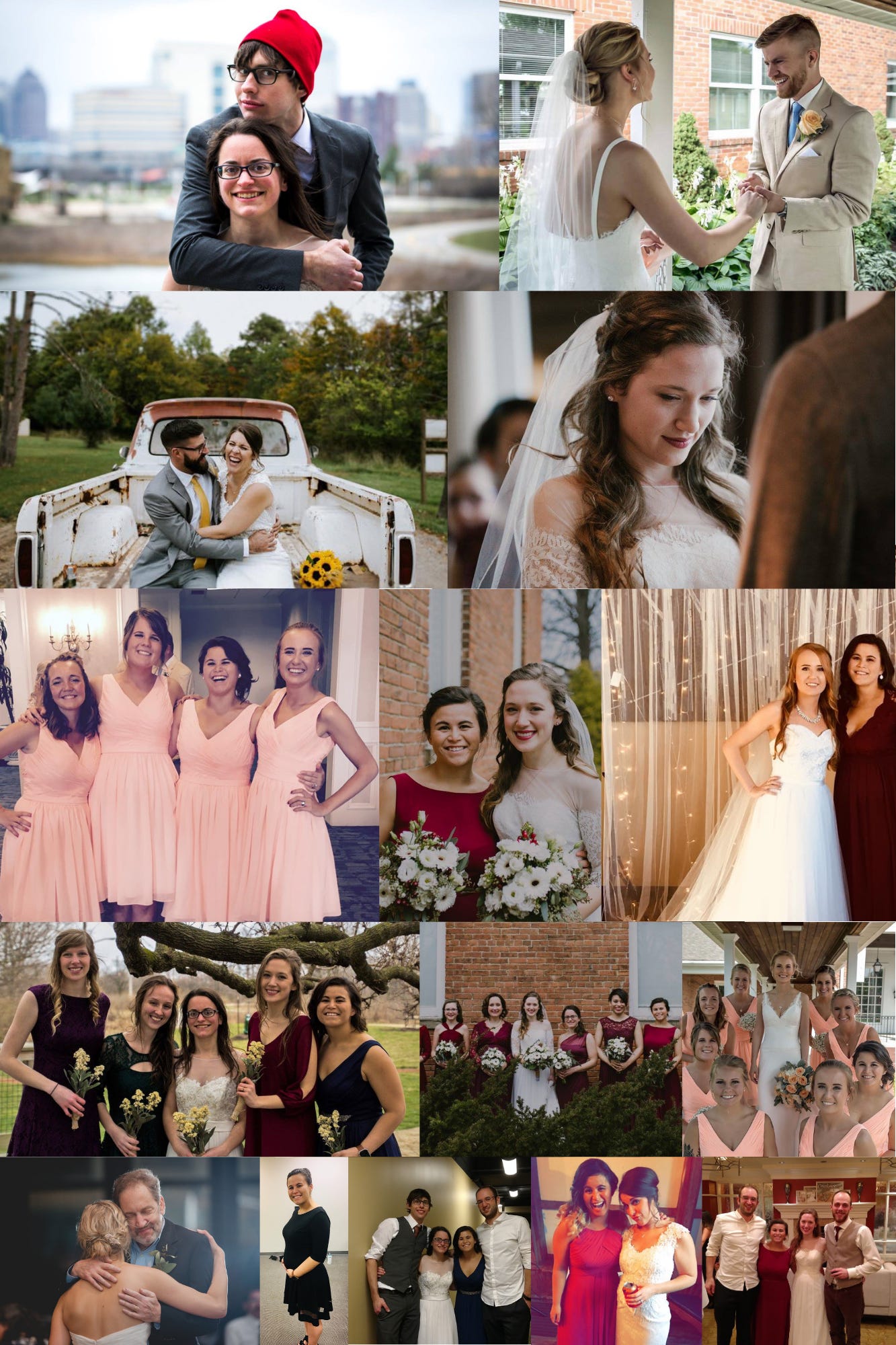
Grief did not stay home so I could celebrate. It was there in every smile, every toast, every plan for the future, and every reminder that there would be no more chances.
That year, I began to understand not just that joy and sorrow don’t take turns, but that one loss doesn’t protect you from another.
My husband’s sister’s wedding was at the end of the year. It was a beautiful winter wedding, and her dad was able to walk her down the aisle, which was a gift we didn’t take lightly.
People kept coming up to us throughout the day, expressing concern about my husband’s dad’s health. They hadn’t realized how much he had declined.
When my husband was a child, his dad had been diagnosed with a chronic disease that stayed in remission for years.
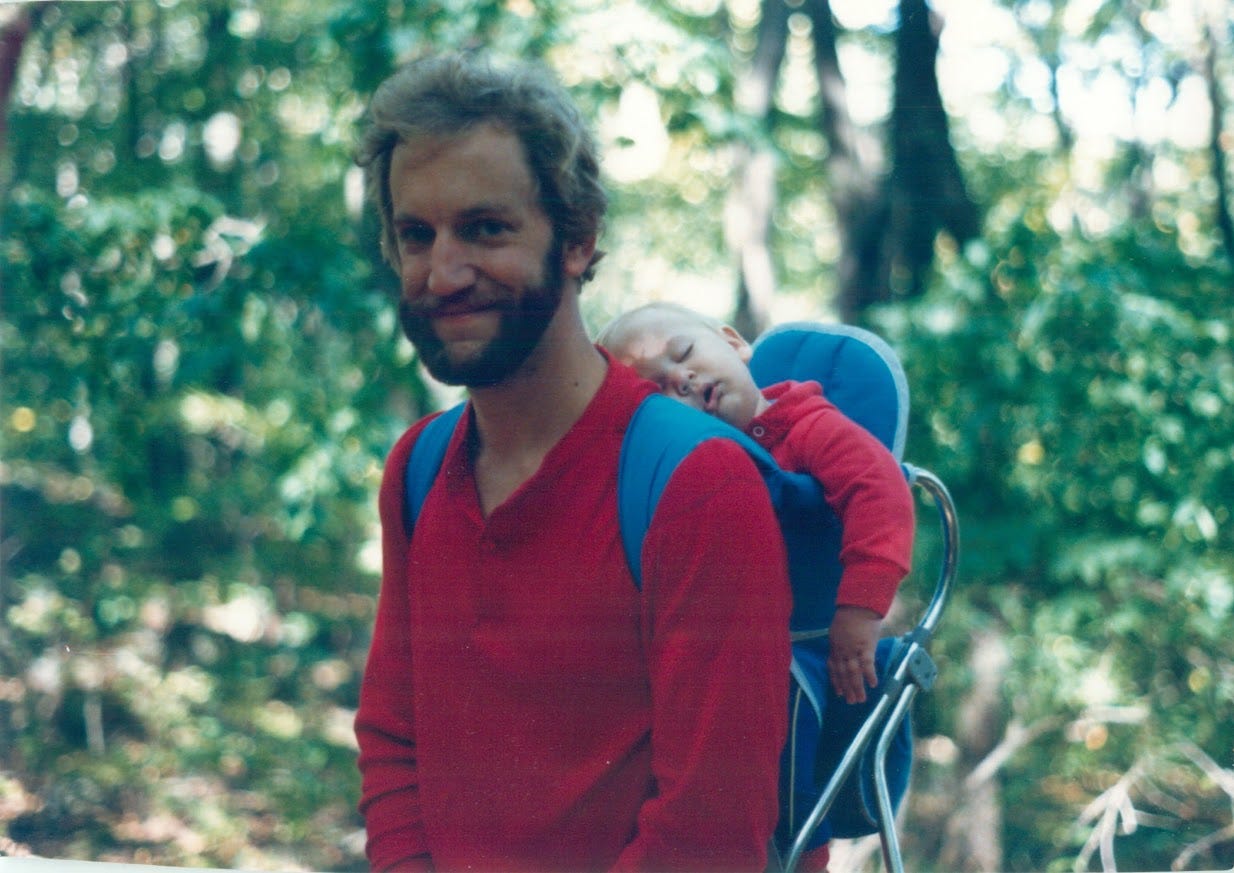
Over time, it began to progress, and by 2015 he had to retire early. There were yearly hospitalizations where we wondered, is this going to be the time? But on the day of the wedding, hooked up to oxygen, he was there, present, able to walk his daughter down the aisle.
But not even two weeks later, right before Christmas, he was back in the hospital. The questions were familiar. Do we pause everything? Who stays the night? How serious is it this time?
The days stretched on in hospital rooms. Waiting. Watching. Numb. Then somehow it was Christmas Eve. We didn’t bring gifts, but my husband’s dad handed out books meant to give us a laugh. My husband got How to Traumatize Your Children. I got Safe Baby Handling Tips and I Just Want to Pee Alone.
And alongside the books came a staggering check that paid off our college debt. Looking back, it was so much more than just a generous gift, it was a father trying to put things in order before he left.
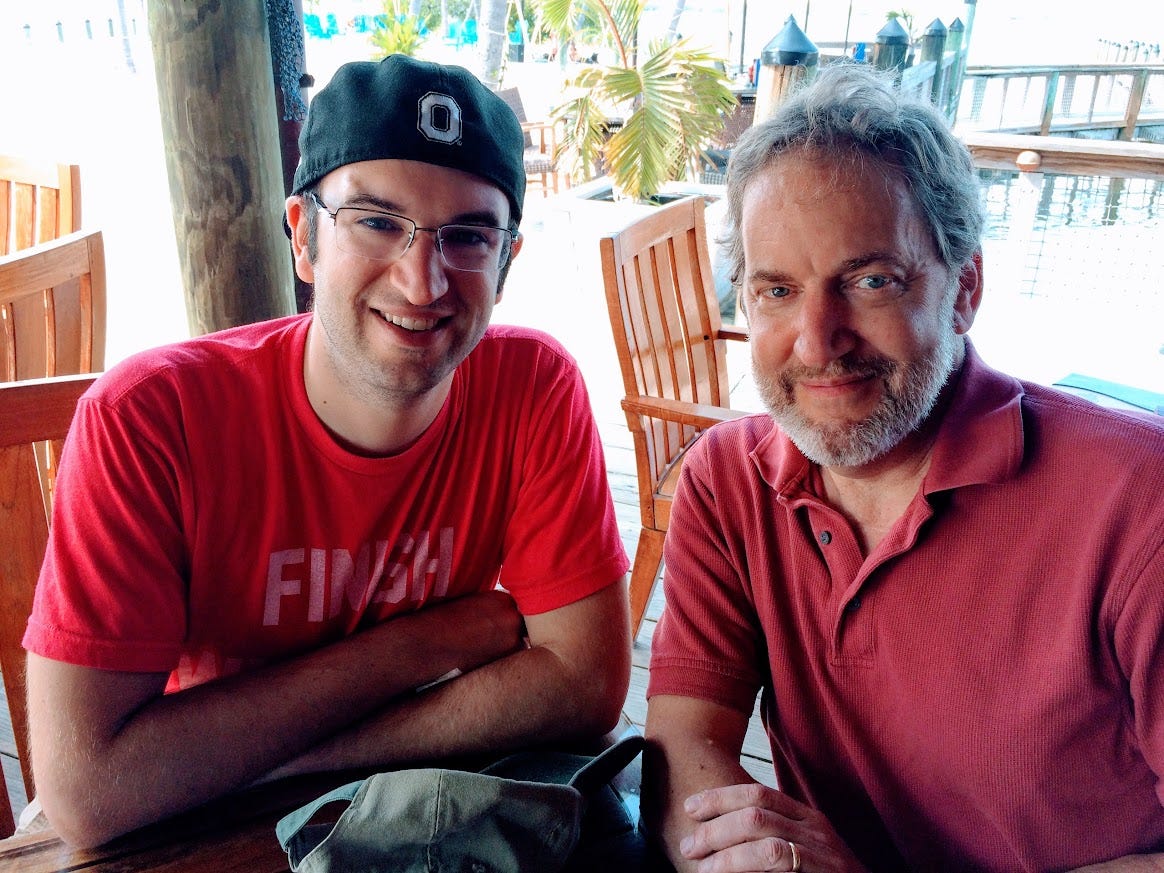
My husband walked me to the parking garage, both of us overwhelmed by the weight, before he went back upstairs to stay the night with his dad.
The night before he died, my husband’s sister’s new husband of two weeks stayed with him. I hate admitting this came after all of us wanted to head home to get some rest.
But it was a blessing in disguise. New to our family, but already important to my father-in-law’s heart, he was the man who would care for his baby girl. They got to spend that last night together. For his last meal, which he barely touched, he ordered shrimp pad Thai.
The next morning, we were all there when the decision was made to move him to hospice. Before he left the hospital, he reached out and touched my stomach. I was due in March. He said he wished he could meet our daughter.
At the hospice facility, he got settled, and we stepped outside for a moment. Then someone came running, calling for us to come back, saying it was worth running for.
Within six months, my husband and I had both lost our dads, and just a few months later we would become parents for the first time.
Life didn’t space those things out or give us time to finish grieving before something new began. It all came layered, overlapping, unfinished.
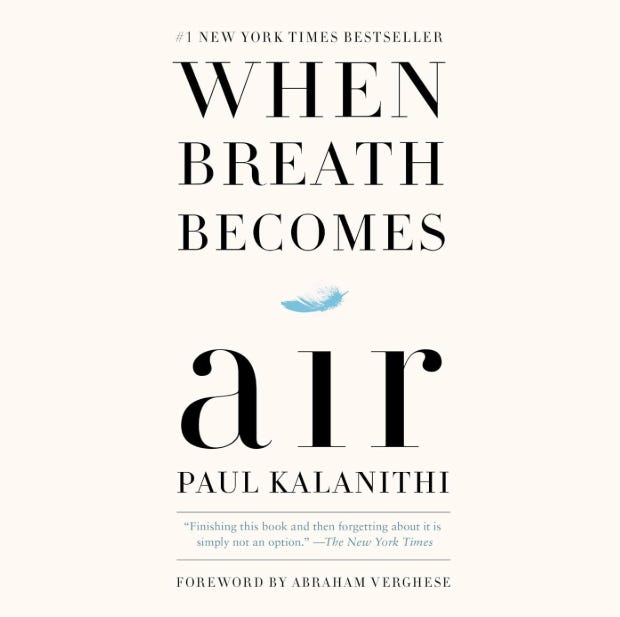
It’s been nine years this week, but I still have flashbacks to that last year of my father-in-law’s life. He loved to read, and at some point, during that time he found a book called When Breath Becomes Air and bought copies for everyone.
I love reading, but I resisted that book for a long time. Part of me thought I already knew what it would be.
So, I didn’t read it. But two years ago, I finally picked it up, partly because I wanted to honor him and partly because I felt like I should.
When Breath Becomes Air is a memoir by Paul Kalanithi, a neurosurgeon diagnosed with terminal lung cancer in his mid-30s, just as he was finishing years of training and stepping into the career he had worked toward his whole life.
The book follows the shift from being a doctor—someone who helps others face death—to becoming a patient himself. He writes about what it means to lose the future he had carefully built, and how he begins to ask different questions: not “how long do I have?” but "how should I spend the time I have left?
There is a stretch where treatment works and his cancer goes into remission. During that time, he and his wife decide to have a child, and he returns to work as a surgeon. He’s trying to live fully inside whatever time he’s been given, even though the outcome is already known. Eventually, the cancer returns and progresses, and he dies not long after his daughter is born.
The final section is written by his wife, reflecting on his last days and what it was like to walk through that with him.
When I finished it, I was surprised by my reaction. I didn’t love the book.
I hated it.
All I could see was my perspective: the unfinished conversations, the empty chairs, the fathers who never got to meet grandchildren, and the plans that never happened.
But every night this week, I found myself thinking about it again, and eventually it clicked. My father-in-law loved this book because he knew what he was facing. He knew death was coming, that time was limited, that the body breaks down, limitations increase, and no amount of hard work can stop it. And he found someone with language for it.
Grief has a way of stealing words. Sometimes the greatest gift is finding them again.
So, if you’re in the midst of grief, facing your own mortality, or simply carrying the ache of things that didn’t get finished, I want to offer you a few things.
First, permission to grieve. Not to rush. Not to explain it away. Not to pretend you’re fine. Joy and sorrow do not take turns, and grief does not stay home just because there is still life to be lived. It follows us into celebrations, new beginnings, and ordinary days. That’s okay. It simply means we love someone that’s not here with us. You have permission to read the same book three times. To hand it to a friend and say, "This. This is what I'm trying to tell you."
Second, permission to hope. That ache we feel when someone we love dies, when something beautiful ends, or when life doesn’t turn out the way we hoped is more than grief. It is homesickness. A reminder that we were made for more, and that death does not have to be the end of the story. You have permission to long for heaven. To wonder about it. To imagine it. To pray for it. To get excited about it. To make plans for a future beyond this one.
Third, permission to go. When the phone rings, when something feels wrong, when someone you love is hurting, you have permission to rearrange your plans. To leave early. To spend the night in the hospital. To make the drive. To book the flight. To sit by the bedside. Most of us are afraid of overreacting. But when it comes to the people we love, you’ll never regret showing up.
And lastly, permission to not have the words. When language feels out of reach, when grief and hope feel too big to hold, you have permission to turn on a song, pick up a pen, scribble in the margins, or go looking for a sunset. Sometimes what comes out isn't an explanation. It's a cry from the heart.
Here are two of mine.
No Breathing Room
The first grief
takes your breath away.
That’s the phrase,
isn’t it?
As if sorrow arrives,
puts a fist on your chest,
and reminds you
that breathing is something
you usually do
without thinking.
People talk about grief
as though it arrives
one chapter at a time.
But sometimes
it stacks.
Loss upon loss.
Wave upon wave.
Before you’ve found a place
to set down one sorrow,
another settles
on your breast.
And for a while
you wonder
if this is what
suffocating feels like.
Yet somehow,
my lungs rise.
my lungs fall.
my lungs rise.
my lungs fall.
Until morning.
And morning.
And morning
again.
Breathing Foreign Air
Some days
the homesickness
arrives without warning.
A sunset
that ends too quickly.
A conversation
that makes me wish
for one more hour.
A song.
A story.
A quiet moment
on the water.
A child asleep
with a book
on their face.
For a moment,
everything feels
the way it should.
And then it passes.
The sky darkens.
The page ends.
The child grows older.
The kayak reaches shore.
And I am left
with that familiar ache.
The feeling that
I have spent my whole life
breathing foreign air.
As this post goes out, my husband and I are in Zion National Park. It’s our first trip back out West since the one where we got the phone call about my dad, and it just so happens to be the anniversary.
Despite the sadness that still twinges, I’m grateful. Grateful for the years we’ve been given. Grateful for the people we love. Grateful for healing. Grateful that grief is not the end of the story. Grateful that while a page can be ripped out, there’s still so much that makes me say, “Thank you, God, for everything You have done.”
And that's coming from someone whose dad, mom, brother, and sister are all gone. Loss has been part of my story, but it is not the story. Jesus is.
I am not living in light of loss. I am living in light of eternity.
As expected, I have so much more I want to say. I wanted to write about what it looks like to face death when Jesus feels far away, the kind of faith my father-in-law had, how to grieve when the people around you are grieving too, and one centered fully on HOPE. But those are stories for another day.
Until then, hug your people a little longer than necessary. Answer one more question. Take the trip. Write the note. Record your voice. Thank God for everything He has done.
And when the homesickness comes, let it remind you where home is.
Comments
Nothing yet. Say the first thing.
Sign in to join the conversation.