
June is almost over. But the conversation around the emotional and psychological wellbeing of males is still in its infancy—and in some circles, conspicuously non-existent.
And there is no one left to blame, but men themselves.
One of my favourite philosophers of all time is Friedrich Wilhelm Nietzsche.
Granted, Nietzsche was a rather crazy fellow. He believed he was the best thing to happen to the universe since the discovery of agege bread, he possessed an almost comical confidence in his own genius, towards the end of his life on earth he literally ran insane, and he—on several occasions—claimed that “God was dead” and we were all responsible in killing him.

Fascinating man if you ask me!
The part of Nietzsche’s endless—albeit artistic—philosophical ramblings that fascinated me most was his attempt to answer a surprisingly simple question:
Where did our ideas of “good” and “bad” actually come from?
Nietzsche wasn't convinced that morality simply fell from heaven. Since he believed "God was dead," he obviously wasn't going to agree with Kant's insistence that morality came from God. Neither was he particularly impressed with British philosophers like David Hume, who argued that we call things "good" because they are useful.
Instead, he went on a deep dive on trying to understand how our ethical principles have evolved through time. And he discovered something quite interesting.
You see, before Nietzsche started to play around with philosophy, he was a lecturer in philology (a fancy way for saying he studied words and language). So, he decided that he was going to look into how the words “good” and “bad” actually evolved to mean what they do today.
He found out that the word “good” (in ancient languages) initially wasn’t associated with moral decisions. Instead, good was used to describe nobility, prestige, wealth, the upper class, and people whose most pressing dilemma was deciding whether a Versace handbag matched a Louis Vuitton purse.
“Bad”, on the other hand, was used to identify anything that was not “good”. Servants, beggars, LAPO babies, people that chase danfos and kekes, the part of society that doesn’t wake up on a Wednesday morning craving ice cream from Venice.
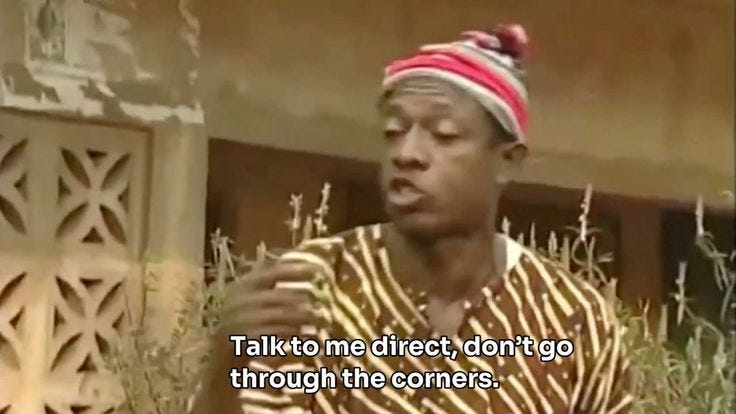
To be bad was to not be good. And to be good was to be the best.
Across works like “Beyond Good and Evil” and “On the Genealogy of Morals”, Nietzsche argues that our moral vocabulary evolved out of struggles over classism, status, and hierarchy before it evolved into questions of virtue and vice.
The point is this: Sometimes, societies don’t just invent rules; they invent identities
And I think the same thing happened with our understanding of emotional availability, vulnerability, and openness.
Think about it. Why do we associate hardness with masculinity, and softness with femininity? Why do we claim women are more “emotional” than men (this is a totally different conversation, btw)? Why do we tell boys who cry that they’re behaving like girls? Why is a general appreciation for the messiness, and beauty, and confusion that is existing, termed a female trait, while men are supposed to be stone hearted and indifferent?
It’s because the only way to create superiority, is to first create difference. So, men were told they were nonchalant, and distant, and reserved, and tough, because they needed to be sold a brand identity that alienated them from women.
Yes, the patriarchy is a system, it’s a social structure, it's a historical framework that entrenched male dominance. But it’s also marketing at its absolute finest.
Men weren’t merely given responsibilities. They were sold an identity. A brand. One whose value proposition was simple: You are not women.
Every feature of the product followed from that premise.
Be tough. Be distant. Be nonchalant. Don’t cry. Don’t need help. Don’t talk about your feelings.
Don Draper and the entire cast of “Mad Men” have nothing on the big P. Because while advertising agencies sold toys to babies and soap to mummies, the patriarchy learned how to sell coldness to daddies, emotional distance to boyfriends, suffering in silence to bachelors, and a fear of genuine intimacy to Yoruba men.

And the reason they did wasn’t just for vibes. They did it because in some twisted way it made men feel different from women, hence providing the platform for men to be superior to women too.
So, calling women “emotional” was no longer a compliment or an observation, it was a silent jab at their supposed weakness, and volatility. It made them seem like an explosive commodity, one that needed to be tamed, and managed, and controlled.
And the same people who invented the disease conveniently positioned themselves as the cure.
But just like Olivia Rodrigo screamed several times in her latest album, listen up men:
“You will never be the cure”
And the reason we never will be is because there wasn’t a problem in the first place. Because it’s never been wrong to cry, or to talk about your feelings, or to be open about your emotions.
Carrying the world on your shoulders doesn’t make you a man, it makes you exhausted. Avoiding vulnerability doesn’t make you mysterious, it makes you avoidant. And appreciating wonder in the world doesn’t make you a woman, it makes you human.
Don’t let systems designed to divide, and exploit, and subjugate, dictate how you live your life, or how you relate with people and reality.
Tell your friends you love them. They deserve to hear it.
Talk to someone when things get overwhelming. You’ll be shocked by how many people just want to listen.
And when you hear a song that reminds you of your childhood, allow yourself to cry a little. Tears really are therapeutic.
June is almost over.
And somehow, we talked about men’s mental health so little that I’m starting to wonder if the actual men’s mental health awareness month is in July, and we’re just raising awareness for the actual month ahead of time.
At this point I feel like we should have just left June to be Pride month, God knows the LGBTQ+ community need it way more than we do. Or maybe, we should just give the slot to people who will actually use it; like first daughters—they seem to be carrying enough family drama to justify an awareness month of their own.
The truth is, awareness months don’t fail because governments ignore them. They fail because the very people they’re meant to serve refuse to participate.
We’ve spent decades asking society to take men’s mental health seriously while making jokes about our friends for opening up. We’ve demanded empathy from everyone else while rationing it amongst ourselves. We keep blaming the world for teaching men to suffer in silence, yet every time a man decides to speak, another man is waiting with “man up”, “oga you’re too soft”, or “stop behaving like a woman.”
The patriarchy might have sold us an identity. But we willingly became its most loyal customers. And that needs to change.
So tomorrow, instead of complaining about how many days and months there are for celebrating women, girls, or mothers, ask your guy friend in the office, “How far?”
And don’t settle for “I dey.”
Ask him how work is treating him. Ask him about his children. Ask him if he’s sleeping well. Ask him about the dreams he’s quietly abandoned because life got in the way. Ask him about the bills he never talks about. Ask him if he’s okay—and then wait long enough for an honest answer.
Tell your friends you love them. Hug your brothers. Cry when life hurts. Laugh loudly when life is good. Go to therapy if you can. Find your people. But whatever you do, stop treating emotional honesty like it’s some embarrassing side effect of being human.
Because it isn’t.
June is almost over. The hashtags will disappear, the campaigns will end, and everyone will move on to the next awareness month.
Let’s not.
If men’s mental health is ever going to become more than thirty days on a calendar, it won’t happen because of reshares on your WhatsApp status, or black and white Instagram posts with polished captions.
It will happen because one man decided to ask another man the seemingly uncomfortable question, “Are you really okay?” and because that other man finally felt safe enough to answer honestly.
That’s where real masculinity begins.
Not in carrying the weight of the world alone.
But in finally admitting that you don’t have to.
See you next week, Wanderers.
.
.
.
What I’m Reading: I haven’t opened a book in a week… I’m detoxing.
What I’m Watching: “The Good Place”
What I’m Doing: I have a lot to do this holiday, but I’m trying to just rest this first week before I have to lock in again 😭.
Edit: Almost forgot my recommended Substack for the week…
No posts
Comments
Nothing yet. Say the first thing.
Sign in to join the conversation.