
The Number Line
I remember three things about second grade. My teacher’s name was Ms. Nutt, which is a fantastic name for a teacher, I knitted a blue hat on a round loom that I was terribly proud of, and I learned to use a number line.
Two number lines were available to us – one giant one that stretched across the top of the wall and a smaller one that was like a long bumper sticker across the top of my desk. I think there was a unit in our math book that showed us how to use it to add, subtract, and do skip-counting. But the real value of the line was that it was there for us to see all year. I relied on it the entire year, relying on it to complete my workbook problems at first, then using it to check my work later in the year.
Crutches
Other than the unit where we learned how it worked, I don’t think Ms. Nutt ever said much about it except to remind us that it was there if we needed help. I don’t recall ever being made to use it, and it was never removed in an effort to force us to do the work in our heads.
I think about that approach quite often these days. Years ago, I attended a workshop in which the clinician told us not to let our students listen to the music they were learning. The fear was that the students would learn by ear instead of learning to read the music, and in doing so, they’d never learn to read. The same is true of writing in the note names – if you let students write in the names of the notes, they’ll never learn to read.
I don’t believe either of those are true. When a student wants to listen to the music, they’re not trying to avoid reading, they’re trying to understand what the music is supposed to sound like. It’s the only way they’ll know if the notes they’re reading are correct or not.
Time to Pack
Let’s say I give a student “Time to Pack” by Amy Stephens. It a good review piece for drop-lift slurs and starts like this:
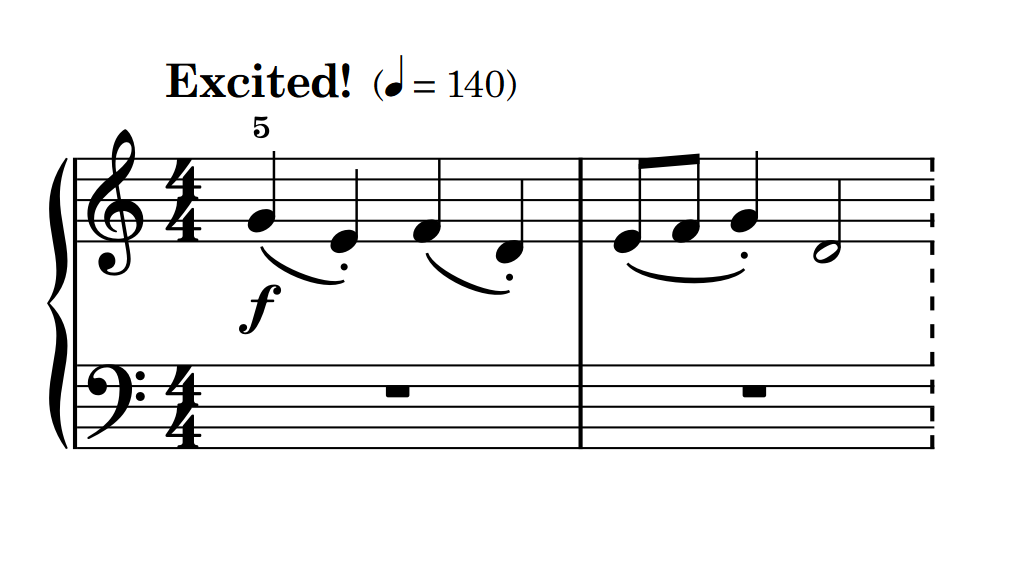
Now, imagine you’re a student who isn’t a confident reader yet. You’re doing your best, and you play this:
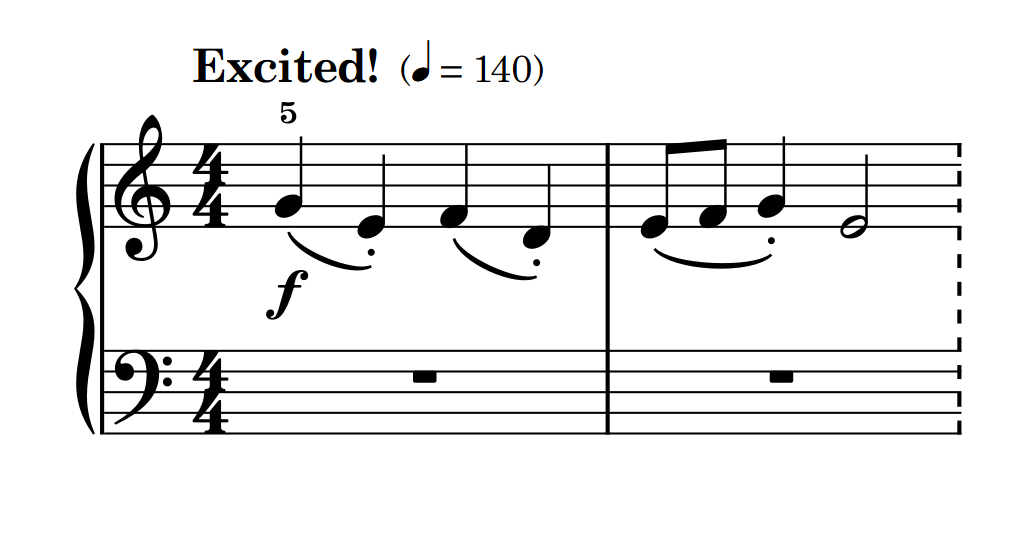
Or maybe you do this:
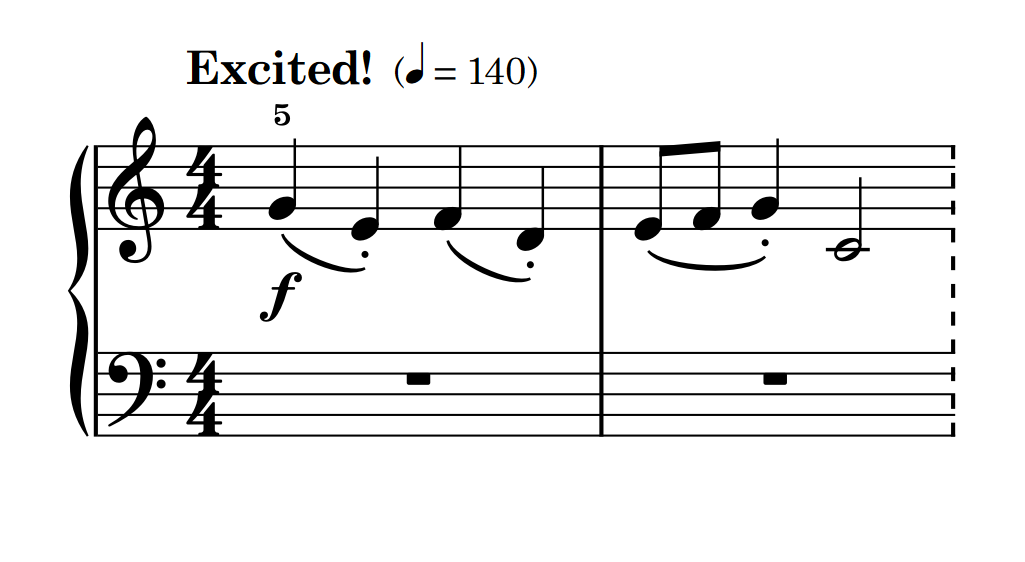
Regardless, both options sound totally reasonable, so you assume you’ve figured it out. It gets in your ear, and you practice it that way all week, only to discover at your next lesson that the note that sounds 100% absolutely right to you is wrong. What’s more, when your teacher plays it the way it’s supposed to go, it sounds super weird because you’re used to the phrase ending on the E or the C instead.
Enter the Crutch
Of course, the two ways to fix this kind of problem are to support the correct note with some kind of crutch. Maybe it’s letting the student listen to the piece so they become familiar with the right sound. Maybe it’s writing in the name of the note, or the finger number.
Regardless, I feel like I’m doing my best teaching when I anticipate the exact right amount of support to offer when the piece is introduced. After I’ve spent a year with a student, I usually get a feel for what kind of help they need, and these kinds of issues become more and more avoidable. But I feel like it’s more art than science. It’s not as simple as “Don’t let them listen to the piece” or “Don’t let them write the names of the notes in.” That’s like telling someone with a sprained ankle to walk on it. When something’s weak, you need the crutch. Then at it gets stronger, the crutch becomes unnecessary.
The Landmark Poster
In my studio, I keep this card by the piano. It shows the landmark notes that we learn and gives students a bit of help. Like Ms. Nutt’s number line, I show them how to use it, but I leave it up to them to decide when and how much. Students seem to relate to it differently. Some use it quite often, others glance at it now and then to check themselves. At some point, it becomes altogether unnecessary.
I’ve linked the poster below. There are two – a small one I give to everyone to take home and put on their piano, and a larger one I keep in the studio. Print it out and put it by the piano. Don’t make a big deal out of it, just tell your students you found a handy little landmark card on the internet and they can use it if they want. Then watch. See who uses it and when. See who’s curious and who’s completely uninterested. I’d be very interested in hearing your observations, so feel free to comment below.
Happy Teaching!
No posts
Comments
Nothing yet. Say the first thing.
Sign in to join the conversation.