
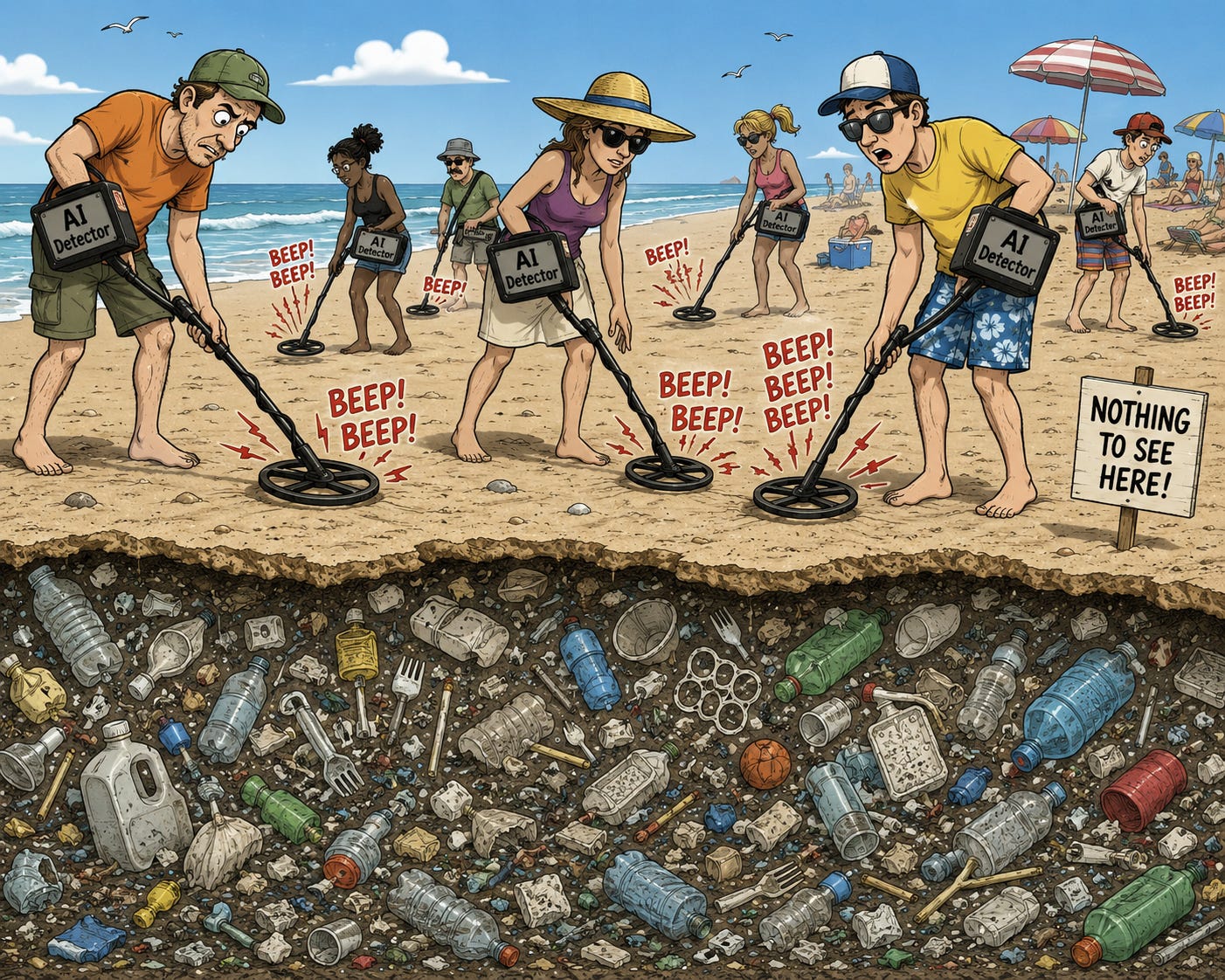
Earlier this month I attended the Teaching & Learning with AI Conference in Orlando. One of the presenters did something interesting: in front of a room full of educators, she pasted an original piece of writing into a popular AI detector. The detector came back and announced, with the serene confidence these tools always have, that her writing was 60 percent AI-generated.
It may have seemed funny, but it shouldn’t have, given the implications: somewhere out there numerous students failing on exactly that kind of verdict.
I spent three days at this conference expecting the conversation to be about cheating. That is, after all, where most schools start and stop. The minute ChatGPT arrived, the entire institutional reflex was to ask one question: how do we prevent cheating? And the answer the market provided was the AI detector, a piece of software that promises to do for the essay what the breathalyzer did for the highway. Plug in the paper, get a number, render judgment.
Turnitin, the largest player in this space, scans more than 38 million student essays. Its chief product officer has acknowledged that the tool carries roughly a 4 percent error rate at the sentence level, which is why some scores now arrive with an asterisk warning you not to trust them. Four percent sounds modest until you remember the volume. Four percent of 38 million is a lot of teenagers getting an asterisk on their permanent record. Honestly, I don’t believe the real number is 4 percent. A company that sells AI detection has every incentive in the world to publish the most flattering figure it can defend and not one decimal point lower.
You don’t have to take my word for it. Researchers at Stanford ran seven of these detectors against essays written by non-native English speakers — TOEFL exam essays, every one of them written by a human being — and the detectors flagged more than 61 percent as AI-generated, while clearing essays by native-born American students almost perfectly. The tools were detecting people who write in shorter sentences and plainer vocabulary, and then punishing them for it. If you wanted to design a system that quietly discriminates against immigrant kids and English-language learners, you could not do much better than the one we’re currently selling to schools as a fairness tool.
Probably the most telling event that speaks against AI detectors: in July of 2023, OpenAI shut down its own AI detector because it simply didn’t work. They caught their own machine’s output about a quarter of the time. If the people who built the engine can’t reliably detect the output, the vendor down the street selling you a 4 percent error rate is probably selling you marketing.
And even when these tools do work, consider who they actually catch. They catch the lazy. The kid who copies the prompt into ChatGPT, pastes the answer back, and changes nothing. That student was going to get caught by a half-awake teacher anyway. The student who actually puts in effort, who runs the output through a second model, rewrites in their own cadence, breaks up the rhythm the detectors look for, sails through untouched. So we’ve built a system that flags the clumsy and the foreign while waving the genuinely deceptive right past.
So if detection is a dead end, what should schools actually teach? This is where the conference got interesting, and where I think the real ethics curriculum lives.
The lesson almost nobody is teaching is this: chatbots lie, and they will lie specifically to make you happy. I’ve written before about how these systems are sycophantic by design; the product specification, quite literally, is to agree with you, to validate you, to keep you nodding. That’s harmless when you’re asking for a dinner recipe. It is corrosive when a sixteen-year-old asks a confident machine to explain the causes of World War I and receives a fluent, authoritative answer that’s partly fabricated. The danger isn’t that AI is wrong. We’ve always had wrong sources. The danger is that AI is wrong while being relentlessly agreeable and believable, and our teenagers trust the source.
One librarian at the conference demonstrated this beautifully. She asked an AI for sources and it cited a real academic journal, by name, volume 58, page 22; the journal cited only published 16 volumes. While the citation looked perfect, it was fiction. Her instruction to students was simple and, I think, the single most useful thing said all week: click every link, run every citation, don’t stop at reading the answer. Another presenter taught what she called the “represent” test, which boils down to two questions a student should ask of anything a machine hands them: would I say this, and can I defend it? That’s a habit of mind, and it’s the kind of thing schools used to be good at instilling before we outsourced our skepticism to a confidence score.
In life, the trait that separates students who thrive from the ones who get fooled is not raw intelligence, it’s the willingness to doubt a confident answer. The straight-A student who never questions the textbook is, in an AI world, the most vulnerable person in the room, because she has been trained her whole life to trust the authoritative voice. The machine is nothing if not an authoritative voice. We have raised a generation to respect confidence, and we’ve just handed them a confident liar.
Only 23 percent of American colleges even have an AI policy, let alone a strategy. So we have time to get this right, and most institutions haven’t started. My modest proposal is that we stop pouring money into machines that catch kids and start teaching all of them the only skill that actually matters here: how to be unimpressed by a confident answer. Teach them to interrogate the machine the way a good editor interrogates a writer, or the way I’d hope any of us would interrogate a stranger who shows up promising to be our best friend.
The presenter whose own writing got flagged as 60 percent artificial had it exactly backwards, and exactly right. The machine couldn’t tell her real words from fake ones. Our job is to make sure our students can.
Can Colleges Make All Their Students ‘AI Fluent’?: Higher education institutions are recognizing the imperative to equip students with AI fluency, a skill increasingly deemed essential for future employment. Colleges like Ohio State University are actively hiring faculty with AI expertise as part of a broader initiative to integrate AI literacy across disciplines, responding to surveys indicating that a majority of students find AI knowledge crucial, despite their concerns about the technology’s implications. While the approach varies among institutions — Purdue University has made AI competency a graduation requirement, and the University of Virginia promotes voluntary AI literacy projects — many educators express uncertainty about how to effectively implement AI training. Notably, a collaborative effort among community colleges is fostering job-specific training in AI fields, emphasizing adaptable skills over merely technical competencies. While I applaud colleges trying to make this a priority, I pray that they are infusing their classes with ethical standards.
Long-Term NAEP Shows Growth for 9-Year-Olds, More Disappointment for Teens: Recent findings from the National Assessment of Educational Progress (NAEP) indicate a notable improvement among 9-year-olds, who have shown a 4-point increase in reading scores and a significant recovery in math, with gains particularly pronounced among lower-performing students. In stark contrast, 13-year-olds have not made similar gains, with reading performance stagnating at levels comparable to 1971, reflecting the long-lasting impact of the pandemic on older students who experienced significant educational disruptions during formative years. The troubling decline in literacy, as evidenced by only 14% of 13-year-olds reading for pleasure daily compared to 37% of 9-year-olds, underscores the importance of fostering a reading culture and addressing attendance issues, with 61% of older students reporting recent absences. I honestly have no idea how we can get kids to love reading when they are addicted to short-form video on social media and quick answers from AI. This problem is going to compound. Unfortunately, required reading is not the answer.
The Lie at the Core of Gifted and Talented Programs: The concept of "giftedness" in education, long thought to signify inherent intelligence, is being scrutinized as flawed and overly simplistic. Research shows that factors such as socioeconomic status and environmental influences significantly shape a child's cognitive development, often more than innate abilities. Alarmingly, a 2022 report indicated that approximately 60% of students in Gifted and Talented programs are white, while these students make up only about 40% of the public school population, highlighting racial disparities that have persisted for decades. The article advocates for a reevaluation of how we identify and nurture giftedness, suggesting that current testing methods, which primarily rely on cognitive assessments, may not accurately reflect a child's potential and can perpetuate systemic inequities. Acknowledging that intelligence is complex and influenced by numerous variables can lead to a more inclusive approach to education that better serves all students. I’m not sure what’s worse: the number of psychologists who will find your child “gifted” if you hire them, or the parents who actually believe their child is “gifted” as a result. We put our daughter in a public school for a hot minute and she tested “gifted” so she could be in the G&T program — my daughter is smart, don’t get me wrong, but she is not “gifted” in the true meaning of the word. Of all the kids I know, and it’s a lot, I can only think of 2 or 3 that I would actually consider to be “gifted.”

Steve McGuire@sfmcguire79
No replication crisis here. In the last two years, each Ivy League school has independently discovered that standardized tests predict success in college: 1. Dartmouth (Feb 5, 2024): “Several key findings guided our decision: First, standardized test scores are an important
5:39 PM · Jun 12, 2026 · 34.5K Views
20 Replies · 84 Reposts · 501 Likes
It is gratifying to see all eight of us re-embracing the SAT and ACT. If you need test prep, I hope you’ll consider using Score At The Top.

Werner Zagrebbi🇦🇿@zagrebbi
Average SAT by major at Columbia. Classics improbably edges out Math and Physics for the top spot at 1529. Sociology is on the bottom (1422), though "Ethnicity & Race Studies", "Public Health", and "Human Rights" aren't too far in front. The within-school spread is 100 points

2:32 PM · Jun 11, 2026 · 362K Views
100 Replies · 88 Reposts · 946 Likes
The classics are number one, and sociology came in last.
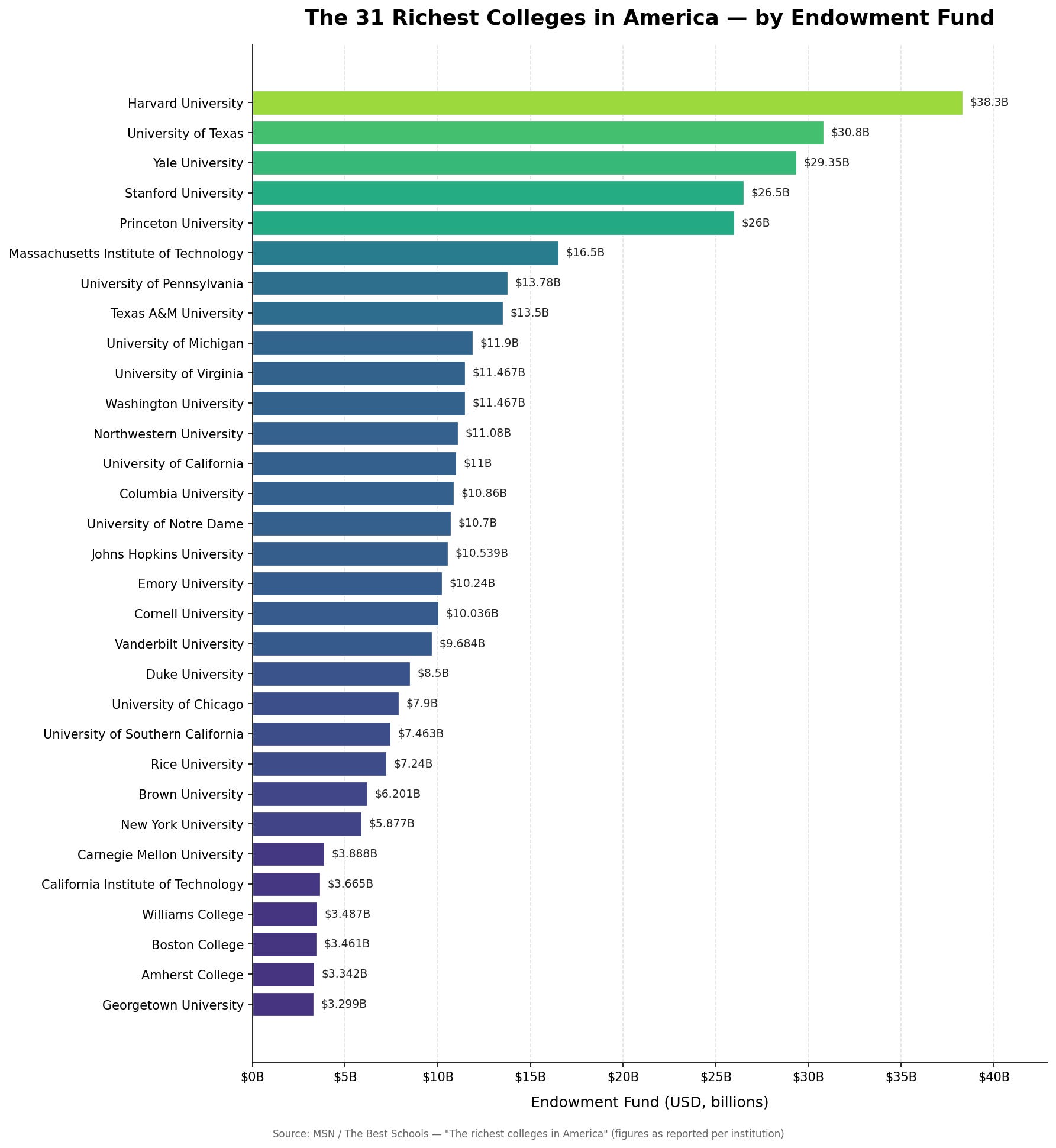
The Richest Colleges in America—The Endowment Numbers Are Hard to Believe: Harvard University sits atop America's wealthiest institutions with a $38.3 billion endowment, but the figures that follow are nearly as staggering: the University of Texas holds $30.8 billion, Yale $29.35 billion, Stanford $26.5 billion, and Princeton $26 billion, with all 31 schools profiled commanding endowments in the billions. The list runs from these giants down to Georgetown at $3.3 billion, and notably blends private powerhouses with public flagships like UT and Texas A&M ($13.5 billion). The piece pairs each endowment with how much the school pours into research—MIT spends roughly $952 million, Yale $951 million, Chicago $433 million—underscoring that these funds bankroll everything from medical schools and public-policy programs to the research parks that helped birth Silicon Valley. Claude Code put together the below chart for me.
Students Are Using a ‘Backdoor’ to Attend Their Dream Schools: A growing number of students are navigating alternative pathways to enroll in their desired colleges, particularly when traditional admissions routes fall short. Programs like the University of Florida’s Pathway to Campus Enrollment (PaCE) have surged, from 250 students in 2015 to nearly 3,000 in fall 2024, allowing students to begin their education online while integrating into campus life through shared housing and extracurricular activities. The trend reflects a shift in the admissions landscape, where students who narrowly missed out on acceptance can still partake in university experiences, albeit sometimes through community colleges, as seen with Texas A&M's dual-enrollment partnership with Blinn College, which tripled in size to around 1,000 students annually. This approach not only presents financial benefits—like reduced tuition costs—but also raises questions about the equity and accessibility of college admissions, with some students labeling these routes as "cheat codes" for college entry. While there are a number of these programs out there, more than one Director of Admissions has asked us not to refer to them as “back doors” or “cheat codes.” If you’re interested in learning more about what UF has to offer, we recently put together a comprehensive resource guide on getting into UF.
‘Reaching a crisis point’: UC Berkeley professors expectations for assigned readings: Humanities faculty at UC Berkeley are increasingly adjusting reading assignments to accommodate perceived challenges students face with lengthy texts. Professors like Carlos Noreña have significantly reduced weekly reading from 100 pages to 35, raising concerns about the viability of teaching disciplines like history if such reductions continue. Meanwhile, others, such English professor Grace Lavery, maintain or even their reading loads, viewing difficulty with dense material as part of intellectual growth. Notably, many educators are opting to use excerpts from longer works instead of complete texts, as seen in courses by Mark Brilliant and Trevor Jackson. Despite these shifts, comprehension levels remain consistent, although students struggle with certain analytical skills. AI tools, while not outright banned, complicates the reading experience, with concerns about the accuracy of AI-generated summaries hindering genuine engagement with texts. It’s really no wonder students graduating college have difficulty finding a job, they don’t want to do any hard work! I probably read 35 pages of my book this morning!
Higher Influence: How Qatar Pulls the Strings on American Campuses: Qatar’s extensive financial involvement in American universities raises critical questions regarding the influence of foreign funding on academic independence and institutional integrity. Recent contractual documents reveal that Qatar’s government, through entities like the Qatar Foundation, strategically utilizes partnerships with institutions such as Georgetown University and Northwestern University to advance its national interests, including control over intellectual property and governance decisions. For instance, the contracts include provisions that grant consultation rights over senior academic appointments and prior approval over intellectual property, indicating a structured approach to exert influence while framing these agreements as philanthropic endeavors. The implications for American higher education are profound, particularly as these relationships intertwine with geopolitical dynamics and concerns about the promotion of ideologies that may counter U.S. interests, highlighting the need for transparency and critical assessment of foreign partnerships in educational settings. Barri Weiss did an amazing podcast on how Qatar bought America. People make such a fuss over the money the Jewish lobby pours into politics, yet they seem to have no qualms with Qatari and similar nations spending significantly more to influence the politics of our country.
Falsely accused of using, California college students push back as cheating crisis grows: The rapid integration of AI in higher education has led to a notable increase in accusations of academic dishonesty among students, with a Los Angeles attorney indicating that such accusations now comprise approximately 35% of her education-related caseload. Surveys reveal that around two-thirds of students have utilized AI for classwork, with about 9% admitting to using it to cheat. This shift has created an environment of distrust, where faculty suspect students of unethical behavior while students believe faculty may also be leveraging AI without transparency. Furthermore, the use of AI detection tools has led to numerous false positives, particularly affecting non-native English speakers, with some detection systems criticized for their high error rates. In response to these challenges, students are adapting by meticulously documenting their work processes to defend against potential accusations, highlighting a growing trend of self-protection amidst evolving academic integrity standards.
“That’s a fair point. The challenge I see is…” - Acknowledge the other person’s perspective before presenting your counterpoint.
“I’d like to add a nuance to that.” - Offer additional insights or perspectives that the leader may not be aware of, rather than correcting them directly.
“My concern with that approach would be…” - Shift the focus from the person to the proposed plan or approach, specifying what the risks are and why they matter.
“I want to make sure we’re factoring in…” - Highlight missing information or considerations in a way that assumes good intentions, avoiding blame.
“What needs to be true to move forward with [other idea]?” - Encourage leaders to consider alternative ideas by framing them as potential future actions to explore.
Not to toot my own horn, but I do use most of this language on a regular basis — but, not always.
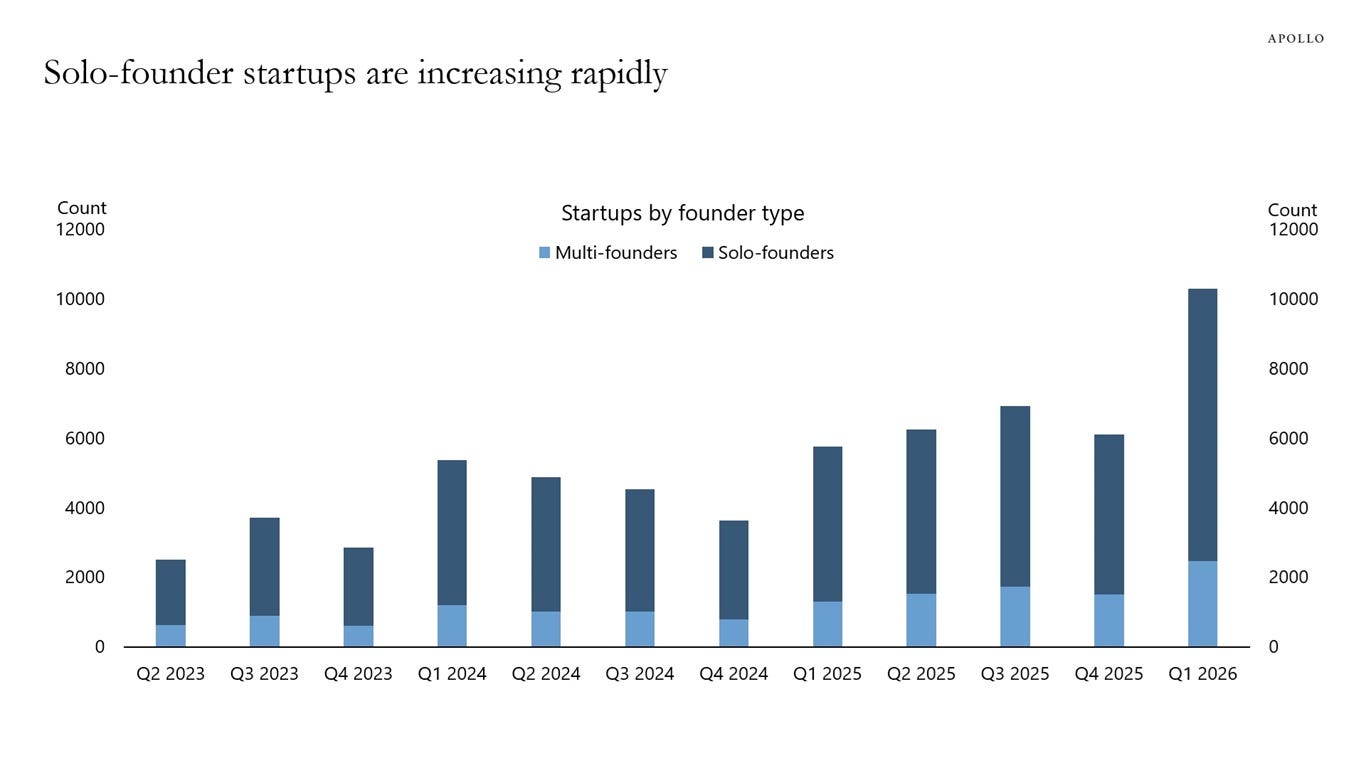
AI-Driven Explosion in the Number of Entrepreneurs. AI may or may not be contributing to massive job losses, but it is definitely contributing to a massive increase in people starting their own businesses.
What I’m Watching: I finished season one of Pluribus and really enjoyed it. I am very curious to see what happens in season two. Unfortunately, it appears that it will not be released until 2027.
What I’m Reading: I finished The Fourth Option by Jack Carr, which was another page-turner from one of my favorite authors. Every time I read one of his books, I always hope that they will turn it into a movie. Considering Jack Carr has two series on Amazon, it’s not unlikely that this will eventually hit the screen. For my next book, I am going to focus on Oz Perlman’s latest book: Read Your Mind: Proven Habits for Success from the World’s Greatest Mentalist.
My Favorite Recent Podcast: Another week without anything memorable.
No posts
Comments
Nothing yet. Say the first thing.
Sign in to join the conversation.