
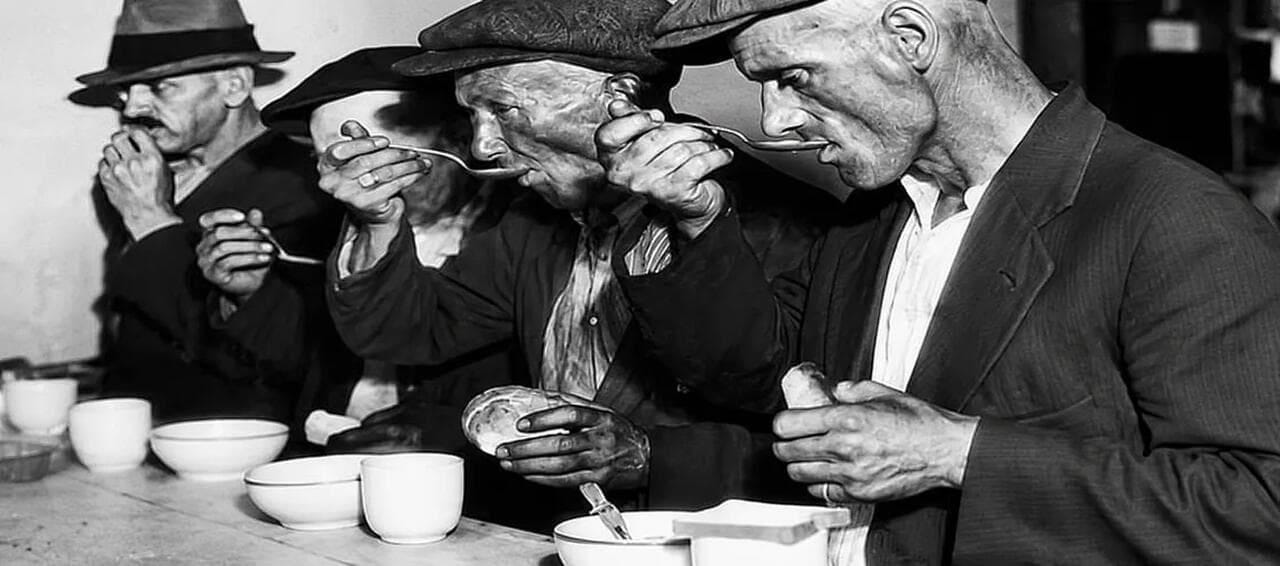
The Great Depression was not a sepia-toned folktale; it was a meat-grinder that chewed through 25 percent of the working population, that evicted grandmothers into snowbanks, that turned proud men into beggars and children into scavengers. The bones of that era still jut through the soil of our present moment—visible to anyone brave enough to look. What follows is not a curiosity shop of antiquated customs, but a field manual written in blood and hunger, a record of how ordinary human beings refused to break when the world snapped in half. Read it. Memorize it. The wolves are already at the door. - John Walter
Move as a clan. When work dried up in Akron or Detroit, families packed their possessions into trucks and rolled toward the horizon like Bedouins. Staying together meant pooling resources, sharing bread, ensuring that when one member stumbled, others could prop them up. The lone wolf starved; the pack endured.
Ask not what the job is; ask only if it exists. Pride was a luxury item, quickly pawned. Men who had managed offices took up shovels. Women who had worn silk now scrubbed floors. The work itself mattered less than the doing of it, the exchange of sweat for coins.
Scavenge value from the discarded. Driftwood became fuel. Rusted metal became scrap. Bones became glue. The beachcomber and the junk man were aristocrats in this economy, turning refuse into currency through sheer force of will.
Create your own occupation. Women arose before dawn to cook stews and pies, then sold them outside factory gates during lunch breaks. Men sharpened tools on porches, offering services to neighbors. Necessity was the mother of small enterprise.
Convert your vehicle to shelter. Those with cars or trucks slept in them, parking behind churches or in empty lots. Public gyms offered showers for pennies; the automobile became a rolling bedroom.
Trade without currency. Barter economies sprouted like weeds. A morning's labor might yield a gallon of milk; a repaired fence could earn a bushel of apples. Money was scarce; ingenuity was not.
Dig in the dirt. The vegetable plot was the difference between malnutrition and survival. Even city dwellers tore up lawns to plant potatoes. Seeds cost pennies; harvests were priceless.
Hunt and hook. Rabbits, squirrels, fish from the creek - these were not sport but sustenance. A shotgun was as vital as a plow, and the woods were a larder for those who knew how to read them.
Gather what grows wild. Nuts, berries, dandelion greens, cattail roots - nature provided for those who knew her language. Children became expert foragers, their eyes trained to spot edibles in the ditch.
Expect loss. They learned that possessions were temporary, that security was illusion, that everything could vanish overnight. This knowledge was terrible but liberating.
They always have been. But we remember now how to bar the gate, how to sharpen the knife, how to look our brothers and sisters in the eye and say: We have less, but we have enough. We will make it through another winter. We will see the spring.
Comments
Nothing yet. Say the first thing.
Sign in to join the conversation.